
Noah Williams is an interior designer and flooring expert at Nova Floor. In Dubai, he helps people pick the right floor, get it installed, and keep it looking good. He also writes simple, practical flooring and home care guides for readers in Dubai and around the world.
How to Get Rid of Carpet Beetles | 10 Effective Treatment & Prevention Tips
Noah Williams
You find a small hole in your favorite wool sweater. A week later, you spot a tiny fuzzy worm near the baseboard. These are classic signs of carpet beetles. Many people spray the visible bugs and move on. Then the beetles return a few weeks later.
This guide by Nova Floor shows you how to get rid of carpet beetles for good. You will learn to identify them, find the hidden source, and choose treatments that actually work. The advice draws on research from university entomology departments, not guesswork.
Contents
Carpet Beetles at a Glance
| Question | Quick Answer |
| Which stage causes damage? | Larvae. Adults feed on flower pollen. |
| How big are adults? | About 1/16 to 3/16 inch (2 to 5 mm) |
| What do larvae eat? | Wool, silk, fur, feathers, leather, pet hair, dead insects, and some dry foods |
| Do they bite? | No, but larval hairs can cause an itchy rash |
| When do adults appear? | Mostly spring and early summer |
| When are larvae active? | All year indoors |
| Hardest part of control | Finding the source |
What Are Carpet Beetles?
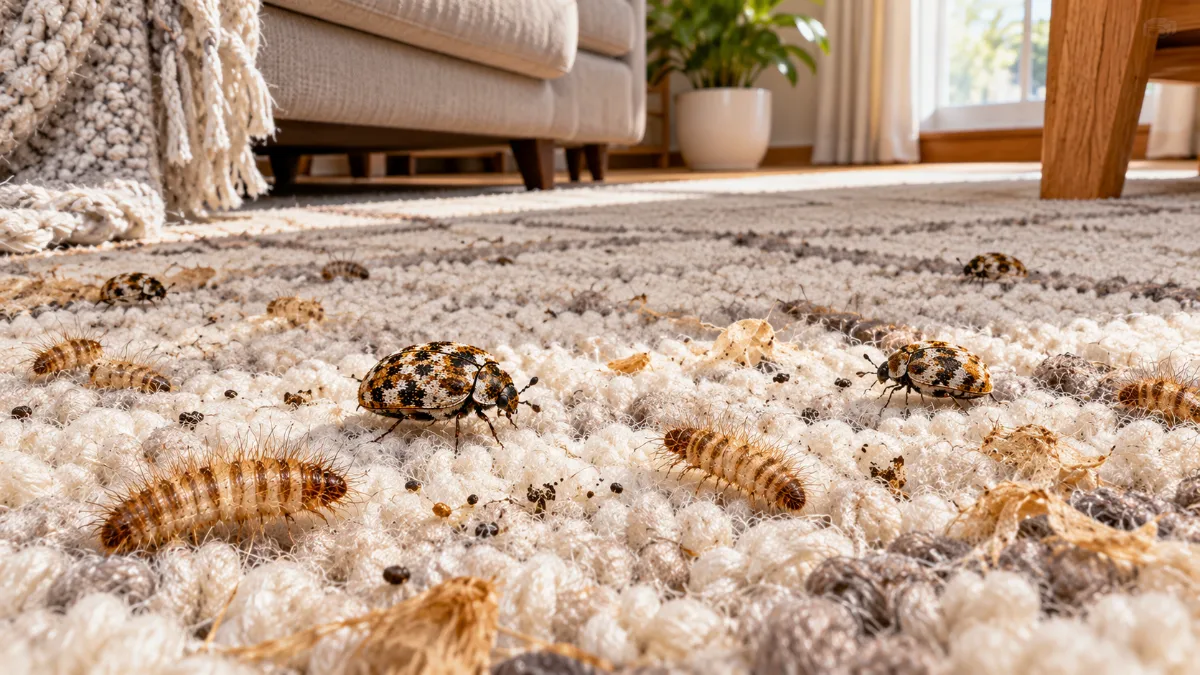
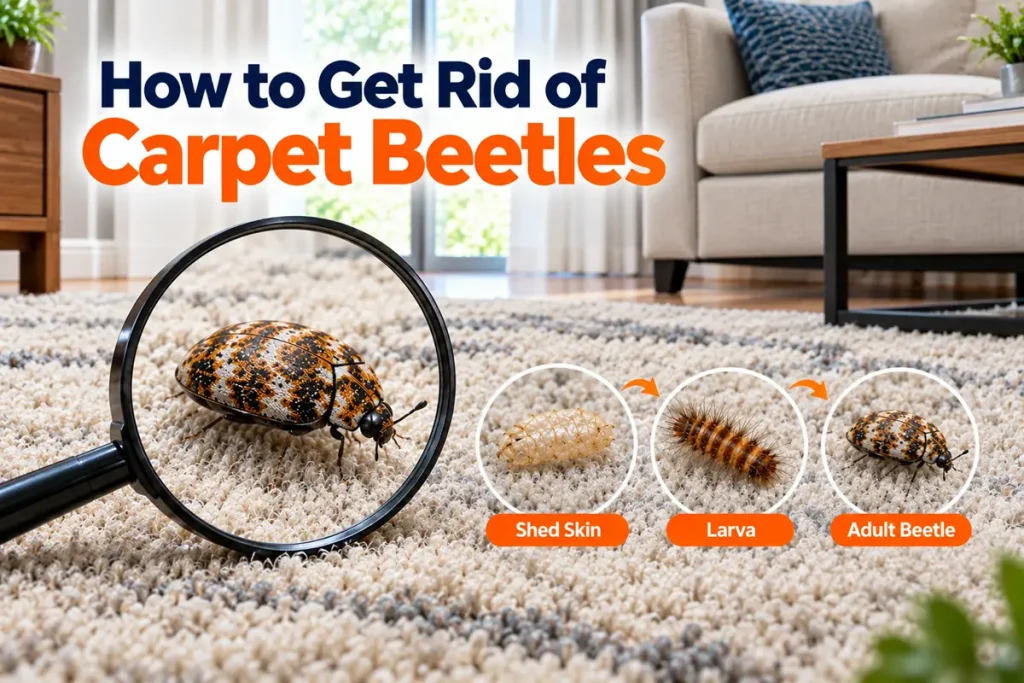
Carpet beetles are small insects from the Dermestidae family. People also call them carpet bugs, rug bugs, or fabric beetles. Despite the name, they rarely stay in carpets alone.
The larvae mainly feed on keratin, a protein found in wool, fur, feathers, silk, and leather. Very few insects can digest keratin, which makes carpet beetle larvae especially destructive to natural animal-based fabrics. A sisal carpet has a lower risk because sisal comes from a plant and does not contain keratin.
Cotton and synthetic fibers also face a much lower risk. However, larvae may still damage these carpets when they contain wool blends or collect food stains, pet hair, skin flakes, and body oils.
Adult carpet beetles live a different life. They feed on pollen and nectar outdoors and do not eat your fabrics. However, a single female can lay dozens of eggs near a suitable food source indoors. These eggs develop into larvae, which cause the actual damage to carpets, rugs, clothing, and other natural materials.
Common Types of Carpet Beetles
Four species cause most household damage. Control methods stay the same for all of them, but identification helps you find the source faster.
| Species | Adult Appearance | Larva Appearance | Key Habit |
| Varied carpet beetle (Anthrenus verbasci) | About 1/10 inch; black with irregular white, brown, and yellow scales | Light and dark brown stripes; dense hair tufts; wider at the rear | Longest larval stage, up to 630 days |
| Furniture carpet beetle (Anthrenus flavipes) | Slightly larger and rounder; mottled white and orange scales with black spots | White at first, then chestnut brown; wider at the front | Shortest larval stage, 70 to 94 days |
| Black carpet beetle (Attagenus unicolor) | 1/8 to 3/16 inch; shiny black or dark brown; more oblong | Shiny, smooth, and tapered, with a long tail tuft | Infests stored foods as well as fabrics |
| Common carpet beetle (Anthrenus scrophulariae) | Black with white patches and an orange stripe; 2.2 to 3.5 mm | Dark brown with hair tufts | Larval stage of about 60 to 80 days |
Older adults of all species can lose their colored scales. They then look plain black or brown, which makes identification harder.
What Do Carpet Beetle Larvae Look Like?
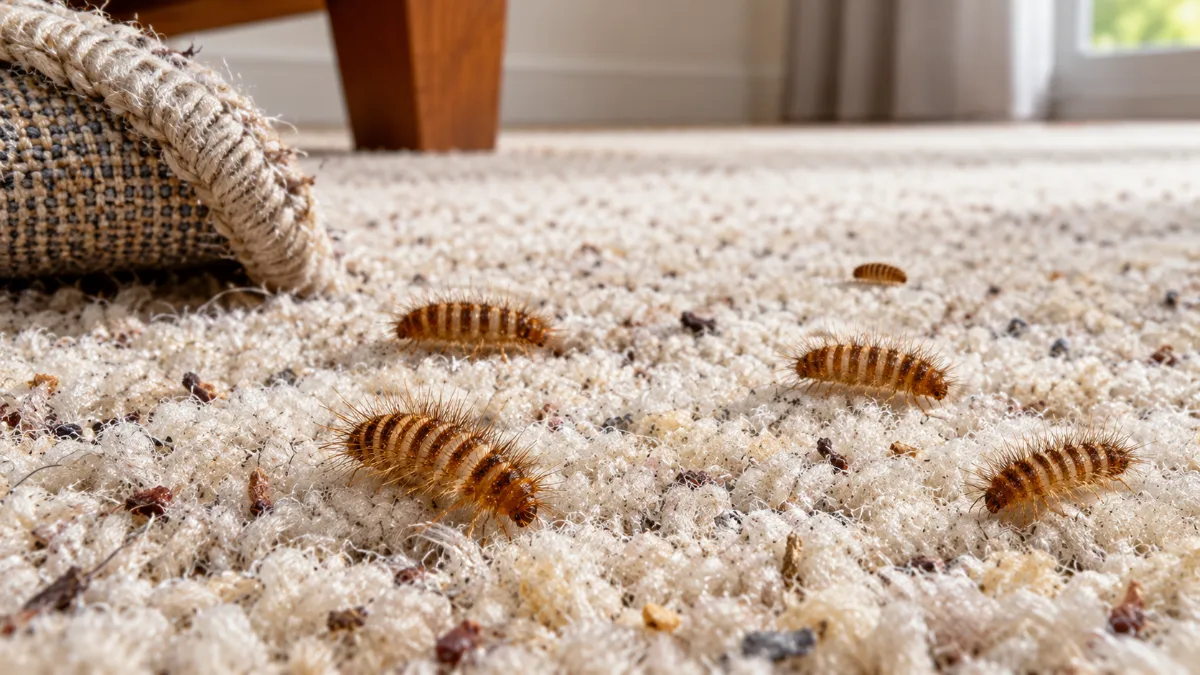
Baby carpet beetle larvae look like tiny, hairy worms. Many people call them “woolly bears.” Most measure 1/8 to 1/4 inch long and crawl slowly. Unlike true worms, they have six short legs.
Larvae avoid light. They stay in dark, undisturbed places and feed for months without notice. You usually find them only when you lift a rug, move a storage box, or shake out an old coat.
If you notice small bugs in carpet that look fuzzy and striped, you are almost certainly seeing beetle larvae in house fabrics, not adult beetles.
Why Carpet Beetles Are Hard to Get Rid Of
Are carpet beetles hard to get rid of? Yes, and their life cycle explains why. The larval stage can last for many months, sometimes more than a year. During that time, larvae hide deep inside fibers, cracks, and storage boxes.
| Life Stage | Varied | Furniture | Black |
| Eggs per female | About 40 | About 60 | About 90 |
| Days to hatch | 10 to 20 | 9 to 16 | 6 to 16 |
| Larval stage (days) | 220 to 630 | 70 to 94 | 166 to 330 |
| Pupal stage (days) | 10 to 13 | 14 to 17 | 8 to 14 |
| Adult lifespan | 2 to 6 weeks | 4 to 8 weeks | 4 to 8 weeks |
This timeline creates three challenges. First, one round of treatment rarely reaches every larva. Second, eggs you miss today will hatch within about two weeks. Third, many adults on your windowsills grew up inside your home.
Those adults gather at windows because they want to reach the flowers outside. Their presence tells you an indoor food source exists somewhere.
Signs of a Carpet Beetle Infestation
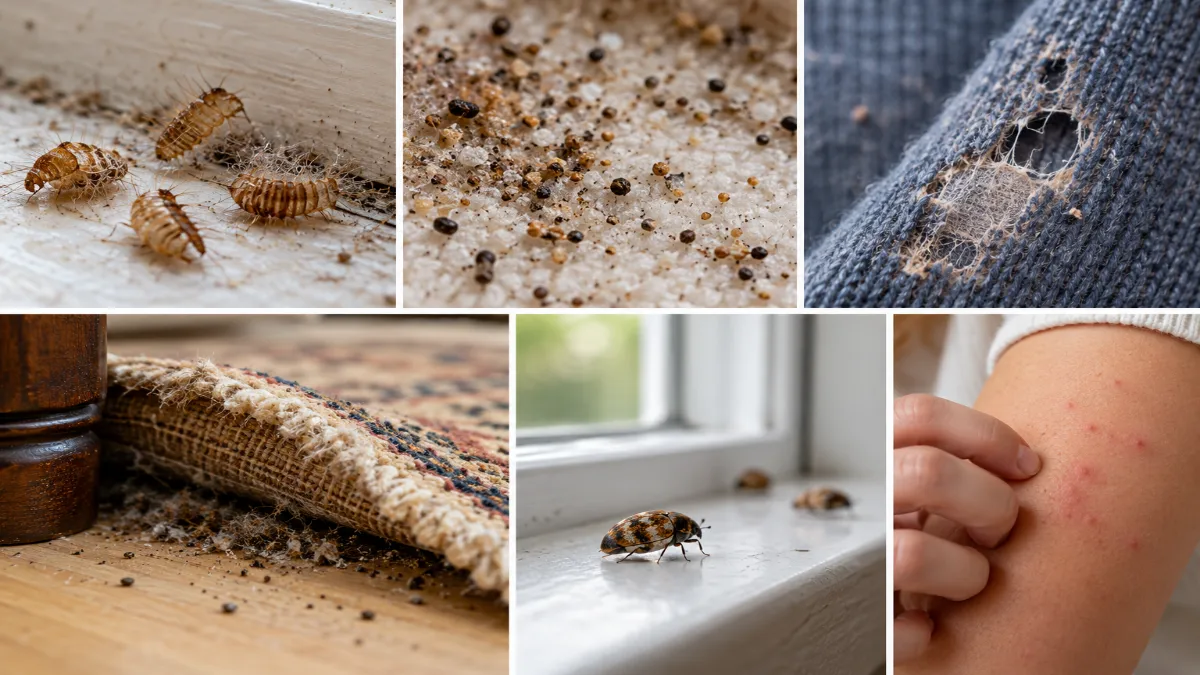
Watch for these clues. Two or more together strongly suggest an active infestation.
- Shed skins. Larvae molt several times. Their empty skins look like brown, bristly shells and often collect along baseboards, in drawers, and under rugs.
- Tiny fecal pellets. These look like grains of salt or coarse sand. They often match the color of the fabric the larvae ate.
- Concentrated damage. Larvae tend to chew one area heavily. Look for thin patches, bare spots, and holes in cuffs, collars, hems, and folds.
- Damage at rug edges. Larvae prefer the edges and undersides of carpets, especially beneath heavy furniture.
- Adults near windows. Small round beetles on sills, curtains, or light fixtures in spring point to a nearby infestation.
- Unexplained itchy bumps. Some people develop a rash before they ever see a larva.
Carpet Beetle, Clothes Moth, or Bed Bug?
People often confuse these three pests. Correct identification saves time and money, because each one needs a different treatment.
| Clue | Carpet Beetles | Clothes Moths | Bed Bugs |
| Food | Animal fibers, dead insects, some dry foods | Animal fibers | Human blood |
| Fabric damage | Concentrated holes and thin patches | Scattered holes | None |
| Webbing | None | Silky webs or cases | None |
| Skin marks | Rash from larval hairs | None | True bites |
| Main hiding spots | Closets, rug edges, vents, attics | Dark closets, stored woolens | Mattress seams, bed frames |
What Causes Carpet Beetles in Your Home?
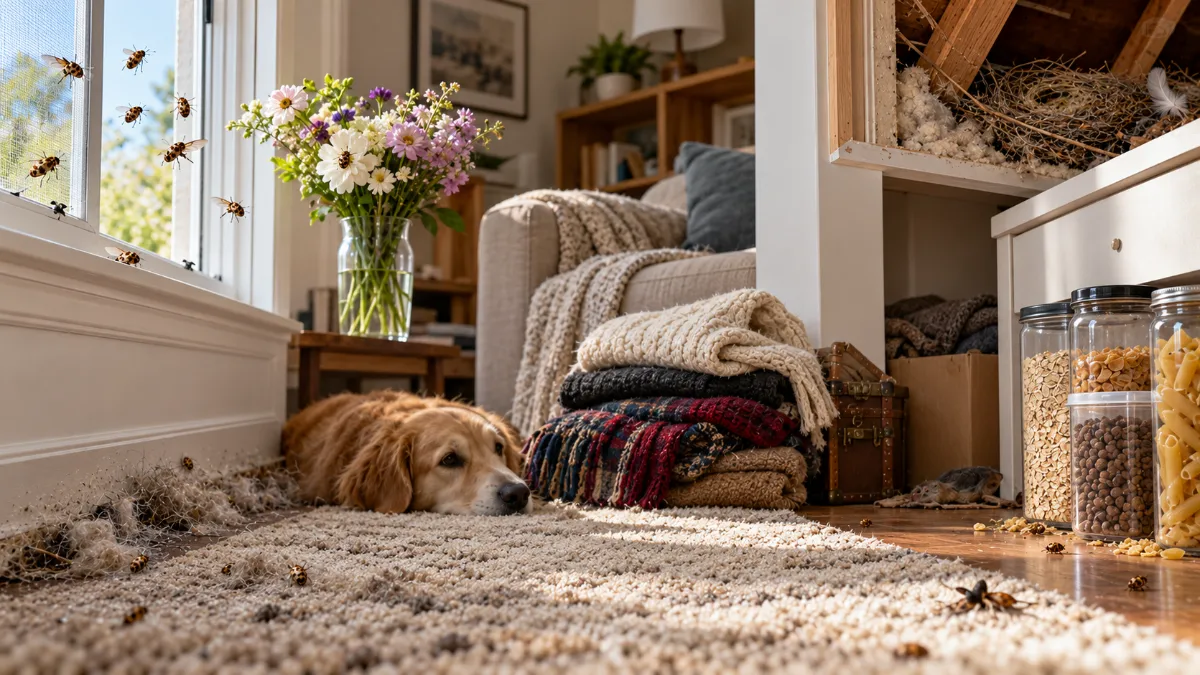
To learn how to get rid of what causes carpet beetles, you need to know how they arrive and what keeps them alive.
How they get in. Adults fly through open windows and doors, especially in spring. They also hitch a ride on cut flowers, since they feed on pollen. Second-hand rugs, upholstered furniture, and vintage clothing can carry eggs and larvae straight into your home.
What keeps them alive. Larvae need a steady food supply. Common sources include:
- Pet hair and lint along baseboards and inside floor vents
- Wool coats, hats, and blankets stored for long periods
- Bird, rodent, bee, and wasp nests in attics, chimneys, and eaves
- Dead insects such as cluster flies and lady beetles in attics and light fixtures
- Dead mice or other small animals in wall voids
- Flour, cereal, pet food, birdseed, and dried pasta
- Potpourri, taxidermy, feather pillows, piano felts, and wool insulation
Notice the pattern. Clothes you wear often and rugs you vacuum regularly rarely suffer damage. Neglected items in dark spaces face the greatest risk.
Are Carpet Beetles Dangerous?
Carpet beetles do not bite, sting, or spread disease. They also do not damage the structure of your home. Their risk falls into two areas: property damage and skin reactions.
The skin problem comes from the larvae. Larvae carry rows of tiny spear-shaped hairs called hastisetae. These hairs break off easily and can float through the air. Research links exposure to reactions ranging from skin rashes to eye and nose irritation and even acute asthma.
The most common symptoms are itchy red bumps, sometimes with small blisters. Many people mistake these bumps for insect bites. Air conditioning systems can also carry larval hairs away from the infestation, so cleaning ducts and vents helps.
Wear gloves when you handle infested items. See a doctor if a rash spreads or you notice breathing problems.
Are black carpet beetles dangerous? They pose the same skin risk as other species. They also contaminate stored food, so throw away any infested pantry products.
How to Get Rid of Carpet Beetles: 10 Effective Treatment & Prevention Tips
The best way to get rid of carpet beetles follows a clear order. Find the source, remove it, kill the remaining larvae, and then block their return. Tips 1 to 8 focus on treatment. Tips 9 and 10 focus on prevention.
1. Find and Remove the Source First
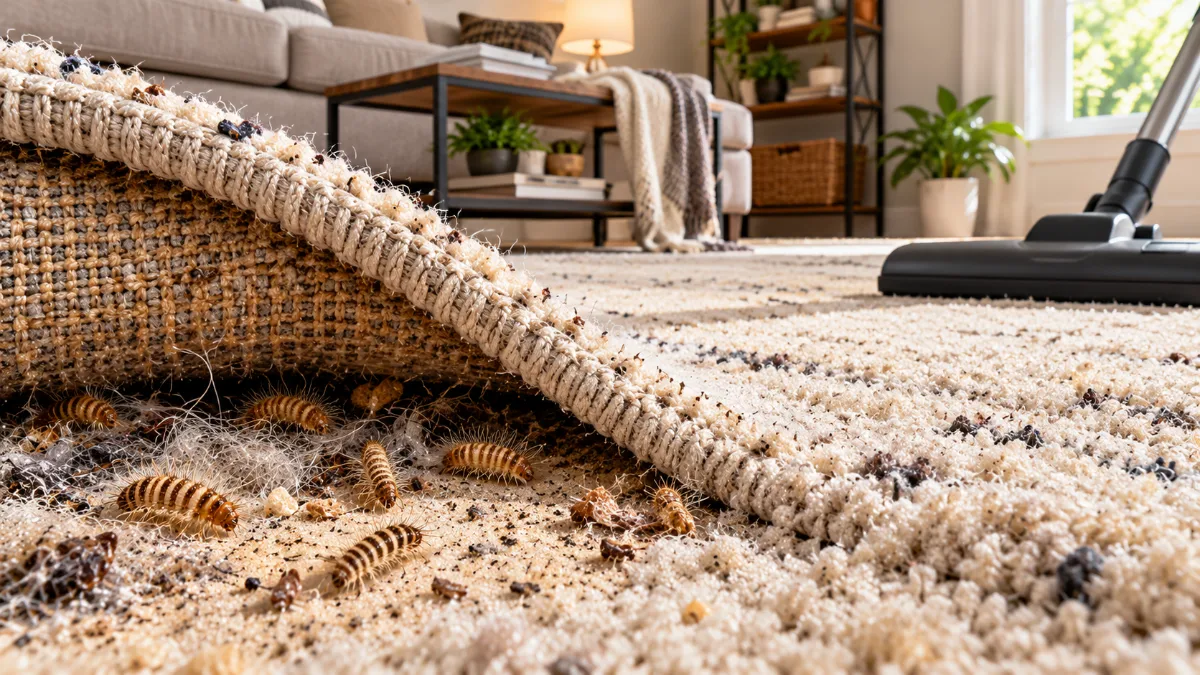
This step decides whether your treatment succeeds. Spraying visible bugs fails if a hidden colony keeps breeding nearby.
Grab a flashlight and gloves. Then inspect these areas carefully:
- Closets and drawers. Check folds, seams, cuffs, and collars of wool, silk, fur, and leather items.
- Carpets and rugs. Look under heavy furniture and along edges. Use needle-nose pliers to lift wall to wall carpet from the tack strip near baseboards.
- Vents and ducts. Remove floor vent covers and look for pet hair and lint.
- Attic and basement. Search for old nests, dead insects, rodent droppings, and wool insulation.
- Pantry. Inspect flour, cereal, grains, spices, pet food, and birdseed.
Place heavily infested items in sealed plastic bags before you carry them through the house. This step stops larvae from dropping onto clean areas. Discard anything you cannot clean.
Here is a useful clue. If beetles keep appearing in a room with an attic vent or fan, check the attic for a bird nest.
2. Vacuum Thoroughly and Empty the Vacuum Outside
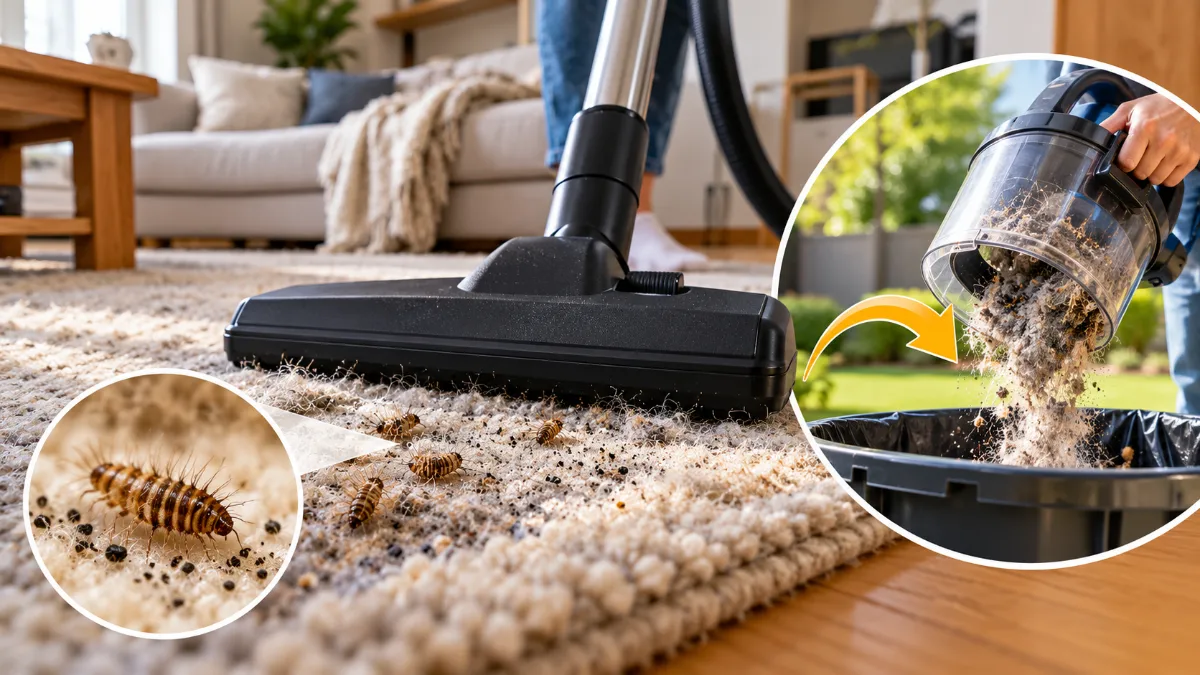
Vacuuming removes eggs, larvae, and adults. It also removes the hair and lint that larvae eat. Few methods do both jobs at once.
Use a crevice tool along baseboards, carpet edges, and closet corners. Vacuum under every piece of furniture, including beds and sofas. Clean upholstery seams, curtain folds, windowsills, and the inside of drawers. If possible, flip area rugs and vacuum the underside too.
Empty the vacuum immediately after each session. Seal the bag or canister contents in a plastic bag and take it outside. Otherwise, larvae can crawl back out. During active treatment, vacuum affected rooms every few days. Once the problem settles, switch to a weekly routine.
3. Wash, Dry, or Dry Clean Infested Fabrics
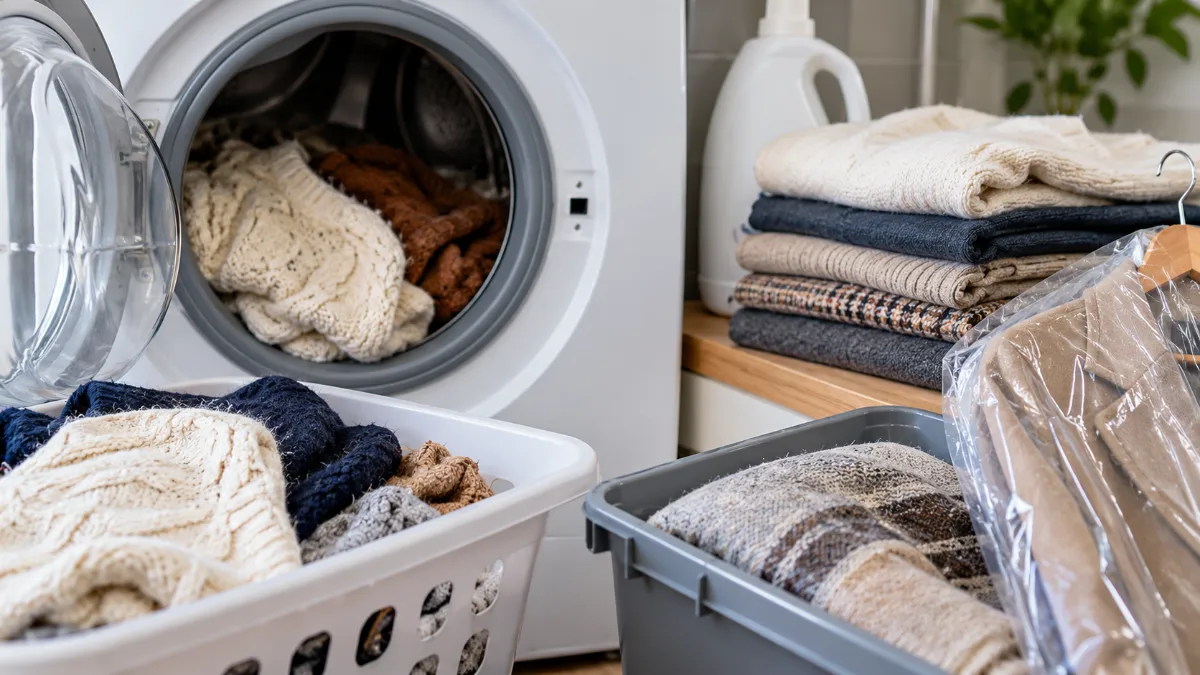
Heat kills carpet beetles at every life stage. Hot water laundering and dry cleaning remain the most important methods for clothing, blankets, and curtains.
Wash items in the hottest water the care label allows. Then dry them on high heat. Dryer heat alone also kills eggs and larvae. Send delicate wool, silk, and tailored garments to a dry cleaner.
Treat every natural fiber item in an infested closet, not just items with visible holes. Eggs measure under 1 mm, so you cannot see them easily. Cleaning also removes perspiration and food residue, which attract egg-laying females.
4. Freeze Items You Cannot Wash
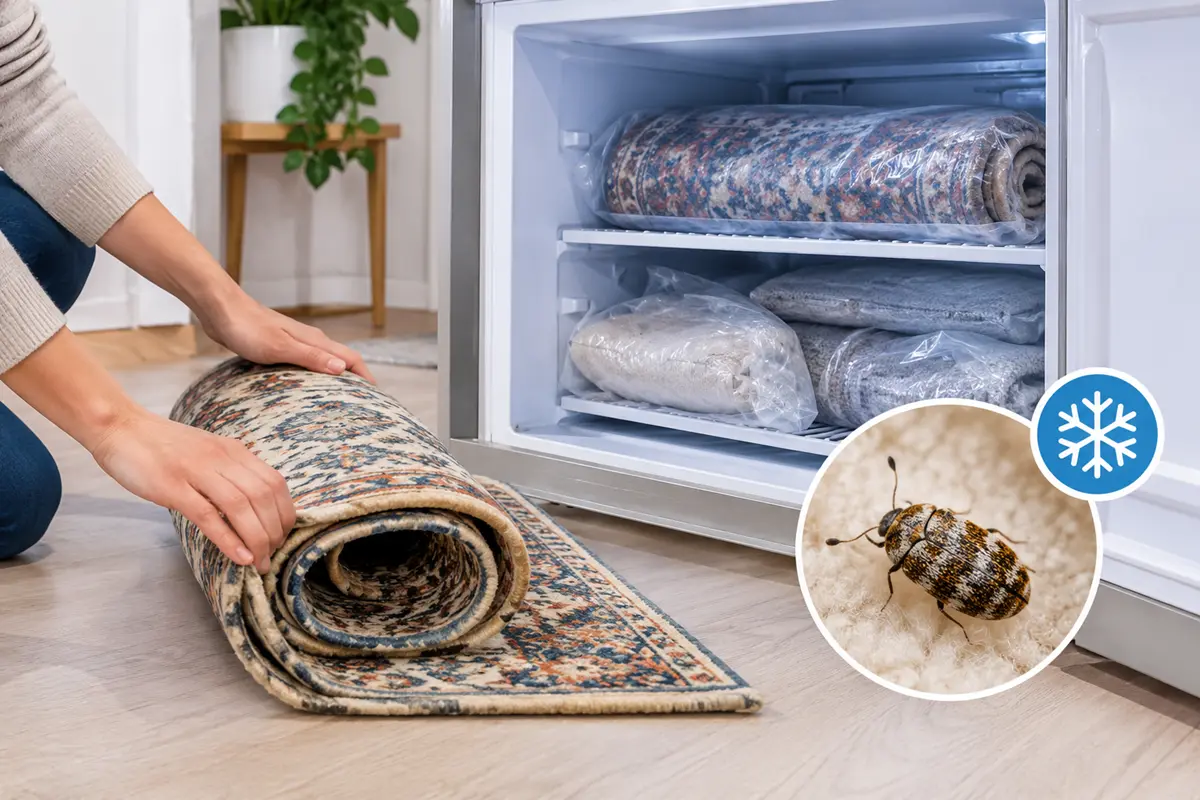
Freezing offers a safe, chemical-free way to treat leather, fur trim, wool sweaters, stuffed toys, small rugs, and taxidermy mounts. Follow these steps for reliable results:
- Seal the item in a plastic bag and squeeze out excess air.
- Place it in a freezer set to 0°F (minus 18°C) or colder.
- Leave it for at least one week. A freezer that reaches minus 20°F (minus 29°C) kills all stages in about 72 hours.
- Let the sealed bag sit at room temperature for 24 hours before opening it.
The bag prevents frost damage. The 24-hour rest prevents condensation from soaking the item. Some materials turn brittle in the cold, so handle frozen items gently.
5. Steam Clean Carpets, Rugs, and Upholstery
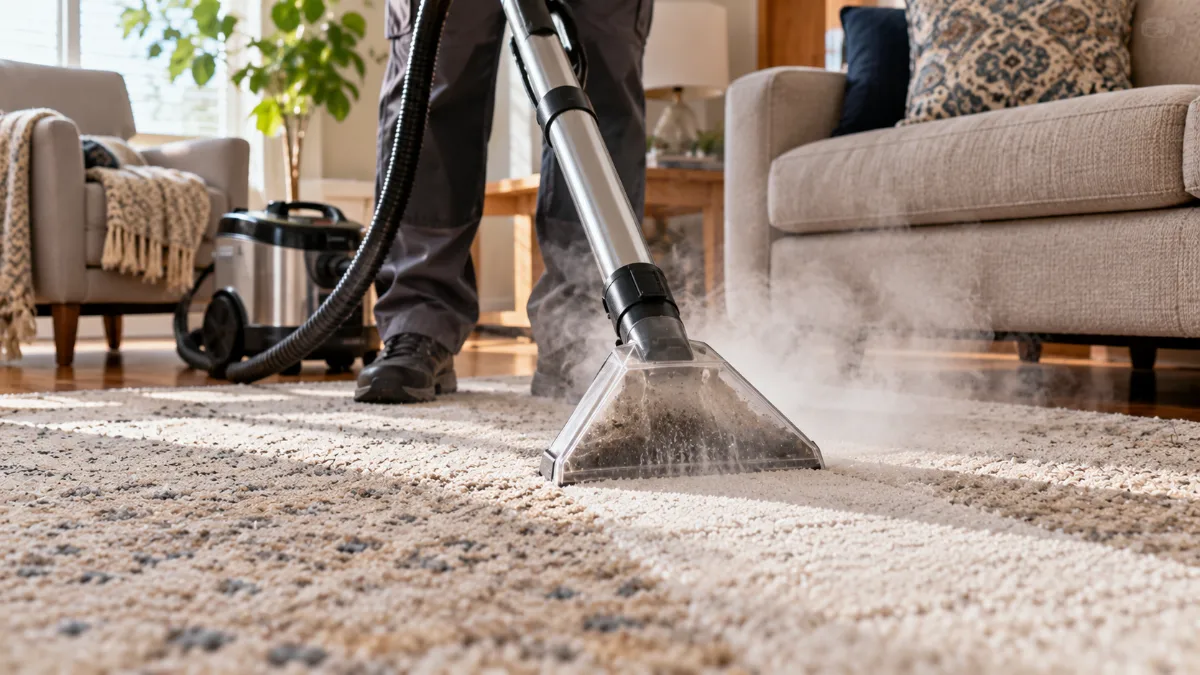
Sprays often fail because larvae hide deep in fibers. Steam and hot water extraction reach those hiding spots and kill larvae and eggs on contact.
Focus on carpet edges, areas under furniture, and the seams of upholstered chairs and sofas. Let everything dry completely before you replace furniture.
Take care with natural fibers. Steam can shrink wool and make silk dyes bleed. Always test a hidden corner first. For antique, Oriental, or valuable rugs, hire a professional rug cleaner instead.
6. Apply Diatomaceous Earth or Boric Acid in Cracks and Voids
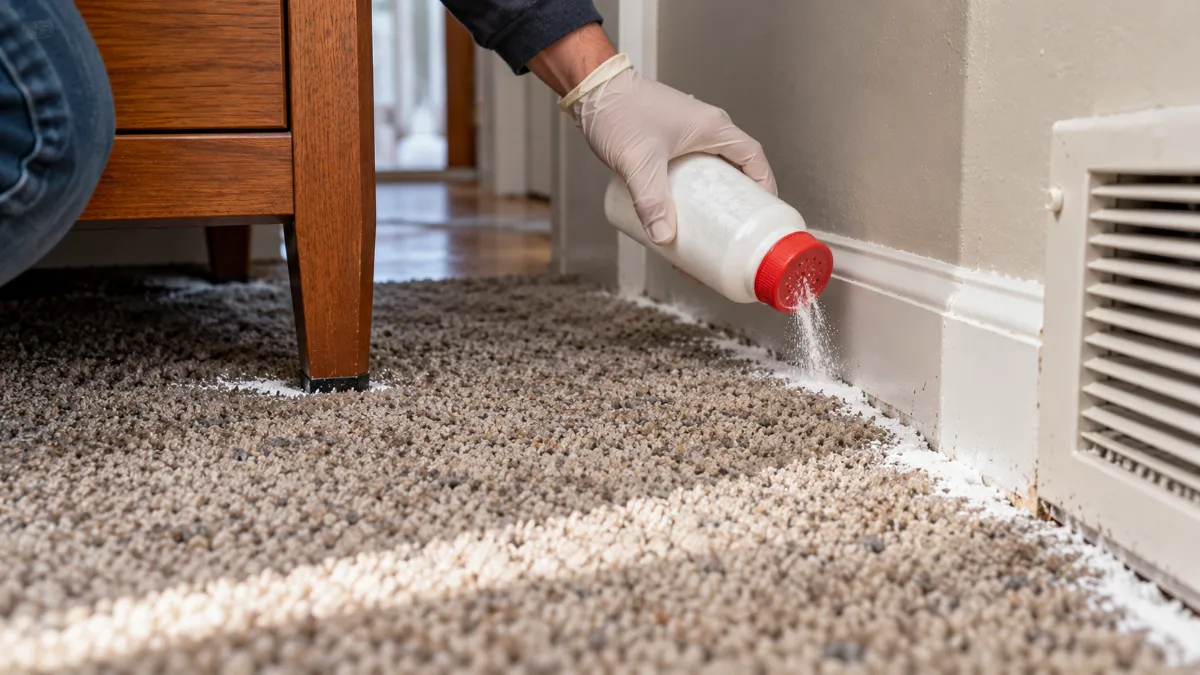
Does diatomaceous earth kill carpet beetles? Yes, but only on contact. Diatomaceous earth (DE) is a fine powder made from fossilized algae. Its sharp particles damage the insect’s waxy outer layer, and the insect dries out.
The City of Edmonton recommends crack and crevice applications of DE for persistent infestations. It describes DE as a low-toxicity dust that provides long-lasting control.
Use diatomaceous earth for carpet beetles this way:
- Choose food-grade DE.
- Apply a thin, barely visible layer. Insects avoid thick piles.
- Target baseboards, closet floors, cracks, and areas under heavy furniture.
- On open carpet, leave it for about 48 hours, then vacuum thoroughly.
- In undisturbed voids, you can leave it in place longer.
- Wear a dust mask and gloves, and keep it away from food prep areas.
DE has limits. It does not affect eggs, and vacuuming removes it. Use it as support, not as your only treatment.
Boric acid works in a similar way when applied in thin layers to cracks and crevices. However, misapplied boric acid can damage property and harm people and pets. Keep children and pets away from treated areas. For wall voids and attics, insecticidal dusts such as silica aerogel reach places that sprays cannot.
7. Use a Labeled Insecticide as a Spot Treatment Only
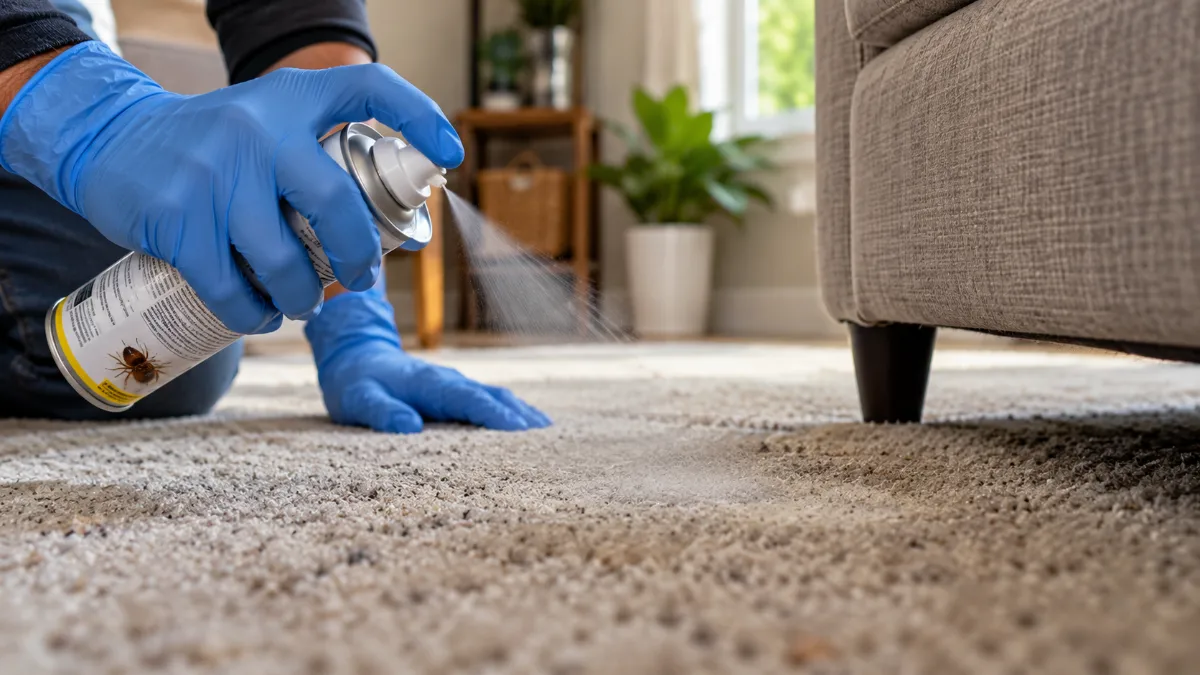
Chemical carpet beetles treatment works best as a final step after cleaning. It targets larvae in places you cannot wash, freeze, or steam.
Choose a product that lists carpet beetles on the label. Common active ingredients include deltamethrin, bifenthrin, cyfluthrin, and permethrin. Some flea sprays labeled for fabric pests also work.
Apply the spray to carpet edges, the floors and walls of closets, storage shelves, and cracks. If you find live larvae in a carpet, spray both sides when possible. Use a lighter coat on the top surface to reduce staining. Always test a small hidden spot first.
Never spray clothing or bedding. Keep children and pets out of treated rooms until surfaces dry. Skip bug foggers. Their mist settles on open surfaces and rarely reaches larvae hidden in fibers, cracks, and closed drawers.
8. Set Sticky Traps to Track the Problem
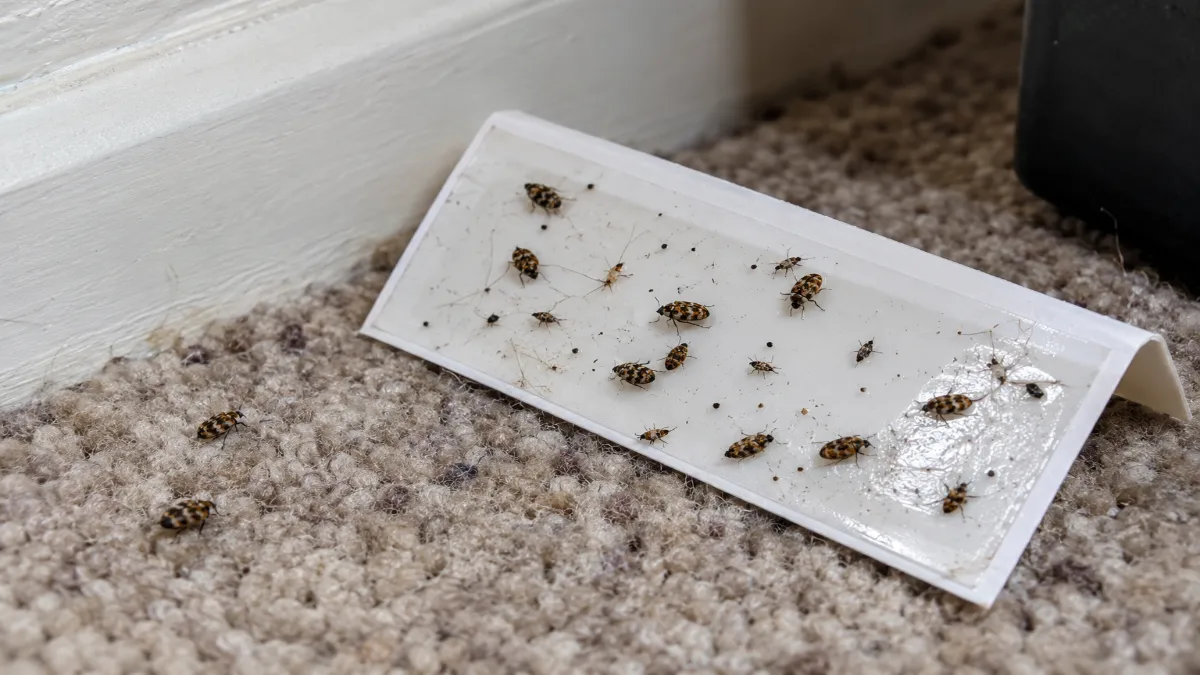
Traps will not end an infestation alone. However, they show you where beetles come from and whether your treatment works.
Place plain sticky traps on windowsills to catch adults heading toward light. Pheromone traps attract males and catch beetles earlier, but each one targets a specific species. Identify your beetle before you buy them.
Set traps in several rooms. The room with the most catches usually sits closest to the source. Check traps once or twice a week. Rising numbers mean you missed a breeding site. Falling numbers mean your plan is working.
9. Store Natural Fabrics in Airtight Containers
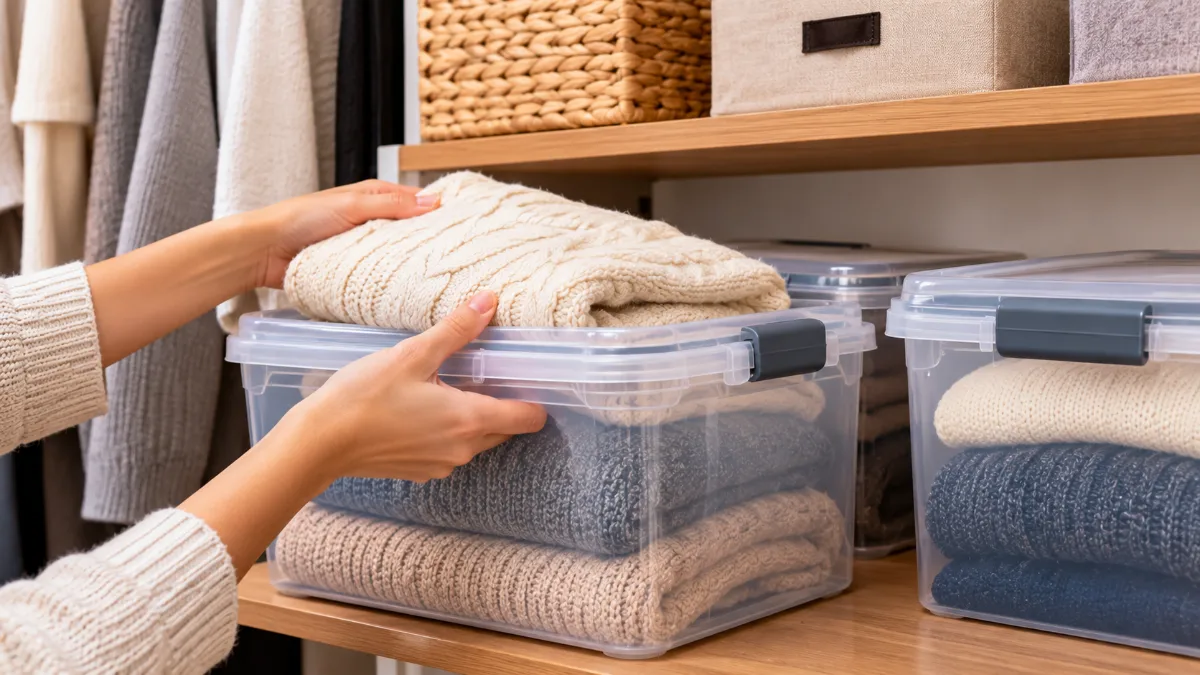
Storage habits play a major role in how to prevent carpet beetles. Most infestations start in items packed away for months.
Clean every item before storage. Washing or dry cleaning removes eggs and the body odors that attract beetles. Then pack items in airtight plastic totes or vacuum-sealed bags. Closets do not seal well enough to keep beetles out.
If you use mothballs, place them only inside sealed containers. Their vapors work only at high concentrations. Keep them away from children, pets, food, and plastic buttons or hangers, which can soften and melt.
Do not depend on cedar. Cedar oil kills only small larvae and fades as the wood ages. A tight seal matters far more than the type of wood. Each year, take stored woolens outside, brush them, and air them before repacking. For valuable furs, consider professional cold storage.
10. Block Entry Points and Check What You Bring Inside
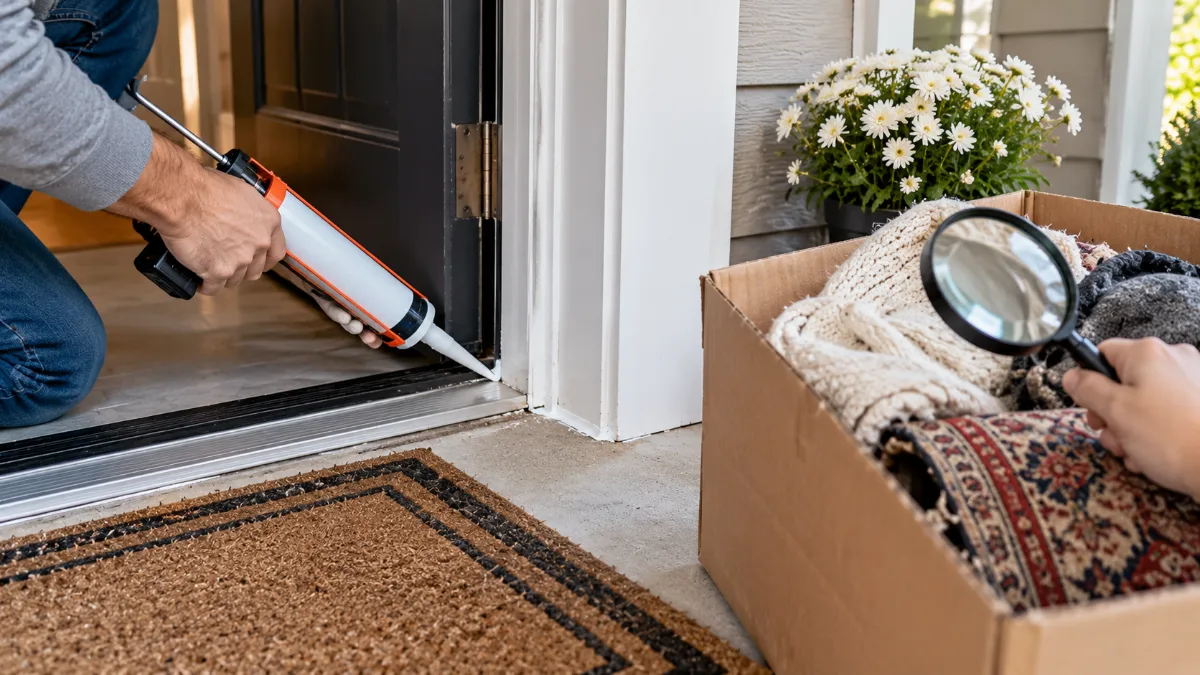
Your final step stops new beetles from arriving.
Repair torn window screens and damaged weatherstripping. Seal gaps around doors, windows, vents, and utility pipes. Keep screenless windows closed from spring through fall, when adults fly most.
Shake out cut flowers outdoors before bringing them inside. Adults favor pollen-rich flowers such as crape myrtle, spiraea, and daisies. Avoid planting these right next to doors and windows.
Inspect second-hand rugs, upholstered furniture, and vintage clothing before they enter your home. Clean or freeze them first. Remove old nests from eaves and chimneys after birds leave, and check local wildlife rules first. Finally, keep a simple routine: vacuum weekly, groom pets often, and store pantry foods in sealed containers.
Natural Remedies: What Works and What Doesn’t
Many online articles promote home remedies with little evidence. This table separates proven methods from weak ones.
| Remedy | Verdict | What You Should Know |
| Hot washing and drying | Works | Kills all life stages |
| Freezing | Works | Requires at least one week at 0°F |
| Diatomaceous earth | Works on contact | Does not affect eggs |
| Baking soda | Weak evidence | No reliable research shows it kills larvae |
| Vinegar | Cleaner only | Useful for wiping shelves; does not reach larvae in fibers |
| Essential oils | Mild repellent | Peppermint, clove, and neem may deter adults; dark oils can stain |
| Sunlight | Unreliable | May help small items; fades natural dyes in wool and silk |
| Cedar | Weak | Loses effect as the oil fades |
Does baking soda kill carpet beetles? Several blogs claim it does, but no solid research supports this. Baking soda may help a vacuum lift debris, but it will not end an infestation. Diatomaceous earth offers a far better powder option.
Also avoid bleach on carpets and natural fabrics. It destroys the very fibers you want to protect.
How to Get Rid of Black Carpet Beetles
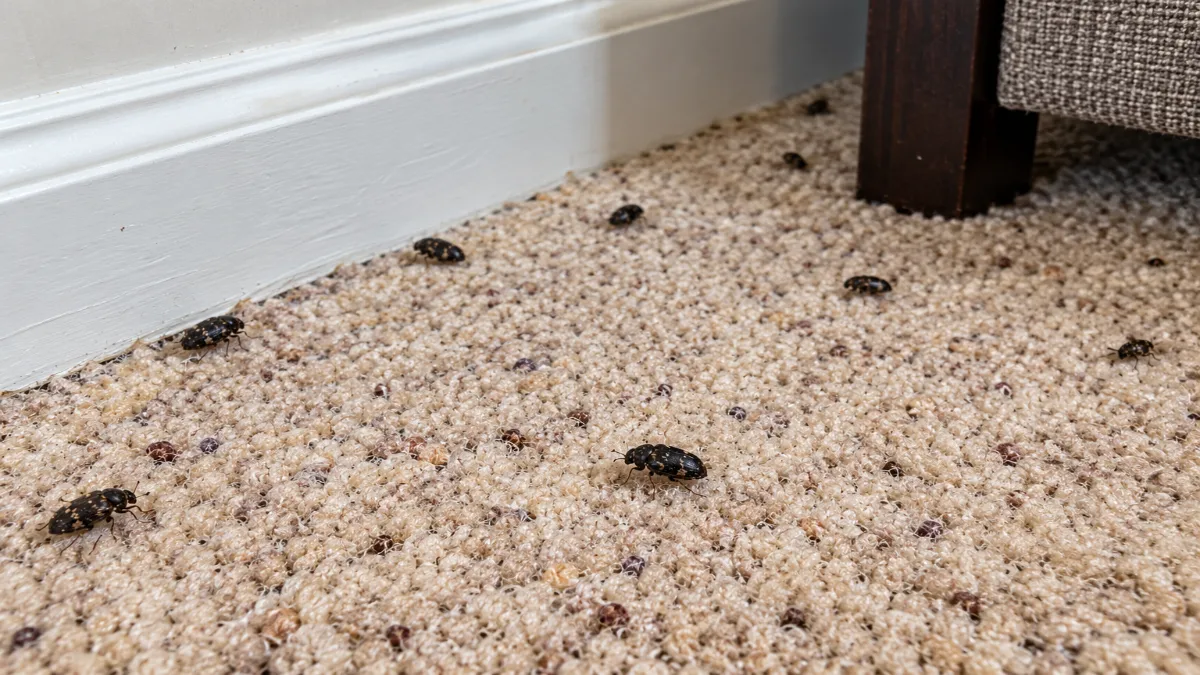
The black carpet beetle needs special attention because it attacks both fabrics and food.
Identify it. Black carpet beetle larvae are reddish brown and carrot-shaped. They can reach about a third of an inch and end in a distinct tuft of long hairs. Adults are oval, dark brown to black, and reach about a quarter inch. This species also lays the most eggs, about 90 per female.
Know its habits. These larvae often feed behind baseboards on lint and hair. They also scavenge dead insects that gather around windows and vents. In dry climates, they damage grains, flour, and cereals more often than fabrics.
Start black carpet beetle treatment in the kitchen:
- Empty your pantry completely.
- Inspect flour, grains, pasta, cereal, spices, pet food, and birdseed.
- Throw out anything with larvae, shed skins, or clumped product.
- Vacuum shelves and cracks. Do not wipe flour spills with soap and water first, because the paste lodges in cracks and feeds larvae.
- Store dry foods in glass or hard plastic containers with tight lids.
After the pantry, apply the fabric methods from tips 1 to 7. Treat baseboards, window frames, and vents with a thin layer of diatomaceous earth.
Carpet Mites and Carpenter Beetles: Are You Treating the Right Pest?
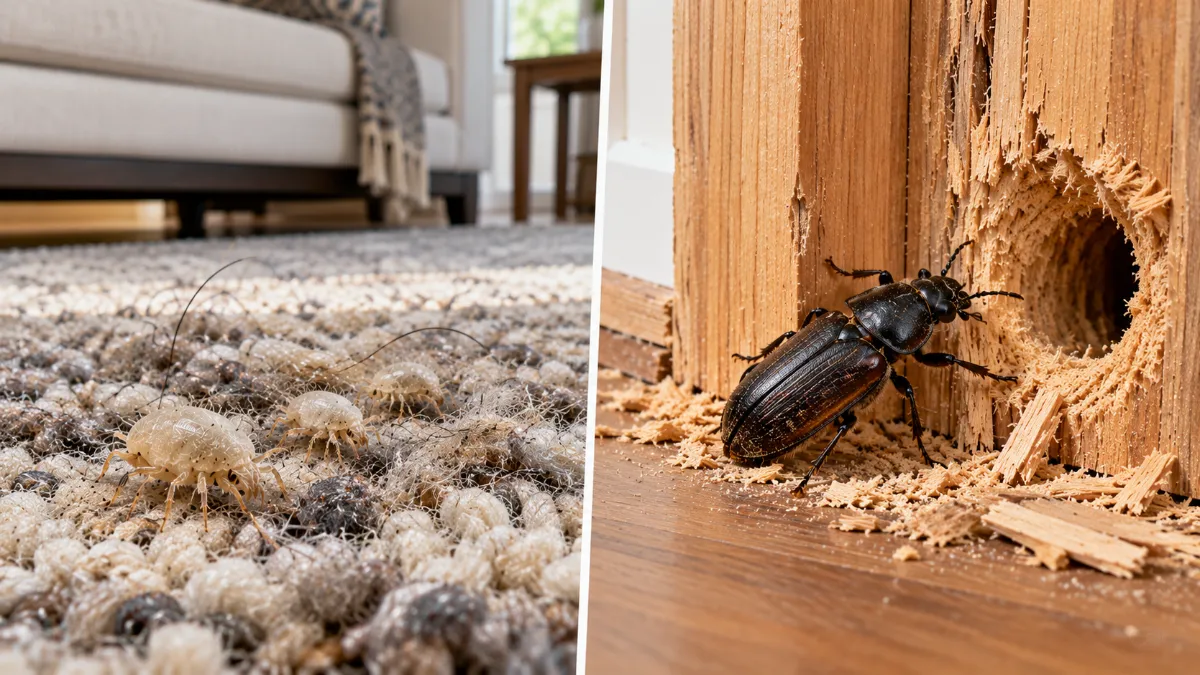
Many searches mix up carpet beetles with other pests. Treating the wrong pest wastes time and money.
Carpet mites. Entomologists do not recognize any household pest named the “carpet mite.” People usually mean one of two things. Some mean dust mites, which are microscopic and invisible without magnification. Others see carpet beetle larvae and mistake them for mites.
If you can see tiny carpet bugs crawling, they are not dust mites. If you want to know how to get rid of carpet mites of the dust mite kind, focus on lowering humidity, washing bedding in hot water, and vacuuming with a HEPA filter.
Carpenter beetles. This name also does not match a common household pest. Most people mean carpenter bees or wood-boring beetles. Carpenter bees tunnel into wood to build nests, and they attack unfinished wood far more than painted or sealed wood.
If you need to know how to get rid of carpenter beetles that bore into wood, start by sealing or painting bare wood and repairing old holes. Carpet beetle treatments will not help.
Your Carpet Beetle Removal Plan
Getting rid of carpet beetles takes patience, not luck. Use this timeline to stay on track.
- Days 1 to 3: Inspect the home, bag infested items, and find the source.
- Week 1: Vacuum deeply. Wash, dry clean, or freeze fabrics. Steam clean carpets.
- Week 2: Apply DE in cracks, spot treat with a labeled insecticide, and set traps.
- Weeks 3 to 8: Vacuum every few days, check traps weekly, and repeat spot treatments if needed.
- Ongoing: Store fabrics in airtight containers, seal entry points, and inspect new items.
Carpet beetles survive by hiding, not by fighting back. Once you remove their food and hiding spots, they lose their advantage. Stay consistent for a few months, and your rugs, clothes, and furniture will stay safe.
Frequently Asked Questions
How long does it take to get rid of carpet beetles?
Most homes need several weeks to a few months. Larvae can live for many months, and missed eggs hatch within about two weeks. Keep monitoring with traps for at least two months after you stop seeing larvae.
Does seeing one carpet beetle mean I have an infestation?
Not always. A few adults in spring may simply fly in from outdoor flowers. Take action if you also find larvae, shed skins, or fabric damage.
Can carpet beetles live in your bed?
They rarely live in beds because they do not feed on people. However, wool blankets, down comforters, and feather pillows can host larvae. If you wake up with bites in rows or clusters, inspect the mattress seams for bed bugs instead.
Is it safe to sleep in a room with carpet beetles?
Yes, for most people. Carpet beetles do not bite or crawl onto people to feed. If you develop an itchy rash, wash your bedding in hot water and vacuum the room to remove loose larval hairs.
Do carpet beetles eat synthetic carpet?
They rarely eat nylon or polyester fibers. However, synthetic carpets trap hair, lint, and food crumbs, which feed larvae. Regular vacuuming removes this food supply.
Can carpet beetles infest a car?
Yes. Leather seats, wool floor mats, pet hair, and food crumbs attract them. Vacuum the seats, mats, and trunk thoroughly, steam clean fabric surfaces, and remove stored clothing or blankets.
Do carpet beetles die in winter?
No. Adults appear mainly in spring and summer and live only a few weeks. Larvae, however, stay active indoors all year because your home stays warm. Damage can continue quietly through the winter months.
What is the fastest way of killing carpet beetles?
Direct heat and cold work fastest on individual items. A hot wash with high-heat drying kills all stages in one cycle. For the whole house, no instant fix exists, so combine the steps above for lasting results.

Noah Williams
Interior Designer & Flooring Expert
Related Posts