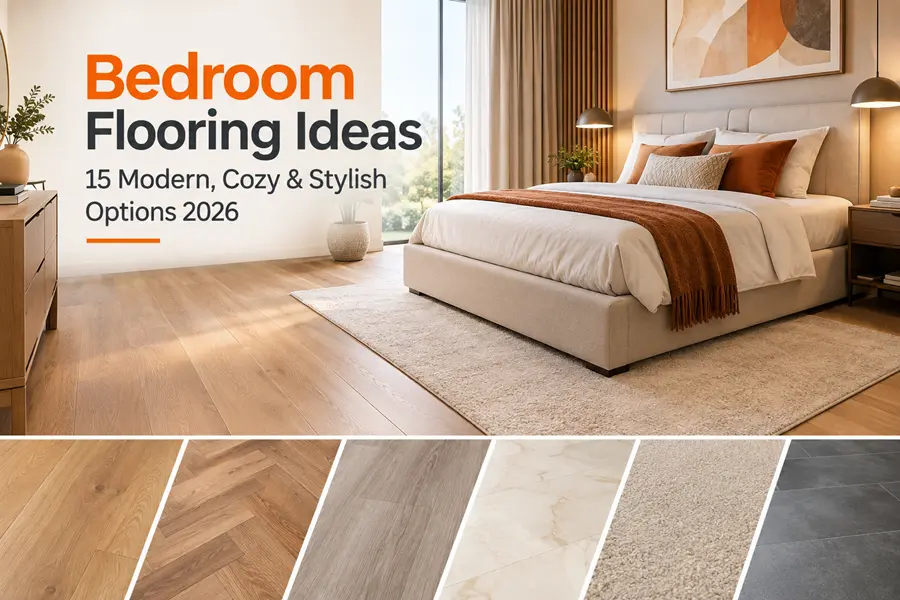
Your bedroom floor is the first thing your feet touch in the morning and the last thing they feel at night. It shapes how warm the room feels, how quiet it stays, and how much time you spend cleaning.
This guide by Nova Floor covers 15 bedroom flooring ideas, from soft carpet to statement herringbone. Each idea explains who it suits, what to watch out for, and how to style it. You’ll also find a comparison table, color and pattern advice, and quick answers to common questions.
Contents
What Is the Best Bedroom Flooring?
The best bedroom flooring depends on what matters most to you:
- For warmth and softness: Choose carpet.
- For long-term value: Choose solid or engineered hardwood.
- For a wood look on a budget: Choose laminate.
- For quiet, waterproof, family-friendly floors: Choose LVT.
- For humid climates or bedrooms with an ensuite: Choose SPC or porcelain tile.
Bedrooms get far less foot traffic than kitchens or hallways. That means you can put comfort and style ahead of heavy-duty toughness.
How to Choose Bedroom Flooring: 6 Things to Check
1. Comfort Underfoot
You often walk barefoot in a bedroom. Carpet and cork feel softest. Vinyl feels a little warmer and softer than laminate or wood. Tile and concrete feel hard and cool.
2. Noise
Hard floors reflect sound, and carpet absorbs it. If your bedroom sits above another room, noise control matters even more. A good acoustic underlay or a large rug makes a big difference with hard floors.
3. Climate and Moisture
Solid wood expands and shrinks as humidity changes. In hot, humid, or heavily air-conditioned homes, engineered wood, SPC, and porcelain tile hold their shape better.
4. Allergies and Cleaning
Hard floors don’t hold dust the way carpet does, and you can wipe them clean in minutes. If you love carpet but have allergies, pick a low-pile style and vacuum often with a HEPA filter.
5. Pets and Kids
Pet claws scratch soft wood and snag loop carpet. Kids spill things. Scratch-resistant laminate and LVT with a thick wear layer handle both well.
6. Budget
Your total cost includes materials, underlay, installation, and subfloor prep. Laminate and vinyl usually cost least. Solid hardwood, parquet, and stone-look tile usually cost most.
Bedroom Flooring Options Compared
| Flooring Type | Feel Underfoot | Noise Control | Moisture Resistance | Cost (Installed) | Best For |
| Carpet | Softest | Excellent | Low | $–$$ ($3–$8/sq ft) | Cozy, cold rooms |
| Solid hardwood | Firm | Fair | Low | $$–$$$ ($9–$20/sq ft) | Long-term value |
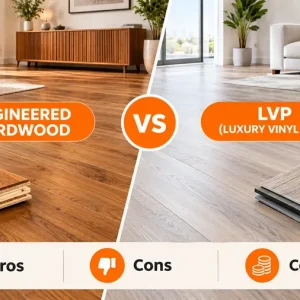
| Engineered hardwood | Firm | Fair | Moderate | $$–$$$ ($6–$15/sq ft) | Most homes, concrete subfloors |
| Laminate Flooring | Firm | Fair (with underlay) | Moderate | $–$$ ($3–$8/sq ft) | Budget wood look |
| LVT Flooring | Slightly soft | Good | High | $–$$ ($4–$10/sq ft) | Families and pets |
| SPC Flooring | Firm | Good (with underlay) | High | $–$$ ($4–$9/sq ft) | Humid climates, ensuites |
| Parquet / herringbone | Firm | Fair | Low–moderate | $$$–$$$$ ($10–$25/sq ft) | Statement floors |
| Cork | Soft, warm | Very good | Moderate (sealed) | $$ ($5–$12/sq ft) | Quiet rooms |
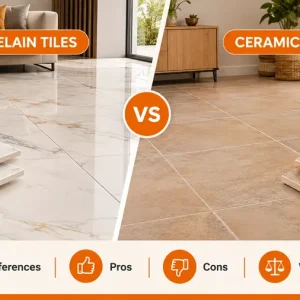
| Porcelain tile | Hard, cool | Poor | Very high | $$–$$$ ($7–$20/sq ft) | Hot climates |
| Microcement | Hard, cool | Poor | High (sealed) | $$$ ($10–$20/sq ft) | Minimal modern rooms |
Cost tiers compare typical installed prices per square foot: $ = under $6, $$ = $6–$12, $$$ = $12–$20, $$$$ = $20+. Local labor rates, product quality, and subfloor prep change your final number.
15 Bedroom Flooring Ideas for 2026
1. Plush Carpet Flooring for the Coziest Bedroom
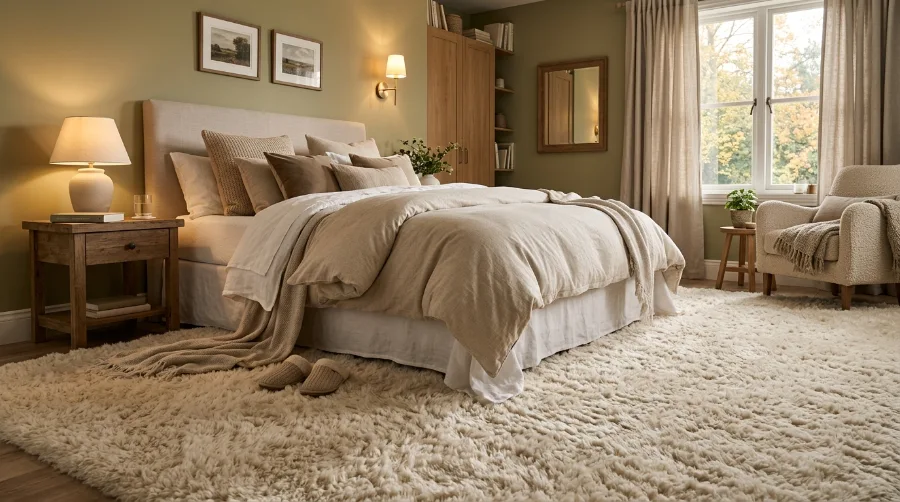
Nothing beats carpet for pure comfort. It feels warm on cold mornings, softens footsteps, and makes a room feel instantly cozy.
Best for: Cold climates, upstairs bedrooms, and light sleepers
Watch out for: Stains, trapped dust, and flattening in walkways
Carpet comes in a few main styles:
- Plush or Saxony: Smooth, soft, and classic, but it shows footprints and vacuum marks.
- Frieze: Twisted, shaggy fibers that hide footprints and feel casual.
- Berber (loop pile): Tough and low-profile, but pet claws can snag the loops.
Pro tip: Don’t skimp on the pad. A quality carpet pad adds comfort and helps the carpet last longer. For better indoor air, look for carpet that carries the CRI Green Label Plus certification for low emissions.
2. Solid Hardwood Flooring for Timeless Value
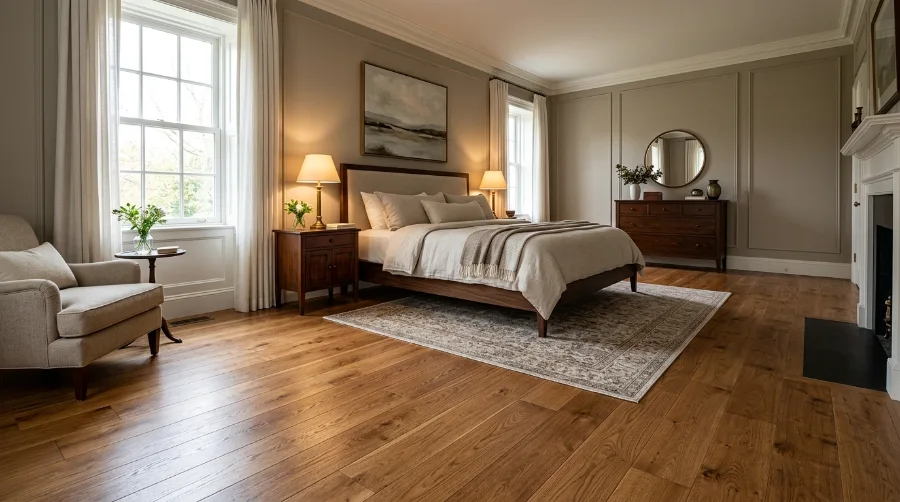
Solid hardwood flooring uses one piece of real wood per board. Oak, maple, and walnut rank among the most popular choices. It suits almost any style, from traditional to modern farmhouse.
Best for: Homeowners who plan to stay long-term and care about resale appeal
Watch out for: Scratches, dents, and movement with humidity
The biggest advantage is lifespan. You can sand and refinish solid hardwood several times, so one floor can last for generations.
The main drawback is moisture. Wood swells in damp weather and shrinks in dry weather, which can cause gaps or cupping. Most wood flooring makers ask you to keep indoor humidity within a steady range, often between 30% and 50%. Solid hardwood also isn’t the best match for concrete slabs.
Pro tip: Red oak gives a warm, traditional tone. White oak gives a cooler, more modern look and takes light stains well.
3. Wide-Plank Engineered Hardwood for Modern Bedrooms
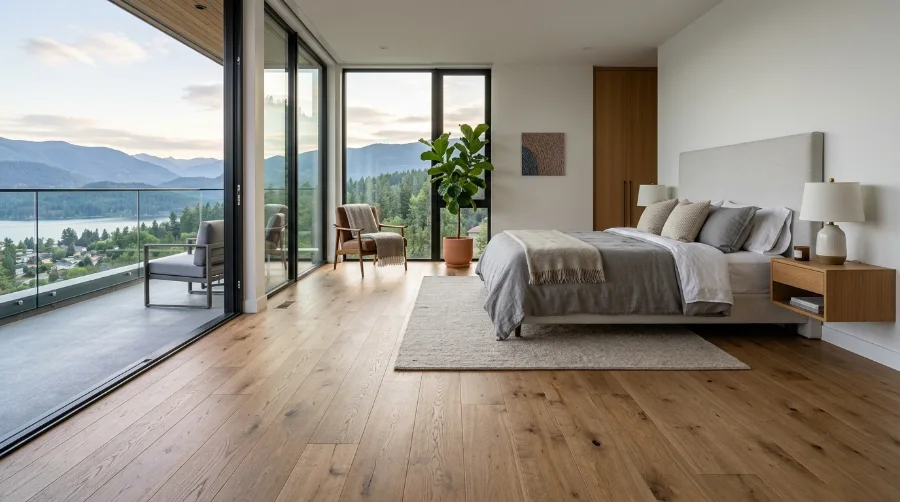
Engineered hardwood puts a real wood top layer over a plywood or fiberboard core. It looks and feels like solid wood but handles humidity changes much better.
Best for: Modern bedrooms, concrete subfloors, and homes with underfloor heating
Watch out for: Thin wear layers that limit refinishing
Wide planks, around 180 mm (7 inches) or wider, create a calm, modern look. Fewer seams make the room feel larger and more open.
Pro tip: Check the wear layer thickness before you buy. A thicker top layer (around 3 mm or more) usually lets you sand the floor at least once. A very thin layer may not allow any sanding.
4. Light Wood Flooring for Bright, Airy Bedrooms
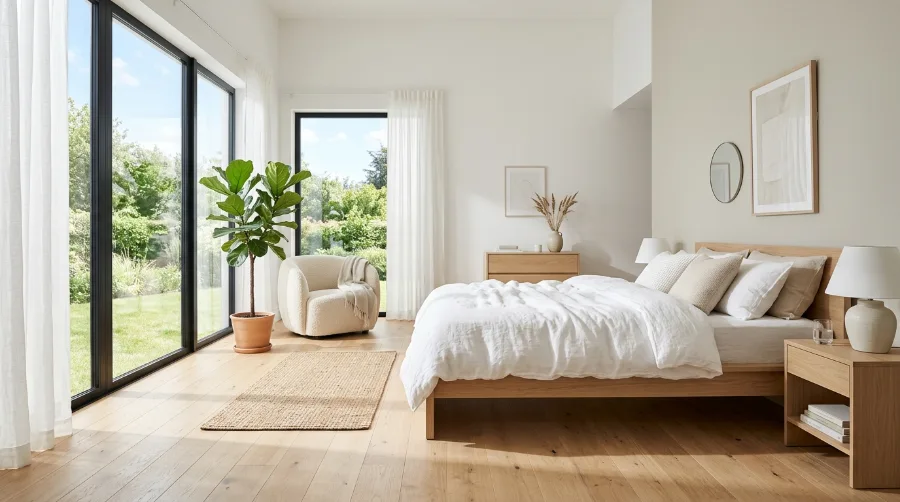
Light wood flooring includes white oak, ash, maple, and whitewashed finishes. These pale tones bounce light around the room and make small bedrooms feel bigger.
Best for: Small bedrooms, north-facing rooms, and Scandinavian, Japandi, or coastal styles
Watch out for: Dark dirt and some finishes that turn yellow over time
Light floors hide dust and pet hair better than dark floors. They also pair easily with white walls, linen bedding, and natural textures.
Pro tip: Ask for a water-based or low-yellowing finish. Some oil-based finishes give pale wood an amber tint as they age.
5. Dark Wood Flooring for a Luxury Bedroom Look
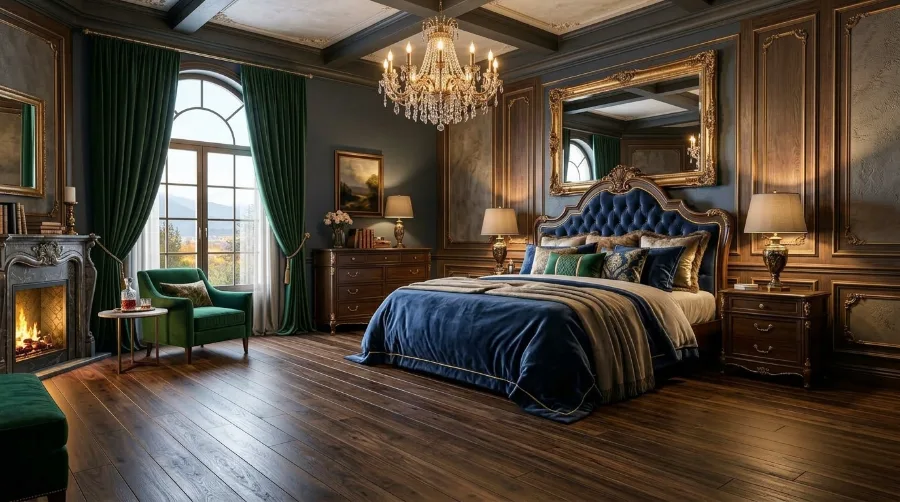
Dark wood flooring, such as walnut, smoked oak, or espresso stains, adds drama and depth. It creates a rich, hotel-style feel, especially with crisp white bedding.
Best for: Large bedrooms with plenty of natural light
Watch out for: Visible dust, scratches, and footprints
Dark floors can make a small or dim room feel smaller. They shine in spacious rooms where the contrast has space to breathe.
Pro tip: Choose a matte or satin finish instead of high gloss. Lower sheen hides scratches and dust much better. Balance the dark floor with light walls and a large, light-toned rug.
6. Natural Wood Flooring With a Matte, Oiled Finish
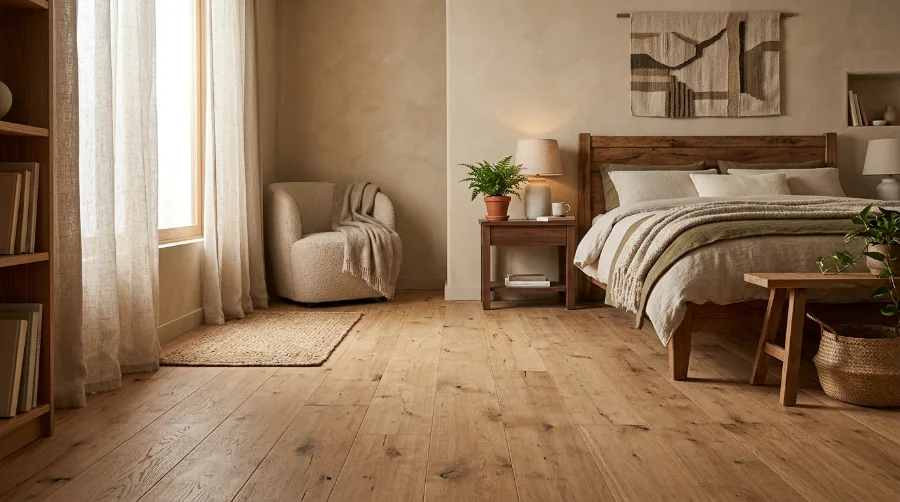
This idea skips the stain. Natural wood flooring with a hardwax oil finish shows the wood’s true color, grain, and knots. It feels soft and organic under bare feet.
Best for: Japandi, rustic, and nature-inspired bedrooms
Watch out for: Regular upkeep and lower water resistance than lacquered floors
Oiled floors have one big practical perk. You can spot-repair a scratch without refinishing the whole room. However, you’ll need to re-oil the floor every few years, depending on wear.
Pro tip: Pick your wood grade carefully. Rustic or character grades with knots hide daily wear. Select grades look cleaner but show marks more easily.
7. Laminate Flooring for a Budget-Friendly Wood Look
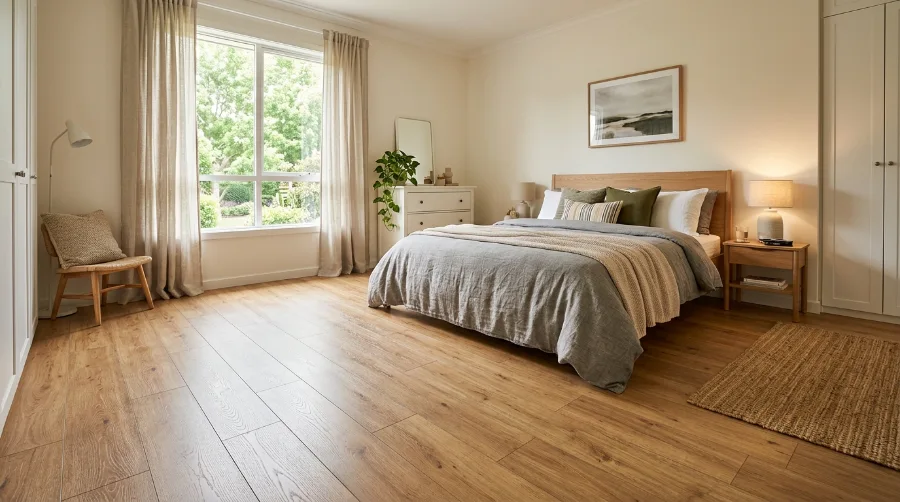
Laminate flooring stacks a clear wear layer, a printed image layer, and a dense fiberboard core. Modern laminate copies wood texture closely, including grain you can feel.
Best for: Tight budgets, rentals, and busy households
Watch out for: Hollow, clicky footsteps and water damage on basic versions
Laminate resists scratches well, which helps with pets and kids. Check the AC rating, which measures surface toughness. AC3 suits most bedrooms, and AC4 handles heavier wear.
You can’t sand or refinish laminate. If a board gets damaged, you replace it.
Pro tip: Invest in a good acoustic underlay. It softens the hollow sound and makes laminate feel more solid, which matters in upstairs bedrooms.
8. LVT Flooring for Quiet, Low-Maintenance Comfort
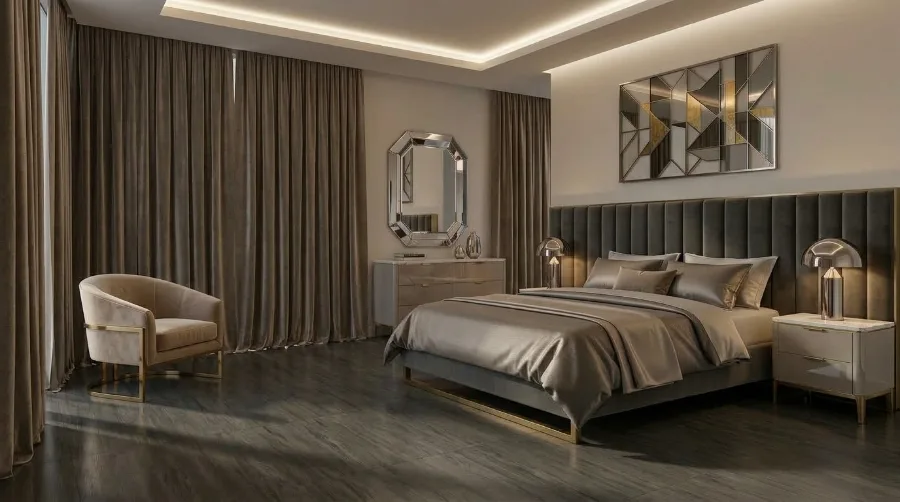
LVT flooring stands for luxury vinyl tile. Plank versions often go by LVP. This vinyl flooring layers a protective wear layer over a printed design and a flexible vinyl core.
Best for: Families, pet owners, and anyone who wants easy cleaning
Watch out for: Dents from heavy furniture and fading in strong sunlight
LVT feels softer and warmer than tile or laminate. It also stays quieter underfoot and resists water completely. You’ll find wood-look and stone-look styles in almost every color.
Pro tip: Compare wear layers, measured in mils. A 12 mil layer works well for most bedrooms. Choose 20 mil if you have large dogs or active kids. Pick a product with UV protection if your bed sits near big windows.
9. SPC Flooring for Humid Climates and Ensuite Bedrooms
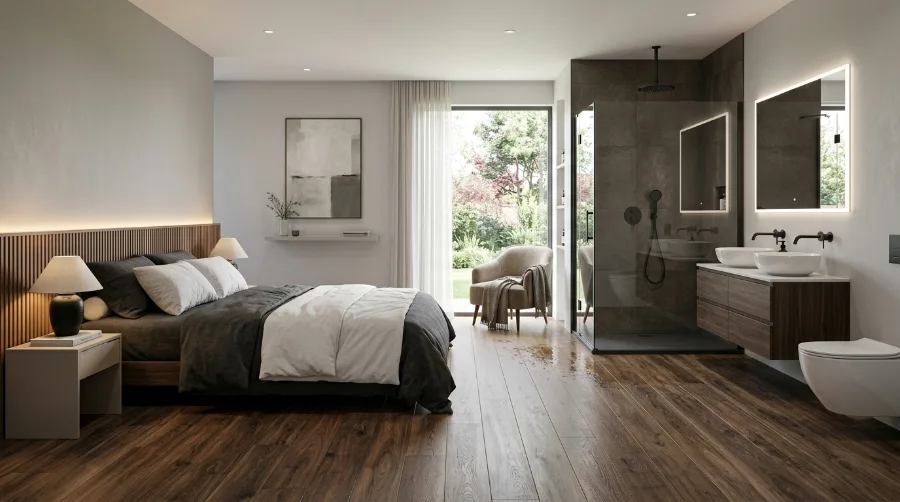
SPC flooring stands for stone plastic composite. It uses a rigid core of limestone powder and PVC, so it barely moves with heat, cold, or humidity.
Best for: Hot and humid regions, rooms with large sunny windows, and bedrooms that connect to a bathroom
Watch out for: A firmer, cooler feel than flexible vinyl
SPC’s waterproof core lets you run the same floor from your bedroom into your ensuite. That creates one smooth, seamless look.
It feels harder than LVT, so choose a product with an attached underlay. That layer adds comfort and cuts noise.
Pro tip: SPC’s rigid planks bridge small dips in the subfloor better than flexible vinyl. You still need a fairly flat base, so check the maker’s flatness requirements.
10. Parquet Flooring for Classic Character
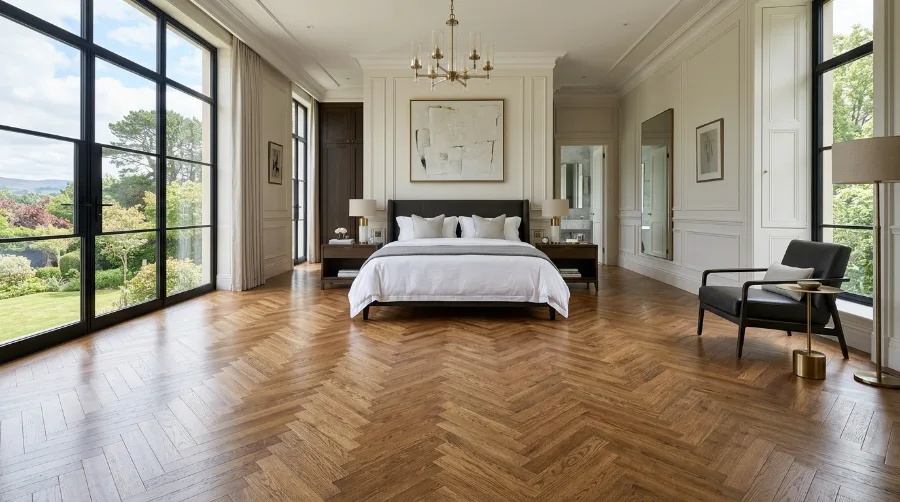
Parquet flooring arranges small wood blocks into geometric patterns. Popular styles include simple block, basket weave, and ornate Versailles panels.
Best for: Traditional, Parisian, and heritage-style bedrooms
Watch out for: Higher labor costs and trickier repairs
Parquet adds instant character and craftsmanship. You can find it in solid wood, engineered wood, and even wood-look vinyl for a lower price.
Pro tip: Match the pattern to the room size. Simple block parquet suits small bedrooms. Save large Versailles panels for big rooms where the full pattern can show.
11. Herringbone Flooring for a Stylish Statement
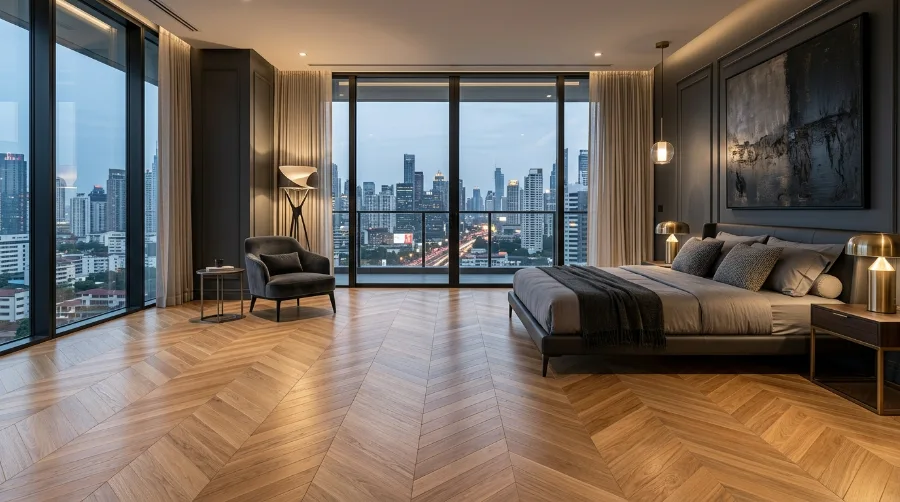
Herringbone flooring sets rectangular planks in a staggered zigzag. Chevron looks similar but cuts the plank ends at an angle, creating a continuous “V” shape.
Best for: Stylish bedrooms that need a focal point without extra decor
Watch out for: More material waste and longer installation time
Herringbone adds movement and elegance. It works in both classic and modern bedrooms. You can buy it in engineered hardwood, laminate, LVT, and SPC.
Pro tip: Point the pattern along the longest wall or toward the main window. This draws the eye through the room and makes it feel longer. Plan for extra material, since patterned layouts create more offcuts than straight planks.
12. Layered Area Rugs Over Hard Floors
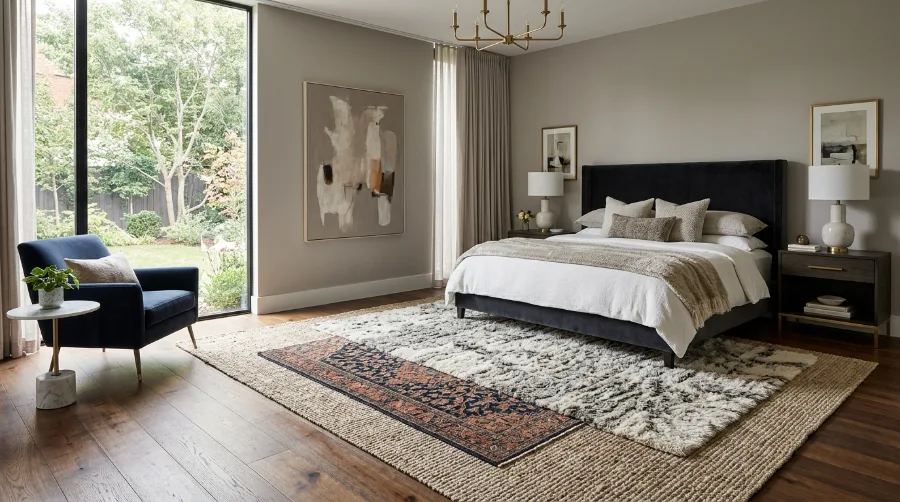
Area rugs give you the easy cleaning of hard floors plus the softness of carpet. You can also swap them out when you want a new look.
Best for: Anyone who wants both style and comfort, or renters who can’t change the floor
Watch out for: Rugs that look too small or slide around
Size matters most. Use these common guides:
- Queen bed: 8 × 10 ft (about 240 × 300 cm)
- King bed: 9 × 12 ft (about 275 × 365 cm)
- Twin or single bed: 5 × 8 ft (about 150 × 240 cm)
Aim for the rug to extend about 45–60 cm (18–24 inches) past each side of the bed. That way your feet land on something soft.
Pro tip: Always use a rug pad. It stops slipping, protects the floor, and adds extra sound control. Wool feels soft and lasts long. Jute adds texture but feels rougher on bare feet.
13. Cork Flooring for a Soft, Quiet, Eco-Friendly Floor
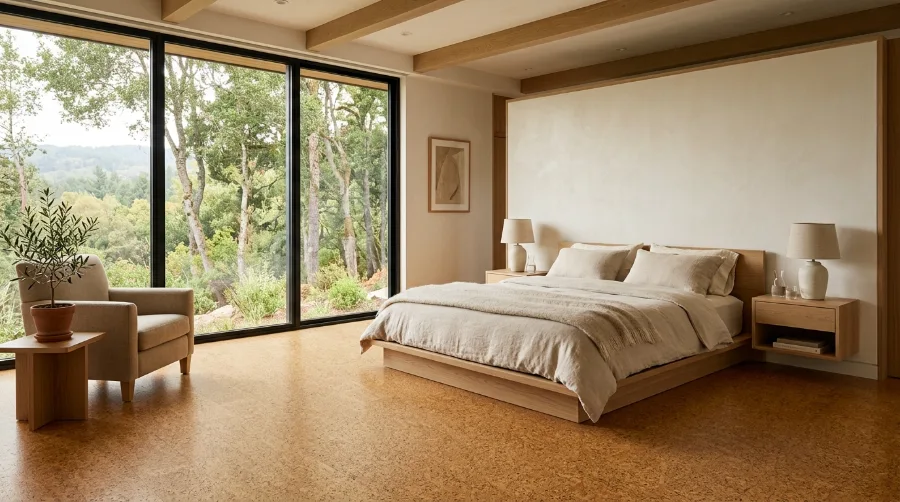
Cork comes from tree bark that grows back after harvest, so producers don’t cut down the tree. It feels cushioned and warm and absorbs sound very well.
Best for: Light sleepers, nurseries, and eco-conscious homes
Watch out for: Dents from furniture legs, fading in direct sun, and pet claw scratches
Cork’s natural texture adds warmth to modern and rustic rooms alike. It needs a good sealant to resist moisture and wear.
Pro tip: Choose click-together cork planks with a protective wear layer. They install more easily and hold up better than older glue-down cork tiles.
14. Wood-Look Porcelain Tile for Hot Climates
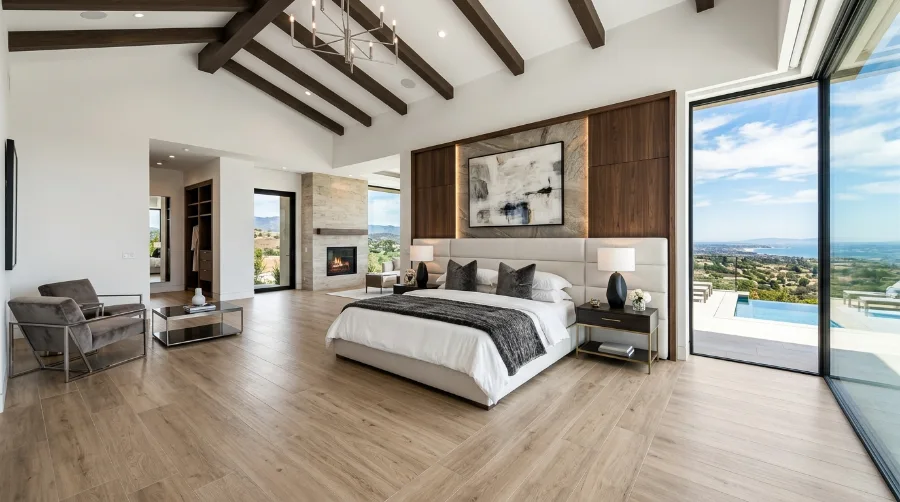
Wood-look porcelain tile gives you the grain of wood with the toughness of tile. It stays cool, which makes it a smart pick in hot regions.
Best for: Hot climates, homes that run AC often, and allergy sufferers
Watch out for: Hard, cold floors in winter, echo, and grout lines
Porcelain resists water, stains, and scratches. It also works very well with underfloor heating, which solves the cold-floor problem.
Pro tip: For long plank tiles, ask your installer to limit the offset to one-third of the tile length. A 50% offset can cause uneven edges on long tiles. Choose rectified tiles and grout in a matching color for a more natural wood look.
15. Microcement Flooring for Minimal Modern Bedrooms
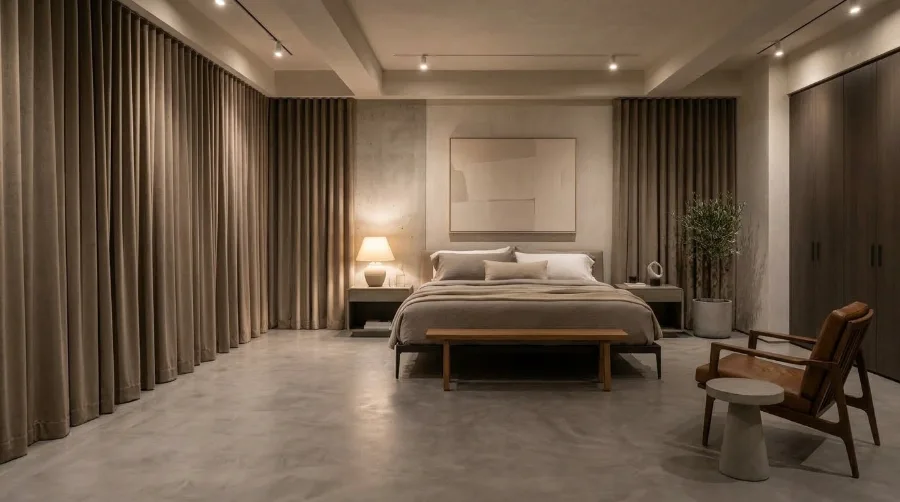
Microcement is a thin cement-based coating, just a few millimeters thick. Installers trowel it over existing floors to create a smooth, seamless surface with no grout lines.
Best for: Minimalist, industrial, and modern bedrooms
Watch out for: A hard, cool feel and hairline cracks if the base moves
Microcement gives a calm, gallery-like look. It pairs well with underfloor heating and can flow into a bathroom without any breaks.
Pro tip: Hire an experienced installer, since results depend heavily on skill. Warm up the look with a thick wool rug, wood furniture, and soft lighting.
Bedroom Flooring Colors: How to Pick the Right Shade
Flooring colors set the mood before you add a single piece of furniture. Here’s how each color family works:
- Light tones (blonde, white oak, whitewash): Make rooms feel open and bright. Great for small or dim bedrooms.
- Mid-tones (honey, natural oak): Hide dust, lint, and small scratches best. The most forgiving choice for daily life.
- Dark tones (walnut, espresso): Feel cozy and luxurious. Best in large, bright rooms.
- Gray and greige: Suit cool, modern palettes. Greige blends gray and beige, so it works with both warm and cool decor.
Match the Undertone
Every floor has a warm (yellow, orange, red) or cool (gray, blue) undertone. Match it to your walls and bedding. Warm floors suit cream and terracotta. Cool floors suit white, blue, and charcoal.
Contrast Your Furniture
Avoid picking a floor that almost matches your wood furniture. Near-matches look like a mistake. Go clearly lighter or darker instead.
Test Samples at Home
Place large samples on the floor, not against a wall. Check them in morning light, afternoon light, and lamplight over a few days. Colors can shift a lot between showroom lighting and your bedroom.
Flooring Patterns for Bedrooms
Flooring patterns change how big, calm, or dramatic a bedroom feels.
| Pattern | Look | Best For | Extra Material Needed |
| Straight lay | Clean and simple | Any bedroom | Low |
| Diagonal lay | Adds movement | Small or square rooms | Moderate |
| Random-width planks | Rustic and natural | Farmhouse and large rooms | Low–moderate |
| Herringbone | Elegant and classic | Statement bedrooms | High |
| Chevron | Bold and modern | Larger rooms | High |
| Parquet blocks | Detailed and traditional | Heritage-style rooms | High |
Which Way Should Planks Run?
Run planks parallel to the longest wall to make the room look longer. Or run them toward the main window, since light along the boards hides seams. With solid hardwood nailed to a wooden subfloor, installers usually lay boards across the floor joists for strength.
Best Bedroom Flooring for Your Situation
| Your Situation | Best Choice | Why It Works |
| Small bedroom | Light wood or light wood-look LVT, wide planks | Reflects light and reduces visual clutter |
| Kids’ bedroom | LVT or low-pile carpet | Handles spills and softens falls |
| Allergies | Hardwood, LVT, or tile with washable rugs | Doesn’t trap dust |
| Pets | LVT (20 mil wear layer) or laminate | Resists scratches and accidents |
| Upstairs or apartment | Carpet, cork, or LVT with acoustic underlay | Reduces noise below |
| Hot or humid climate | SPC or porcelain tile | Holds its shape and stays cool |
| Cold climate | Carpet, cork, or engineered wood with underfloor heating | Feels warm underfoot |
| Tight budget | Laminate or vinyl flooring | Low cost with a wood look |
| Luxury bedroom | Wide-plank engineered oak or herringbone | Rich look with lasting value |
| Bedroom with ensuite | SPC, LVT, or porcelain tile | Runs seamlessly into the bathroom |
Practical Tips Before You Buy and Install
- Live with samples first. Keep large samples in the room for three to seven days before you decide.
- Check the subfloor. It needs to be flat, clean, and dry. Test concrete slabs for moisture before installing any wood product.
- Let materials acclimate. Wood and laminate often need to sit in the room for a set time before installation. Follow the maker’s instructions.
- Leave expansion gaps. Floating floors need a small gap at the walls. Baseboards cover it.
- Choose the right underlay. Acoustic underlay cuts noise. Many apartment buildings have sound rules, so check yours.
- Confirm underfloor heating limits. Many wood and vinyl products set a maximum surface temperature, often around 27°C (81°F). Check the warranty.
- Look for indoor air labels. FloorScore covers hard surface flooring. CRI Green Label Plus covers carpet.
- Order extra material. Add about 10% for straight layouts and more for herringbone or chevron. Keep leftovers for future repairs.
- Check door clearance. Thick carpet and pad can stop doors from opening. Plan to trim doors if needed.
- Protect your new floor. Put felt pads under bed legs, nightstands, and dressers.
Common Bedroom Flooring Mistakes to Avoid
- Choosing looks only. A glossy dark floor may look stunning in photos but show every speck of dust.
- Skipping the underlay. Laminate and SPC without good underlay can sound loud and hollow.
- Buying a rug that’s too small. A tiny rug makes the bed look like it’s floating in empty space.
- Using solid hardwood in humid rooms. It can gap, cup, or warp.
- Ignoring the rest of the house. Bedroom flooring doesn’t need to match the hallway, but it should coordinate in tone.
- Picking colors from a screen. Always test physical samples in your own light.
Frequently Asked Questions
What is the most popular bedroom flooring?
Carpet and wood-look floors top the list. Carpet wins for comfort, while hardwood, engineered wood, and LVT win for easy cleaning and style.
Is carpet or hardwood better for a bedroom?
Carpet feels warmer, softer, and quieter. Hardwood lasts longer, cleans more easily, and adds resale appeal. Many people choose hardwood with a large area rug to get both benefits.
What is the difference between LVT and SPC flooring?
Both are waterproof vinyl flooring. LVT has a flexible core that feels softer and quieter. SPC has a rigid stone-based core that stays more stable in heat, sunlight, and humidity but feels firmer.
Is laminate flooring good for bedrooms?
Yes. Laminate works well in bedrooms because foot traffic stays light. It resists scratches and costs less than wood. Use an acoustic underlay to reduce hollow sounds.
What flooring makes a small bedroom look bigger?
Light wood flooring in wide planks makes small rooms look larger. Run the planks along the longest wall, and keep the same floor into nearby closets.
What is the quietest bedroom flooring?
Carpet with a quality pad is the quietest. Cork comes second. For hard floors, LVT with an acoustic underlay offers the best sound control.
Can I use herringbone flooring in a small bedroom?
Yes. Choose smaller planks and a light or mid-tone color. The pattern adds interest without making the room feel crowded.
What is the most luxurious bedroom flooring?
Wide-plank engineered oak, herringbone or parquet hardwood, and natural stone-look finishes feel the most luxurious. Pair them with a large wool rug for comfort.
Does bedroom flooring need to match the rest of the house?
No, it doesn’t have to match. However, choose tones and undertones that flow well with nearby hallways and rooms.
Final Thoughts
The best bedroom flooring balances comfort, climate, cleaning, and cost. Carpet and cork give you softness and quiet. Hardwood and engineered wood give you lasting beauty. Laminate, LVT, and SPC give you a wood look with less upkeep. Parquet and herringbone turn the floor itself into a design feature.
Start with how you use your bedroom every day. Then test real samples in your own light. The right choice will feel good under your feet for years.