
A bathroom is a small room, but it holds a lot. Water lines, drains, wiring, tile and heavy fixtures all fit into a few square feet. That is why a remodel can feel hard to plan.
This bathroom remodel guide shows you how to remodel a bathroom from start to finish. You will learn the correct order of work. You will see real costs in US dollars and UAE dirhams, and how long each type of project takes. You will also get 15 budget-friendly ideas, DIY tips and advice for an old house bathroom remodel.
Do you want to redo a bathroom with paint and new fixtures? Or do you plan to strip it to the studs? Either way, start here.
Contents
How Do You Remodel a Bathroom?
First, set your budget and scope. Then plan the layout, order materials and get permits. Next, remove the old bathroom, update the plumbing and wiring, and waterproof the shower. Finally, install tile, fixtures and finishing touches. Most remodels cost $6,000 to $25,000 (AED 22,000 to 91,800) and take 2 to 8 weeks of work.
Key Takeaways
- Plan for surprises. Keep an extra 15–20% of your budget for problems you find behind the walls.
- Follow the right order. Plumbing and wiring go in before the walls close. Waterproofing goes on before any tile.
- Keep the layout. If the toilet, sink and shower stay in their current spots, you can save thousands on plumbing.
- A renovated bathroom pays you back. A midrange bathroom remodel recoups about 80% of its cost at resale, according to the 2025 Cost vs. Value Report.
- Old houses need extra care. Test for lead and asbestos before you start demolition.
Cosmetic Refresh, Mid-Range Remodel or Full Gut? Pick Your Scope First
Your scope is the size of the job. It is the first decision you make, and it shapes your budget, your timeline and how much you can do yourself. There are three main types of bathroom remodel.
| Scope | What Changes | Typical Cost (USD) | Typical Cost (AED) | Time | DIY-Friendly? |
| Cosmetic refresh | Paint, faucet, lights, mirror, hardware, regrouting, maybe new flooring | $2,500 – $10,000 | AED 9,200 – 36,700 | 2 days – 2 weeks | Yes, mostly |
| Mid-range remodel | New tile, vanity, toilet, tub or shower in the same layout | $10,000 – $30,000 | AED 36,700 – 110,200 | 3 – 6 weeks | Partly: demolition, painting, simple installs |
| Full gut remodel | Everything removed to the studs; fixtures or walls may move | $25,000 – $45,000+ | AED 91,800 – 165,300+ | 6 – 12 weeks | Rarely: needs licensed trades |
Costs are 2026 US national averages for professional work. Large cities cost more. AED figures use the fixed rate of 1 USD = 3.6725 AED.
A high-end job can cost much more. An upscale bathroom remodel averages about $81,600 (AED 299,700), according to the 2025 Cost vs. Value Report.
How to choose your scope:
- Choose a cosmetic refresh if the room works well and has no leaks, but looks dated. This is the cheapest way to redo a bathroom.
- Choose a mid-range remodel if the tile, tub or vanity is worn out but the layout suits you. This option gives the best value for most homes.
- Choose a full gut remodel if you see signs of water damage, have old pipes, or want a new layout. Many old houses fall into this group.
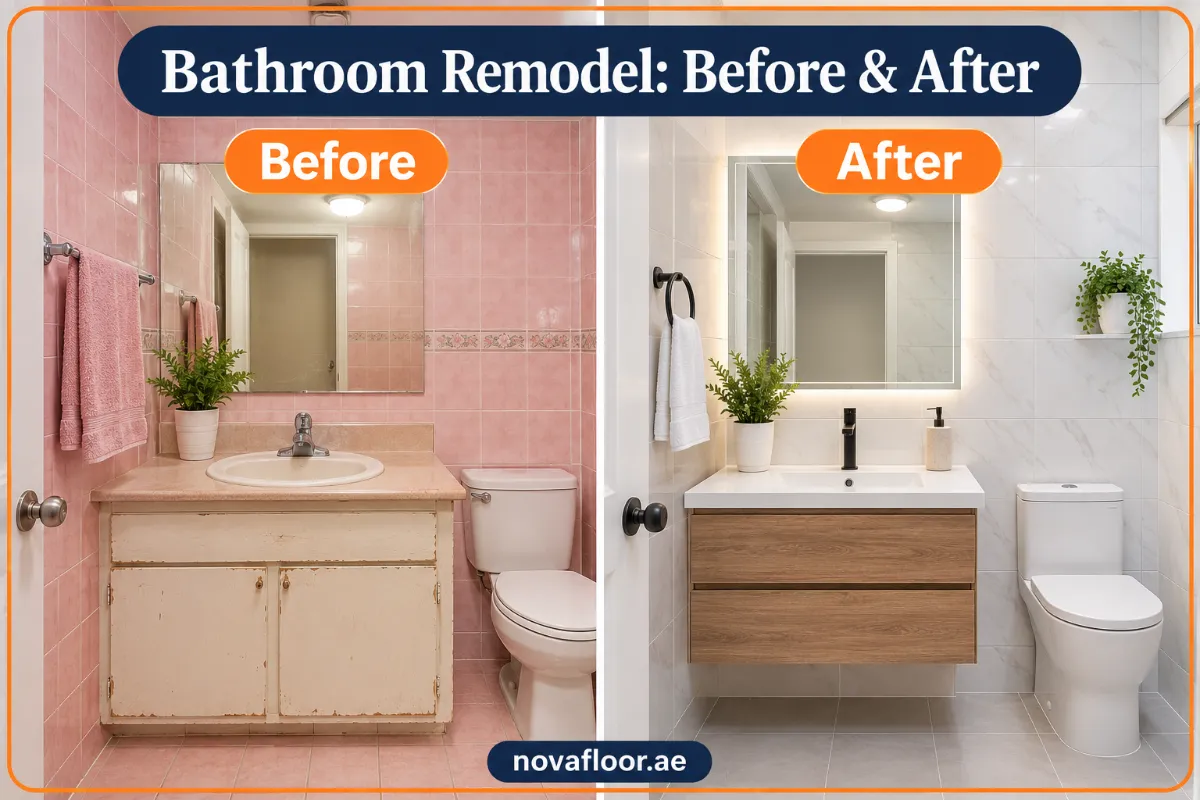
Expert Tip: Press on the floor near the toilet and the tub. Does it feel soft or springy? That often means water has rotted the subfloor. Plan for at least a mid-range remodel, because paint and new fixtures will not fix rot.
Bathroom Remodel vs. Renovation: What’s the Difference?
People often use the two words to mean the same thing, but there is a small difference. A renovation updates what is already there, such as new paint, a new vanity or new tile in the same layout. A remodel changes the form of the room, such as moving the toilet, swapping a tub for a walk-in shower or taking down a wall.
The difference matters for your budget. Changing the form of the room costs more and often needs a permit.
How Much Does It Cost to Remodel a Bathroom in 2027?
Most homeowners in the US spend between $6,000 and $25,000 (AED 22,000 to 91,800) to remodel a bathroom. Angi’s 2026 data puts the national average at about $12,100 (AED 44,500). Expect 2027 prices to run a little higher, because plumbers, electricians and tile setters are in short supply.
Your final price depends on four things: the size of the room, your scope, the materials you pick and local labor rates.
Cost by Bathroom Type and Size
| Bathroom Type | Typical Size | Cost (USD) | Cost (AED) |
| Half bath or powder room | 18 – 32 sq ft | $1,200 – $15,000 | AED 4,400 – 55,100 |
| Guest or hall bathroom | 35 – 50 sq ft | $3,500 – $20,000 | AED 12,900 – 73,500 |
| Primary bathroom | 100+ sq ft | $7,000 – $30,000 | AED 25,700 – 110,200 |
| Luxury primary suite | 150+ sq ft | $50,000 – $80,000+ | AED 183,600 – 293,800+ |
Cost per Square Foot
Most bathroom remodels cost $70 to $400 per square foot. The average is about $120 per square foot (AED 441). To use these numbers, first measure your bathroom floor area.
| Finish Level | Cost per Sq Ft (USD) | Cost per Sq Ft (AED) |
| Budget (cosmetic) | $70 – $120 | AED 257 – 441 |
| Mid-range | $120 – $280 | AED 441 – 1,028 |
| High-end | $250 – $400+ | AED 918 – 1,469+ |
Small bathrooms often cost more per square foot than large ones. The reason is simple. The plumber, electrician and tile setter charge a minimum fee, whether the room is 30 or 100 square feet.
Bathroom Remodel Cost Breakdown by Item
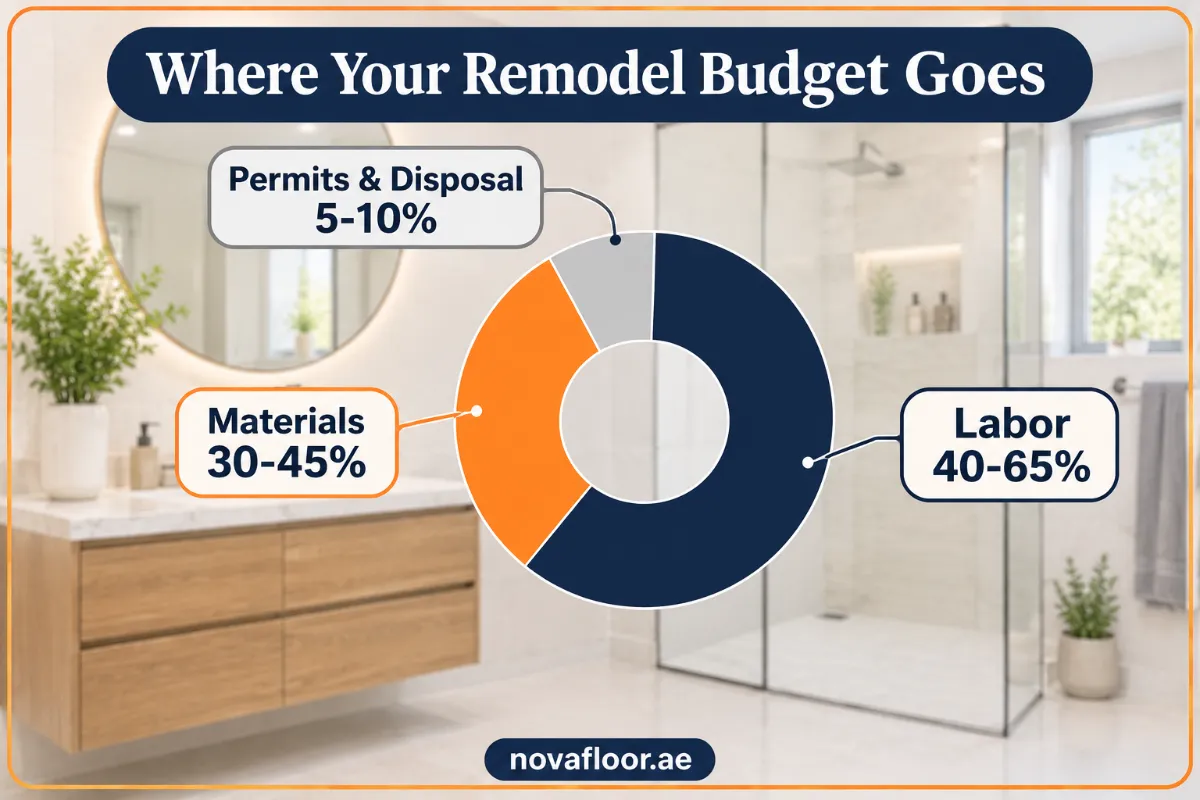
Labor is the biggest cost. It usually takes 40% to 65% of the total budget. Materials take most of the rest, and permits and disposal take about 5% to 10%.
| Item | Typical Installed Cost (USD) | Typical Installed Cost (AED) |
| Demolition and disposal | $650 – $2,500 | AED 2,400 – 9,200 |
| Plumbing rough-in (same layout) | $3,000 – $8,000 | AED 11,000 – 29,400 |
| Electrical updates (GFCI outlets, new circuit) | $300 – $2,000 | AED 1,100 – 7,300 |
| Exhaust fan | $250 – $800 | AED 900 – 2,900 |
| Tile installation labor | $2,500 – $6,000 | AED 9,200 – 22,000 |
| Shower or tub replacement | $1,500 – $8,000+ | AED 5,500 – 29,400+ |
| Vanity with top (stock) | $630 – $3,200 | AED 2,300 – 11,800 |
| Toilet | $250 – $1,000 | AED 900 – 3,700 |
| Lighting | $120 – $1,700 | AED 450 – 6,200 |
| Painting | $300 – $1,200 | AED 1,100 – 4,400 |
| Permits | $0 – $2,500 | AED 0 – 9,200 |
Costs are 2026 US averages. AED figures use the fixed rate of 1 USD = 3.6725 AED.
Hidden Costs to Plan For
About one in three remodels goes over budget. Most surprises appear after the old tile comes off. Set aside 15% to 20% of your budget for these costs:
- Water damage and rot: Leaks can rot the subfloor, wall studs or floor joists. Repairs can add $500 to $5,000 or more.
- Mold removal: Mold behind a shower wall must be removed before new walls go up.
- Lead and asbestos testing: A DIY asbestos kit costs $30 to $80. A professional inspection costs $300 to $850. A lead paint inspection costs about $250 to $700.
- Old wiring and pipes: Many inspectors require you to bring old systems up to code once the walls are open.
- Wall changes: Removing a load-bearing wall can cost $1,200 to $10,000. It also needs a permit and a structural expert.
- Product delays: A late shower door or vanity can keep your crew waiting, and some crews charge for return trips.
Does a Renovated Bathroom Add Value to Your Home?
Yes. A renovated bathroom is one of the better-paying interior projects. A midrange bathroom remodel recoups about 80% of its cost at resale. That is its highest return since 2007, according to the 2025 Cost vs. Value Report.
| Project (2025 Cost vs. Value) | Average Cost | Value Added at Resale | Cost Recouped |
| Midrange bath remodel | $26,138 (AED 96,000) | $20,915 (AED 76,800) | 80% |
| Universal design bath remodel | $42,183 (AED 154,900) | $25,812 (AED 94,800) | 61% |
| Upscale bath remodel | $81,612 (AED 299,700) | $34,000 (AED 124,900) | 42% |
The lesson is clear. Midrange finishes pay back the most. Luxury upgrades bring joy, but they rarely pay for themselves when you sell.
How Long Does a Bathroom Remodel Take?
Most remodels take a few days to 12 weeks of work, depending on the scope (see the scope table above). Add 2 to 8 weeks before work starts for planning, permits and ordering materials.
DIY projects take longer. Most DIYers work on weekends, so a 4-week pro job can stretch to 2 or 3 months.
Bathroom Remodel Timeline by Stage
| Stage | Typical Time | What Can Slow It Down |
| Planning and design | 1 – 4 weeks | Changing your mind on the layout |
| Permits and approvals | 1 – 4 weeks | Busy local building office |
| Ordering materials | 2 – 8 weeks | Custom vanities, special-order tile |
| Demolition | 1 – 3 days | Thick mortar-bed tile, cast-iron tubs |
| Repairs and framing | 1 – 3 days | Hidden rot or mold |
| Plumbing and electrical rough-in | 2 – 5 days | Moving fixtures, old pipes |
| Rough-in inspection | 1 – 5 days (waiting) | Inspector’s schedule |
| Backer board, waterproofing and flood test | 2 – 4 days | Drying and curing time |
| Tile and grout | 3 – 7 days | Small mosaics, complex patterns |
| Painting | 1 – 2 days | Drying time in humid rooms |
| Vanity, toilet, fixtures and lighting | 2 – 3 days | Wrong or damaged parts |
| Glass shower door | 1 day to install, plus 1 – 4 weeks to make | It can only be measured after the tile is done |
| Final inspection and touch-ups | 1 – 3 days | Small fixes on the punch list |
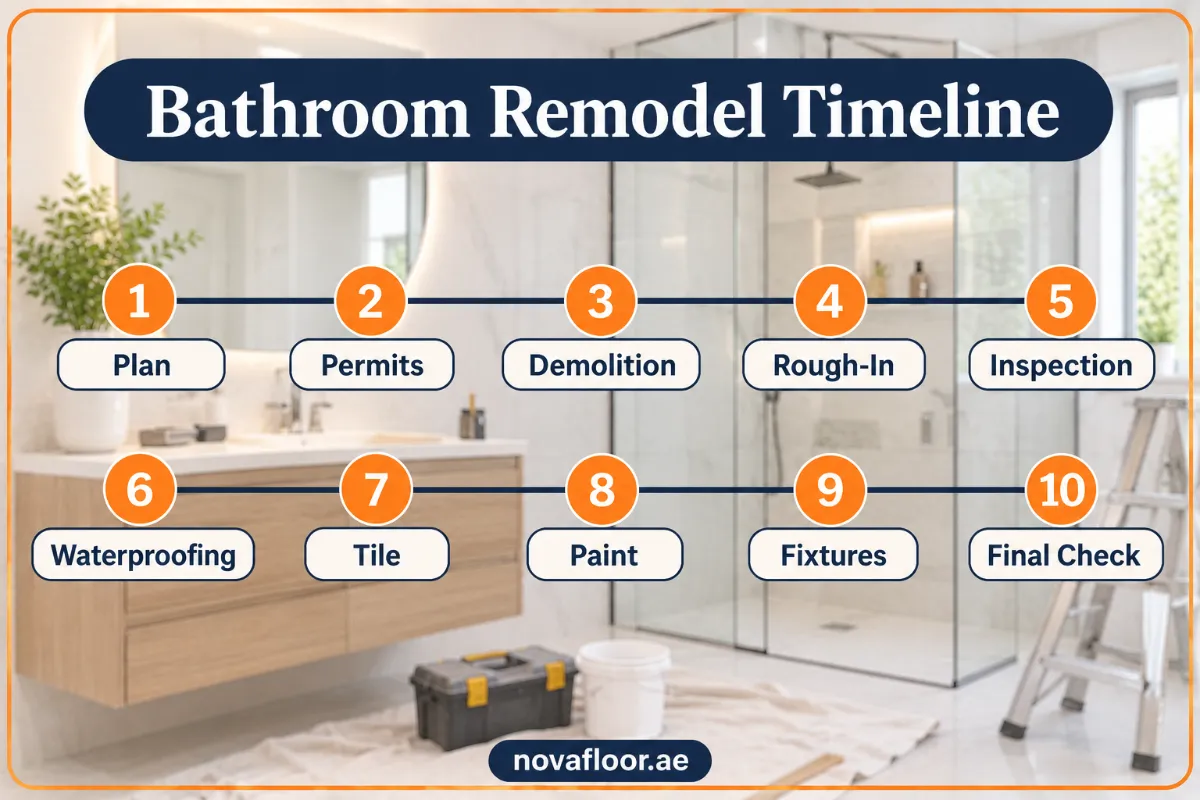
Expert Tip: A custom glass shower door is measured after the tile is set, so it is often the last item to arrive. Hang a shower curtain on a tension rod in the meantime so you can use the shower right away.
How to Live Without Your Bathroom During a Remodel
If it is your only bathroom, plan ahead. These steps make the weeks easier:
- Ask the crew to keep the toilet working as long as possible. Many crews can reset it at the end of each day until the floor work starts.
- Find another place to shower. A gym, a neighbor or a family member can help for a few weeks.
- Rent a portable toilet for the few days when the bathroom is fully open.
- Set up a small wash station in the kitchen or laundry room for brushing teeth.
- Protect children and pets. Keep them away from the work area, dust and loose nails.
How to Remodel a Bathroom Step by Step
A bathroom remodel works best in a fixed order. Each step prepares the room for the next, so skipping one can mean tearing out new work. Follow these 13 steps.
Step 1: Set Your Goals and Budget
List what you want to fix, such as poor storage, weak light or a tub nobody uses. Split your wishes into must-haves and nice-to-haves. Keep 15% to 20% of the budget aside for surprises. For any work you hire out, get three written quotes and check each contractor’s license and insurance.
Step 2: Measure and Plan the Layout
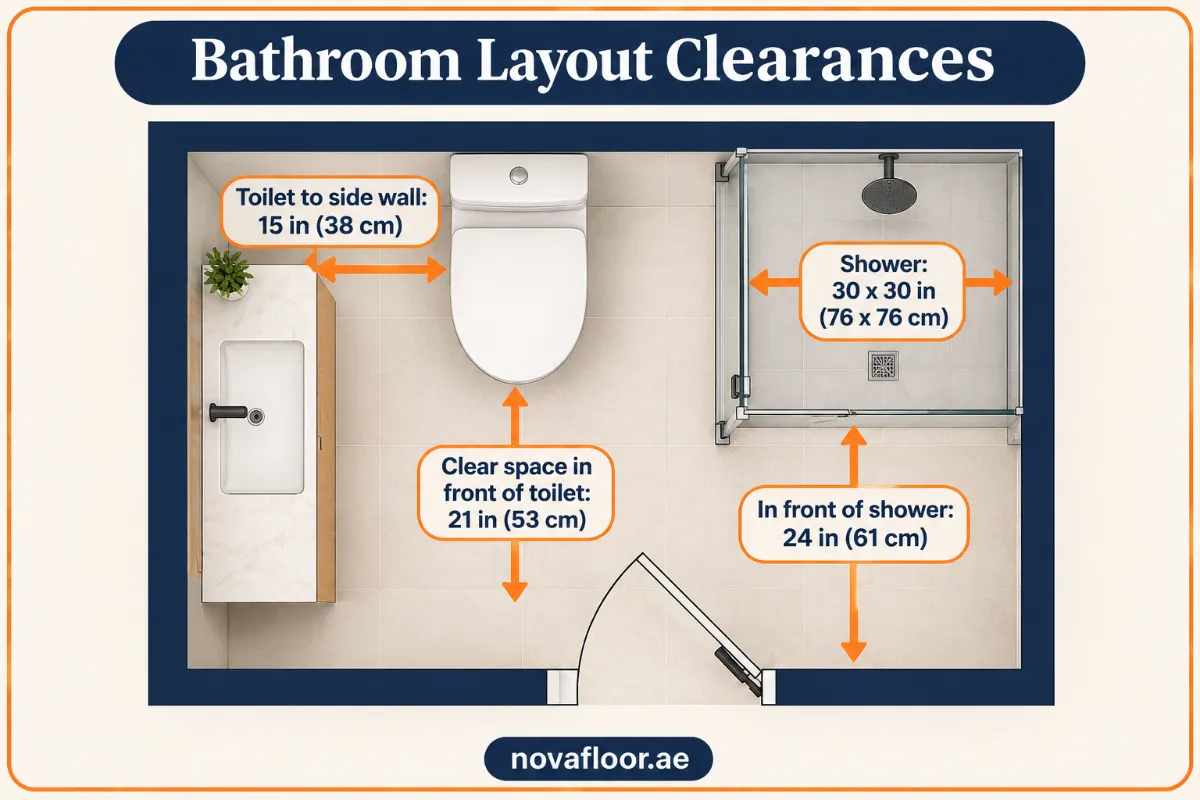
Measure the room. Mark the door, window, drain and pipes on a simple plan. Leave enough space around each fixture. US codes set the minimums below, and the National Kitchen & Bath Association (NKBA) suggests more for comfort.
| Fixture | Code Minimum (US) | Recommended for Comfort |
| Toilet center to side wall | 15 in (38 cm) | 16 – 18 in (41 – 46 cm) |
| Clear space in front of toilet | 21 in (53 cm) | 30 in (76 cm) |
| Clear space in front of shower entry | 24 in (61 cm) | 30 in (76 cm) |
| Shower size | 30 × 30 in (76 × 76 cm) | 36 × 36 in (91 × 91 cm) |
| Space between two sink centers | 30 in (76 cm) | 36 in (91 cm) |
Rules vary by city and country. Check your local code.
Plan for the future, too. Add wood blocking for grab bars while the walls are open, and choose a door at least 32 inches (81 cm) wide.
Step 3: Choose Materials and Order Early
Pick every product before demolition. Read each spec sheet for the exact pipe and wire positions it needs. Store everything in a dry room, and open every box to check for damage.
- Tile amount: Order floor area × 1.10 for straight layouts, or × 1.15 for diagonal layouts. Check that all boxes share one lot number.
- Floor tile: Choose a slip-resistant tile with a wet DCOF rating of 0.42 or higher. Compare porcelain vs. ceramic tiles before you buy.
- Toilet: Check the rough-in size, the distance from the wall to the drain center. Most US toilets use 12 inches, but older homes may have 10 or 14.
Step 4: Get Permits and Approvals
Most cities require a permit to move plumbing, add circuits or change walls. Painting or swapping a faucet usually needs none. A licensed contractor normally applies for it. Unpermitted work can lead to fines, denied insurance claims and problems when you sell. Outside the US, ask your local municipality or building management which approvals you need.
Step 5: Prepare Your Home
Empty the room, and cover the floors on the path to it. Hang plastic sheeting with a zipper door to block dust. Shut off the water, turn off the bathroom circuits at the breaker, and test the wires with a voltage tester. Book a small dumpster or a junk-removal service.
Step 6: Demolition, Done Safely
Wear safety glasses, gloves, boots and a respirator. Shut off and drain the toilet, unbolt it, and stuff a rag in the drain to block sewer gas. Disconnect pipes and wires before you remove the vanity, mirror and lights. Cut walls only as deep as the surface, and remove the tub last. A cast-iron tub can weigh over 300 pounds (136 kg).

Warning: Is your home older than 1980? Test for asbestos and lead before you break any tile, mastic or paint. See the old house section below.
Step 7: Repair the Subfloor and Framing, and Add Blocking
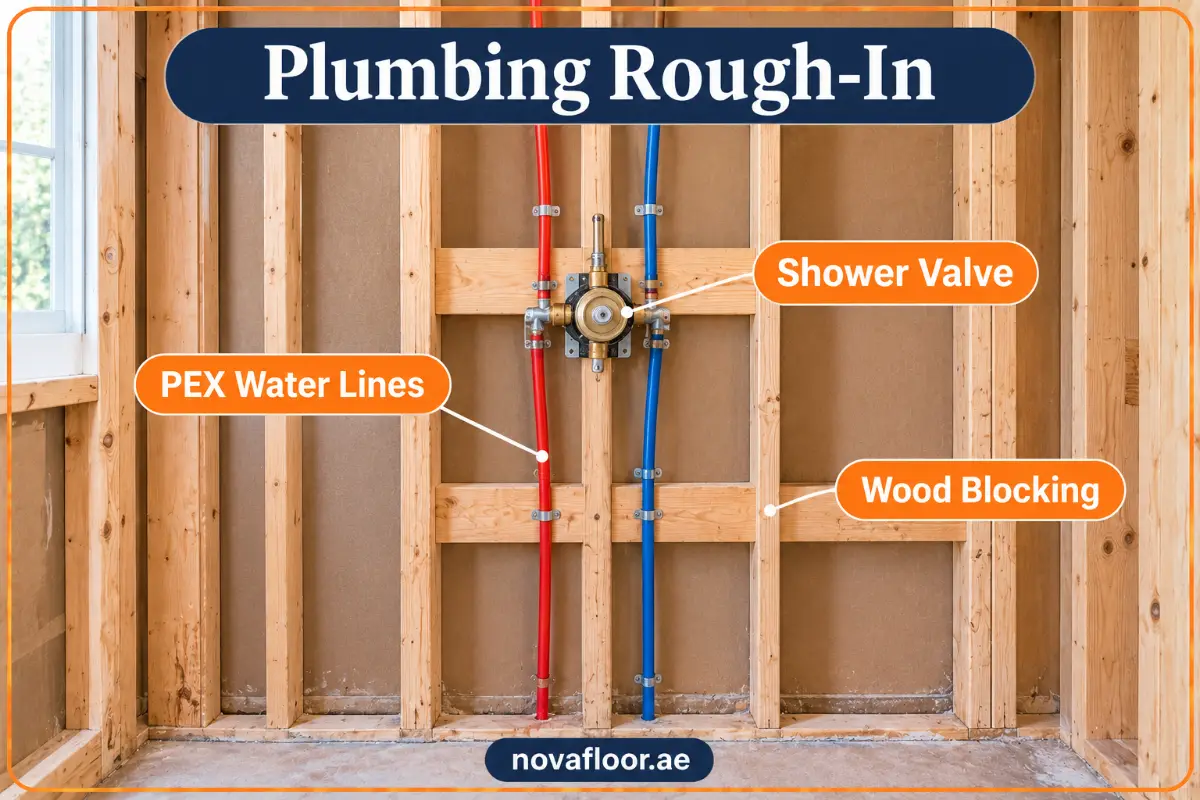
Replace any soft or rotted wood. Tile needs a stiff, flat floor, so check the subfloor before new flooring goes down. Then add wood blocking between the studs behind grab bars, towel bars, floating vanities, wall-hung toilets and glass shower doors.
Step 8: Rough-In Plumbing, Electrical and Ventilation, Then Pass Inspection
Rough-in means placing the pipes, wires and ducts before the walls close.
- Plumbing: Set the shower valve at the maker’s depth, usually about 48 inches (122 cm) high. Use a pressure-balancing or thermostatic valve, which most codes require. Slope drains 1/4 inch per foot (2%), and replace old shut-off valves.
- Electrical: Protect all outlets with GFCI. US code requires a 20-amp circuit for bathroom outlets. Use only wet-rated lights over the shower, and add outlets inside the vanity or near the toilet if needed.
- Ventilation: Size the fan at 1 CFM per square foot, with a 50 CFM minimum. This is the Home Ventilating Institute (HVI) guideline for bathrooms up to 100 square feet. Vent it outdoors, never into the attic.
Do not close the walls until the inspector approves the rough-in.
Step 9: Install Backer Board and Waterproofing, Then Flood Test
This is the most important step. Tile and grout are not waterproof. The layer behind them is what stops leaks.
- Use cement board or foam board in wet areas, and moisture-resistant drywall elsewhere.
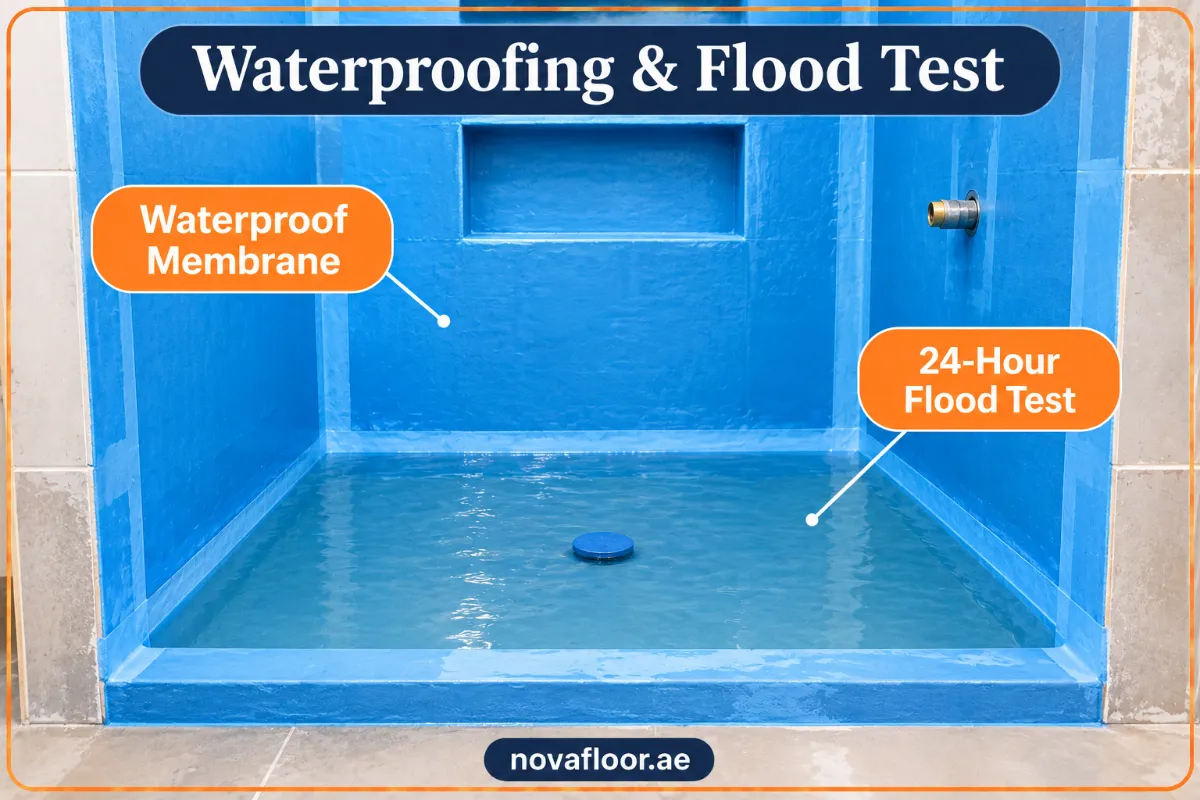
- Cover the shower walls and floor with a liquid or sheet waterproof membrane. Tape every seam and corner.
- On the bathroom floor, run the membrane 2 to 3 inches (5 to 8 cm) up the walls.
- Slope the shower floor 1/4 inch per foot (2%) toward the drain.
- Plug the drain, fill the pan with 1 to 2 inches of water and wait 24 hours. If the level drops, fix the leak before you tile.
Expert Tip: Do not use a plastic vapor barrier behind the board and a membrane on its face. Two barriers can trap moisture and cause mold.
Step 10: Tile the Shower, Then the Floor; Grout and Seal
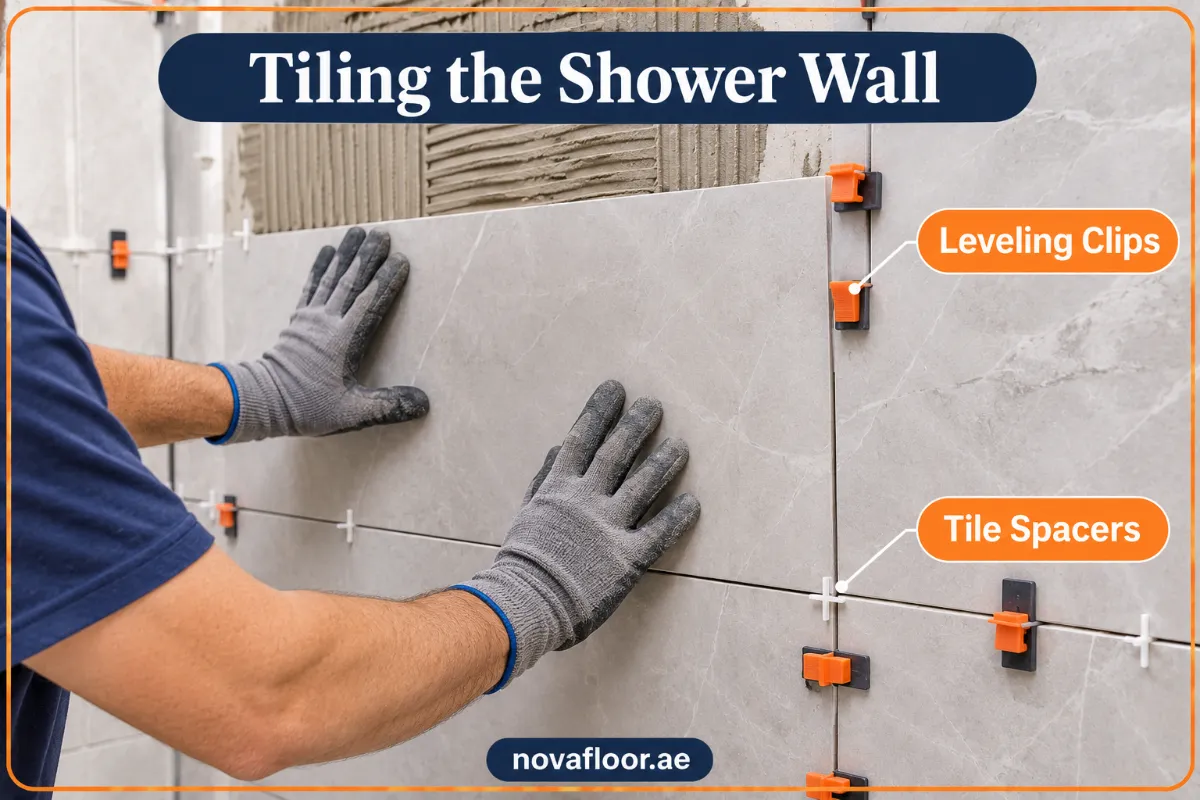
Tile from the top down: shower walls, then the shower floor, then the main floor. For details, see our guide on how to tile a shower wall.
- Use modified thinset in wet areas, never mastic.
- Back-butter tiles larger than 15 inches, and use leveling clips for flat, straight lines.
- Wait 24 hours before grouting. Use silicone caulk, not grout, in corners and where tile meets the tub.
- Seal cement grout after 48 to 72 hours. Epoxy grout needs no sealer.
Want a more stylish floor? Learn how to create patterns with floor tiles.
Step 11: Prime and Paint
Paint after tiling, but before the vanity, toilet and mirror go in. Use a mildew-resistant primer and a satin or semi-gloss bathroom paint. Save touch-ups for the end.
Step 12: Install the Vanity, Toilet, Fixtures and Lighting
- Vanity: Level it with shims and screw it to the studs. Then connect the faucet, drain and new braided supply lines.
- Toilet: Make sure the flange sits level with the finished floor. Use a new wax ring, and tighten the bolts evenly but not too hard.
- Lighting: Mount sconces on both sides of the mirror at 60 to 66 inches (152 to 168 cm) for even, shadow-free light.

Step 13: Finishing Touches and Final Inspection
Caulk around the tub, shower, sink and counter. Hang the accessories, add a floor transition strip at the door, and install the glass shower door. Run each faucet for 10 minutes and check for drips. Then book the final inspection, and walk through a punch list of small fixes with your contractor. Wait 24 hours after caulking before you shower.
Old House Bathroom Remodel: What’s Different?
An old house bathroom remodel follows the same 13 steps, but it hides more surprises. Homes built before 1980 often have hazardous materials, worn-out pipes and floors that are no longer level. Raise your contingency fund to 20% to 30% of your budget, and add a week or two to your schedule.
Test for Lead and Asbestos Before Demolition
These two hazards are the most important difference. Both are safe when left alone. Both become dangerous when you cut, sand or break them, because they release dust you can breathe in.
- Lead paint is common in homes built before 1978. In the US, the EPA’s Renovation, Repair and Painting (RRP) Rule requires paid contractors to be lead-safe certified for work on these homes.
- Asbestos may hide in old vinyl floor tiles, sheet flooring, tile mastic, joint compound, textured ceilings and pipe insulation. It was common in homes built before about 1980.
Test before you start. A DIY kit sends a small sample to a lab. A licensed inspector gives you a full report. If a test is positive, hire a licensed abatement company to remove the material. Do not remove it yourself.
Plaster Walls, Mortar-Bed Tile and Uneven Floors
Old bathrooms were built to last, which makes them hard to take apart.
- Plaster and lath walls are heavy and dusty to remove. Many remodelers cut out only the shower area and patch the rest.
- Mortar-bed tile sits on a thick layer of concrete, often 1 to 2 inches deep, over wire mesh. You cannot tile over it cleanly, and removal takes heavy tools and extra time.
- Uneven floors are common after decades of settling. A self-leveling underlayment can create a flat surface for new tile or vinyl.
Old Pipes and Wiring
Open walls give you the best chance to replace old systems. Do it now, because it costs much more once the new tile is up.
| Old System | Common Problem | Typical Fix |
| Galvanized steel pipes | Rust builds up inside and lowers water pressure | Replace with PEX or copper |
| Cast-iron drains | Cracks and rust from the inside out | Replace damaged sections; keep sound pipes, because cast iron is quiet |
| Knob-and-tube wiring | No ground wire; old insulation | Replace with new grounded circuits |
| 15-amp circuits, no GFCI | Overloaded by hair dryers and heaters | Add a 20-amp GFCI-protected circuit |
| Notched floor joists | Weakened by past plumbers | Sister new lumber beside the joist |
Keep the Character
The best old house bathroom remodel looks like it belongs in the house. Keep or copy the details that give the home its charm.
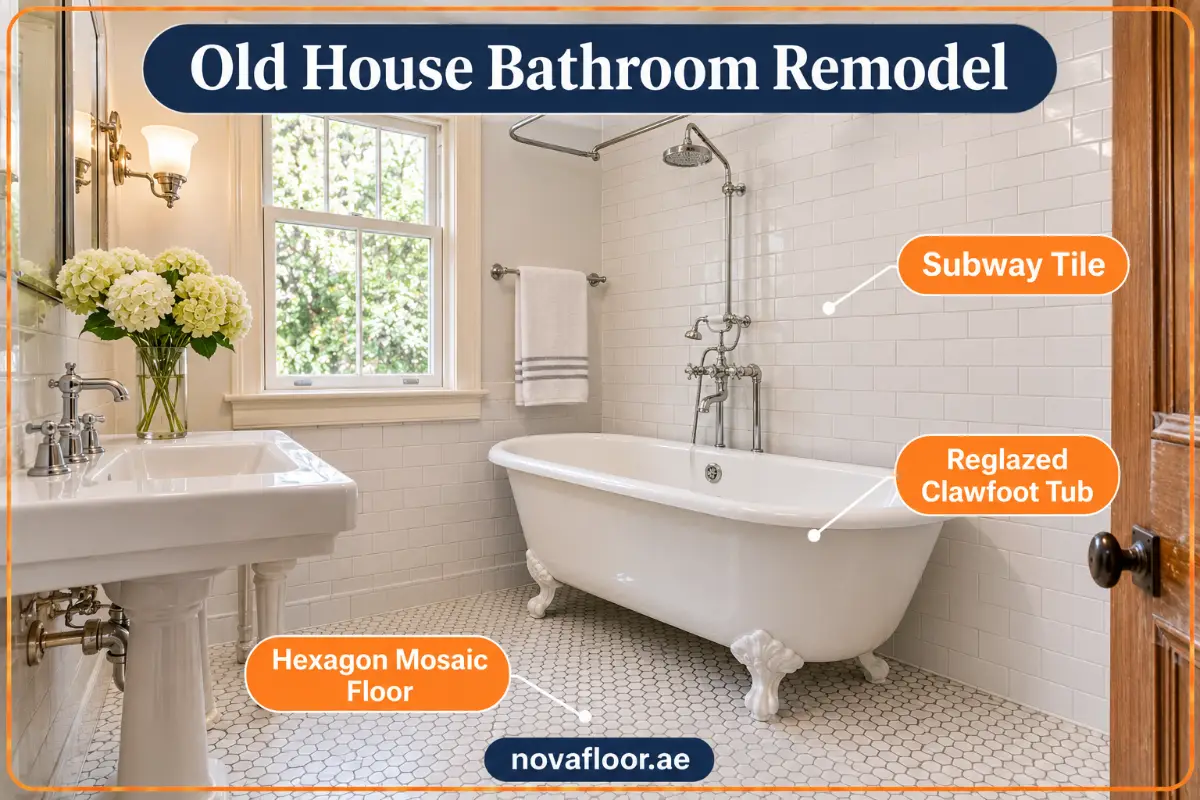
- Reglaze a vintage tub instead of replacing it. Old cast-iron and clawfoot tubs are solid, well made and costly to replace. See Idea 2 for reglazing costs.
- Save the trim and door. Remove old moldings carefully, number them and reinstall them.
- Choose period-friendly finishes. Good choices include white subway tile, small hexagon mosaic floors, pedestal sinks, cross-handle faucets and exposed shower risers for clawfoot tubs.
- Keep the original window if it works well. Add a privacy film or a moisture-safe blind.
When to Call a Structural Engineer
Call an engineer before you remove a wall or add a heavy tub. A cast-iron soaking tub full of water, plus a person, can weigh more than 1,000 pounds (450 kg). Old floor joists may not carry that load. Also call one if you see sagging floors, large cracks or joists that past plumbers have cut through.
15 Budget-Friendly Ideas to Redo a Bathroom
You do not need a full gut remodel to love your bathroom again. These 15 ideas give the biggest change for the least money. Each one lists the cost, time, skill level and whether you can do it yourself. Costs are 2026 US averages.
1. Keep the Plumbing Layout
Cost: $0 · Savings: often several thousand dollars · Skill: None · DIY or Pro: Planning choice
This is the biggest money-saver of all. Leave the toilet, sink and shower where they are. You can still replace every fixture. You just avoid new drain lines, new vent pipes and extra plumber hours.
2. Reglaze the Tub and Tile Instead of Replacing Them
Cost: $350 – $1,000 for a tub (AED 1,300 – 3,700); $730 – $1,700 for wall tile (AED 2,700 – 6,200) · Time: 1 day, plus 24 – 48 hours to cure · Skill: Advanced · DIY or Pro: Pro
Reglazing sprays a new, hard finish over an old tub or tile. It can turn a stained, pink or yellow tub bright white. A full tub replacement costs thousands more. Hire a pro, because the coatings give off strong fumes and DIY kits do not last as long.
3. Regrout and Recaulk
Cost: $20 – $150 DIY (AED 75 – 550) · Time: 1 – 2 days · Skill: Beginner · DIY or Pro: DIY
Dirty grout and moldy caulk make a whole bathroom look old. First, use our guide to clean tile grout. If it still looks bad, scrape out the old grout and apply new grout. Then cut out old caulk and run a fresh bead of silicone. You can also fix chipped or cracked tile at the same time.
4. Install Waterproof SPC or Vinyl Flooring
Cost: $2 – $7 per sq ft for materials (AED 7 – 26 per sq ft) · Time: 1 day · Skill: Beginner to intermediate · DIY or Pro: DIY
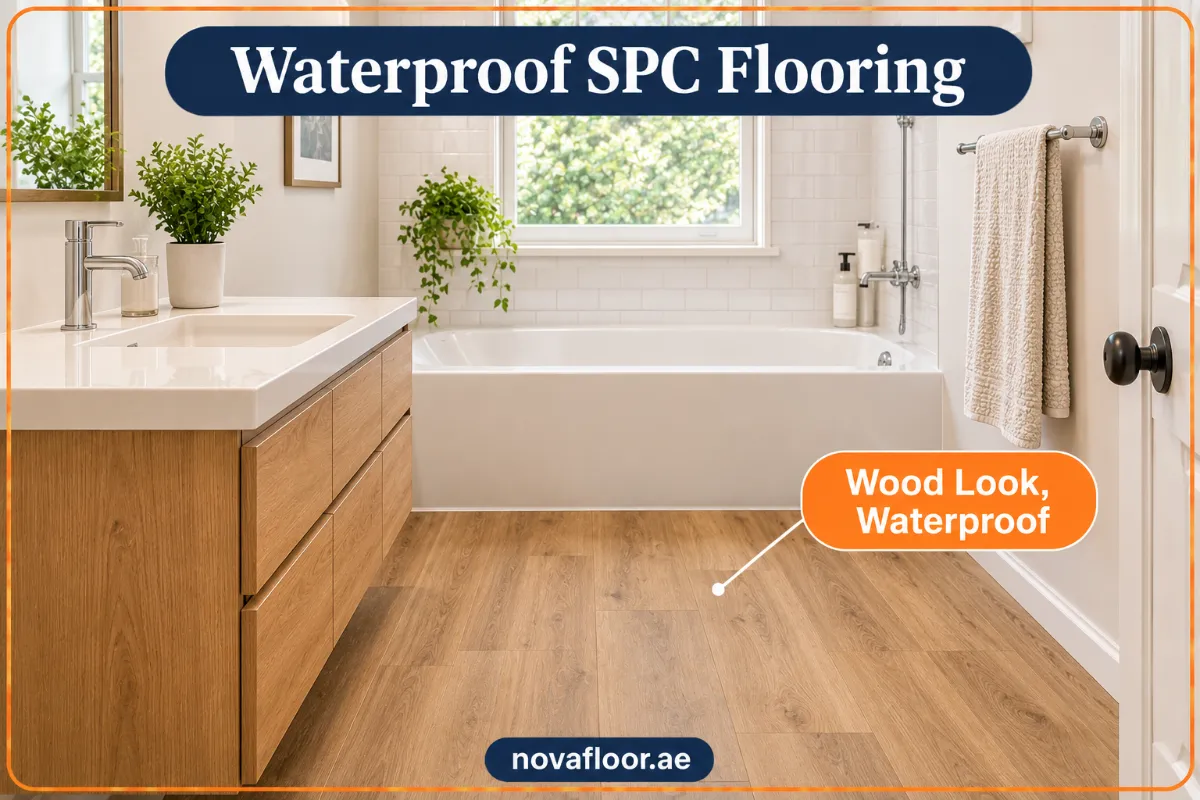
Waterproof SPC flooring and luxury vinyl flooring look like wood or stone but stand up to water. Many click-lock floors can go over flat, sound tile, so you skip messy demolition. Seal the edges around the tub and toilet with silicone. Follow our guide on how to install vinyl plank flooring for a clean result.
5. Use Peel-and-Stick Floor Tiles in a Powder Room
Cost: $1 – $4 per sq ft (AED 4 – 15 per sq ft) · Time: Half a day · Skill: Beginner · DIY or Pro: DIY
Peel-and-stick floor tiles are perfect for a half bath with no shower. They come in bold patterns and need no grout or tools beyond a utility knife.
6. Repaint the Walls and Vanity
Cost: $100 – $300 DIY (AED 370 – 1,100) · Time: 1 – 2 days · Skill: Beginner · DIY or Pro: DIY
Paint is the cheapest way to change the whole mood of a room. Use a mildew-resistant bathroom paint in a satin or semi-gloss finish. For a wood vanity, clean it with a degreaser, sand it lightly and use a bonding primer. Then finish it with a durable cabinet enamel.
7. Choose a Ready-Made Vanity, or Refresh the One You Have
Cost: $150 – $600 to refresh (AED 550 – 2,200); $630 – $3,200 for a new stock vanity, installed (AED 2,300 – 11,800) · Time: 1 day · Skill: Intermediate · DIY or Pro: DIY or Pro
A custom vanity is rarely needed. A stock vanity with new knobs, a fresh paint color or a better top looks custom for far less. Ask a stone yard for a remnant, a leftover piece of quartz or granite. It often costs a fraction of a full slab. Get more ideas on how to remodel a vanity.
8. Swap the Faucet, Showerhead and Toilet Seat
Cost: $100 – $400 per faucet (AED 370 – 1,500); $30 – $200 per showerhead (AED 110 – 730); $50 – $600 for a bidet seat (AED 180 – 2,200) · Time: 1 – 3 hours each · Skill: Beginner to intermediate · DIY or Pro: DIY
New fixtures make an old room feel new. Choose products with the WaterSense label, which use at least 20% less water than standard models. A bidet seat or attachment is a small luxury that also saves toilet paper.
9. Upgrade the Lighting and Mirror
Cost: $150 – $600 for an LED mirror (AED 550 – 2,200); $50 – $300 per sconce (AED 180 – 1,100) · Time: Half a day · Skill: Intermediate · DIY or Pro: Pro for new wiring
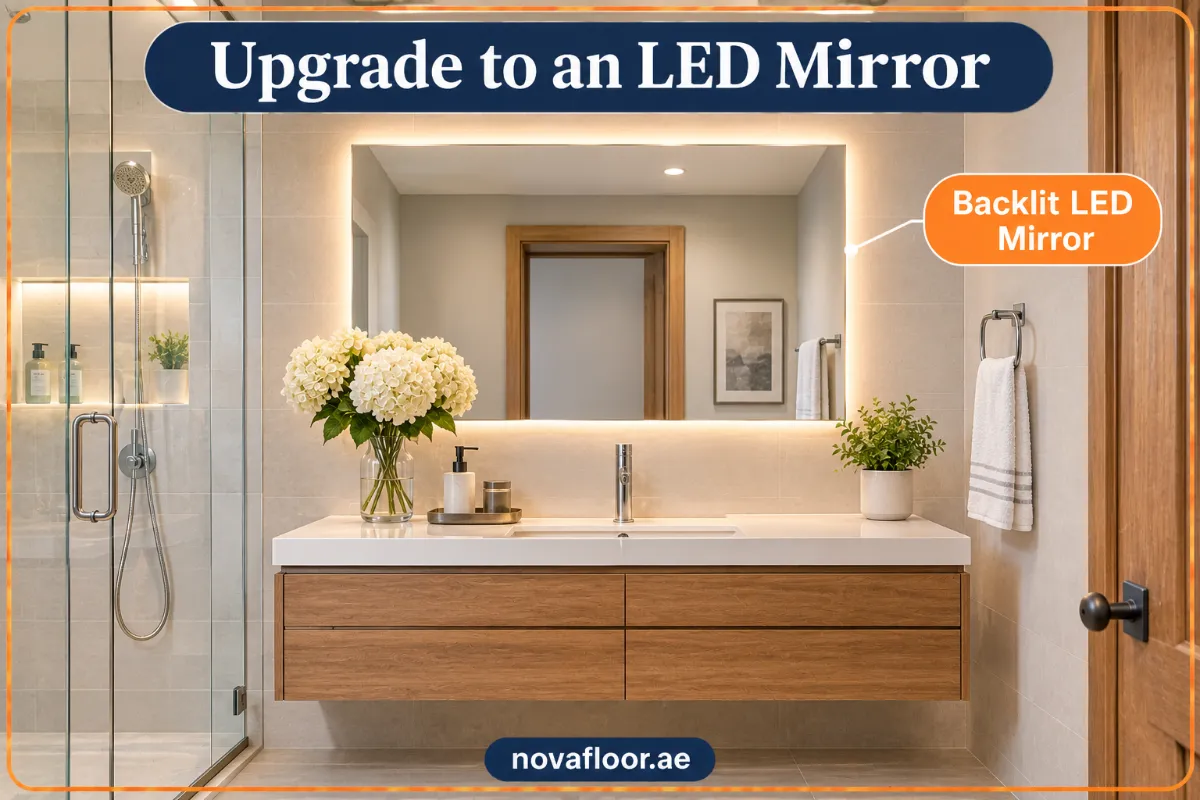
One ceiling light casts shadows on your face. Add a sconce on each side of the mirror, or choose a lighted LED mirror. Put lights on a dimmer for soft light at night. Hire an electrician if you need new wires or boxes.
10. Tile Only the Wet Zones and One Accent Wall
Cost: Saves hundreds to thousands of dollars in tile and labor · Time: Saves several days · Skill: Intermediate · DIY or Pro: DIY or Pro
Floor-to-ceiling tile is beautiful but costly. Tile the shower walls, the floor and perhaps one wall behind the vanity. Paint the rest. Spend the money you save on one standout tile in the shower.
11. Install a Prefab Shower Kit or Convert the Tub to a Shower
Cost: $2,500 – $5,500 for a prefab kit, installed (AED 9,200 – 20,200) · Time: 1 – 3 days · Skill: Advanced · DIY or Pro: Pro
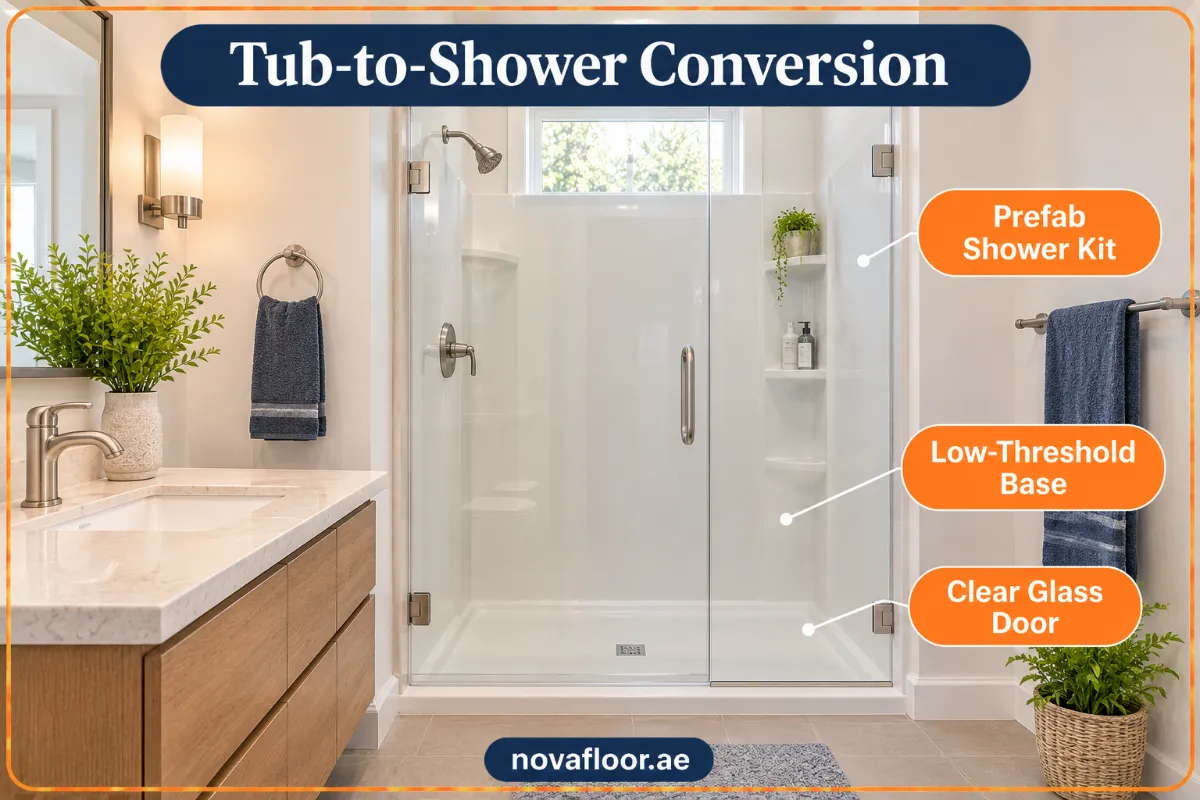
Acrylic and fiberglass shower kits have no grout lines to clean and very few places to leak. A tub-to-shower conversion with a prefab kit costs much less than a custom tiled shower, which often runs $6,000 to $12,000 (AED 22,000 to 44,100). Keep at least one tub in the home if families with young children may buy it someday.
12. Add a Recessed Niche, Shelving and Over-the-Toilet Storage
Cost: $30 – $300 for shelves and cabinets (AED 110 – 1,100) · Time: 1 – 3 hours · Skill: Beginner (shelves) to intermediate (niche) · DIY or Pro: DIY
Small bathrooms need smart storage. Open shelves and an over-the-toilet cabinet use empty wall space. A recessed niche in the shower or a recessed medicine cabinet sits between the studs and takes no floor space. Check for pipes and wires before you cut into any wall.
13. Upgrade the Exhaust Fan
Cost: $250 – $900 installed (AED 900 – 3,300) · Time: 2 – 4 hours · Skill: Intermediate · DIY or Pro: DIY for a swap; Pro for a new fan
A weak fan lets steam ruin your paint, grout and caulk. A quiet fan with a humidity sensor turns on by itself when the air gets damp. That protects every other upgrade you make. A humidity sensor adds about $75 to $125 (AED 280 to 460) to the fan price.
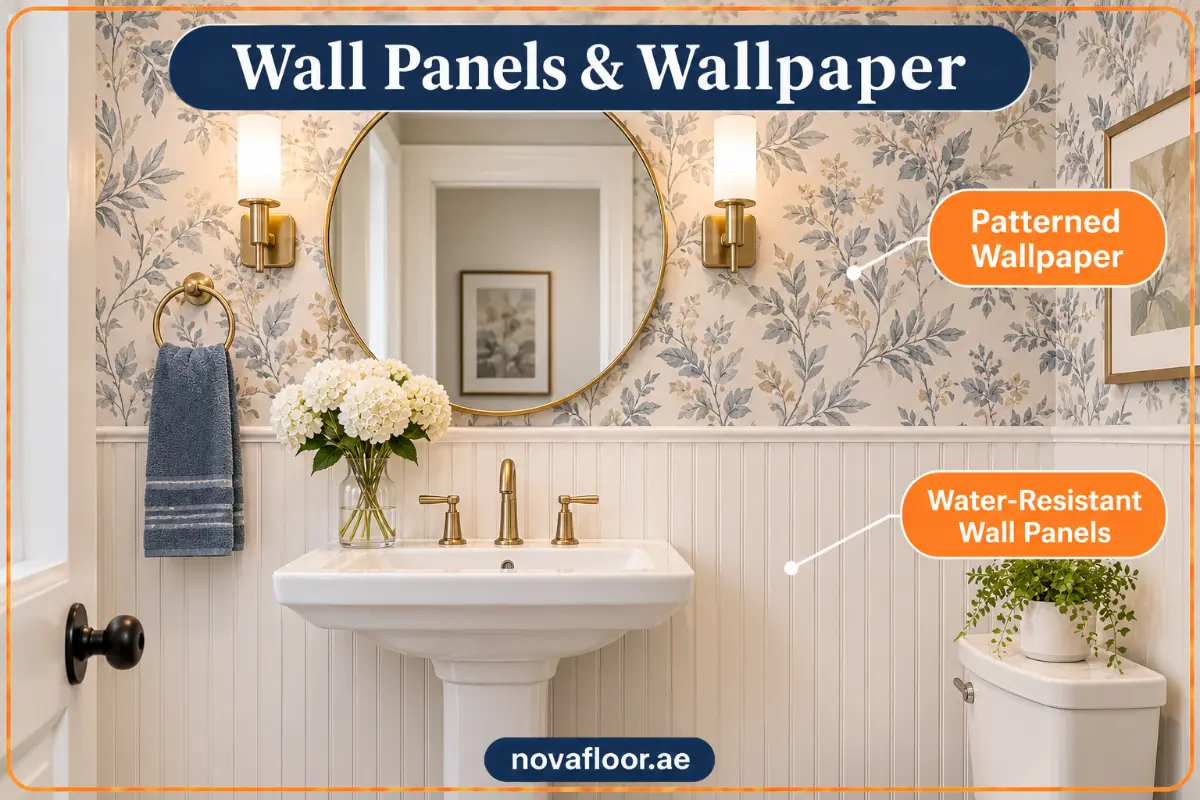
14. Add Water-Resistant Wall Panels, Wallpaper or Beadboard
Cost: About $200 – $800 for a small bathroom (AED 730 – 2,900) · Time: 1 day · Skill: Intermediate · DIY or Pro: DIY
Water-resistant bathroom wall panels cover old tile or damaged walls fast. Moisture-resistant wallpaper adds pattern to a powder room. Use pasted vinyl wallpaper, not peel-and-stick. Keep all of these outside the shower unless the product is rated for wet areas.
15. Finish With New Hardware, Blinds, Mats and Accessories
Cost: $50 – $400 (AED 180 – 1,500) · Time: 1 – 3 hours · Skill: Beginner · DIY or Pro: DIY
Small details finish the look. Match your towel bars, hooks and toilet paper holder to your faucet finish. Hang moisture-resistant roller blinds for privacy. Add non-slip mats by the tub and sink to prevent falls.
Choosing Bathroom Materials: Quick Comparison
The right materials last for decades. The wrong ones crack, stain or leak within a few years. Use these tables to compare your options.
Bathroom Flooring Compared
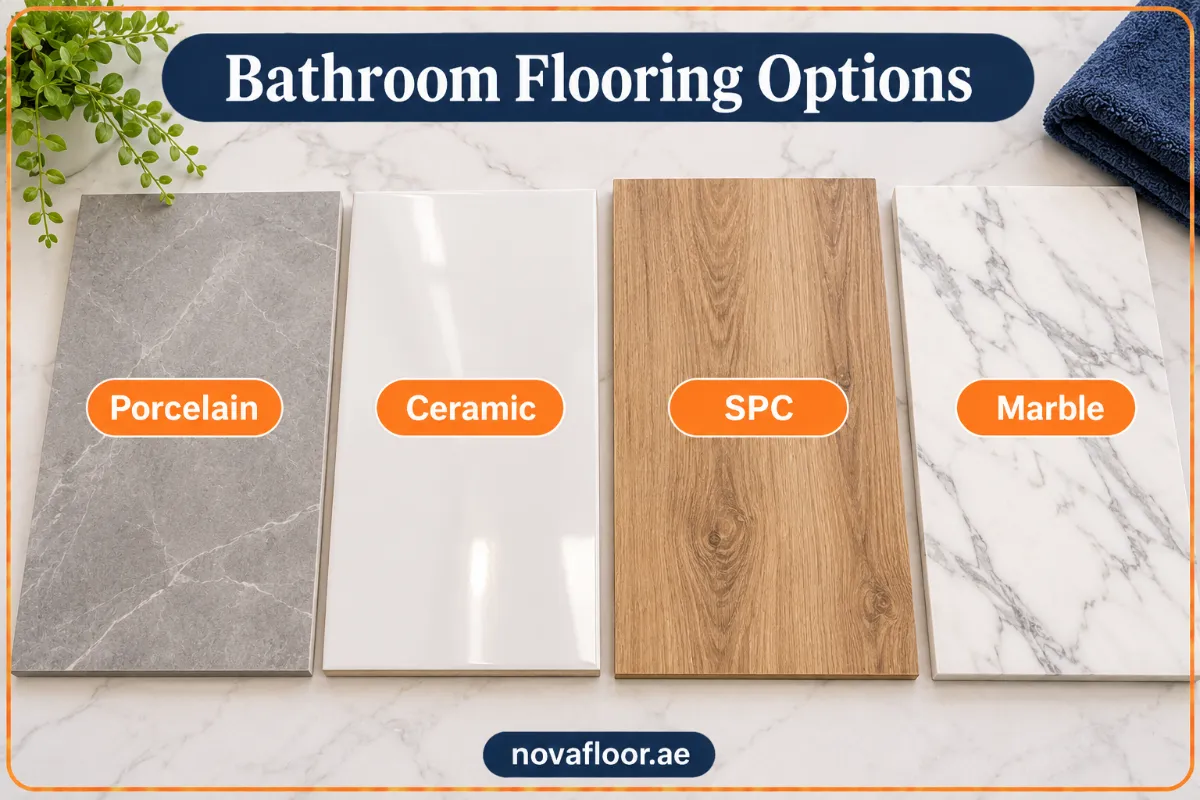
Porcelain tile is the best all-round choice for most bathrooms. SPC and luxury vinyl are the best budget picks.
| Flooring | Water Resistance | Material Cost per Sq Ft | DIY-Friendly? | Best For |
| Porcelain tile | Excellent | $3 – $10 (AED 11 – 37) | Moderate | Any bathroom, including shower floors |
| Ceramic tile | Very good | $1 – $5 (AED 4 – 18) | Moderate | Walls and low-traffic floors |
| SPC or luxury vinyl plank | Waterproof (surface) | $2 – $7 (AED 7 – 26) | Easy | Budget remodels, floating over old tile |
| Natural stone (marble, travertine) | Good if sealed | $8 – $25 (AED 29 – 92) | Hard | High-end primary baths |
| Peel-and-stick vinyl | Fair | $1 – $4 (AED 4 – 15) | Very easy | Powder rooms, rentals |
| Microcement | Good with sealer | $12 – $30 installed (AED 44 – 110) | Pro only | Seamless, modern look |
Want to know how vinyl tile differs from vinyl plank? Read our guide to LVT flooring.
Safety Tip: Shiny polished tile is slippery when wet, so save it for walls. Small mosaic tiles add grip on shower floors because of their many grout lines.
Shower Pans Compared
| Shower Pan | Approx. Cost (Pan Only) | Pros | Cons |
| Fiberglass | $150 – $500 (AED 550 – 1,800) | Cheapest, light, easy to install | Can flex, crack and fade over time |
| Acrylic | $250 – $1,000 (AED 900 – 3,700) | Stronger than fiberglass, keeps its shine | Can scratch |
| Solid surface or stone resin | $400 – $1,500 (AED 1,500 – 5,500) | Very solid feel, high-end look | Heavy, costs more |
| Custom tiled pan | $1,500 – $5,000 installed (AED 5,500 – 18,400) | Any size or shape, curbless option | Needs expert waterproofing |
Grout Types Compared
| Grout Type | Joint Width | Needs Sealing? | Best For |
| Sanded cement grout | 1/8 inch (3 mm) and wider | Yes | Floors with wide joints |
| Unsanded cement grout | Under 1/8 inch (3 mm) | Yes | Walls and polished stone |
| Epoxy grout | Any | No | Showers; stain-proof and mold-resistant |
| Urethane or premixed grout | Most widths | No | DIYers who want easy, stain-resistant grout |
Epoxy grout costs more and sets fast, so it takes practice. Its stain resistance makes it a smart choice for light grout colors in a busy family bathroom.
DIY vs. Hiring a Pro: What You Can Do Yourself
You can do about half of a bathroom remodel yourself and save a large share of the labor cost. Labor is the biggest part of the budget, so every job you take on counts. But some jobs need a licensed pro by law, and a mistake behind the walls can cost far more than you saved.
| Task | DIY-Friendly? | Who Should Do It |
| Demolition (no asbestos or lead) | Yes | You |
| Painting and accessories | Yes | You |
| Faucet, showerhead and toilet seat swap | Yes | You |
| SPC, vinyl or peel-and-stick flooring | Yes | You |
| Vanity or toilet in the same spot | Yes, with some skill | You or a handyman |
| Floor tile | With experience | Skilled DIYer or tile setter |
| Shower waterproofing and wall tile | Not recommended | Tile pro |
| Moving pipes or adding drains | No | Licensed plumber |
| New circuits, outlets or wiring | No | Licensed electrician |
| Glass shower door | No | Glass installer |
| Asbestos or lead removal | No | Licensed abatement company |
| Moving or removing walls | No | Contractor and structural engineer |
How to hire the right pro:
- Get at least three written quotes with the same scope of work.
- Check the license and insurance, and call two recent clients.
- Sign a contract that lists the scope, schedule, payment plan and warranty.
- Avoid paying more than about a third of the total up front. Pay the rest as work is done.
If you live in the UAE, start by comparing the best renovation companies in Dubai.
Tools and Materials Checklist
Rent costly tools, such as a wet tile saw, instead of buying them.
- Safety: safety glasses, gloves, respirator, sturdy boots
- Demolition: pry bar, hammer, reciprocating saw, utility knife
- Layout: tape measure, level, stud finder, voltage tester
- Tiling: wet tile saw, notched trowels, spacers, leveling clips, grout float, sponges
- Finishing: drill, wrenches, caulking gun, paint rollers
- Materials: cement or foam board, waterproof membrane, thinset, grout, silicone caulk, bathroom paint, wax ring, supply lines, shims and blocking
12 Common Bathroom Remodeling Mistakes to Avoid
Most remodel problems come from planning gaps, not bad luck. Avoid these 12 mistakes and you will save time, money and stress.
- No contingency fund. Hidden rot, mold and old pipes appear in many remodels. Without 15% to 20% extra, you may have to stop halfway.
- Buying before measuring. A vanity that is too wide or a door that hits the toilet means returns and delays. Measure twice and check every spec sheet.
- Ordering materials late. A missing vanity or shower door can stop the whole job. Order everything before demolition.
- Trusting grout to keep water out. Grout and tile are not waterproof. A proper membrane behind the tile is what prevents leaks.
- Using grout in corners. Corners and joints where tile meets the tub move slightly. Use flexible silicone caulk there, or the grout will crack.
- A weak exhaust fan, or none at all. Without good ventilation, mold grows and paint peels. Size the fan to the room, and vent it outdoors.
- Moving plumbing without a good reason. It is the fastest way to blow your budget. Move fixtures only when the layout truly does not work.
- Skipping permits or closing walls early. Unpermitted work can block a home sale. Always pass the rough-in inspection before the walls go up.
- Choosing slippery floor tile. Polished tile looks great in the showroom but turns dangerous when wet. Pick a matte, textured or slip-rated tile.
- Relying on one ceiling light. Add light beside the mirror, and put lights on dimmers.
- Forgetting storage and outlets. Plan a niche, a medicine cabinet and outlets inside the vanity before the walls close. Adding them later costs more.
- Over-improving for your home. An upscale remodel recoups only about 42% of its cost at resale. Match your finishes to your home’s value unless you plan to stay for many years.
Bathroom Remodel Trends for 2027
Bathrooms in 2027 are warmer, safer and more personal. The plain, all-white spa look is fading. These trends come from the National Kitchen & Bath Association’s latest Bath Trends Report, a survey of nearly 700 industry experts, and from leading designers.
- Warm neutrals and natural textures. In the NKBA survey, 96% of experts named neutrals as the most popular bath colors. Soft greens and blues are rising, too. Designers pair them with wood vanities, natural stone and handmade-look tile.
- Matte and brushed finishes. Polished chrome is losing ground. Experts rated matte, brushed and satin faucet finishes as more popular.
- Bigger walk-in showers and wet rooms. Many homeowners now skip the tub in a secondary bath and build a larger, curbless shower instead.
- Aging-in-place design. Nearly half of the experts surveyed say aging-in-place design is close to mainstream, and about a third say it already is. Expect grab-bar blocking, wider doors and seats in showers.
- Smart and wellness features. Lighted mirrors, mood lighting in the shower, thermostatic valves and smart toilets turn the bathroom into a place to relax.
- Furniture-style vanities. Vanities that look like antique dressers or tables make the bathroom feel like a real room.
- Fewer grout lines. Large-format tile and slab walls look clean and are easier to keep clean.

For floors, see the latest flooring trends to find a look that will last.
Budget Tip: Spend on timeless basics, such as a good shower, solid waterproofing and neutral tile. Add trends with items that are cheap to change later, such as paint, hardware, mirrors and towels.
Frequently Asked Questions
What is the first step in remodeling a bathroom?
The first step is to set your budget and scope. Decide whether you want a cosmetic refresh, a mid-range remodel or a full gut. Then measure the room and list your must-haves. Every later choice, from tile to timeline, depends on these decisions.
How much does it cost to remodel a bathroom?
Most US bathroom remodels cost $6,000 to $25,000 (AED 22,000 to 91,800). A cosmetic refresh can cost as little as $2,500 (AED 9,200). A full gut remodel often costs $25,000 to $45,000 or more (AED 91,800 to 165,300+). Size, materials and labor rates set the final price.
What order do you remodel a bathroom in?
Follow this order:
- Plan and get permits.
- Remove the old bathroom.
- Repair the floor and framing.
- Rough in the plumbing and wiring, and pass inspection.
- Install backer board and waterproofing.
- Tile, then paint.
- Install fixtures, and finish with caulk and accessories.
How long does it take to remodel a small bathroom?
A pro crew can remodel a small bathroom in about 2 to 4 weeks once work starts. A cosmetic refresh may take only a few days. Add time for planning, permits and ordering materials. DIY projects done on weekends often take 2 to 3 months.
Can I remodel a bathroom myself?
Yes, you can do many jobs yourself. These include demolition, painting, vinyl flooring, and swapping a faucet, vanity or toilet in the same spot. Hire licensed pros to move pipes, add wiring, remove asbestos or change walls. Most areas require them by law.
What is the most expensive part of a bathroom remodel?
Labor is the most expensive part. It often takes 40% to 65% of the total budget. The costliest single jobs are moving plumbing, building a custom tiled shower and fixing hidden water damage. Keeping fixtures in the same place is the best way to control costs.
Do I need a permit to remodel a bathroom?
You usually need a permit to move plumbing, add electrical circuits or change walls. Cosmetic work, such as painting or replacing a faucet, rarely needs one. Rules vary by city and country, so check with your local building office before you start.
Should you tile or paint first in a bathroom?
Tile first, then paint. Tile work is messy, and thinset or grout can splash onto fresh paint. Paint after the tile is done but before you install the vanity, toilet and mirror. Do a final touch-up at the very end.
Can you redo a bathroom without replacing the tub?
Yes. You can reglaze the tub for about $350 to $1,000 (AED 1,300 to 3,700). Then add a new faucet, a new showerhead and fresh caulk. Update the tile around it, or cover it with water-resistant wall panels. This keeps the plumbing in place and saves thousands.
What is the cheapest way to redo a bathroom?
The cheapest way is a cosmetic refresh that keeps the current layout. Paint the walls and vanity, regrout the tile and replace the caulk. Then swap the faucet, lights, mirror and hardware. Add SPC or peel-and-stick flooring. Many of these updates cost under $1,000 (AED 3,700) when you do them yourself.
What flooring is best for a bathroom?
Porcelain tile is the best all-round choice. It is waterproof, durable and comes in slip-resistant finishes. For a budget remodel, waterproof SPC or luxury vinyl plank is a great choice. It is warmer underfoot and easy to install yourself. Avoid solid hardwood and carpet in full bathrooms.
Is it worth remodeling a bathroom before selling?
Often, yes. A midrange bathroom remodel recoups about 80% of its cost at resale, according to the 2025 Cost vs. Value Report. Small updates, such as fresh paint, new fixtures and clean grout, often give the best return before a sale. Avoid costly luxury upgrades unless your home’s value supports them.
How do you remodel a bathroom in an old house?
First, test for lead and asbestos before demolition. Then check the pipes, wiring, subfloor and joists, because old systems often need updates. Keep features with character, such as a cast-iron tub or original trim. Keep 20% to 30% of your budget aside for surprises.
Final Thoughts
Now you know how to remodel a bathroom the right way. Pick your scope first, and set a budget with 15% to 20% extra. Then follow the steps in order, and never cut corners on waterproofing or ventilation. Those two steps protect everything you build on top of them.
You do not need a huge budget to love your bathroom. Keep the layout and refresh the surfaces. Then spend where it matters most: a leak-proof shower, a slip-resistant floor and good light. Whether you plan a quick weekend redo or a full old house bathroom remodel, careful planning is what turns a dated room into a renovated bathroom you will enjoy for years.
Ready to start your bathroom project? Our team can help you choose waterproof flooring, wall panels and blinds that suit your space and budget. Contact our team for expert advice.