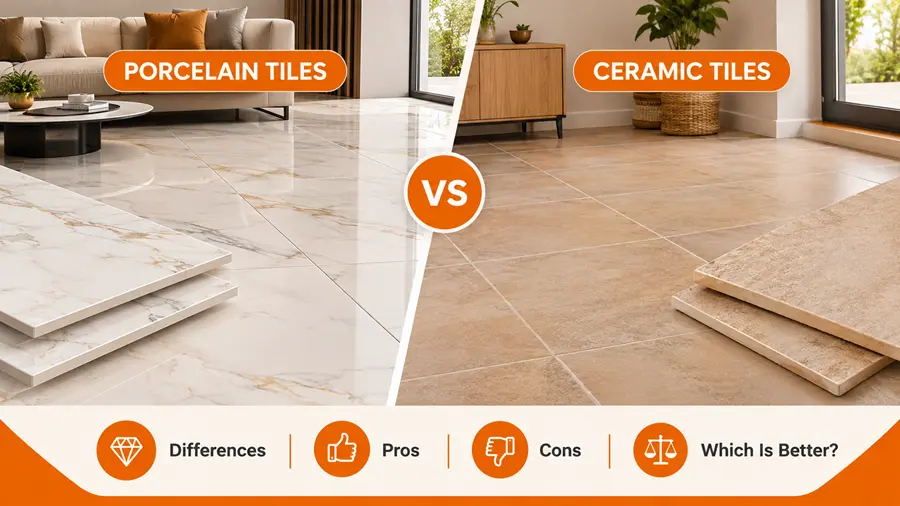
Choosing between porcelain and ceramic tile can feel confusing. The two tiles often look almost the same in the store, and many boxes don’t make the difference clear. Yet your choice affects how well your floor holds up, how much you spend, and how long your tile lasts.
This guide by Nova Floor Experts explains the porcelain vs ceramic tile debate in plain language. You’ll learn how each tile is made, how they compare on durability, water resistance, cost, and installation, and which one fits each room in your home.
Contents
Is Porcelain or Ceramic Better?
Porcelain is better for floors, wet areas, busy spaces, and outdoor use because it is denser, harder, and absorbs 0.5% water or less. Ceramic is better for walls, backsplashes, and light-traffic rooms because it costs less, cuts easily, and offers bold decorative styles.
Neither tile wins everywhere. The right pick depends on where the tile goes, how much wear it faces, and your budget.
What Is the Difference Between Porcelain and Ceramic Tile?
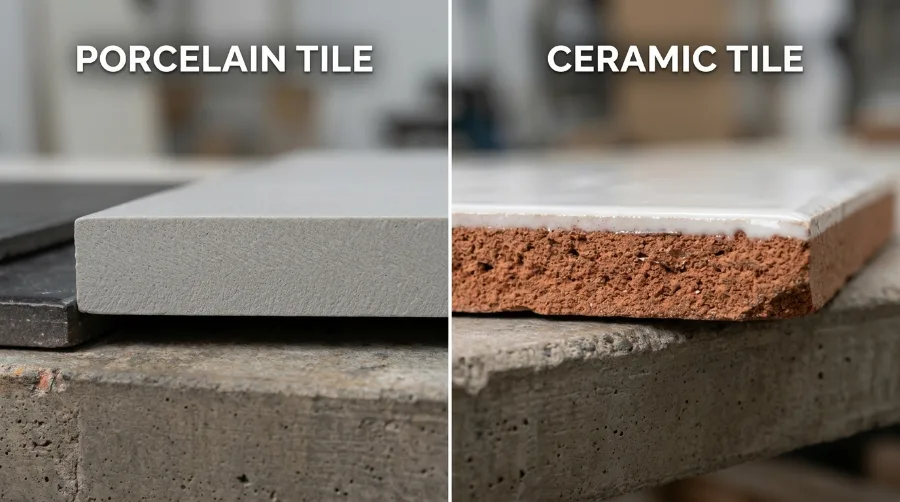
The main difference is density. Porcelain is actually a type of ceramic, but it uses finer clay and fires at a higher heat, which makes it denser, harder, and far less absorbent.
What Is Porcelain Tile?
Porcelain tile starts with fine, pure clay rich in kaolin, mixed with minerals like feldspar and silica. Makers press it under high pressure and fire it at about 1,200–1,300°C (2,200–2,500°F). The heat fuses the particles into a dense, glass-like body that absorbs 0.5% water or less.
What Is Ceramic Tile?
Ceramic tile uses a coarser red or white clay, fired at a lower heat of about 1,000–1,150°C (1,800–2,100°F). The result is a lighter, more porous tile. Most ceramic tiles get a glaze on top, which adds color and protects the surface.
That gap in density drives almost every other difference in the ceramic vs porcelain comparison, from water resistance to price.
Porcelain Tiles vs Ceramic Tiles: Side-by-Side Comparison
Porcelain leads on strength, water resistance, and outdoor use, while ceramic leads on price and ease of installation.
| Feature | Porcelain Tile | Ceramic Tile |
| Clay type | Fine, kaolin-rich clay | Coarser red or white clay |
| Firing temperature | About 1,200–1,300°C (2,200–2,500°F) | About 1,000–1,150°C (1,800–2,100°F) |
| Water absorption | 0.5% or less (impervious) | More than 0.5%, often 3% to 10%+ |
| Density and weight | Denser and heavier | Lighter and more porous |
| Hardness (Mohs scale) | About 7–8 | About 5–7 |
| Typical PEI rating | Often PEI 3–5 | Often PEI 0–3 |
| Cutting and installation | Harder to cut, needs a wet saw | Easy to cut with a snap cutter |
| Outdoor use | Yes, if rated frost-resistant | Generally no |
| Cost | Usually higher | Usually lower |
| Lifespan | Often 50+ years | Often 20+ years on floors, longer on walls |
| Best for | Floors, showers, kitchens, patios, commercial spaces | Walls, backsplashes, light-traffic floors |
Durability and Hardness
Porcelain is the stronger, longer-lasting tile. Its dense body resists scratches, chips, cracks, and heavy wear better than ceramic.
Which Tile Is Stronger?
On the Mohs hardness scale, porcelain usually scores about 7 to 8, while ceramic scores about 5 to 7. You may read that porcelain is “more brittle.” That’s only half true: porcelain is tougher in daily use, but its hardness makes it harder to cut, and it can crack over an uneven or flexing subfloor.
In short, porcelain is tougher once installed but less forgiving during installation.
What Does a PEI Rating Mean?
The PEI rating shows how well a glazed tile’s surface resists wear from foot traffic. It doesn’t measure the hardness of the whole tile. You’ll find it on the box for both ceramic and porcelain tiles.
| PEI Class | Traffic Level | Best Use |
| PEI 0 | None | Walls only |
| PEI 1 | Very light | Walls, bathroom walls |
| PEI 2 | Light | Walls, low-traffic floors like guest bathrooms |
| PEI 3 | Moderate | Most home floors, including kitchens and hallways |
| PEI 4 | Moderate to heavy | All home floors, light commercial spaces |
| PEI 5 | Heavy | Busy commercial and public spaces |
For most home floors, choose PEI 3 or higher. Many ceramic tiles only reach PEI 1 or 2, which is why they suit walls better than busy floors.
Glazed vs Through-Body Porcelain
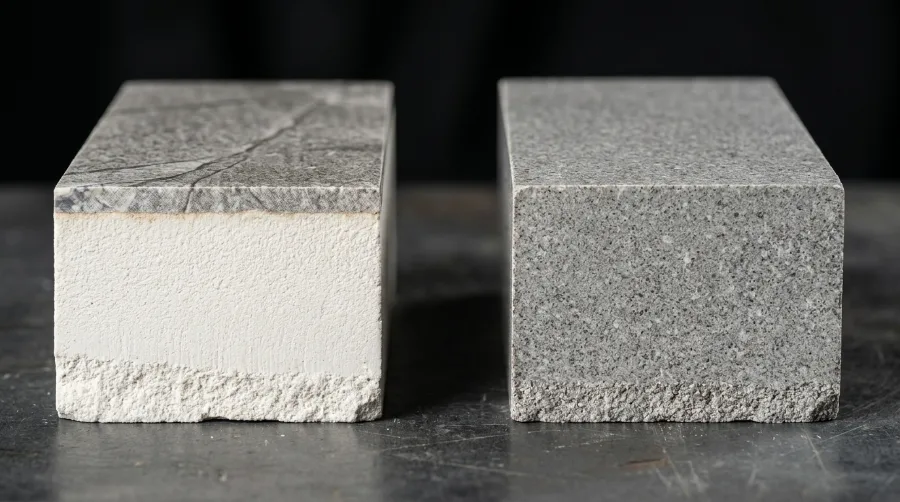
- Glazed porcelain has a colored glaze on top. It offers the widest range of designs, but a deep chip can show a different color underneath.
- Through-body (full-body) porcelain carries the same color and pattern all the way through. Chips and scratches barely show, so it’s ideal for busy floors and commercial spaces.
- Color-body porcelain has a body tinted close to the glaze color, so chips blend in better than on standard glazed tile.
Water Resistance
Water absorption is the clearest line between ceramic and porcelain tiles. True porcelain absorbs 0.5% of its weight in water or less, which the industry calls “impervious.” Ceramic absorbs more than 0.5%, and many wall tiles absorb 10% or more.
Tile Absorption Classes
| Class | Water Absorption | Typical Tile |
| Impervious | 0.5% or less | Porcelain |
| Vitreous | 0.5% to 3% | Dense ceramic |
| Semi-vitreous | 3% to 7% | Standard ceramic floor tile |
| Non-vitreous | More than 7% | Ceramic wall tile |
Are Porcelain or Ceramic Tiles Waterproof?
Neither tile body is fully waterproof. A glazed surface on either tile stops water from soaking in from the top, but the unglazed back, cut edges, and grout lines can still let moisture through.
That’s why glazed ceramic works well on shower walls, where water runs off fast. On shower floors, patios, and pool decks, where water sits, porcelain performs much better. In every wet area, a waterproofing membrane behind or under the tile does the real protective work.
Frost Resistance and Outdoor Use
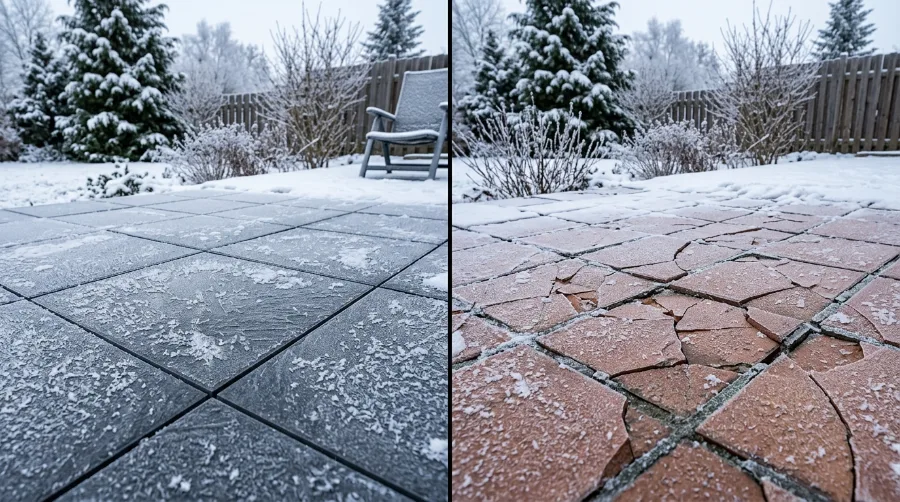
When absorbed water freezes, it expands and can crack tile. Porcelain’s low absorption helps it survive freeze-thaw cycles, so many porcelain tiles carry a frost-resistant rating. Thick outdoor porcelain pavers, often 20 mm, are built for patios and pool areas.
Ceramic generally doesn’t belong outdoors. Rain, sun, and temperature swings wear it down quickly, even in mild climates.
Slip Resistance
Surface finish, not tile type, decides how slippery a floor feels. Polished and high-gloss tiles get slick when wet, whether ceramic or porcelain, while matte, textured, and anti-slip finishes grip much better.
Tile makers measure grip with a rating called DCOF (dynamic coefficient of friction). For level indoor floors that may get wet, look for a DCOF of 0.42 or higher. On shower floors, small mosaic tiles help too, because the extra grout lines add grip underfoot.
Heat Resistance
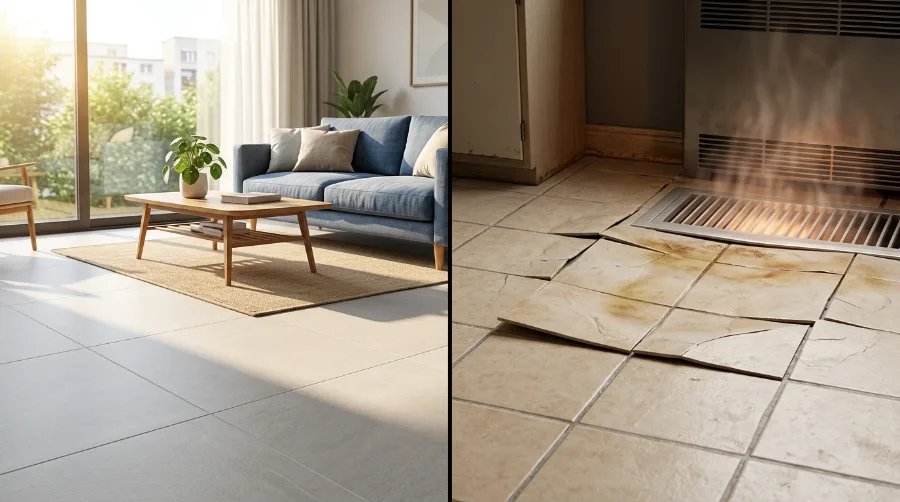
Both tiles handle heat well because both are fired in a kiln. Porcelain’s density makes it less likely to crack from high heat, so it’s the safer choice for fireplace surrounds and hearths.
Both ceramic and porcelain tiles work with radiant floor heating, and porcelain holds and spreads warmth especially well. Without floor heating, both feel cool underfoot, which is a bonus in hot climates.
Appearance and Design Options
Both tiles come in a huge range of colors, sizes, and shapes, but each has its own design strength.
Ceramic shines with bright glazes, bold colors, handmade looks, and detailed patterns. It’s a favorite for subway tile, decorative backsplashes, and accent walls.
Porcelain excels at copying natural materials with striking realism. Wood-look, marble-look, stone-look, and concrete-look porcelain can fool the eye while lasting far longer than the real thing. Porcelain also leads in large-format tiles and slabs, which give a clean look with fewer grout lines.
Many porcelain tiles have rectified edges, which makers grind to exact sizes. This allows very thin grout lines for a sleek, modern finish.
Cost: Ceramic Tiles vs Porcelain Tiles
Ceramic usually costs less than porcelain of similar quality, both to buy and to install. Prices vary widely by region, brand, size, and design, so treat the ranges below as a rough guide.
Material Cost
| Price Tier | Ceramic Tile (USD per sq ft) | Porcelain Tile (USD per sq ft) |
| Budget | About $1–$3 | About $3–$5 |
| Mid-range | About $3–$7 | About $5–$10 |
| Premium or designer | $7+ | $10+ |
Handmade or artisan ceramic can cost more than basic porcelain, so compare specific products instead of assuming.
Installation Cost
Porcelain often costs more to install. Installers need a wet saw, diamond blades, special mortar, and more cutting time. Large-format porcelain adds extra labor for leveling and handling.
Long-Term Value
Porcelain’s higher upfront price often pays off over time. It lasts longer, needs fewer repairs, and keeps its looks in busy spaces, which can also appeal to future buyers. For walls and low-traffic rooms, ceramic gives better value because those spaces don’t need porcelain’s extra strength.
Installation: Which Is Easier?
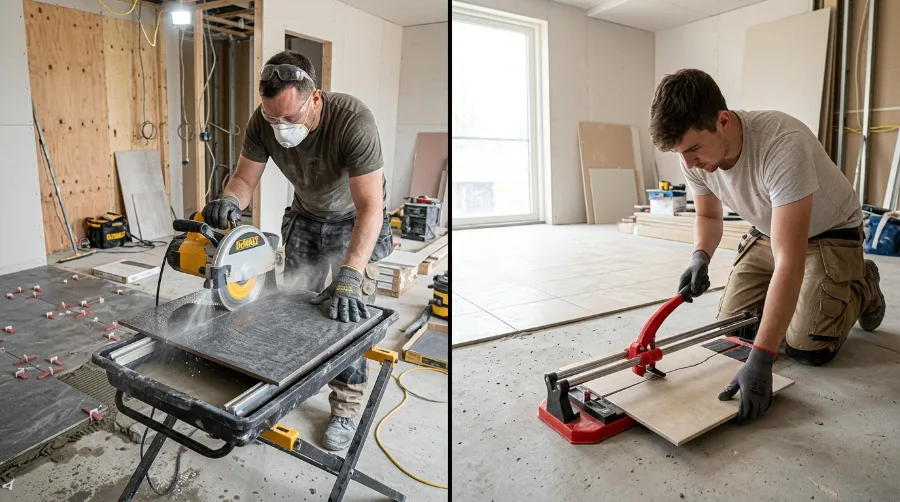
Ceramic is much easier to install, while porcelain needs more skill, tools, and preparation.
Installing Ceramic Tile
Ceramic is the DIY-friendly choice. It’s lighter, and you can cut it cleanly with a basic manual snap cutter. Standard thin-set mortar bonds well because ceramic’s porous back grips the adhesive.
Installing Porcelain Tile
- A wet saw with a diamond blade gives clean cuts through hard porcelain.
- Polymer-modified thin-set mortar is needed, because porcelain’s dense back doesn’t absorb regular mortar well.
- A flat, stiff subfloor prevents cracks, since hard porcelain doesn’t flex.
- Large-format mortar and a leveling system help with tiles longer than about 15 inches (38 cm) and prevent uneven edges, called lippage.
- Back-buttering, or spreading mortar on the tile’s back, ensures full coverage.
Porcelain is also heavier, so check that your walls and floors can carry the load, especially with large slabs.
Should You DIY or Hire a Pro?
A handy homeowner can install ceramic wall tile or a small ceramic floor. For porcelain, especially large-format tile, showers, or outdoor areas, a professional installer usually saves money by avoiding cracked tiles and failed bonds.
Maintenance and Cleaning
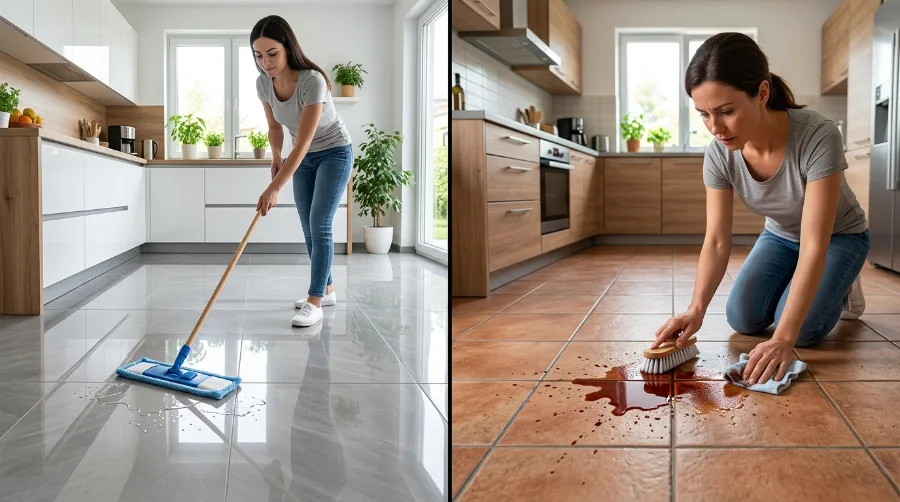
Ceramic and porcelain tiles are both easy to care for with a few simple habits:
- Sweep or vacuum once or twice a week to remove grit that dulls the surface.
- Damp-mop with warm water and a pH-neutral tile cleaner.
- Avoid steel wool, scouring pads, and harsh abrasives.
- Skip bleach, ammonia, and acidic cleaners like vinegar on cement grout, since they weaken it over time.
Do Porcelain and Ceramic Tiles Need Sealing?
Glazed tiles don’t need sealing. Unglazed ceramic, unglazed porcelain, and some polished porcelain may need a sealer to block stains, so check the maker’s care guide.
Cement-based grout needs sealing with either tile. Seal it after installation, then reseal about once a year in wet areas to resist stains, mold, and mildew.
Repairing Damaged Tiles
Keep 5% to 10% extra tiles from the same batch, because colors can vary from lot to lot. A cracked ceramic tile is usually easier to remove and replace since it’s softer. Porcelain rarely needs repairs, but its hardness makes removal slower.
Lifespan: How Long Does Each Tile Last?
With good installation and care, porcelain floors often last 50 years or more. Ceramic floors commonly last 20 years or longer, and ceramic on walls can last as long as porcelain because walls face little wear.
Installation quality matters as much as the tile. A weak subfloor or poor mortar bond can shorten the life of any tile.
Room-by-Room Guide: Ceramic or Porcelain Tiles?
Use porcelain where tile works hard and ceramic where it mostly needs to look good.
| Room or Area | Best Choice | Why |
| Kitchen floor | Porcelain | Handles spills, dropped pans, and heavy traffic |
| Kitchen backsplash | Ceramic or porcelain | Low wear, so ceramic’s styles and price shine |
| Bathroom floor | Porcelain | Low water absorption suits wet floors |
| Shower walls | Ceramic or porcelain | Glazed ceramic sheds water well on vertical surfaces |
| Shower floor | Porcelain | Standing water needs low absorption; use textured or mosaic tile |
| Living room and bedroom | Either | Pick PEI 3+ for floors; porcelain for wood-look floors |
| Entryway and mudroom | Porcelain | Resists grit, dirt, and heavy foot traffic |
| Laundry room | Porcelain floor, ceramic walls | Floors face water and heavy machines |
| Patio and pool deck | Frost-rated, anti-slip porcelain | Survives weather, sun, and freeze-thaw cycles |
| Fireplace surround | Porcelain | Better heat and crack resistance |
| Accent and feature walls | Ceramic | Bold glazes and decorative designs at lower cost |
| Commercial spaces | Through-body porcelain, PEI 4–5 | Handles constant heavy traffic |
Best Tile for Homes With Kids and Pets
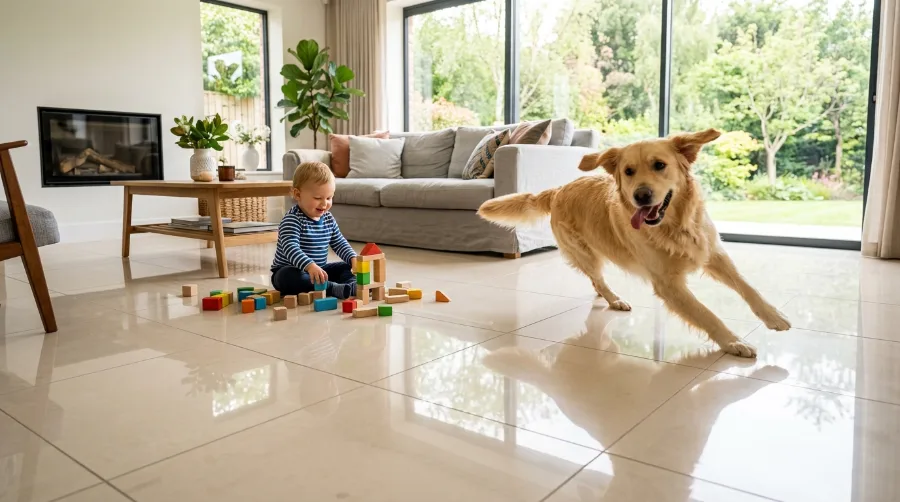
Porcelain is the smarter floor for busy families. It resists scratches from pet claws, chips from dropped toys, and stains from spills, and through-body porcelain hides chips almost completely. Pair it with a matte finish for better grip for kids and paws.
Pros and Cons of Porcelain Tile
Pros
- Very dense, hard, and scratch-resistant
- Absorbs 0.5% water or less, ideal for wet areas
- Suitable for outdoor use when frost-rated
- Realistic wood, stone, and marble looks
- Long lifespan with little upkeep
- Available in large formats with rectified edges
Cons
- Usually costs more to buy and install
- Hard to cut; needs special tools and mortar
- Heavier, which matters on walls and upper floors
- Can crack over an uneven subfloor
- Feels cold underfoot without floor heating
Pros and Cons of Ceramic Tile
Pros
- Usually more affordable
- Easy to cut and DIY-friendly
- Lightweight, great for walls
- Wide range of bold colors, glazes, and patterns
- Easier to replace a single broken tile
Cons
- Absorbs more water, so less suited to wet floors
- Less resistant to chips, cracks, and heavy wear
- Generally not for outdoor use
- Chips show more because the body color differs from the glaze
- Many options carry low PEI ratings unsuitable for busy floors
Common Myths About Ceramic and Porcelain Tiles
Myth: Porcelain is always better. Porcelain wins in tough spots, but ceramic is the smarter buy for walls and backsplashes. Paying extra for porcelain on a low-wear wall rarely adds value.
Myth: Ceramic can’t go in a bathroom. Glazed ceramic works well on bathroom and shower walls. It’s only less ideal for wet floors.
Myth: Porcelain never breaks. Porcelain is tough, but a heavy impact or a poor subfloor can still crack it.
Myth: A glazed tile is fully waterproof. The glaze protects the top, but edges, backs, and grout can still let water through.
Myth: Porcelain never needs sealing. Glazed porcelain doesn’t, but unglazed and some polished porcelain may. Grout always does.
How to Tell Porcelain and Ceramic Tile Apart
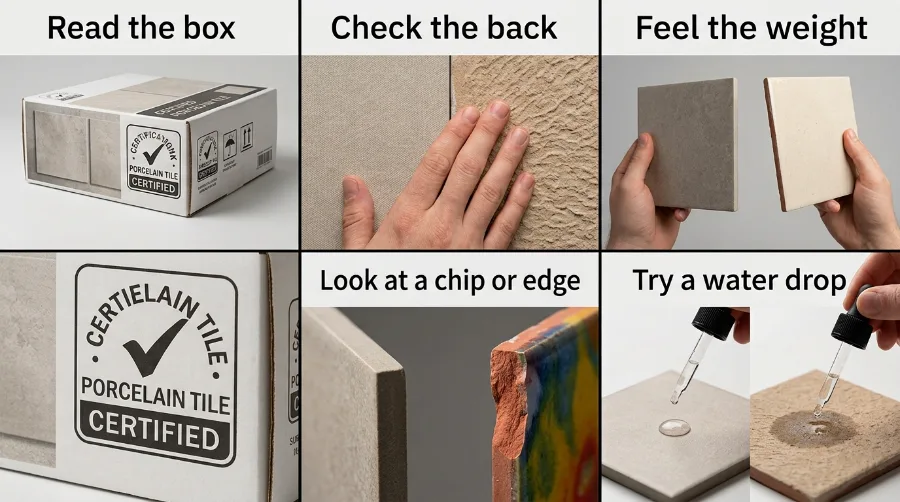
- Read the box. Look for the word “porcelain,” a water absorption rate of 0.5% or less, or a porcelain certification mark.
- Check the back. Porcelain feels smooth and fine, while ceramic feels rougher and chalkier.
- Feel the weight. Porcelain is heavier than a ceramic tile of the same size.
- Look at a chip or edge. Ceramic often shows a red or white body under the glaze. Porcelain shows a denser body, often close to the surface color.
- Try a water drop. Put a few drops on the unglazed back. Ceramic soaks it up quickly, while porcelain lets it bead.
Some tiles get labeled “porcelain” without meeting the 0.5% standard, so check the technical specs when you can.
How to Choose Between Ceramic or Porcelain Tiles
Answer these seven questions before you buy:
- Is it a floor or a wall? Floors need porcelain or ceramic rated PEI 3+. Walls can use almost any tile.
- Will it get wet often? Choose porcelain for wet floors, showers, and outdoor spaces.
- How busy is the space? Pick porcelain for entryways, kitchens, and homes with kids or pets.
- Is it indoors or outdoors? Outdoors, use frost-rated porcelain only.
- What’s your budget? Ceramic saves money where performance needs are low.
- Are you installing it yourself? Ceramic is far easier for DIY projects.
- What look do you want? Choose ceramic for bold, decorative styles and porcelain for realistic wood, stone, or large-format looks.
Many homeowners mix both: porcelain on the floor and ceramic on the walls. You get strength where you need it and savings where you don’t.
Frequently Asked Questions
Is porcelain tile more expensive than ceramic?
Usually, yes. Porcelain costs more to buy and install because of its refined clay, higher firing heat, and harder cutting. Some designer ceramic tiles, though, cost more than basic porcelain.
Which is better for bathroom floors, porcelain or ceramic?
Porcelain is better for bathroom floors. It absorbs very little water and resists wear. Choose a matte or textured finish for better slip resistance.
Can I use ceramic tile in a shower?
Yes, on the walls. Glazed ceramic sheds water well on vertical surfaces. For the shower floor, porcelain is the better choice because water sits there longer.
Is porcelain tile slippery when wet?
It can be, especially with a polished or glossy finish. Matte, textured, or anti-slip porcelain grips well. Look for a DCOF of 0.42 or higher for wet indoor floors.
Do porcelain tiles chip easily?
No. Porcelain resists chips better than ceramic. If it does chip, through-body porcelain hides the damage because its color runs all the way through.
Can porcelain tile go outside?
Yes, if the maker rates it frost-resistant and suitable for outdoor use. Outdoor porcelain pavers work well on patios and pool decks. Ceramic generally shouldn’t go outdoors.
Is ceramic tile good for kitchen floors?
It can work with a PEI rating of 3 or higher. Still, porcelain handles spills, dropped pans, and heavy traffic better, so it’s the stronger pick for busy kitchens.
Can you use porcelain tile on walls?
Yes. Porcelain works well on walls, including shower walls. Large porcelain tiles are heavy, so they need proper wall support and the right mortar.
Which lasts longer, ceramic or porcelain tile?
Porcelain usually lasts longer, often 50 years or more on floors. Ceramic also lasts many years, especially on walls where wear is low.
Do ceramic and porcelain tiles need sealing?
Glazed tiles don’t need sealing. Unglazed tiles and some polished porcelain may need a sealer. Cement grout should be sealed for both tile types.
Final Verdict: Porcelain vs Ceramic, Which Is Better?
Porcelain is the better choice for performance. It’s denser, harder, more water-resistant, and ready for floors, showers, busy spaces, and the outdoors. Ceramic is the better choice for value and design on walls, backsplashes, and light-traffic rooms, and it’s far easier to install yourself.
The best tile isn’t about which material wins overall. It’s about matching the right tile to the right space. Use porcelain where your tile works hard, use ceramic where it mostly needs to look good, and your floors and walls will serve you well for decades.