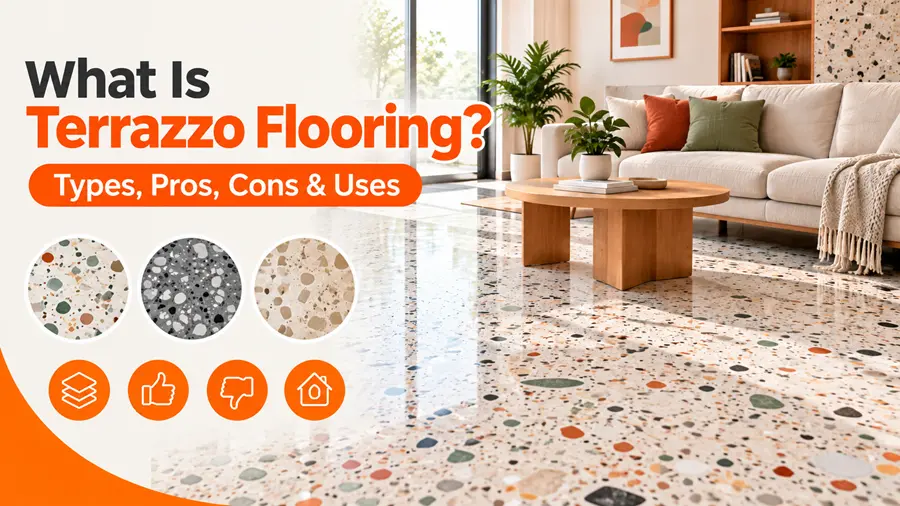
Terrazzo flooring combines small pieces of marble, granite, quartz, or glass with a cement or epoxy binder. Installers pour the mixture or lay it in place, allow it to cure, and then grind and polish the surface until it becomes smooth. This process creates a durable floor with a distinctive speckled pattern, and you can choose from a wide range of colors and aggregate combinations.
People have used terrazzo for more than 500 years. Venetian craftsmen originally made it by reusing leftover marble pieces. Today, you can find terrazzo in airports, hospitals, schools, offices, and modern homes because it handles heavy foot traffic and can last for decades with proper care.
In this guide by Nova floor Experts, you’ll learn what terrazzo flooring is made of, how the material works, the main types available, where you can use it, and the factors that affect its cost.
Contents
What Is Terrazzo Flooring?
Terrazzo is not a single material. It is a flooring system built from two main parts:
- A binder (also called the matrix) that holds everything together
- Aggregates (also called chips) that give the floor its color and pattern
Workers mix the two, spread the blend over a prepared base, and let it harden. Then they grind the surface down with diamond abrasives until the chips show through. A final polish and sealer bring out the shine.
Because the floor cures as one piece, poured terrazzo has almost no seams or grout lines. That single detail explains many of its advantages, from easy cleaning to strong stain resistance.
How terrazzo differs from terrazzo tiles
Poured terrazzo is mixed and installed on site. Terrazzo tiles are made in a factory, cut to size, then set with thinset mortar like ceramic tile.
Both use the same terrazzo materials. The difference is where the work happens:
- Poured terrazzo gives you a seamless floor and unlimited design options
- Terrazzo tiles cost less, install faster, and suit smaller rooms or DIY-friendly projects
Tiles do have grout joints, so they lose the smooth, unbroken look that makes poured terrazzo stand out.
What Is Terrazzo Flooring Made Of?
A finished terrazzo floor uses five components. Each one does a specific job.
1. The binder (matrix)
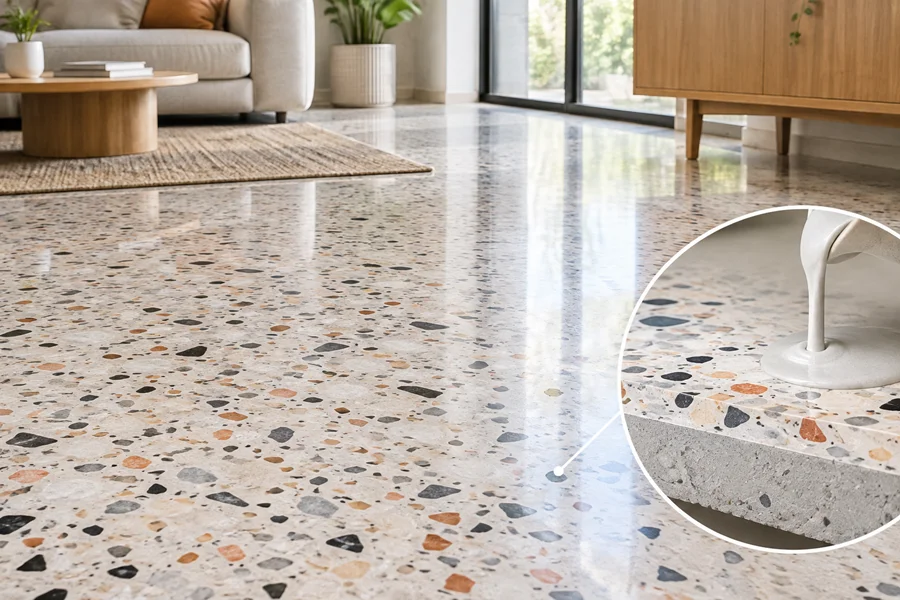
The binder suspends the aggregate and bonds the floor together. Two main options exist:
- Cement binder: White or gray portland cement, usually tinted with pigments for soft, natural colors
- Epoxy resin binder: A two-part resin that accepts any custom color, including bright and bold shades
Your binder choice drives almost every other decision, from thickness and cure time to whether the floor can go outdoors.
2. Aggregates (the chips)
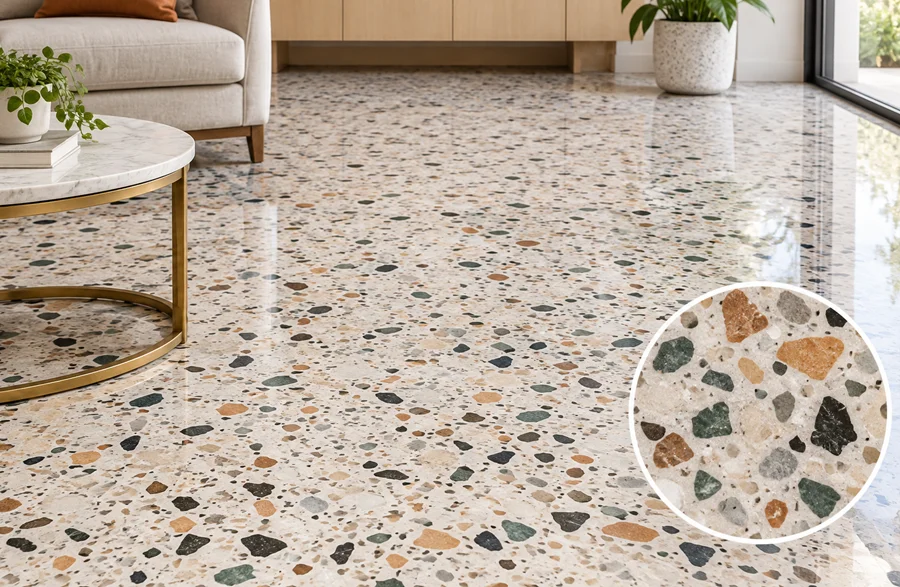
Aggregates give terrazzo its personality. Most designs call for chips to make up 70% to 85% of the visible surface.
Common aggregate materials include:
- Marble chips – the classic choice, soft in tone and widely available
- Granite – harder and more speckled, good for heavy-traffic areas
- Quartz – bright, consistent color; often used with epoxy
- Glass aggregates – recycled glass and crushed mirror, which add sparkle
- Mother-of-pearl and seashell – for decorative accents
- River rock and stone – for rustic, large-chip designs
Chip size matters too. Small chips create a fine, even texture. Large chips create a bold, dramatic look and need a thicker floor to hold them.
Practical example: A school might pick small marble chips in a single tone for hallways, then use crushed mirror and colored glass to build the mascot logo in the main lobby.
3. Divider strips
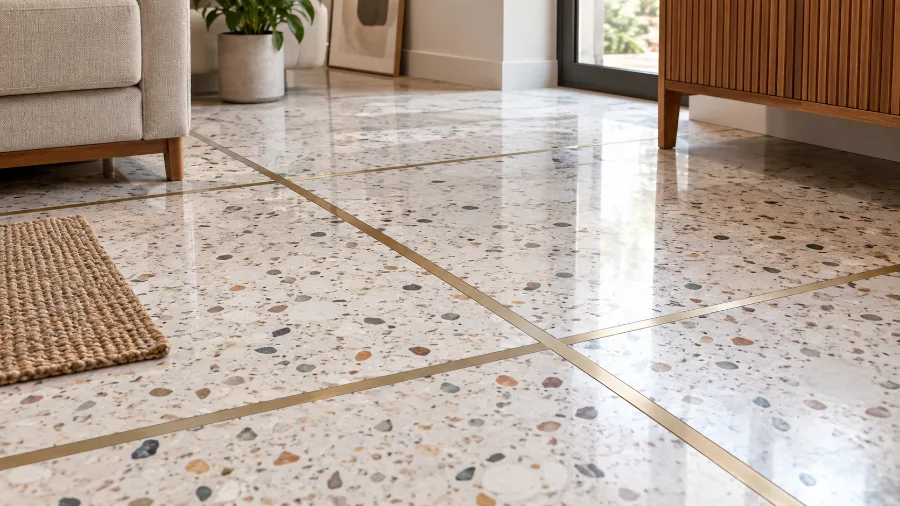
Divider strips are thin metal or plastic strips set into the floor before pouring. They do three jobs:
- Separate different colors so the mixes do not bleed into each other
- Create shapes, borders, logos, and wayfinding patterns
- Allow for movement in large floor areas, which helps control cracking
Strips come in zinc, brass, aluminum, or plastic. Most are 1/8 inch wide. Installers grind them flush during polishing, so they end up level with the surface.
4. Membranes and substrate prep
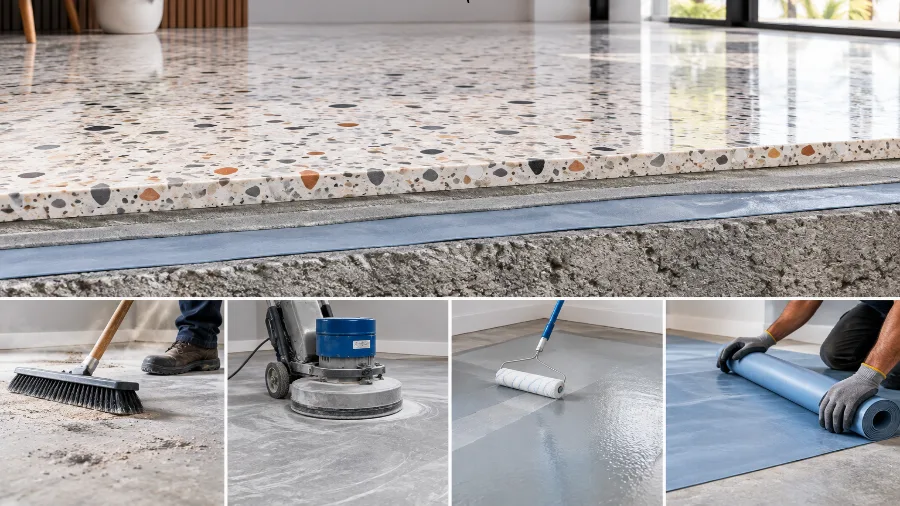
The base under the floor matters as much as the mix on top. Depending on conditions, a crew may install:
- A primer or bonding agent so the terrazzo grips the slab
- A cleavage membrane that lets the floor and slab move separately
- A moisture mitigation membrane if the concrete slab holds too much humidity
- A crack suppression membrane so cracks in the slab do not travel upward
Skipping this step is the most common cause of terrazzo failure.
5. Sealer
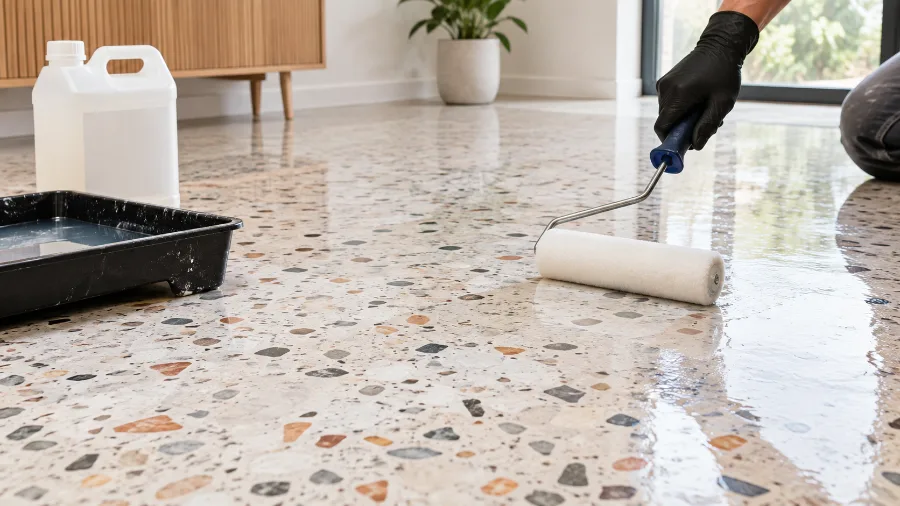
After the final polish, installers apply a sealer. Most modern sealers are water-based and use acrylic polymers. The sealer blocks stains and adds gloss. It also needs periodic reapplication, which we cover in the maintenance section below.
How Terrazzo Flooring Works: The Installation Process
Here is what a typical poured-in-place installation looks like:
- Prepare the substrate. The crew cleans, levels, and tests the concrete slab for moisture.
- Install membranes. They add primers or separation layers based on the system type.
- Set divider strips. Strips go down according to the design drawings and are anchored tightly.
- Mix and pour. The binder and aggregate get mixed, then troweled into place between the strips.
- Cure. Epoxy cures in a day or two. Cement needs several days or more.
- Rough grind. Diamond grinders cut down the surface to expose the chips.
- Grout the floor. Crews fill any small pinholes with matching binder.
- Fine grind and polish. Progressively finer abrasives build the final finish.
- Seal. The sealer goes on last, once the floor is clean and dry.
Terrazzo installation is skilled trade work. A poor pour or rushed cure creates problems that are expensive to fix, so hiring an experienced contractor matters more here than with most flooring types.
Types of Terrazzo Flooring
Terrazzo systems fall into a few main families. Each suits a different budget, building, and slab condition.
Epoxy terrazzo
Epoxy terrazzo uses a resin binder instead of cement. It is the most popular system for new commercial construction.
Best for: Interior spaces, bright custom colors, thin floors, fast schedules
Key traits:
- Very thin, usually 3/8 inch, so it adds little height or weight
- Accepts unlimited colors, including vivid pigments
- Non-porous and highly stain resistant
- Cures fast, which shortens project timelines
- Not suitable outdoors, since UV light and weather can fade or peel it
Cementitious terrazzo
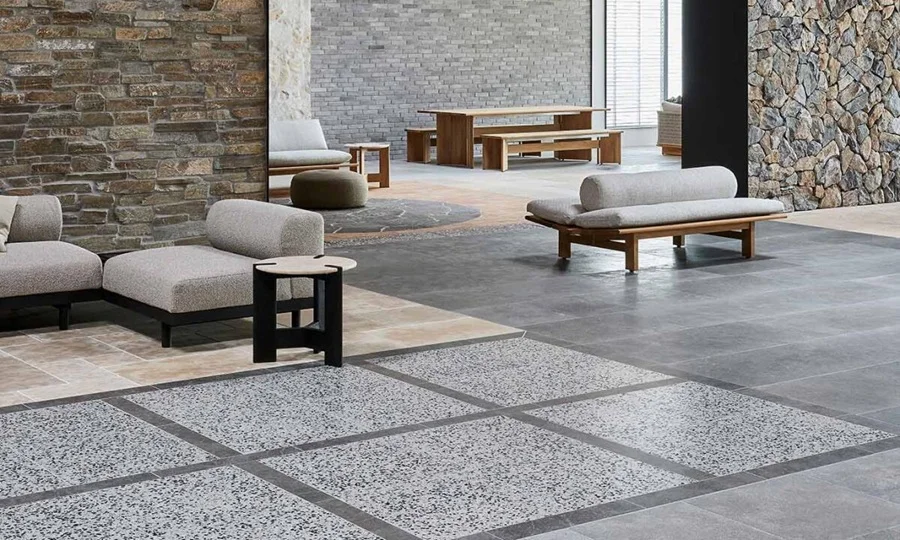
Cementitious terrazzo uses a cement binder. It is the original form and still the right pick for outdoor areas and older buildings.
Best for: Exterior patios, plazas, restoration work, buildings with slab movement
Key traits:
- Handles sun, freeze-thaw cycles, and moisture better than epoxy
- Thicker and heavier, which affects floor height and structural load
- Colors lean toward softer, earthy tones
- Longer cure time, so the schedule runs longer
Cementitious terrazzo comes in several sub-systems:
- Sand cushion terrazzo: The thickest and most forgiving option. A sand layer and wire mesh separate the floor from the slab, so slab movement does not crack the surface.
- Bonded terrazzo: An underbed bonds directly to the slab. A middle-ground option in thickness and cost.
- Monolithic terrazzo: Poured straight onto the concrete slab at about 1/2 inch. The thinnest and cheapest cement system, but it needs a stable, crack-free slab.
- Thin-set cement terrazzo: A modified cement system that pours thin like epoxy.
Polyacrylate terrazzo
Polyacrylate is a hybrid. It uses cement modified with acrylic polymers. This system pours thin like epoxy but breathes like cement, which makes it useful over slabs with moisture issues. It also works in some exterior applications.
Terrazzo tiles (precast terrazzo)
Factory-made terrazzo tiles come in standard sizes, often 12×12 or 16×16 inches. Crews install them with thinset and grout.
Best for: Homes, small rooms, tighter budgets, renovation projects
Precast terrazzo also covers stair treads, window sills, wall bases, and countertops.
Rustic terrazzo
Rustic terrazzo uses large chips and a textured, unpolished finish. The rough surface improves slip resistance, which makes it a good choice for pool decks, entryways, and outdoor walkways.
Venetian and Palladiana terrazzo
These are decorative styles rather than separate systems:
- Venetian terrazzo uses larger chips for a chunky, high-contrast look
- Palladiana terrazzo sets broken slabs of stone, tile, or glass into the floor, then pours terrazzo around them like a mosaic
Quick comparison
| Type | Binder | Thickness | Outdoor use | Relative cost |
| Epoxy terrazzo | Resin | ~3/8″ | No | High |
| Monolithic cement | Cement | ~1/2″ | Yes | Moderate |
| Bonded cement | Cement | ~1 3/4″ | Yes | Moderate-high |
| Sand cushion | Cement | ~2 1/2″ | Yes | Highest |
| Polyacrylate | Modified cement | ~3/8″ | Limited | Moderate-high |
| Terrazzo tiles | Either | Tile thickness | Depends on tile | Lowest |
Common Uses and Applications
Terrazzo works anywhere that needs a floor to survive hard use and still look good.
Commercial and public buildings
- Airports and transit hubs: Rolling luggage and millions of footsteps cause almost no wear
- Hospitals and clinics: The seamless, non-porous surface is easy to sanitize
- Schools and universities: Floors installed decades ago often still serve today
- Retail and hospitality: Custom colors and inlaid logos support brand design
- Libraries, museums, and civic buildings: Wayfinding patterns guide visitors without signs
Residential uses
Homeowners use terrazzo in:
- Entryways and hallways
- Kitchens, where spills wipe up easily
- Bathrooms, especially with rustic or honed finishes for grip
- Open-plan living areas, where the seamless look makes rooms feel larger
- Patios and pool surrounds, using cement-based systems
Beyond the floor
Terrazzo is not limited to flooring. Fabricators also make:
- Stair treads and risers
- Wall panels and wainscoting
- Countertops and vanity tops
- Shower pans and bench seats
- Planters, benches, and site furnishings
Pros of Terrazzo Flooring
Exceptional durability. A properly installed terrazzo floor can last 40 to 75 years or more. Many historic buildings still use their original floors.
Low maintenance. Daily care means sweeping and damp mopping. There is no refinishing schedule like hardwood or regrouting like tile.
Unlimited design freedom. You control binder color, chip type, chip size, and pattern. Divider strips let you add logos, borders, and artwork.
Hygienic and allergy friendly. The non-porous, seamless surface gives dust mites, mold, and bacteria nowhere to settle. That matters in healthcare settings and in homes with allergy sufferers.
Water and stain resistant. Sealed terrazzo shrugs off spills, which suits kitchens, baths, and entryways.
Sustainable. Many terrazzo mixes use recycled glass, recycled marble chips, and post-consumer content. The long lifespan also keeps replacement waste out of landfills. Terrazzo can contribute to green building credits.
Low lifetime cost. The floor costs more upfront but rarely needs replacement. Spread over 50 years, the annual cost is often lower than cheaper flooring types that need replacing every 10 to 15 years.
Works with radiant heat. Terrazzo conducts heat well, so it pairs nicely with in-floor heating systems.
Cons of Terrazzo Flooring
High upfront cost. Terrazzo is one of the more expensive flooring types to install, especially for custom designs.
Specialized installation. You cannot DIY poured terrazzo. The work needs trained crews and heavy grinding equipment, and skilled installers are not available in every market.
Cold underfoot. The dense surface holds cool temperatures. Radiant heating or area rugs solve this.
Hard and unforgiving. Standing on terrazzo for hours tires your legs. Dropped glassware breaks instead of bouncing. Consider anti-fatigue mats in kitchens and work areas.
Slippery when wet. Polished terrazzo gets slick with water. Use honed or rustic finishes in bathrooms, entries, and pool areas.
Vulnerable to acids. Vinegar, citrus, and harsh cleaners can etch the marble chips and dull the sealer.
Can crack. If the slab below shifts or the crew skips proper prep, cracks can telegraph through the floor.
Long install timeline. Cement systems need days to cure. Grinding and polishing add more time, and the work is dusty and noisy.
Terrazzo Flooring Maintenance
Terrazzo maintenance is simple, but it has rules.
Routine care
- Sweep or dust mop daily to remove grit, which is the main cause of scratching
- Damp mop with a pH-neutral cleaner and clean water
- Wipe spills quickly, especially wine, coffee, and citrus juice
- Place walk-off mats at entrances to trap sand and dirt
Sealing
Reseal the floor every 1 to 3 years for cement terrazzo. Epoxy terrazzo needs it less often, since the resin itself resists moisture. High-traffic commercial floors may need annual attention.
Watch for these signs that sealing is due:
- Water no longer beads on the surface
- The shine looks patchy or dull
- Spills leave faint marks
Deep restoration
Every 10 to 20 years, a professional can strip the old sealer, regrind the surface, and repolish it. This brings back the original finish at a fraction of replacement cost. It is one reason terrazzo floors from the 1950s still look sharp.
What to avoid
- Vinegar, bleach, ammonia, and acidic cleaners
- Abrasive scouring pads and steel wool
- Oil-based soaps that leave a slippery film
- Dragging furniture without felt pads
- Letting standing water sit on the surface
How Much Does Terrazzo Flooring Cost?
Terrazzo pricing varies widely because it depends on system type, design complexity, and labor market.
| Option | Typical installed cost (per sq ft) |
| Terrazzo tiles | $15 – $35 |
| Cementitious poured-in-place | $25 – $50 |
| Epoxy poured-in-place, standard design | $30 – $65 |
| Epoxy with custom logos and patterns | $45 – $100+ |
A 200-square-foot room typically runs $4,000 to $10,000 installed.
Factors that affect terrazzo cost
- System type. Sand cushion systems use the most material and labor. Tiles use the least.
- Design complexity. Every added color needs more divider strips, more mixes, and more labor. Logos and curved borders raise the price sharply.
- Aggregate choice. Standard marble chips are inexpensive. Mother-of-pearl, crushed mirror, and semi-precious stone cost several times more per pound.
- Chip size. Larger chips need thicker floors and more grinding time.
- Substrate condition. Cracked, uneven, or damp slabs need repair or moisture mitigation before work starts.
- Project size. Larger areas lower the cost per square foot because setup and mobilization get spread out.
- Location. Labor rates and installer availability vary a lot by region.
- Removal of old flooring. Tearing out existing tile, vinyl, or wood adds to the budget.
Thinking about lifetime cost
Compare the numbers over 50 years. A mid-priced carpet or vinyl floor might need replacing four or five times in that window. A terrazzo floor installed once, cleaned properly, and repolished twice usually still has decades left. That is why schools, airports, and hospitals keep choosing it despite the sticker price.
Terrazzo vs. Other Flooring Options
| Feature | Terrazzo | Ceramic/Porcelain Tile | Polished Concrete | Natural Stone | Luxury Vinyl |
| Lifespan | 40–75+ yrs | 20–40 yrs | 25–50 yrs | 50+ yrs | 10–25 yrs |
| Seams/grout | None (poured) | Grout lines | None | Grout lines | Seams |
| Design options | Unlimited | Wide | Limited | Fixed by stone | Wide (printed) |
| Upfront cost | High | Low–moderate | Low–moderate | High | Low |
| Maintenance | Low | Moderate (grout) | Low | Moderate (sealing) | Low |
| DIY friendly | No (tiles: yes) | Yes | No | Limited | Yes |
| Comfort underfoot | Hard, cold | Hard, cold | Hard, cold | Hard, cold | Softer, warmer |
Terrazzo vs. tile: Tile costs less and installs faster, but grout lines stain and need upkeep. Terrazzo gives you a seamless surface and a longer life.
Terrazzo vs. polished concrete: Both are ground and polished. Concrete costs less but offers limited color and pattern control. Terrazzo lets you design the surface.
Terrazzo vs. marble: Marble delivers natural veining but scratches, etches, and costs a lot to maintain. Terrazzo uses marble chips in a tougher matrix, so you get similar elegance with better durability.
Terrazzo vs. luxury vinyl: Vinyl is cheap, warm, and DIY friendly. It also wears out, dents, and fades. Terrazzo costs far more upfront and outlives vinyl several times over.
Is Terrazzo Flooring Right for You?
Terrazzo is a strong fit if you:
- Plan to stay in the building long term
- Need a floor that handles heavy traffic
- Want a custom look you cannot get from off-the-shelf products
- Value low daily maintenance
- Have a stable concrete slab to build on
Look at other options if you:
- Have a tight upfront budget
- Need the job finished in a few days
- Want a soft, warm surface underfoot
- Are renovating a rental or short-term property
- Cannot find an experienced terrazzo contractor nearby
For budget-conscious projects, terrazzo tiles offer a middle path. You get the look and much of the durability at a lower price.
Frequently Asked Questions
How long does terrazzo flooring last?
A well-installed terrazzo floor lasts 40 to 75 years, and many last more than a century. Buildings from the early 1900s still have their original terrazzo in service. Lifespan depends on installation quality, slab stability, and regular sealing.
Is terrazzo flooring expensive?
Yes, upfront. Installed costs usually run $15 to $100 per square foot depending on the system and design. Over the full life of the building, though, terrazzo often costs less per year than flooring you replace every decade.
Is terrazzo flooring outdated?
No. Terrazzo has returned to mainstream design in recent years. Designers use it in modern homes, boutique hotels, cafes, and offices. Bold epoxy colors and large-chip patterns give it a contemporary feel that looks nothing like mid-century installations.
Is terrazzo good for bathrooms and kitchens?
Yes. Sealed terrazzo resists water and stains, and the seamless surface has no grout to scrub. For bathrooms, choose a honed or textured finish rather than a high-gloss polish so the floor stays safer when wet.
Can you install terrazzo over an existing floor?
You need to remove most existing flooring first. Terrazzo bonds to a clean, sound concrete substrate. Crews can sometimes pour over an old terrazzo floor after grinding it, but vinyl, carpet, and wood have to come out.
Is terrazzo flooring slippery?
Polished terrazzo can be slippery when wet. Rustic finishes, honed surfaces, and slip-resistant additives in the sealer all improve traction. For pool decks and outdoor walkways, use a textured cement-based system.
Does terrazzo flooring crack?
It can, but usually because of slab movement rather than the terrazzo itself. Proper substrate prep, crack suppression membranes, and correctly placed divider strips prevent most cracking. Sand cushion systems handle unstable slabs best.
Can I install terrazzo flooring myself?
Poured terrazzo is not a DIY project. It needs specialized mixing, industrial grinders, and trained crews. Terrazzo tiles, however, install like any other tile and are within reach for experienced DIYers.
Is terrazzo eco-friendly?
Yes. Many mixes use recycled glass and reclaimed marble chips. Low-VOC epoxy options exist, and the extremely long lifespan means far less replacement waste than most flooring types.
What is the difference between epoxy and cementitious terrazzo?
Epoxy terrazzo uses a resin binder. It is thinner, cures faster, offers brighter colors, and works indoors only. Cementitious terrazzo uses a cement binder. It is thicker, cures slower, uses softer tones, and handles outdoor conditions and slab movement better.
Final Thoughts
Terrazzo flooring earns its reputation through a simple combination: hard aggregates suspended in a strong binder, ground to a smooth finish that lasts for generations. It costs more than most flooring upfront, and it needs skilled hands to install. In return, you get a surface that resists wear, cleans easily, matches almost any design idea, and rarely needs replacing.
If you want a floor you install once and keep for the life of the building, terrazzo is hard to beat. Get quotes from at least three certified installers, ask to see completed projects in person, and confirm they have tested your slab before any work begins.