
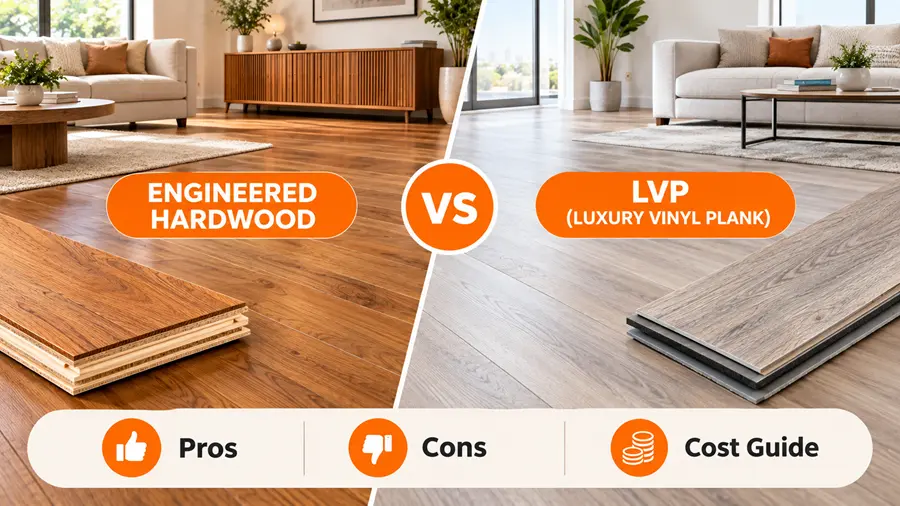
Engineered hardwood and luxury vinyl plank (LVP) both give you the look of a wood floor for less than solid hardwood. But they are very different products. One is real wood. The other is vinyl. That single difference shapes how each floor looks, feels, handles water, and holds its value.
This guide by Nova Floor, compares engineered hardwood vs LVP side by side. You’ll learn how each floor is built, what each costs in 2026, which one suits each room, and how to choose the right floor for your budget, pets, and lifestyle.
Contents
Engineered Hardwood vs LVP
Engineered hardwood is a real wood floor. It has a thin layer of hardwood on top of a plywood or fiberboard core. It looks and feels like solid hardwood, can be refinished, and can last 50 years or more with good care.
LVP is a synthetic floor made mostly of PVC vinyl. A printed wood image sits under a clear wear layer. It is waterproof, scratch resistant, cheaper, and easier to install. However, it cannot be refinished and usually lasts 15 to 25 years.
Choose engineered hardwood for living rooms, bedrooms, and long term value. Choose LVP for kitchens, bathrooms, basements, rentals, and busy homes with pets.
Side-by-Side Comparison
| Feature | Engineered Hardwood | LVP |
| Main material | Real hardwood veneer over plywood or HDF | PVC vinyl with a printed design layer |
| Material cost | $3 to $16 per sq ft | $2 to $10 per sq ft |
| Installed cost | $7 to $20 per sq ft | $4 to $16 per sq ft (most $5 to $12) |
| Water | Water resistant, rarely waterproof | Waterproof (most rigid core products) |
| Scratch resistance | Moderate | High |
| Dent resistance | Good, depends on wood species | Strong for SPC, weaker for WPC and flexible |
| Can be refinished | Yes, if the wear layer is thick enough | No |
| Typical lifespan | 25 to 50+ years | 15 to 25 years |
| Feel underfoot | Warm, solid, natural | Depends on core and underlayment |
| Installation | Nail, staple, glue, or float | Mostly click lock floating |
| DIY friendly | Moderate | Very |
| Radiant heat | Excellent match | Usually fine within temperature limits |
| Resale appeal | Higher | Good |
| Best rooms | Living rooms, bedrooms, dining rooms | Kitchens, baths, basements, laundry rooms |
What Is Engineered Hardwood Flooring?
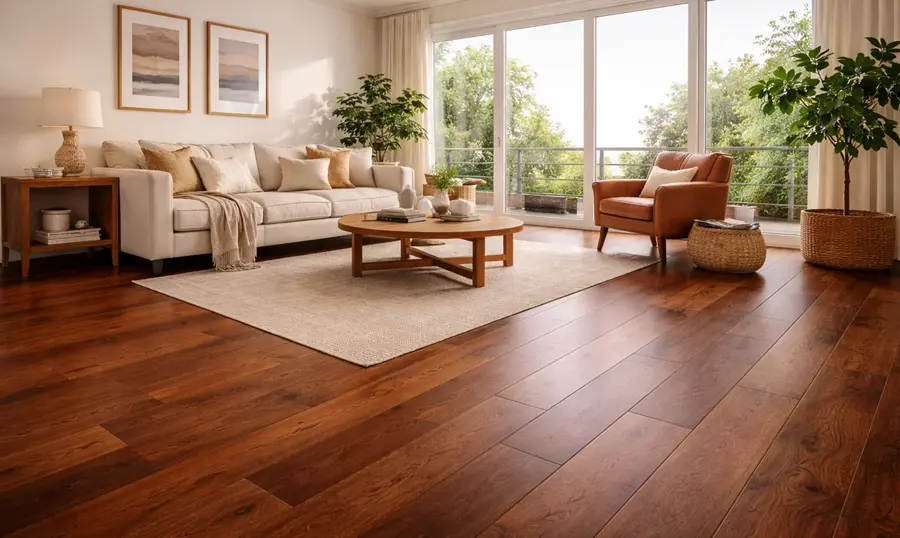
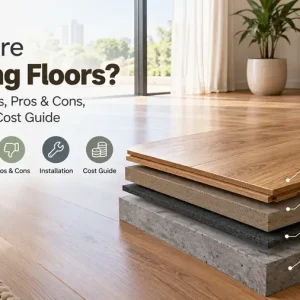
Engineered hardwood flooring is real wood flooring built in layers. The top layer, called the wear layer or veneer, is a slice of real hardwood such as white oak, red oak, hickory, maple, or walnut. Below it sits a core of plywood or high density fiberboard (HDF).
How Engineered Hardwood Is Built
The core layers are stacked in alternating directions. This crossply design keeps each plank stable, so it expands and shrinks less than solid hardwood when humidity changes. That stability lets you install engineered hardwood where solid wood struggles, such as over concrete slabs, in some basements, and over radiant heat.
Budget planks often have three core layers. Midrange products usually have five, and premium planks have seven or more. More layers generally mean a stronger, more stable floor.
Most engineered floors come prefinished from the factory with a tough coating, often aluminum oxide or UV cured urethane. You can also buy unfinished planks that a pro stains and seals on site for a custom color.
A newer category, waterproof engineered hardwood, pairs a real wood veneer with a rigid waterproof core and a sealed surface. Always read the label, though. Most engineered hardwood is only water resistant.
Wear Layer Thickness and Refinishing
The wear layer controls how many times you can sand and refinish the floor. As a rule of thumb, each full sanding removes roughly 1 mm of wood.
| Wear Layer | What It Allows | Good Fit For |
| Under 2 mm | Screen and recoat only, or one very light sanding by a skilled pro | Low traffic rooms, tight budgets |
| 2 to 3 mm | One to two full refinishes | Bedrooms, average family homes |
| 4 mm and up | Three or more full refinishes | Forever homes, busy living areas |
Tip: A “screen and recoat” lightly buffs the old finish and adds a fresh topcoat. It revives dull floors without sanding into the wood, so even thin wear layers can get one.
Pros and Cons of Engineered Hardwood
Pros
- Real wood beauty. Every plank has natural grain, knots, and color changes.
- Can be refinished. A thick wear layer lets you sand away wear and change the stain color.
- Stable in humidity. The layered core resists cupping and gapping better than solid wood.
- Flexible installation. You can nail, staple, glue, or float it, even over concrete.
- Long lifespan. Quality floors can last for decades.
- Strong resale appeal. Buyers see real wood as a premium feature.
- Eco options. Many brands offer FSC certified wood.
Cons
- Higher cost. It costs more than LVP for both materials and labor.
- Not waterproof. Standing water can swell the core and lift the veneer.
- Scratches show. Soft species and glossy finishes reveal marks from claws and grit.
- Sun changes color. UV light can lighten or darken wood over time.
- Limited refinishing. Thin veneers allow few or no full sandings.
- Harder to DIY. Nail down and glue down jobs often need a pro.
What Is Luxury Vinyl Plank (LVP) Flooring?
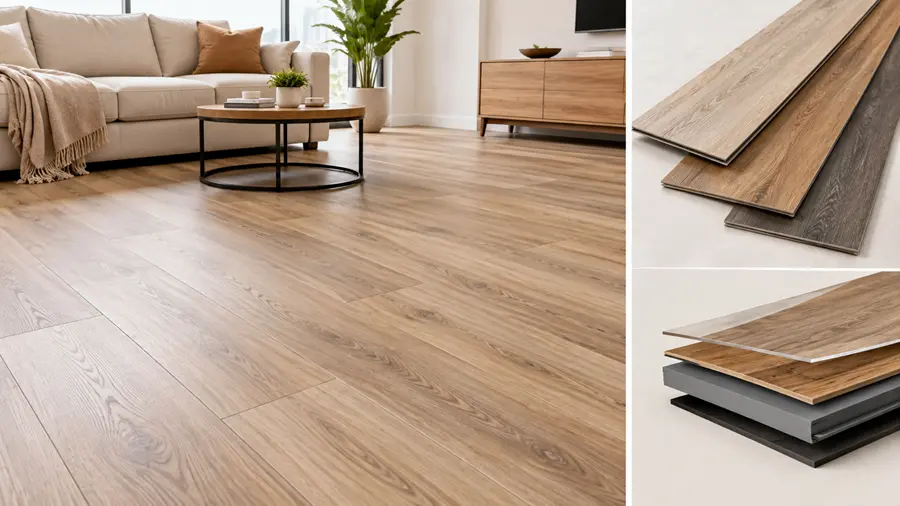
LVP is a synthetic plank floor made mainly from polyvinyl chloride (PVC). It copies the look of wood with a high resolution photo layer. The word “plank” sets it apart from luxury vinyl tile (LVT), sheet vinyl, and thin peel and stick vinyl.
The Layers Inside an LVP Plank
- Top coat: A UV cured coating, often with aluminum oxide or ceramic beads, fights scuffs and stains.
- Wear layer: A clear vinyl film protects the design from scratches. Its thickness is measured in mils.
- Design layer: A photorealistic print shows the wood grain. Better products add embossed in register (EIR) texture, where the surface grooves line up with the printed grain.
- Core: The thickest layer gives the plank its strength and waterproof performance.
- Backing or attached pad: Cork, foam, or IXPE padding adds cushion and cuts noise.
SPC vs WPC vs Flexible LVP
Most comparisons skip this detail, but the core type changes how LVP performs.
| LVP Type | Core Material | Strengths | Weak Points |
| SPC (stone plastic composite) | Limestone powder and PVC | Very dense, strong dent resistance, stable in heat and cold | Harder and cooler underfoot, can sound louder |
| WPC (wood plastic composite) | Foamed PVC (many contain little or no wood) | Softer, warmer, quieter | Dents more easily under heavy furniture |
| Flexible LVP (glue down or dry back) | Thin, bendable vinyl | Low cost, low profile, easy to cut | Needs a very smooth subfloor, shows flaws below it |
SPC and WPC are both called rigid core LVP. Most waterproof click lock planks sold today use one of these two cores.
LVP Wear Layer Thickness in Mils
A mil is one thousandth of an inch. It is not a millimeter, so don’t compare mils directly to engineered wood wear layers.
| Wear Layer | Best Use |
| 6 to 8 mil | Closets, guest rooms, very light use |
| 12 mil | Standard residential rooms |
| 20 mil | Busy homes with kids, pets, or rentals |
| 22 to 28 mil and up | Heavy traffic and light commercial spaces |
Warranty length often rises with wear layer thickness. A 20 mil product usually carries a longer residential warranty than a 12 mil budget product.
Pros and Cons of LVP
Pros
- Waterproof. Rigid core planks shrug off spills, pet accidents, and wet shoes.
- Scratch and stain resistant. The wear layer and top coat protect the surface.
- Budget friendly. It usually costs far less than engineered hardwood.
- Easy to install. Click lock planks float over the subfloor with no nails or glue.
- Low maintenance. You can sweep and damp mop it with little worry.
- Many styles. Choices include wide plank, gray, whitewashed, distressed, and hand scraped looks.
- Simple repairs. You can swap a damaged plank on a floating floor.
Cons
- Cannot be refinished. Once the wear layer wears through, you replace the floor.
- Shorter lifespan. It rarely lasts as long as real wood.
- Can dent. Softer cores and thin products dent under heavy furniture.
- Sun fading. Budget products can fade or discolor near large windows.
- Pattern repeats. Cheaper lines reuse a few printed designs, which looks less natural.
- Environmental concerns. PVC comes from fossil fuels and is hard to recycle.
- Glue down removal. Taking out glued vinyl is slow, messy work.
Engineered Hardwood vs LVP: 10 Key Differences
1. Look and Feel: Engineered Hardwood Looks More Authentic
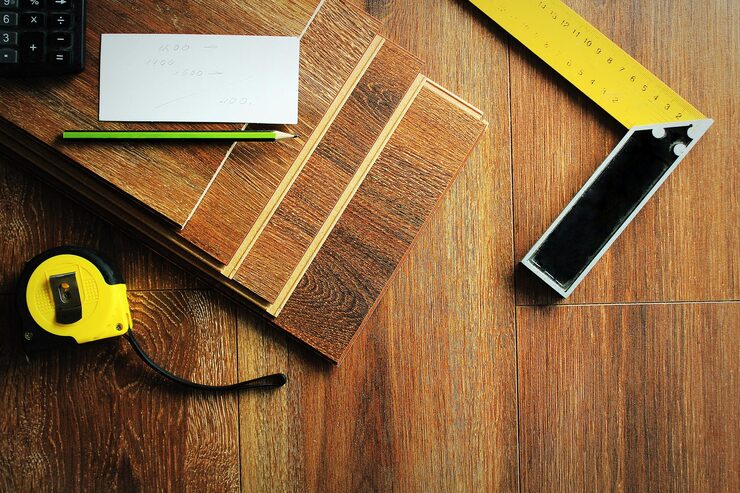
Because the top layer is real wood, no two engineered planks match exactly. Once installed, most people can’t tell engineered hardwood from solid hardwood.
LVP copies wood with a photo. Premium LVP with EIR texture and many unique plank designs looks convincing from standing height. Up close, though, repeated patterns and the smooth feel of vinyl can give it away. Real wood also feels warmer to bare feet.
2. Water Resistance: LVP Wins in Wet Areas
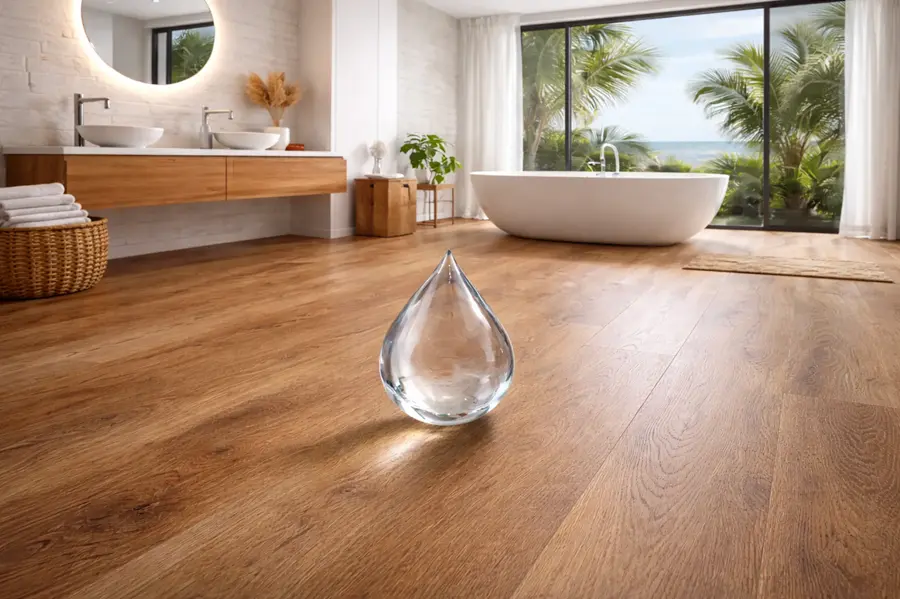
Rigid core LVP is waterproof, so water won’t swell the planks. Water can still slip through seams and edges to the subfloor, however. In bathrooms and laundry rooms, seal the perimeter with a flexible caulk and follow the maker’s instructions.
Engineered hardwood handles humidity better than solid wood. Standing water, however, can swell the core, cause cupping, or separate the veneer. Wipe spills quickly. If you want real wood in a damp area, look for a product labeled waterproof and read the warranty terms.
3. Scratch and Dent Resistance: It Depends on the Core
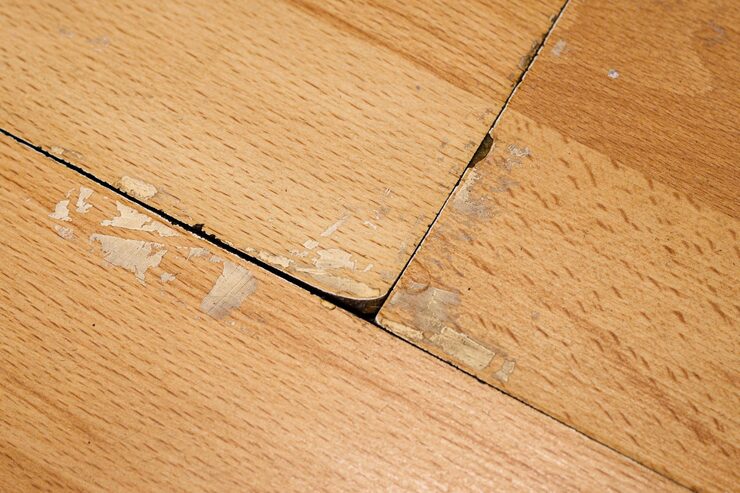
LVP usually beats engineered hardwood on scratches thanks to its wear layer and coating. Dents are a different story:
- SPC LVP resists dents very well.
- WPC and flexible LVP can dent under heavy furniture or dropped pans.
- Engineered hardwood depends on the wood species.
The Janka hardness scale measures how well a wood resists dents. Higher numbers mean harder wood. Common flooring species rate roughly like this: red oak 1290, white oak 1360, hard maple 1450, and hickory 1820.
Here’s a key difference in repairs. You can sand scratches out of engineered hardwood. A deep scratch through LVP’s wear layer can’t be fixed, so you must replace that plank. On either floor, a matte or wire brushed finish hides small marks best.
4. Lifespan: Engineered Hardwood Lasts Longer
Quality engineered hardwood with a thick wear layer can last about 50 years because you can refinish it. Well made LVP typically lasts 15 to 25 years. Budget LVP with a thin wear layer may need replacing in 5 to 10 years in a busy home.
5. Comfort and Noise: Underlayment Makes the Difference
Nailed or glued engineered hardwood feels solid and sounds natural. A floating engineered floor can sound hollow without a quality pad.
LVP comfort depends on the core. WPC planks and products with an attached pad feel softer and quieter. Thin SPC over concrete can feel hard, cool, and a bit clicky.
For condos and upstairs rooms, check two sound ratings: IIC (Impact Insulation Class) for footstep noise and STC (Sound Transmission Class) for airborne sound. Many buildings and HOAs require a minimum rating, so ask before you buy.
6. Installation: LVP Is Faster and Easier to DIY
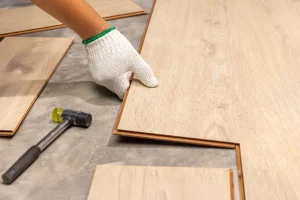
Most LVP uses a click lock floating system. You score planks with a utility knife and snap them together. A motivated homeowner can lay about 200 to 300 square feet per day.
Engineered hardwood can float, too, but many products are nailed, stapled, or glued down. These methods need saws, a flooring nailer or trowel, and more skill. Glue down jobs over concrete also need moisture testing. That’s why many homeowners hire a pro for engineered wood.
Both floors need good prep:
- Flat subfloor. Many manufacturers require flatness within about 3/16 inch over 10 feet. Uneven floors can break click joints.
- Moisture control. Test concrete and use a vapor barrier where the instructions call for it.
- Expansion gap. Leave space at the walls so the floor can move.
- Acclimation. Engineered wood often needs about 48 hours in the room before installation. Many rigid core LVP products need little or none. Always follow the product’s guide.
7. Maintenance and Repairs
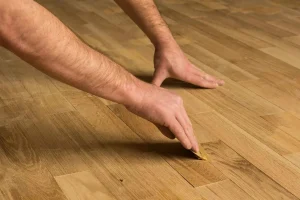
Daily care for both: Sweep or vacuum often, using a hard floor setting without a beater bar. Put felt pads under furniture legs and doormats at entries to trap grit.
LVP: Damp mop with a pH neutral cleaner. Skip wax, ammonia, bleach, abrasive pads, and steam mops unless the maker approves them. To repair damage, replace the plank. Keep a spare box from your original order.
Engineered hardwood: Use a dry or barely damp mop with a wood floor cleaner. Never soak the floor or use a steam mop. Hide small scratches with a touch up kit. Plan a screen and recoat every few years in busy rooms, and a full refinish when the wood looks worn. Keeping indoor humidity around 35 to 55 percent helps prevent gaps and cupping.
8. Radiant Floor Heating: Engineered Hardwood Is a Top Choice
Engineered hardwood works very well over radiant heating because its layered core stays stable as temperatures change.
LVP usually works over radiant heat, too. Most manufacturers cap the floor surface temperature, often around 80 to 85°F, because vinyl can soften or warp if it gets too hot. Check that your exact product is approved for radiant heat before you buy.
9. Health, Indoor Air Quality, and Sustainability
Air quality. Look for FloorScore certification on either floor. It shows the product passed testing for low VOC (volatile organic compound) emissions. For engineered wood with composite cores, check that it meets CARB Phase 2 or TSCA Title VI formaldehyde limits. For LVP, choose products labeled phthalate free.
Sustainability. Engineered hardwood uses much less slow growing hardwood than solid planks. Wood is renewable, and look for FSC certified products for responsible sourcing. Refinishing also keeps the floor out of landfills longer.
LVP is made from PVC, a plastic that is hard to recycle. Some brands run takeback programs, but most old vinyl ends up in landfills. A longer lasting LVP with a thick wear layer reduces waste.
10. Resale Value
Buyers often see real wood as a premium feature, so engineered hardwood tends to boost appeal in main living areas. Quality LVP is widely accepted today, especially in kitchens, basements, and rentals. Thin, cheap LVP, however, can make a home feel less upscale.
Listing tip: Describe your floor accurately. “Engineered white oak hardwood” sells better than a vague “wood look floors.”
Engineered Hardwood vs LVP Cost Guide (2026)
LVP costs less up front in almost every case. Still, the full picture depends on labor, prep, and how long you plan to stay.
Material and Installation Costs per Square Foot
| Cost Item | Engineered Hardwood | LVP |
| Materials | $3 to $16 (most $6 to $12) | $2 to $10 (most $3 to $6) |
| Professional labor | $3 to $8 | $2 to $6 |
| Total installed | $7 to $20 | $4 to $16 (most $5 to $12) |
| Old floor removal | About $1 to $3 | About $1 to $3 |
What drives engineered hardwood prices: wood species, grade (clean “select” grades cost more than knotty “character” grades), plank width, wear layer thickness, number of core layers, and finish type. Glue down installs usually cost more than nail down or floating installs.
What drives LVP prices: core type (SPC or WPC), wear layer thickness in mils, total plank thickness, attached padding, texture quality, and brand.
Sample Project: 500 Square Foot Living Room
This example uses midrange products, professional installation, 10% extra material for waste, and removal of old carpet. Treat it as an illustration and get local quotes.
| Line Item | Engineered Hardwood | LVP |
| Materials (550 sq ft with waste) | $8 x 550 = $4,400 | $4 x 550 = $2,200 |
| Labor (500 sq ft) | $5 x 500 = $2,500 | $3 x 500 = $1,500 |
| Underlayment | About $250 | $0 (attached pad) |
| Old floor removal | About $750 | About $750 |
| Trim and transitions | About $300 | About $300 |
| Estimated total | About $8,200 | About $4,750 |
Real quotes vary widely by region, so a 500 square foot engineered hardwood job can land anywhere from about $3,500 to $10,000. If you install LVP yourself, you can drop the labor cost and spend only about $30 to $60 on basic tools.
Hidden Costs to Budget For
- Subfloor leveling or repair
- Moisture barrier on concrete
- New baseboards or quarter round
- Transition strips and stair nosing
- Stairs, which are priced per step, not per square foot
- Moving furniture and appliances
- Delivery, disposal, and small job minimum fees
Long Term Value: Cost per Year of Use
Up front price isn’t the whole story. Using the sample project above:
- Engineered hardwood: $8,200 over 40 years is about $205 per year, before refinishing costs.
- LVP: $4,750 over 15 years is about $317 per year. Over 20 years, it drops to about $238 per year.
So engineered hardwood can cost less per year if you stay in your home for decades. If you plan to move within five years or you’re flooring a rental, LVP’s lower starting cost usually makes more sense.
Which Floor Is Best for Each Room?
| Room | Better Choice | Why |
| Kitchen | LVP (engineered works with care) | Spills, dropped dishes, heavy traffic |
| Full bathroom | LVP | Standing water and steam |
| Laundry room | LVP | Leaks from washers |
| Basement | LVP (SPC) | Below grade moisture; use engineered only if rated for below grade |
| Living room | Engineered hardwood | Natural beauty, warmth, resale value |
| Bedroom | Engineered hardwood | Comfort and low traffic |
| Dining room | Engineered hardwood | Classic look; add felt pads to chairs |
| Entryway or mudroom | LVP | Wet boots and tracked in grit |
| Home office | Either | Choose SPC or a hard wood species and use a chair mat |
| Rental property | LVP | Durable, low cost, easy plank repairs |
| Condo or apartment | Either | Pick an underlayment that meets HOA sound rules |
Which Is Better for Pets and Kids?
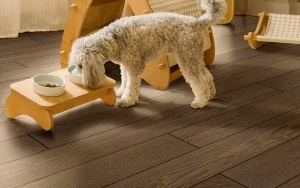
LVP is usually the better pick for pets and young kids. It resists claw scratches and handles pet accidents, spilled drinks, and splashing water bowls. Choose a wear layer of 20 mil or more and a matte finish. Clean up urine quickly, since liquid can seep into seams and reach the subfloor.
If you prefer real wood with pets, you can make engineered hardwood work:
- Pick a hard species like hickory or white oak.
- Choose a matte, wire brushed finish that hides scratches.
- Keep your pet’s nails trimmed.
- Place washable rugs in play zones and under water bowls.
How to Choose: Match the Floor to Your Home
Choose Engineered Hardwood If You…
- Want the authentic look, feel, and warmth of real wood
- Plan to stay in your home for 10 years or more
- Care about resale value in main living spaces
- Have radiant heat or a concrete slab in a dry area
- Would rather refinish a floor than replace it
Choose LVP If You…
- Have a tight budget
- Need flooring for kitchens, bathrooms, laundry rooms, or basements
- Have pets, young kids, or heavy foot traffic
- Want a weekend DIY project
- Are updating a rental or plan to move soon
Match Your Design Style
Engineered hardwood fits traditional, transitional, farmhouse, and classic interiors. Warm oak, walnut, and hickory tones paired with wide planks create a calm, open flow.
LVP suits modern, contemporary, and casual homes. It offers trendy grays, whitewashed tones, and distressed or hand scraped textures that pair well with bold cabinets and patterned rugs.
Mixing both? Many homeowners use LVP in wet rooms and engineered hardwood in living spaces. Choose similar tones and plank widths, and use clean transition strips so the change looks planned.
What About Laminate?
Laminate flooring often shows up in this comparison. It has an HDF core, a printed wood image, and a very hard melamine wear layer. Laminate resists scratches well and costs about $2 to $8 per square foot for materials.
However, its fiberboard core can swell from standing water, even in “water resistant” products. Laminate sits between the two floors: it’s cheaper than engineered hardwood but less water safe than LVP. It works best in dry hallways, bedrooms, and home offices.
How to Tell Engineered Hardwood and LVP Apart
Not sure what’s already in your home or in a store sample? Try these checks:
- Look at a plank edge. Engineered hardwood shows stacked wood layers. LVP shows a solid plastic or stone core.
- Hunt for repeats. Wood grain never repeats exactly. LVP designs often repeat every few planks.
- Touch it. Wood feels warmer and has a natural texture. Vinyl feels cooler and more uniform.
- Tap it. LVP often sounds clickier or more hollow than wood.
- Check a vent or transition. Removing a floor register often reveals the plank’s cross section.
- Read the box or receipt. Product labels list the material and core type.
Buying Checklist
- Order samples and view them in your own light at different times of day.
- For engineered hardwood, check wear layer thickness in mm, core type, species and Janka rating, finish, and whether it’s rated for below grade use.
- For LVP, check core type (SPC or WPC), wear layer in mils, total thickness, attached pad, and EIR texture.
- Look for certifications such as FloorScore, FSC, and CARB Phase 2 or TSCA Title VI.
- Read the warranty. Note what it covers, whether pets are included, and what voids it, like steam mops or poor installation.
- Buy extra. Order about 10% more for waste, or 15% for diagonal layouts, and keep a spare box for repairs.
- Get three quotes and ask each installer exactly what their price includes.
Final Verdict: Engineered Hardwood or LVP?
Neither floor is better for every home. Engineered hardwood wins on authentic beauty, lifespan, refinishing, and resale appeal. LVP wins on water protection, scratch resistance, price, and easy installation.
If you want a long term investment in real wood for your main living spaces, choose engineered hardwood. If you need a tough, waterproof, budget friendly floor for busy or wet areas, choose LVP. For many homes, the smartest plan uses both.
Frequently Asked Questions
Is LVP cheaper than engineered hardwood?
Yes, in most cases. LVP materials cost about $2 to $10 per square foot, while engineered hardwood costs about $3 to $16. LVP labor is also cheaper, and many homeowners install it themselves.
Is engineered hardwood waterproof?
Most engineered hardwood is water resistant, not waterproof. It handles humidity better than solid wood, but standing water can damage it. Some brands sell waterproof engineered hardwood, so check the label and warranty.
Which lasts longer, LVP or engineered hardwood?
Engineered hardwood usually lasts longer. With a thick wear layer and refinishing, it can last about 50 years. Quality LVP typically lasts 15 to 25 years.
Does LVP increase home value?
Quality LVP can make a home more appealing, especially in kitchens, basements, and rentals. However, buyers often value real wood more in main living areas, so engineered hardwood usually offers stronger resale appeal.
Can you put LVP or engineered hardwood in a basement?
LVP, especially SPC, is the safer choice for basements because it’s waterproof. Engineered hardwood can work only if the product is rated for below grade use and you manage moisture with testing and a vapor barrier.
Which floor is better for dogs?
LVP is usually better for dogs. It resists claw scratches and handles accidents and water bowl spills. Pick a wear layer of 20 mil or more.
Is LVP toxic?
Most major LVP brands today are low VOC and phthalate free. To be safe, choose a product with FloorScore certification and air out the room after installation.
Can you refinish engineered hardwood?
Yes, if the wear layer is thick enough. A wear layer of 2 to 3 mm usually allows one or two full refinishes, and 4 mm or more allows three or more. Thin veneers can usually get only a screen and recoat.
Does LVP feel cheap underfoot?
Not always. Premium LVP with a thick core, EIR texture, and an attached pad feels solid and quiet. Thin, budget LVP can feel hollow or plasticky.
Can you install LVP or engineered hardwood over radiant heat?
Engineered hardwood is one of the best wood floors for radiant heat. Many LVP products also work, but most limit floor surface temperature to around 80 to 85°F. Always confirm your product is approved first.

)