
Noah Williams is an interior designer and flooring expert at Nova Floor. In Dubai, he helps people pick the right floor, get it installed, and keep it looking good. He also writes simple, practical flooring and home care guides for readers in Dubai and around the world.
How to Clean Slate Tiles Naturally | 10 Safe Cleaning Methods 2026
Noah Williams
Slate looks beautiful. It also hides dirt in every crack and cleft. Most people reach for a strong cleaner, and that is where the damage starts.
You do not need harsh chemicals. You can clean slate tiles naturally with warm water, a mild soap, and the right brush. This guide shows you exactly how, including deep cleaning, stain removal, grout care, and sealing.
Contents
The Safest Natural Way to Clean Slate
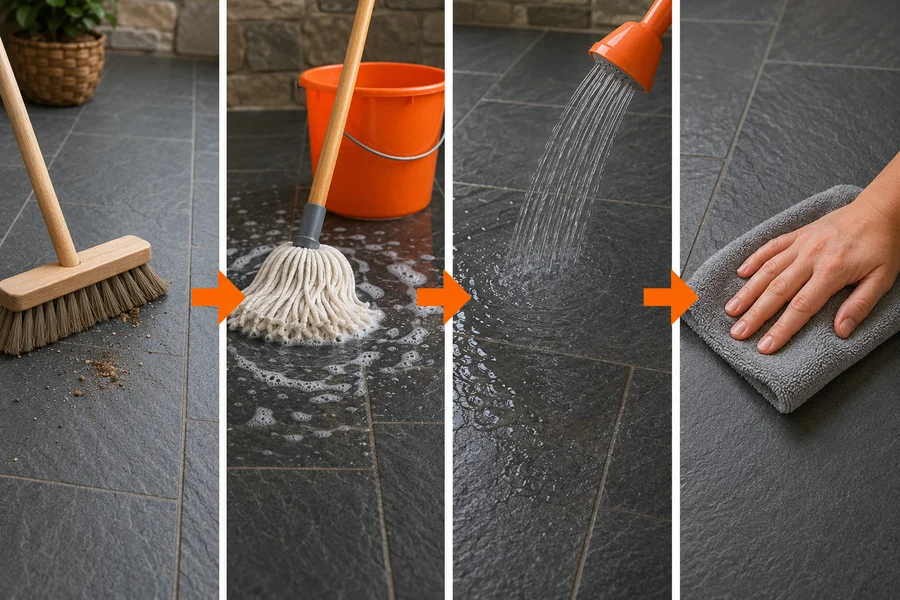
Sweep or vacuum the floor first. Then mop with warm water and a few drops of mild dish soap, or use a pH-neutral cleaner made for natural stone. Rinse slate tiles thoroughly with clean water. Dry the surface right away with a microfiber cloth.
That simple routine handles 90% of the work. The other 10% is stains, grout, and sealing, which this guide by Nova Floor covers in full.
Know Your Slate Before You Clean It
Two floors can look the same and behave very differently. Check these two things first.
Is Your Slate Sealed or Unsealed?
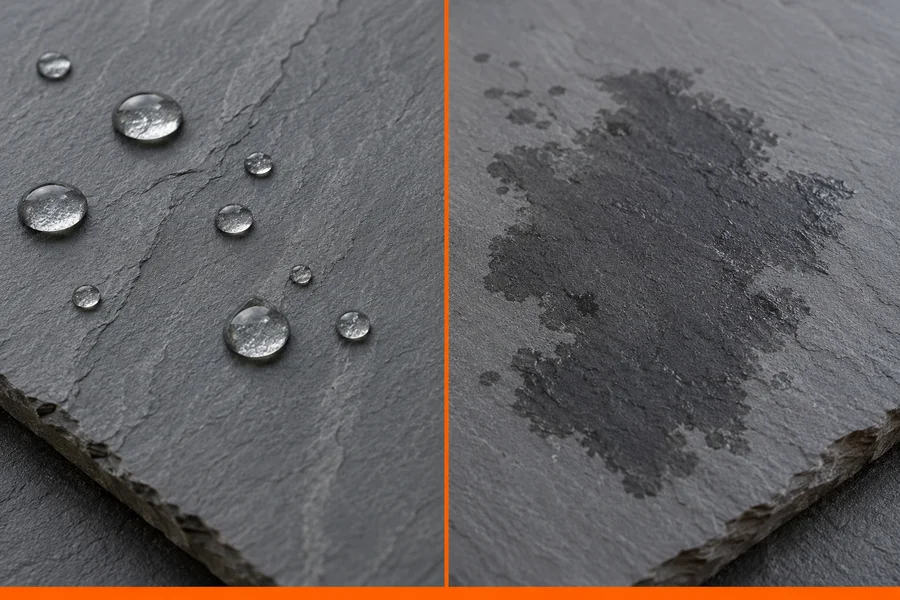
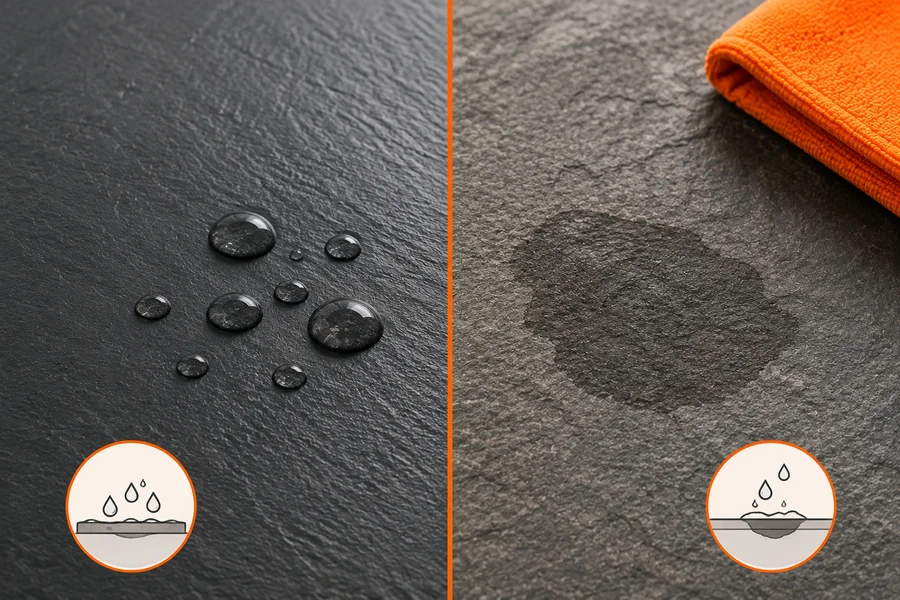
Do the water test. Drop a spoonful of water on the tile. Wait five minutes.
- Water beads on top: you have sealed slate tiles. The sealer is still working.
- Water soaks in and darkens the tile: you have unsealed slate flooring, or the sealer has worn away.
This matters. Unsealed slate is a porous natural stone. It drinks up oil, wine, and dirty mop water. Sealed slate resists stains, but strong cleaners can strip that protection.
Test a hidden corner before you try any new method. A closet edge or a spot under furniture works well.
What Finish Does Your Slate Have?
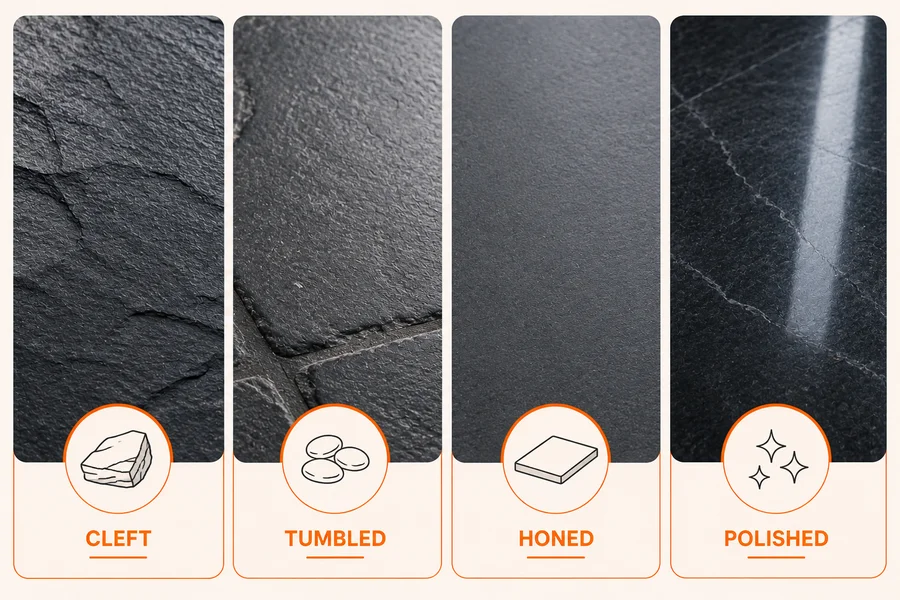
Slate comes in four common finishes. Each one needs a slightly different touch.
| Finish | Surface | Cleaning notes |
| Cleft (natural) | Rough, full of ridges and clefts | Traps the most dirt. Needs brushing. |
| Tumbled | Rough with softened edges | Brush gently, avoid stiff bristles. |
| Honed | Mostly smooth, low sheen | Mop only. Skip hard scrubbing. |
| Polished | Smooth and shiny | Very easy to scratch. Soft cloth only. |
If your mop water turns brown every single time, you almost certainly have cleft slate. That is normal. The dirt sits down inside the texture, and a flat mop never reaches it.
Tools You Need for Natural Slate Floor Cleaning
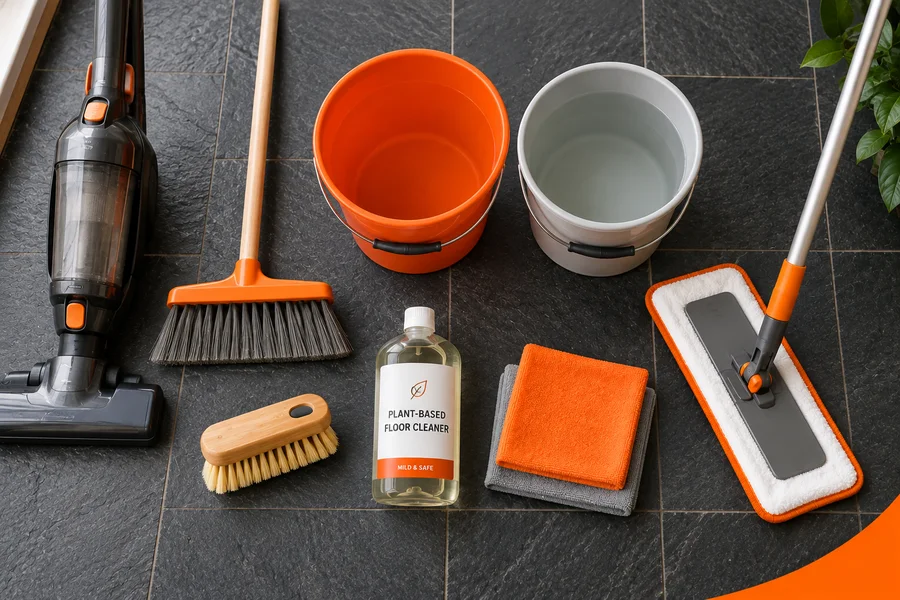
Good tools matter more than strong chemicals. Gather these first:
- Vacuum with a bare floor setting. Turn the beater bar off. Spinning bristles chip slate.
- Soft broom or dust mop. Useful between vacuum sessions.
- Two buckets. One holds the cleaning solution. One holds clean rinse water.
- Microfiber mop or string mop. A microfiber mop suits honed and polished tiles. A string mop reaches into rough texture better.
- Soft-bristle brush. A nylon deck brush handles floors. A grout brush or old toothbrush handles joints.
- Microfiber cloths. Keep several. You need them for drying and buffing.
- Mild dish soap or a pH-neutral cleaner. Both work as a gentle natural stone cleaner.
Skip these completely: steel wool, wire brushes, green scouring pads, and stiff metal scrapers. They leave permanent scratches.
10 Safe Ways to Clean Slate Tiles Naturally
Use these methods on their own or together. Methods 1 to 4 cover routine care. Methods 5 to 10 handle harder jobs.
1. Dry Sweep and Vacuum First
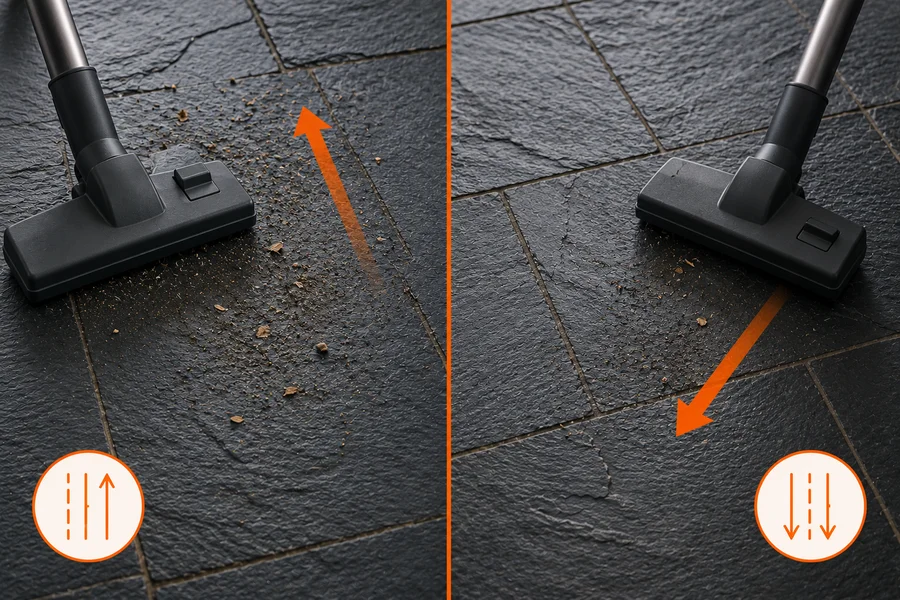
Never mop a dusty slate floor. Grit turns into muddy paste, and it slides into the grout lines.
Vacuum in two directions. Go across the tiles once, then again at a right angle. That second pass lifts grit out of the clefts that the first pass missed.
Do this two or three times a week in busy rooms. It is the single best way to prevent dirt buildup.
2. Warm Water and Mild Dish Soap
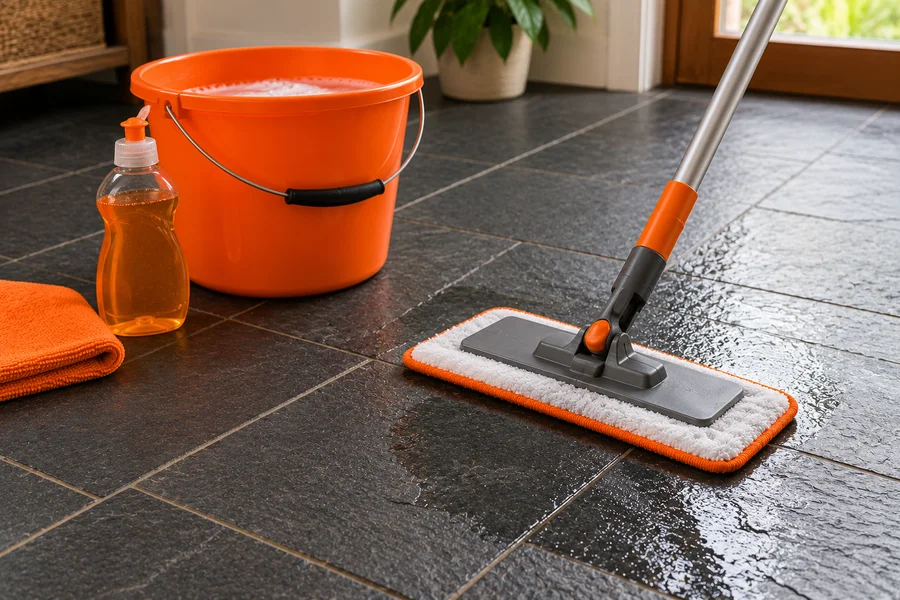
This is the classic natural mix, and it works.
Add about a quarter cup of mild dish soap to one gallon of warm water. Use warm water, not hot. Hot water softens some sealers.
Wring the mop until it feels barely damp. Slate does not need a soaking. Excess water seeps into the stone and the grout.
Mop one small section at a time. Then rinse that section before you move on.
3. pH-Neutral Cleaner Made for Natural Stone
A pH-neutral cleaner is the safest bottled option. It cleans without acid and without harsh alkali.
Check the label for the words “safe for natural stone” or “pH neutral.” Many supermarket floor cleaners are acidic and made for ceramic tiles only.
Follow the dilution on the bottle. More product does not clean better. It just leaves film.
4. The Two-Bucket Rinse Method
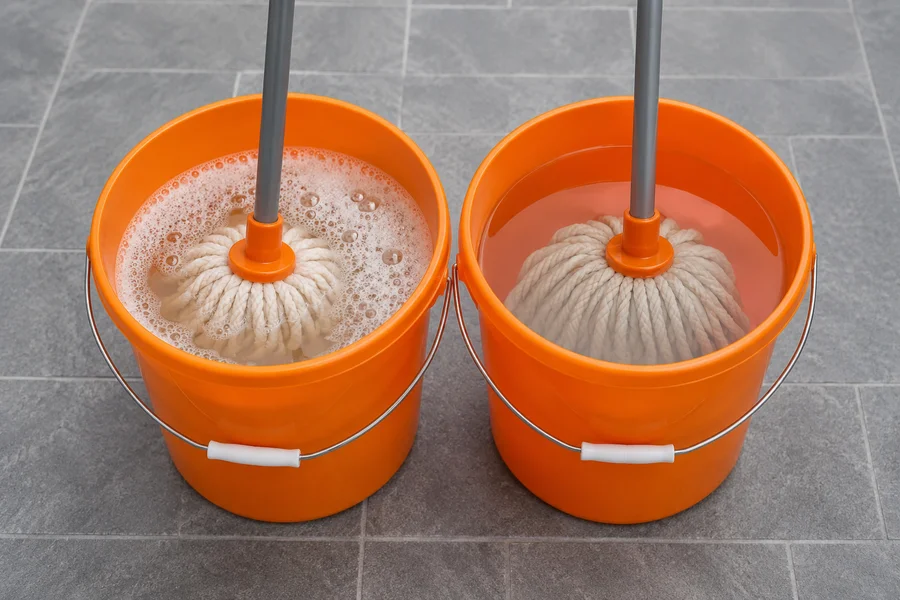
This one method fixes the most common slate complaint: a floor that never looks clean.
Fill bucket one with your cleaning solution. Fill bucket two with plain warm water.
Mop a section with bucket one. Rinse the mop head in bucket two. Wring it out. Go over the same section again with clean water only.
Now you lift the dirt off the floor instead of spreading it around. Change the rinse water as soon as it turns cloudy.
5. Soft-Bristle Brush for Textured and Rough Slate
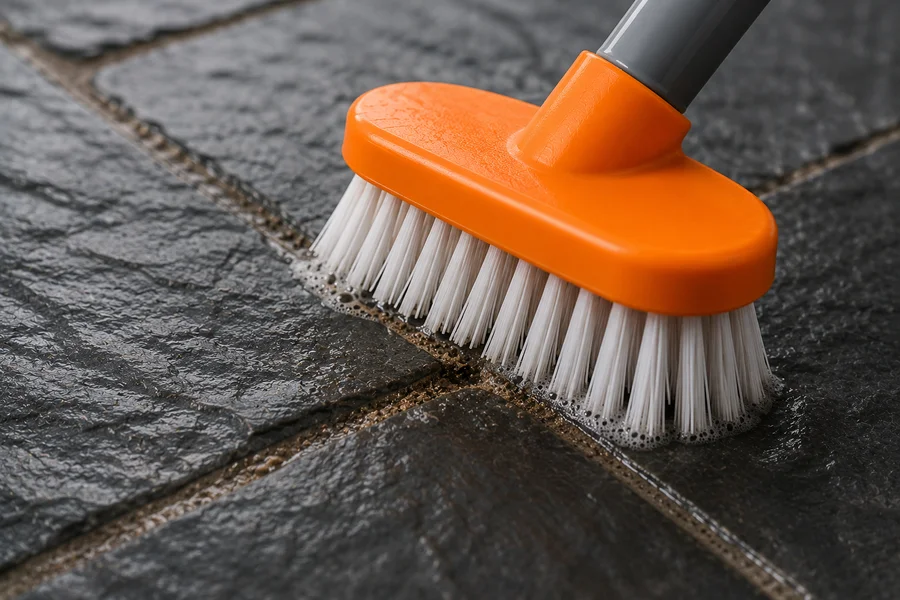
A mop glides over ridges. It cannot reach into them. To clean textured slate properly, you need to agitate the surface.
Here is the method:
- Pour your warm soapy water over a small section, roughly one square metre.
- Let it sit for 10 to 15 minutes. Do not let it dry out. Add more water if needed.
- Scrub with a soft-bristle brush. Work in small circles, then in straight lines.
- Wipe up the dirty water with a cloth or a wet vacuum.
- Rinse with clean water. Dry with microfiber.
That dwell time does the real work. It loosens ingrained dirt so the brush can lift it instead of grinding it deeper.
6. Baking Soda Paste for Grime in Clefts
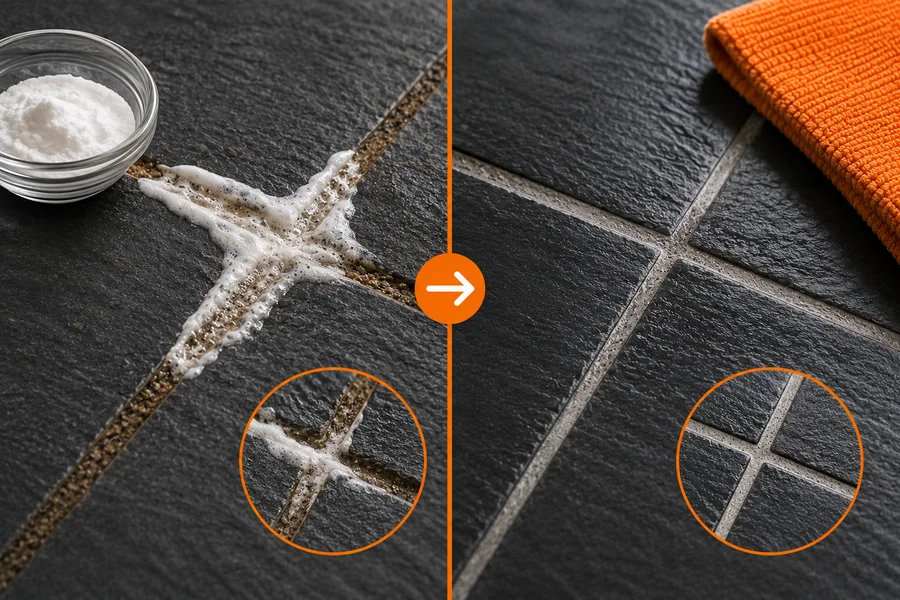
Baking soda helps when soap alone stops working. It is mildly alkaline and lightly abrasive.
Mix three parts baking soda with one part water. Stir until it forms a loose paste.
Spread the paste on the dirty area. Leave it for 10 minutes. Scrub with a soft-bristle brush and plenty of water. Rinse well.
Use this on cleft and tumbled slate only. Never scrub dry baking soda across honed or polished slate. Always keep the surface wet, so the grains slide instead of scratch.
7. Baking Soda Poultice for Oil and Grease Stains
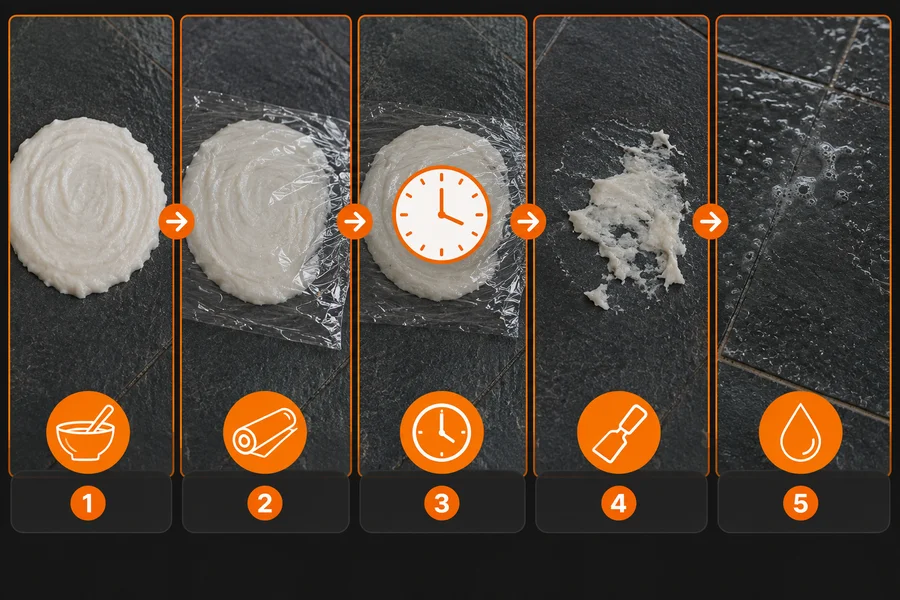
Oil stains sit inside the stone, not on top. Scrubbing will not pull them out. A poultice will.
A poultice is a paste that draws the stain upward as it dries.
- Mix baking soda with a little water into a thick paste, about the texture of peanut butter.
- Spread it about half a centimetre thick over the stain. Extend past the edges.
- Cover it with plastic wrap. Tape the edges down.
- Poke a few small holes in the plastic.
- Leave it for 24 to 48 hours.
- Remove the dry paste with a plastic scraper. Rinse and dry.
Deep stains may need two rounds. Be patient. This is slow, gentle, and effective.
8. Hydrogen Peroxide for Organic Stains
Coffee, tea, wine, pet accidents, food, and mildew all leave organic stains. Hydrogen peroxide breaks them down.
Mix 3% hydrogen peroxide with an equal amount of water. Spray it on the stain. Wait 10 minutes. Scrub gently with a soft-bristle brush, then rinse.
For a stubborn mark, mix peroxide with baking soda into a paste and use it as a poultice, as in method 7.
Test first on light-coloured or multi-coloured slate. Peroxide can lighten some pigments.
9. Rubbing Alcohol for Ink, Dye, and Marker
Alcohol dissolves ink without acid.
Mix a quarter cup of rubbing alcohol into four cups of water. Dab it onto the mark with a cloth. Scrub lightly with a soft-bristle brush. Rinse with clean water and dry.
Work from the outside of the stain toward the middle. That stops the mark spreading.
10. Microfiber Buff to Remove Soap Residue
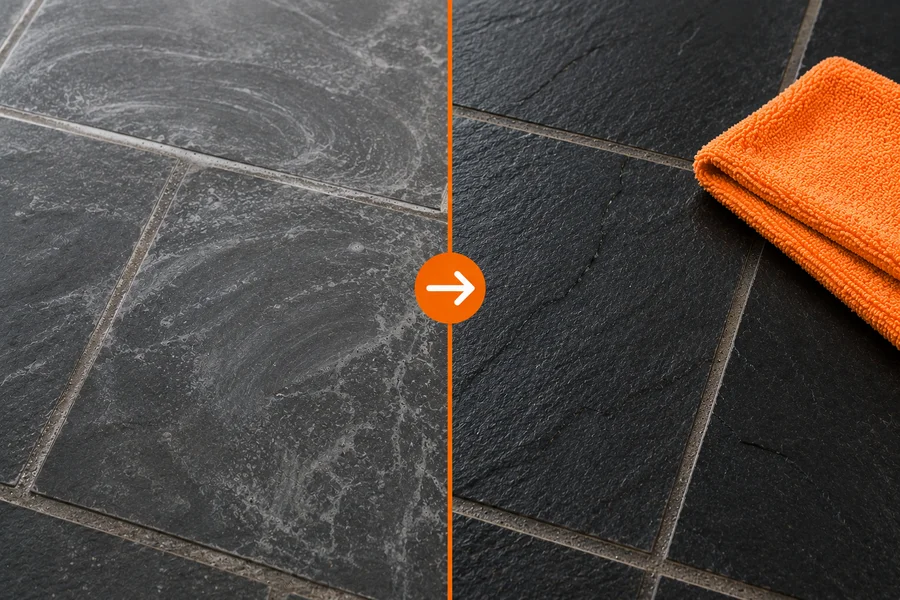
Dull, cloudy slate is usually not dirty. It is coated in dried soap.
To remove soap residue, mop the floor with plain warm water and nothing else. Do this twice. Then buff the surface dry with a clean microfiber cloth.
Air drying causes streaks and water spots. Drying by hand brings back the natural colour and depth.
How to Deep Clean Slate Tiles: Step by Step
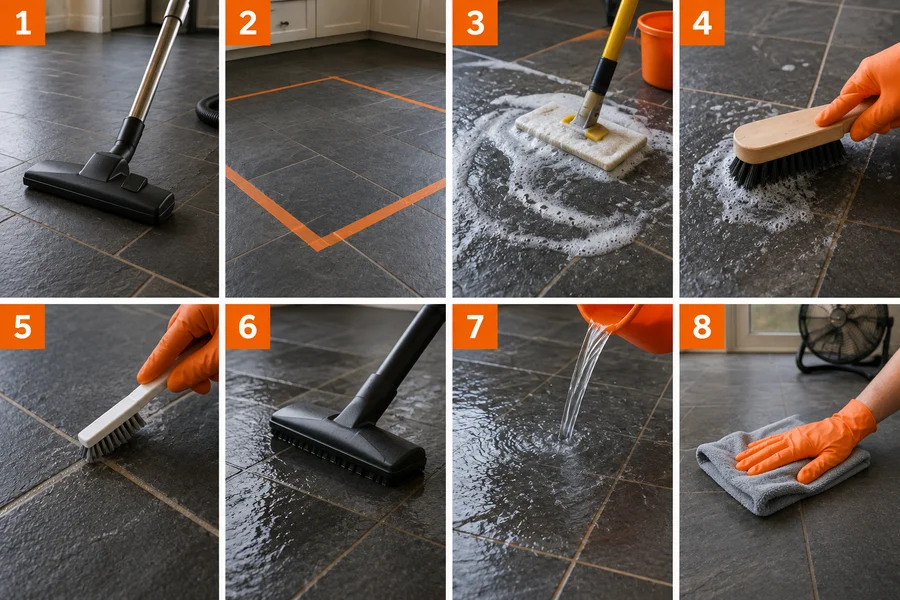
Do a deep clean once or twice a year. Set aside a few hours.
- Clear the room. Move furniture and rugs out.
- Vacuum thoroughly. Cover the whole floor twice, in two directions.
- Work in sections. Choose a small area you can finish before the water dries.
- Apply and dwell. Spread warm soapy water or a pH-neutral cleaner. Let it sit 10 to 15 minutes.
- Scrub the tile. Use a soft-bristle brush. Push into the clefts, not just across them.
- Scrub the grout. Use a narrow grout brush along every joint.
- Lift the dirty water. Use a wet vacuum, a squeegee, or old towels. Do not spread it.
- Rinse twice. Fresh clean water each time. This step decides your final result.
- Dry properly. Buff with microfiber. Open windows or run a fan.
Expect brown water. That is proof the method is working, not a sign of failure.
How to Remove Stubborn Dirt and Stains from Slate
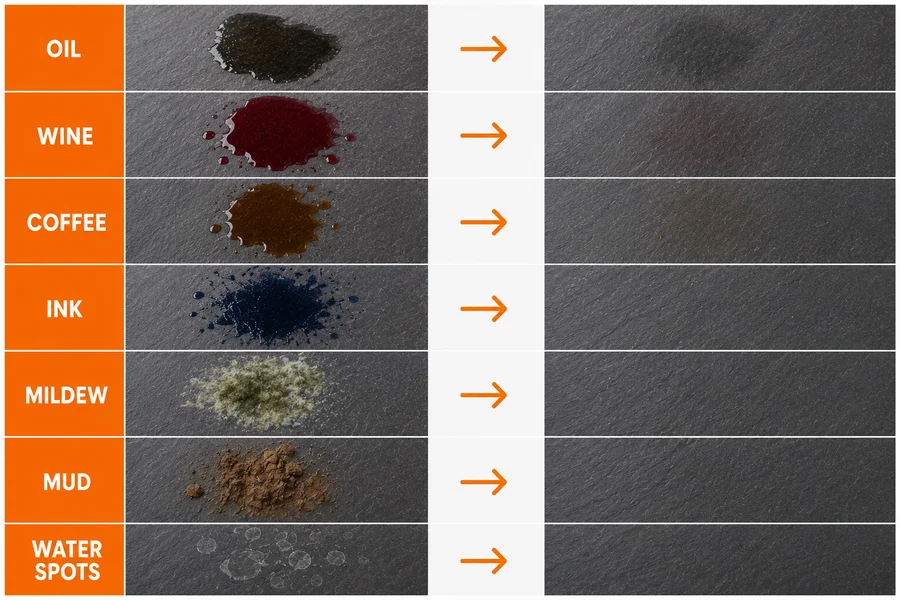
Match the treatment to the stain. Guessing wastes time and can set the mark permanently.
| Stain type | Natural treatment | Wait time |
| Grease, oil, butter | Baking soda poultice | 24 to 48 hours |
| Wine, coffee, tea | Hydrogen peroxide solution | 10 minutes |
| Pet accidents | Hydrogen peroxide, then soap and water | 10 minutes |
| Ink, dye, marker | Rubbing alcohol solution | 5 minutes |
| Mildew and mould | Hydrogen peroxide, then dry the area fully | 15 minutes |
| Ground-in mud | Dwell, then soft-bristle brush | 15 minutes |
| Water spots and film | Plain water rinse, then microfiber buff | None |
Three rules apply to every stain:
- Blot fresh spills at once. Do not wipe. Wiping spreads the spill wider.
- Always test in a hidden spot. Some slate contains iron or soft mineral veins.
- Rinse after every treatment. Leftover residue attracts new dirt.
If a mark survives three attempts, the stone likely absorbed it years ago. A professional restorer can help.
How to Clean Slate Tile Grout Naturally
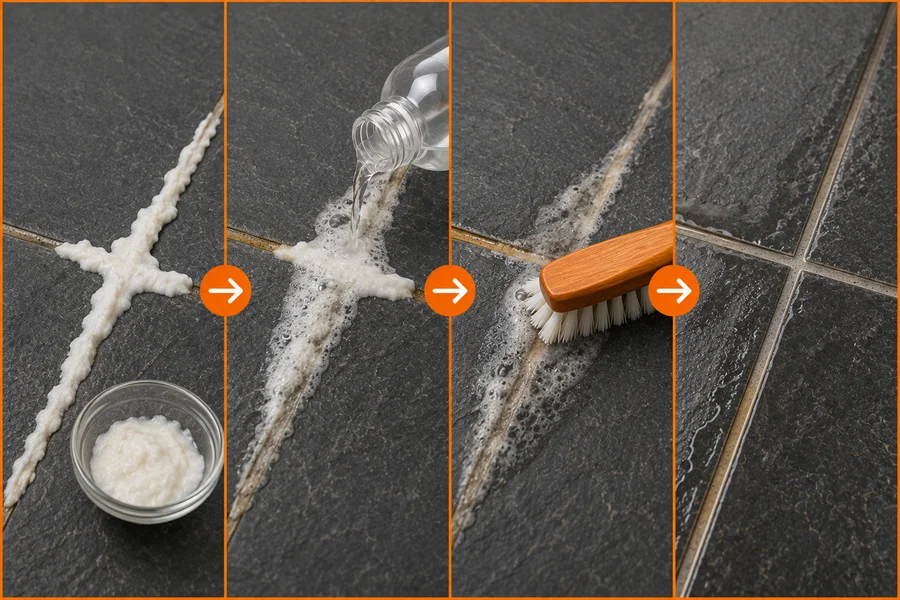
Grout usually makes a floor look dirty, even when the tiles are clean. Cement grout is porous and soaks up everything.
Here is the safe method:
- Vacuum along the joints first.
- Make a paste of baking soda and water.
- Spread it along the grout lines with your finger or a spoon.
- Spray lightly with 3% hydrogen peroxide. It will foam a little.
- Wait 10 minutes.
- Scrub with a stiff nylon grout brush. Use short back and forth strokes.
- Rinse the area two or three times with clean water.
- Dry with a cloth.
Never use vinegar or lemon juice on cement grout. Acid dissolves it and creates crumbling joints.
Grout that stays dark after cleaning is stained, not dirty. In that case, a grout colourant or grout renewal service is the real fix.
Is Vinegar Safe on Slate Tiles?
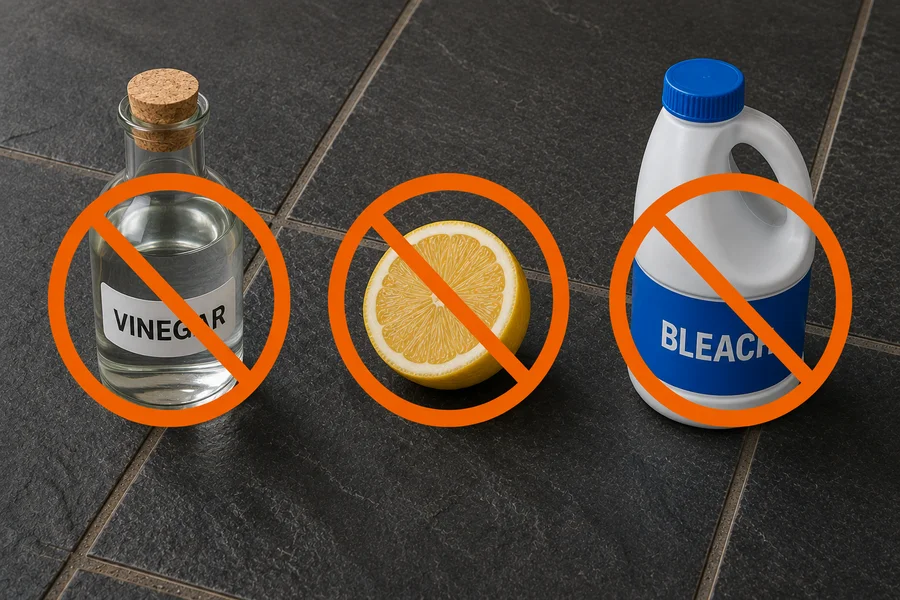
Short answer: no, do not use it.
The full picture is more interesting than most guides admit. Slate is not like marble or limestone. It contains very little calcium carbonate, so mild acid does not usually etch the stone itself. That is why professionals sometimes use acidic products on slate to remove cement haze.
So why avoid vinegar at home? Three real reasons:
- It attacks your sealer. Repeated vinegar mopping wears the sealer down. Once it goes, the porous stone starts absorbing every spill.
- It destroys grout. Cement grout is acid-sensitive. Vinegar softens it, and joints start to crumble and wash out.
- Some slate reacts. Certain slates carry carbonate veins or iron content. Black Brazilian slate is one type that can react badly. You cannot tell by looking.
The risk is real and the benefit is small. Warm water with mild dish soap cleans just as well. Lemon juice and bleach carry the same problems, so leave them out too.
Is Baking Soda Safe on Slate Tiles?
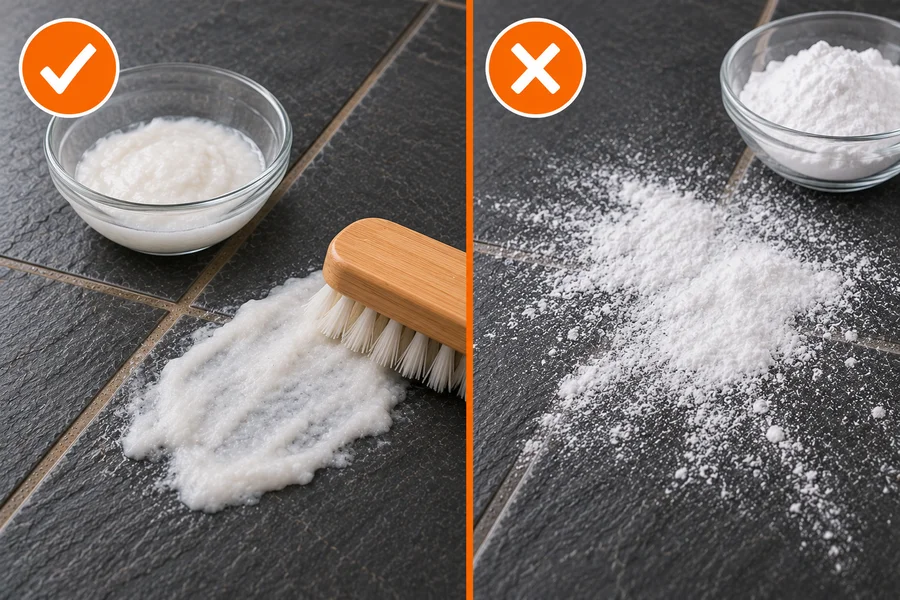
Yes, when you use it correctly.
Baking soda is alkaline, so it will not etch stone or eat grout. That makes it a far better natural choice than vinegar.
The only concern is texture. Baking soda is a mild abrasive. Follow these three rules and it stays safe:
- Always mix it with enough water to form a paste or slurry.
- Never scrub the dry powder across the surface.
- Use it on cleft and tumbled slate freely. Use it very gently on honed slate. Avoid it on polished slate.
Rinse it away completely afterwards. Dried baking soda leaves a white haze.
Cleaners and Tools to Avoid on Slate Floors
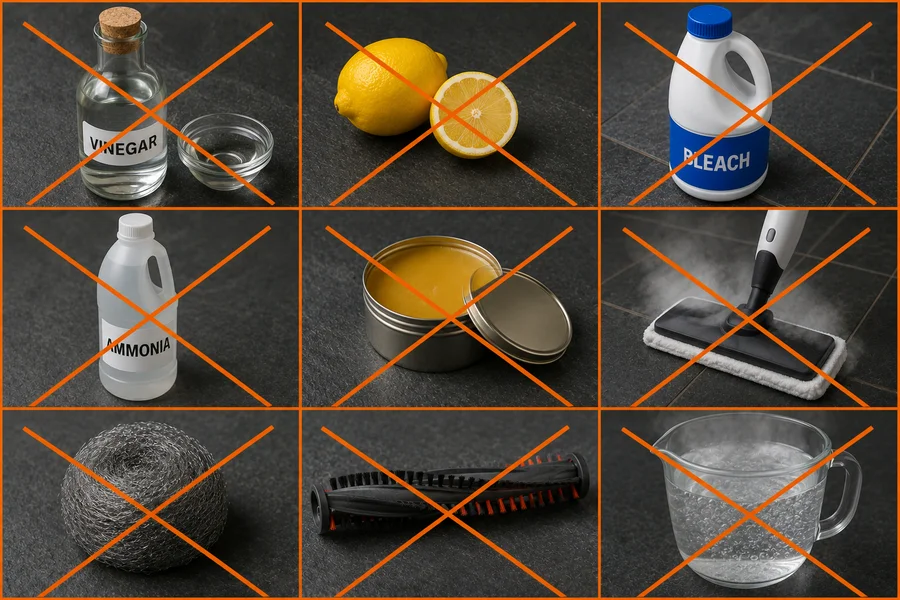
Keep these away from your floor:
- Vinegar and lemon juice. Acid strips sealers and damages grout.
- Bleach. It can discolour slate and leave patchy areas.
- Ammonia and glass cleaner. These dull the finish over time.
- Oil soaps and wax polishes. They build a sticky film that traps dirt.
- Bathroom and toilet cleaners. Most are strongly acidic.
- Steam mops. Steam forces moisture into porous stone. Over time it can weaken sealers and cause the surface to flake, a problem called spalling.
- Steel wool and scouring pads. They scratch instantly.
- Vacuum beater bars. Rotating bristles chip cleft edges.
- Very hot water. It softens sealers and speeds up wear.
One more habit to drop: leaving standing water on the floor. Slate handles moisture well, but grout does not.
Sealing Slate Tiles | When and How
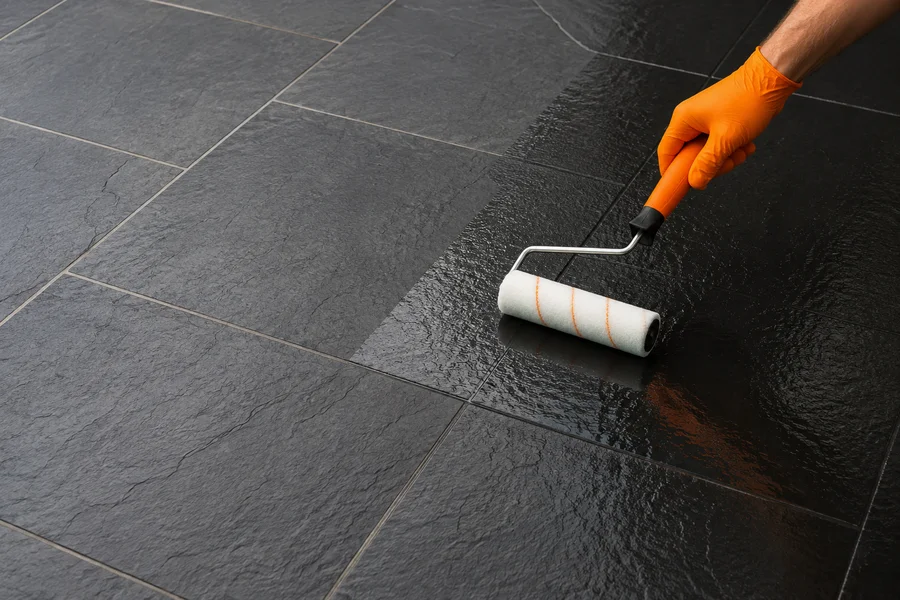
Sealing is what makes natural cleaning easy. A sealed floor releases dirt instead of holding it.
Which Slate Tile Sealer Should You Choose?
You have two main options.
Impregnating sealer (penetrating). It soaks into the stone and protects from within. It leaves the natural look almost unchanged. It breathes, so moisture can escape. This is the best all-round choice, and the right one for bathrooms and wet rooms.
Enhancing or topical sealer. It sits on the surface, deepens the colour, and adds a soft sheen. It looks richer, especially on dark slate. It also wears in traffic paths and needs redoing more often.
Most homeowners are happier with an impregnating sealer.
How to Seal Slate Tiles
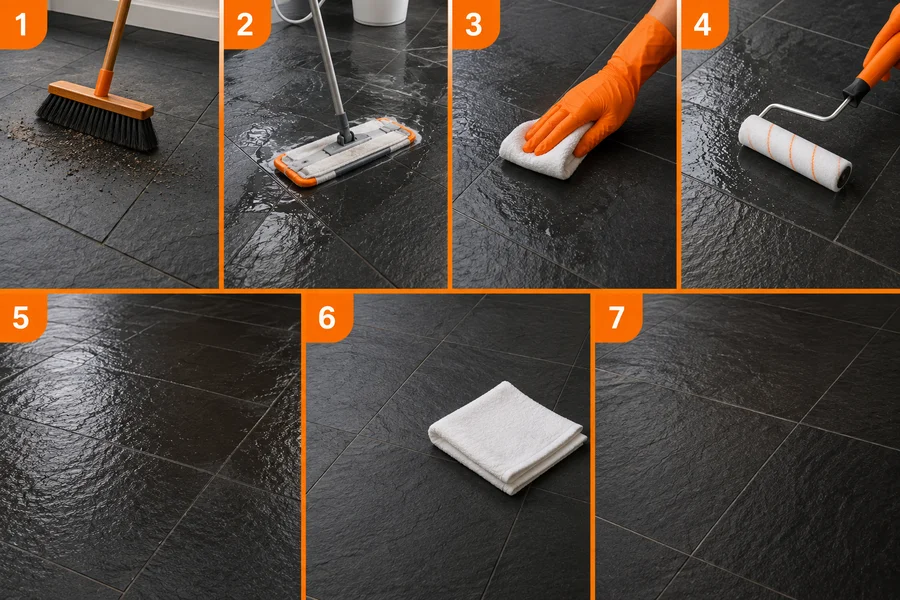
- Deep clean the floor first. Sealer locks in whatever is underneath.
- Let the floor dry completely. Wait at least 48 hours. Newly laid slate needs about two weeks.
- Test the sealer on a spare tile or a hidden corner.
- Apply thin, even coats with a microfiber cloth, flat mop, or paint pad.
- Apply a second thin coat about an hour later.
- Wipe away any pooling before it dries.
- Keep off the floor for the time the label states.
Thin coats always beat thick coats. Thick layers dry slowly, cure poorly, and look cloudy.
How Often Should You Reseal?
Reseal every one to three years. Kitchens, hallways, and entryways may need it yearly. Quiet rooms can go longer.
Run the water bead test every six months. When water stops beading, it is time.
Slate Floor Maintenance Routine
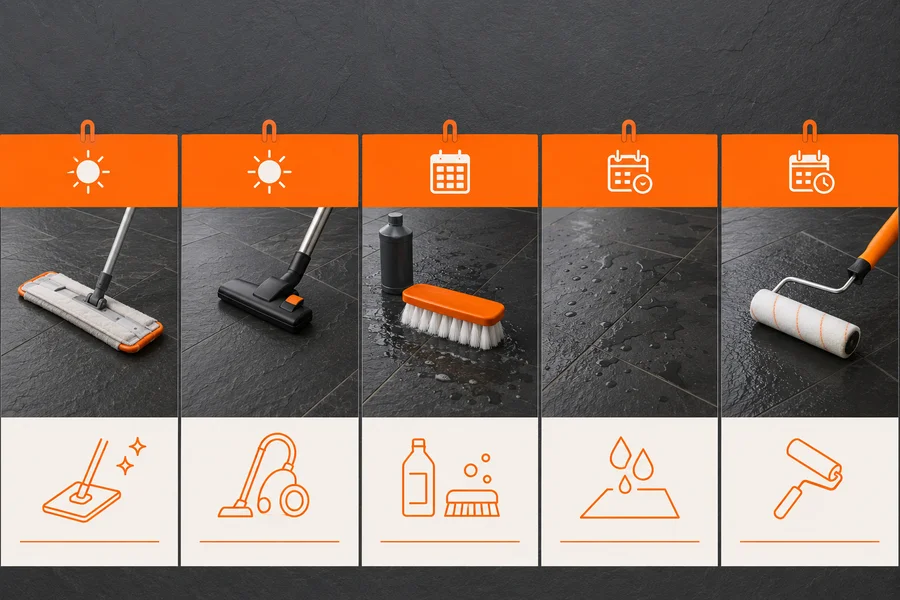
Consistency beats intensity. This schedule keeps slate looking good with very little effort.
Daily
- Sweep or vacuum high-traffic areas.
- Wipe up spills straight away.
Weekly
- Vacuum the whole floor in two directions.
- Damp mop with warm water and mild dish soap.
- Rinse and dry with microfiber.
Monthly
- Scrub grout lines in busy areas with a soft-bristle brush.
- Check for chips or loose grout.
Every 6 months
- Run the water bead test.
- Deep clean high-traffic zones.
Every 1 to 3 years
- Deep clean the whole floor.
- Reseal.
Three habits that prevent most problems:
- Put breathable mats at every entrance to catch grit. Avoid rubber-backed mats, which can stain the stone.
- Stick felt pads under all furniture legs.
- Fix leaks and dripping taps quickly.
Frequently Asked Questions
What is the best natural cleaner for slate tiles?
Warm water with a few drops of mild dish soap. It cleans effectively, leaves no acid on the stone, and costs almost nothing. A pH-neutral natural stone cleaner works equally well if you prefer a bottled product.
Why is my mop water always brown when I clean slate?
Because rough slate holds dirt inside its clefts and ridges. A flat mop slides over the texture and lifts only the top layer. Use a soft-bristle brush with a dwell time, then rinse with the two-bucket method. The water will run clear after two or three deep cleans.
Can I use vinegar and baking soda together on slate?
No. They cancel each other out chemically and produce mostly salty water. Vinegar also risks damaging your sealer and grout. Use baking soda on its own, mixed with water or hydrogen peroxide.
How do I make slate tiles shine naturally?
Rinse the floor with plain water to remove soap residue, then buff it dry with microfiber. Most dullness comes from film, not wear. For a deeper glow, apply an enhancing sealer or wipe a very small amount of mineral oil into the stone and buff it off.
Can I steam clean slate floors?
It is not recommended. Steam pushes hot moisture into porous natural stone and can break down sealers. Repeated steaming may cause flaking. Warm water and a brush give better results with no risk.
How do I clean rough slate tiles without scratching them?
Use a nylon soft-bristle brush and plenty of water. Water acts as a lubricant so the bristles glide instead of grinding. Avoid metal brushes, scouring pads, and dry powders.
Do slate tiles need sealing?
Most do. Slate is a porous natural stone, and unsealed slate flooring absorbs oil, wine, and dirty water. Sealing is optional in dry, low-traffic areas, but it makes routine cleaning far easier everywhere else.
How do I remove years of built-up dirt from slate?
Work in small sections. Apply a mild cleaning solution, let it dwell for 15 minutes, scrub with a soft-bristle brush, then lift the dirty water with a wet vacuum or towels. Rinse twice. Repeat over two or three sessions rather than trying to do everything at once.
Is dish soap bad for natural stone?
Mild dish soap is safe when you dilute it and rinse properly. Problems come from using too much and skipping the rinse, which leaves a dull film. Keep the mix light and always finish with clean water.
Final Thoughts
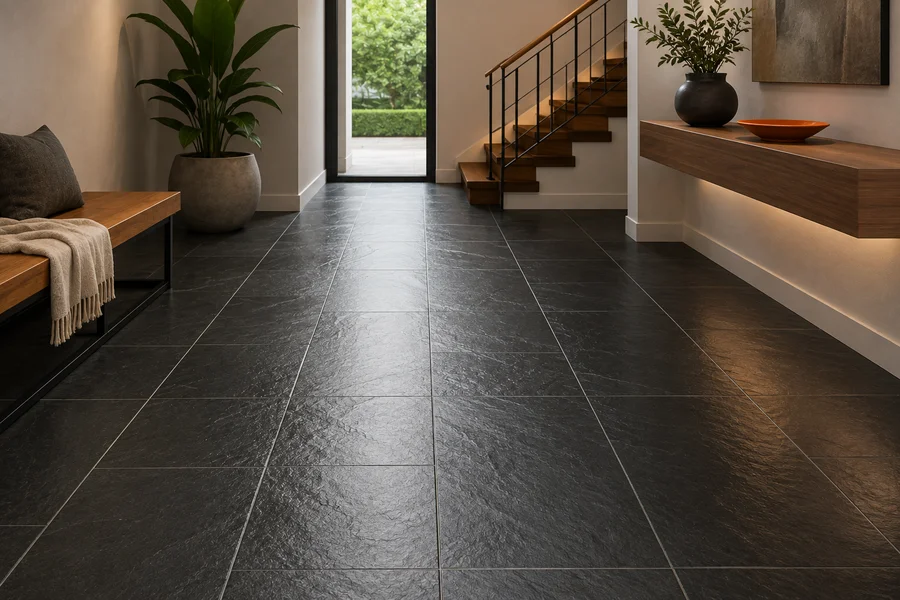
Cleaning slate tiles naturally comes down to four habits: remove grit before it scratches, use gentle warm water and soap, agitate the texture with a soft-bristle brush, and rinse and dry properly every time.
Skip the acids. Skip the steam. Seal the floor when the water stops beading.
Do that, and your slate will look better in ten years than it does today.

Noah Williams
Interior Designer & Flooring Expert
Related Posts