Hardwood floors add warmth and value to any home. But many homeowners damage them without realizing it. Learning how to clean hardwood floors the right way keeps them looking new for years.
Wood is a natural material, unlike tile or vinyl. It reacts differently to water, chemicals, and rough tools. A single wrong habit can dull the finish within months. Small mistakes often lead to deep scratches and water stains.
The Nova floor team created this guide to help you clean any type of wood floor the right way. It covers the right tools, the correct steps, and simple habits that keep your floors lasting longer. You’ll learn everything from daily cleaning to removing stubborn stains. By the end, hardwood floor care will feel simple and stress-free.
Determine the Type of Flooring You Have
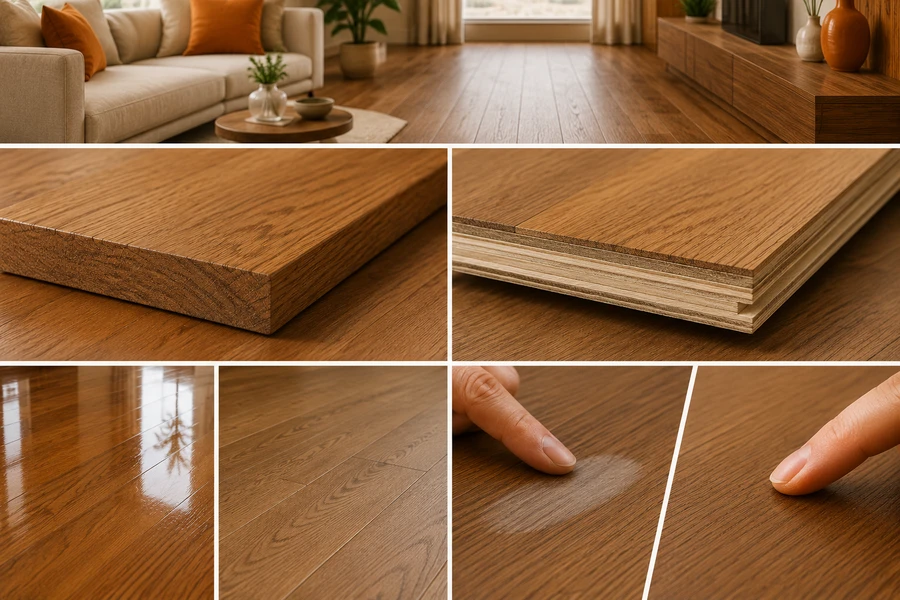
Not all wooden floors are the same. The cleaning method that works for one type can ruin another. Checking your floor type first prevents costly mistakes.
Solid Hardwood Floors
Solid hardwood is one plank of wood, top to bottom. It reacts strongly to standing water and steam. This type needs the driest cleaning approach of all wood floors.
Engineered Hardwood Floors
Engineered wood has a thin wood layer over plywood layers. It handles moisture slightly better than solid wood. Excess water can still seep between planks and cause swelling.
Finish Type Matters Too
Most modern floors have a polyurethane coating for protection. Older floors may have a wax or oil finish instead. A polyurethane finish handles cleaners differently than a waxed surface.
How to Check Your Floor’s Finish
Rub a small area with your finger. If you see a smudge, the floor likely has a wax finish. If there is no smudge, it likely has a polyurethane finish.
Knowing your floor type helps you choose the right cleaning method. This simple check can protect your floor from long-term damage.
What You’ll Need: Tools, Machines & Products
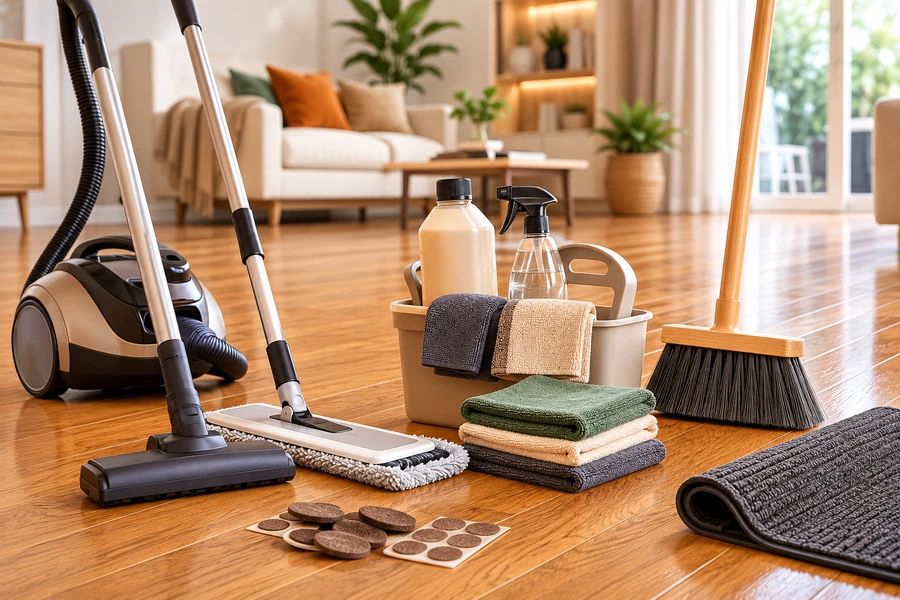
The right tools make hardwood floor cleaning safe and easy. The wrong tools can scratch the surface or leave streaks behind. This checklist includes everything needed before you begin.
Soft Bristle Broom or Dry Mop
A soft bristle broom removes dust without scratching the finish. Stiff bristles can leave small scratches over time.
Microfiber Mop
A microfiber mop is one of the safest tools for hardwood floors. It traps dust and dirt instead of spreading them around. The soft fibers protect a sealed floor finish from scratches.
Vacuum With a Hard Floor Setting
A vacuum with a hardwood or bare floor setting cleans corners and edges well. The beater bar should stay off because it can scuff the surface. Canister vacuums with a floor brush attachment are a good choice.
pH Neutral Wood Floor Cleaner
A cleaner made for hardwood floors protects the finish. A pH neutral formula cleans without removing the protective coating. Products labeled all purpose or multi surface should be avoided.
Soft Microfiber Cloths
A few dry microfiber cloths are useful for spot cleaning and drying the floor after mopping.
Furniture Pads & Door Mats
Felt pads under furniture legs help prevent scratches during everyday use. Door mats catch dirt and grit before they reach your hardwood floors.
After gathering these tools, you can begin the cleaning process.
Step by Step: Best Way to Clean Wood Floors Without Damaging Them
The correct cleaning order helps protect your floor finish. The guide below explains how to clean wood floors step by step.
Step 1: Clear Loose Dust & Debris
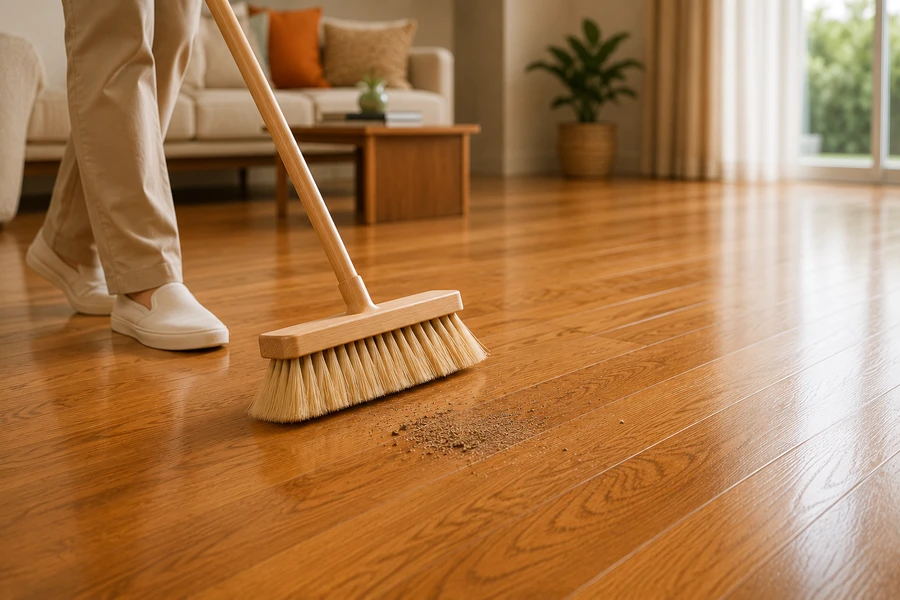
A clean floor surface is the first step before mopping. Dust, grit, and sand can scratch the finish during foot traffic. This step helps prevent new scratches while cleaning.
Step 2: Clean Corners & Edges
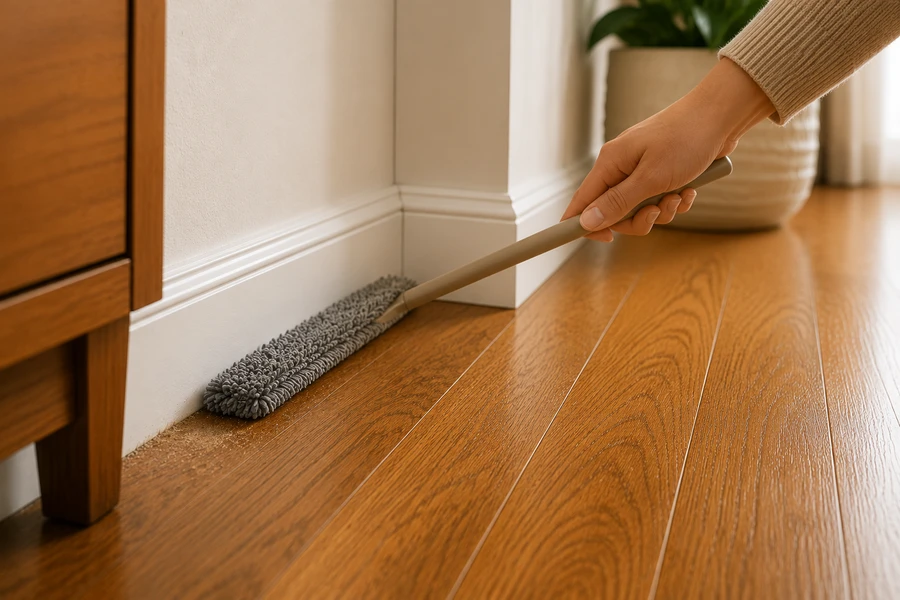 Corners and baseboards often collect dust that is easy to miss. These areas need cleaning before using a damp mop. This step removes dirt left behind after the first sweep.
Step 3: Prepare Your Cleaning Solution
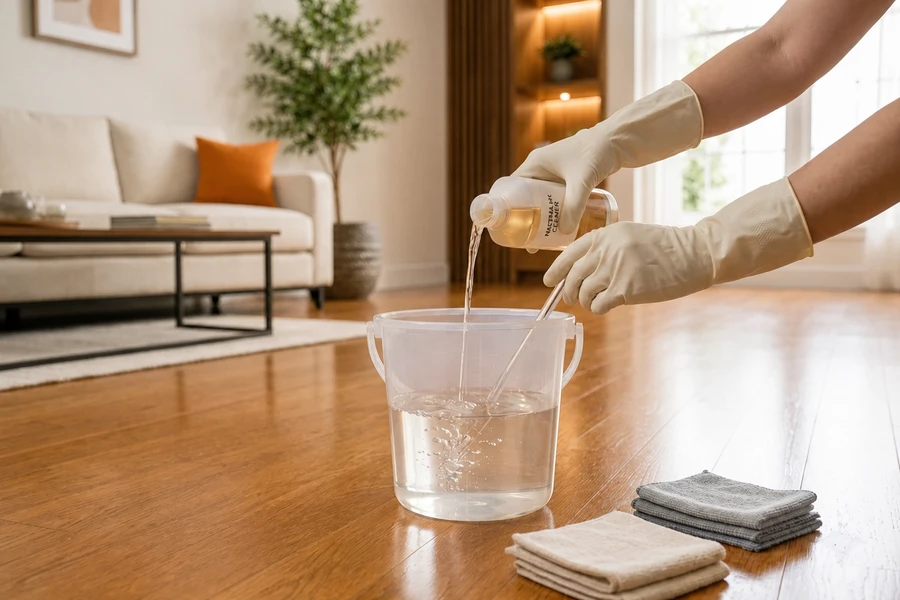 The right amount of cleaner gives the best results. Too much product can leave a sticky or dull surface. A light cleaning solution cleans better than a heavy one.
Step 4: Mop With a Barely Damp Cloth
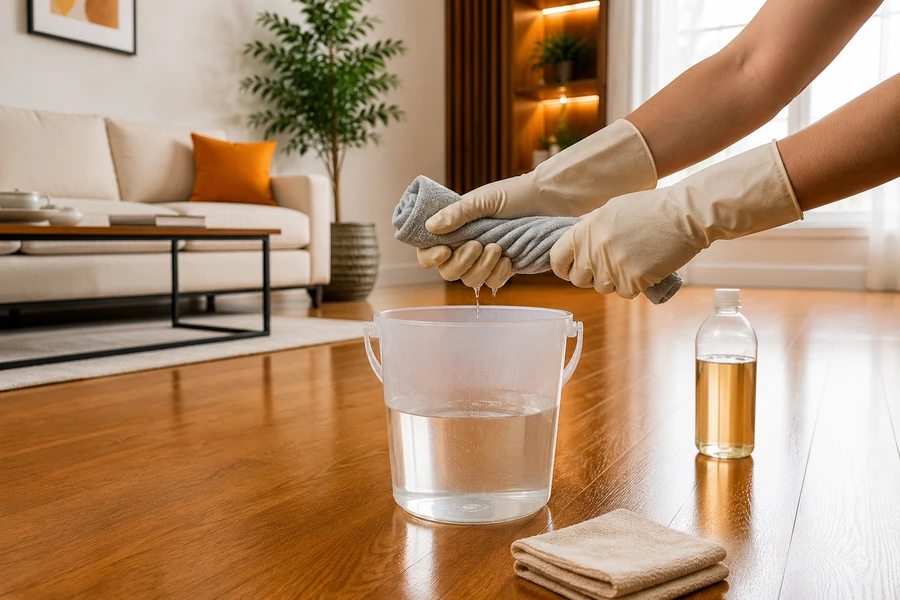 A barely damp mop is safest for hardwood floors. The mop should feel damp, not wet. Too much water can cause the wood to warp.
Step 5: Clean in Small Sections
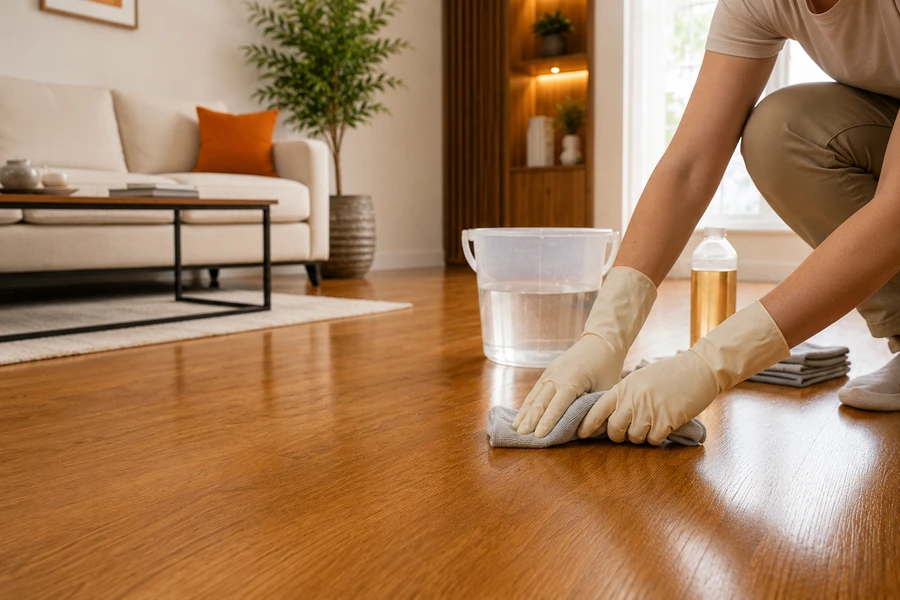 Small areas are easier to clean and dry faster. The wood grain should guide each cleaning pass. This method helps remove dirt and reduces water buildup.
Step 6: Dry the Floor Right Away
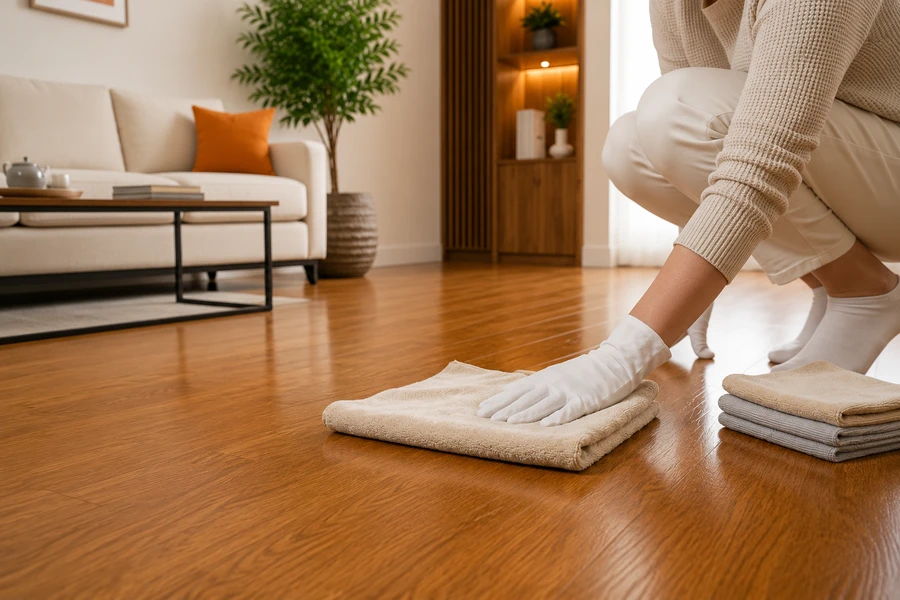 A dry microfiber cloth removes leftover moisture after mopping. Fast drying helps keep water out of the seams. This step is especially important for solid hardwood floors.
Step 7: Buff for a Natural Shine
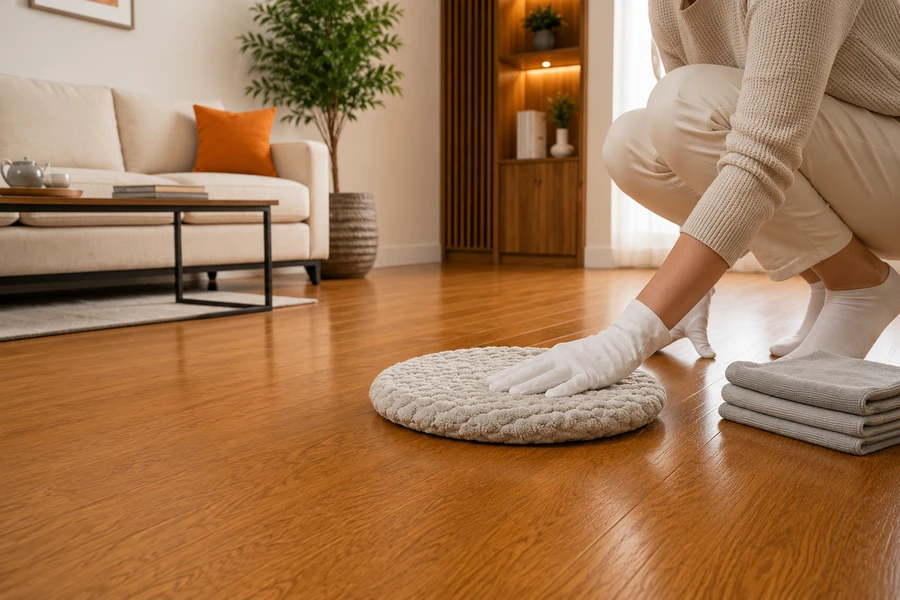 A dry microfiber cloth brings back the floor’s natural shine. Gentle buffing also removes any streaks left after cleaning.
This seven step method keeps hardwood floors clean while protecting the finish. Proper drying helps reduce the risk of moisture damage.
How Often Should You Clean Your Wood Floors?
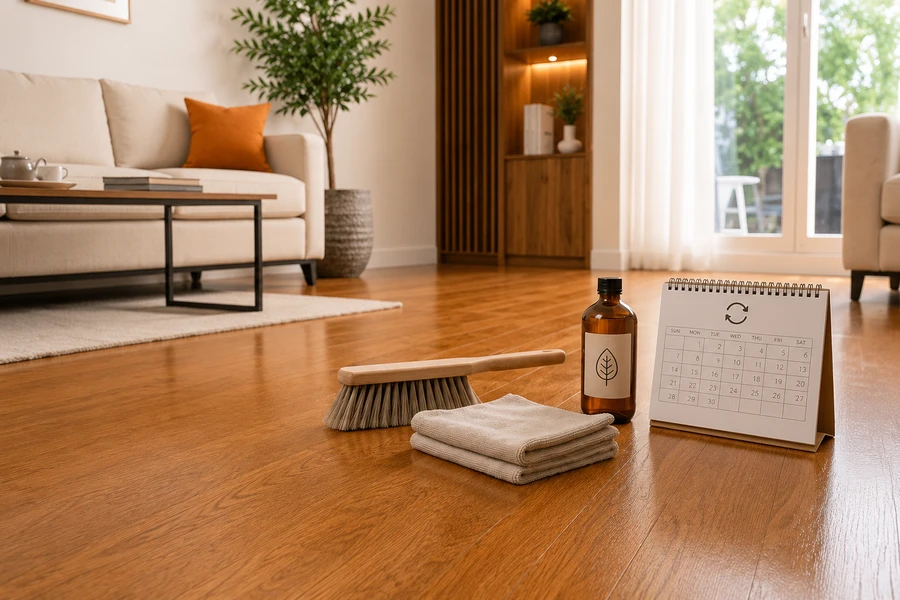 A regular cleaning schedule helps keep hardwood floors in good condition. This guide shows how often each cleaning task should be done.
Daily Tasks
High traffic areas need sweeping or dust mopping every day. Daily cleaning removes grit before it scratches the surface. Spills need quick cleaning to help prevent stains and moisture damage.
Weekly Tasks
The entire floor needs vacuuming once a week with a hard floor setting. A barely damp mop with a pH-neutral cleaner should follow. Weekly cleaning helps stop dust from collecting between the boards.
Monthly Tasks
Furniture pads and door mats need a quick check every month. Worn pads need replacement before they stop protecting the floor. Regular checks help catch small problems early.
Seasonal Deep Cleaning
A deeper cleaning every three to four months helps maintain hardwood floors. The whole floor should be buffed to restore its natural shine. A seasonal check also helps spot areas that need extra care.
A cleaning routine based on this schedule helps protect hardwood floors. Too much moisture from frequent mopping can damage the finish over time.
Removing Paint, Stains & Stubborn Spots from Hardwood
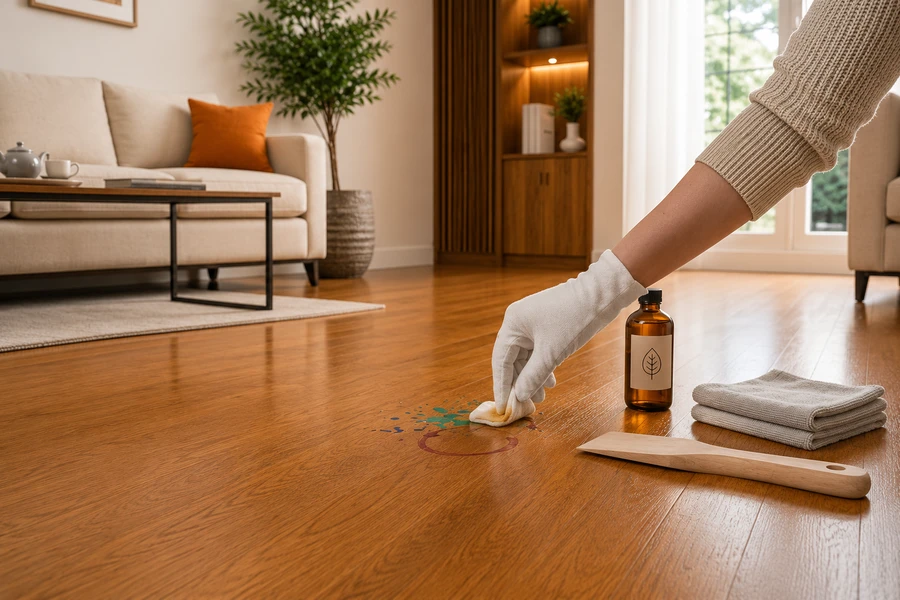 Some marks need more than regular floor cleaning. These methods help remove specific stains and spots without harming hardwood floors.
Removing Dried Paint Splatters
A plastic scraper helps loosen dried paint without scratching the floor. The scraper should stay flat and move with the wood grain. A small amount of mineral spirits can loosen stubborn paint.
Removing Fresh Paint Drips
Fresh paint is easier to remove before it dries. A dry cloth helps absorb the paint without spreading it. A damp cloth removes most water based paint with ease.
Treating Wine & Juice Stains
A small amount of dish soap mixed with warm water works well. Gentle dabbing helps lift the stain without damaging the finish. A dry cloth should remove any remaining moisture.
Removing Watermarks & White Rings
White marks usually appear when moisture gets trapped under the finish. A paste made with baking soda and a few drops of water can help. A short wait before wiping gives the paste time to work.
Handling Ink & Marker Stains
Rubbing alcohol on a cotton pad helps remove ink stains. A hidden area should be tested first to check the finish. A dry cloth should remove any moisture after cleaning.
Dealing With Wax or Crayon Residue
A paper towel placed over the wax helps protect the floor. A warm iron on a low setting softens the wax. The paper towel absorbs the wax as it melts.
Quick spot treatment gives the best results. Longer waiting times allow stains to sink deeper into the wood grain.
Cleaning Mistakes & Products to Avoid
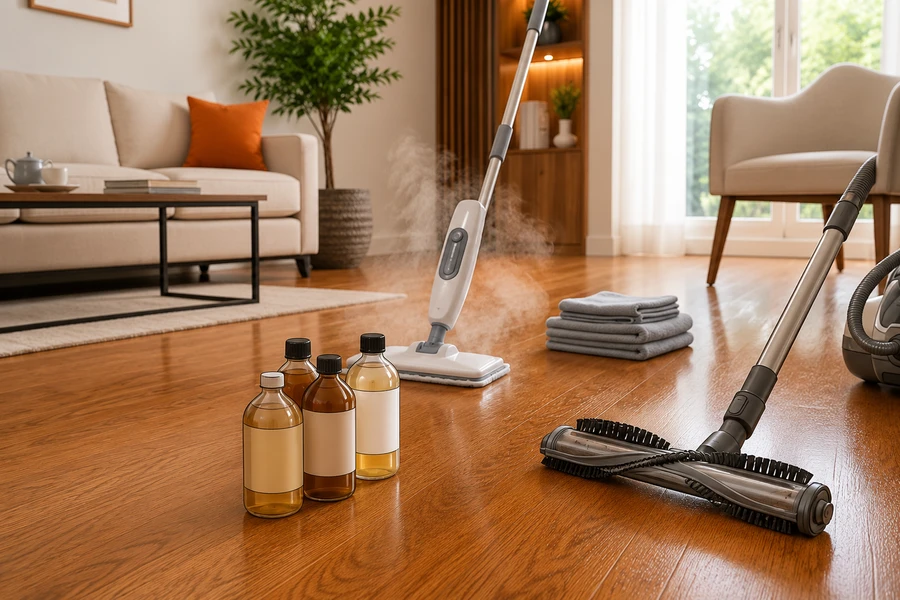 Some cleaning habits can damage hardwood floors over time. This list explains what to avoid when learning how to clean wood floors the right way.
Using a Steam Mop
Steam sends moisture into the gaps between wood boards. Extra moisture can cause the wood to warp over time. Steam mops are not suitable for hardwood floors.
Soaking the Floor With Water
A wet mop leaves too much water on the floor. Standing water can seep into the gaps between boards. Swollen wood and a cloudy finish can result from excess moisture.
Vinegar & Water Mixes
Vinegar contains an acid that can wear down the protective finish. Regular use can leave the floor looking dull. A pH-neutral cleaner is a safer choice for hardwood floors.
Ammonia-Based Cleaners
Ammonia can damage wax and polyurethane finishes over time. The surface becomes more likely to get scratches and stains. Product labels should always be checked before use.
Oil Soap Cleaners
Oil soap leaves a waxy layer on polyurethane finished floors. This buildup can cause problems when refinishing the floor later. Oil soap is suitable only for floors with a wax finish.
Turn Off the Beater Bar Before Vacuuming
A spinning beater bar can scratch hardwood floors. The hard floor setting turns it off before cleaning. This simple step helps protect the floor surface.
Furniture Dragged Across the Floor
Heavy furniture can leave deep scratches when dragged across the floor. Furniture should be lifted instead of pulled during moving.
Careful cleaning habits help protect hardwood floors for years. Simple prevention can reduce the need for costly floor repairs or refinishing.
Daily Wood Floor Maintenance Habits
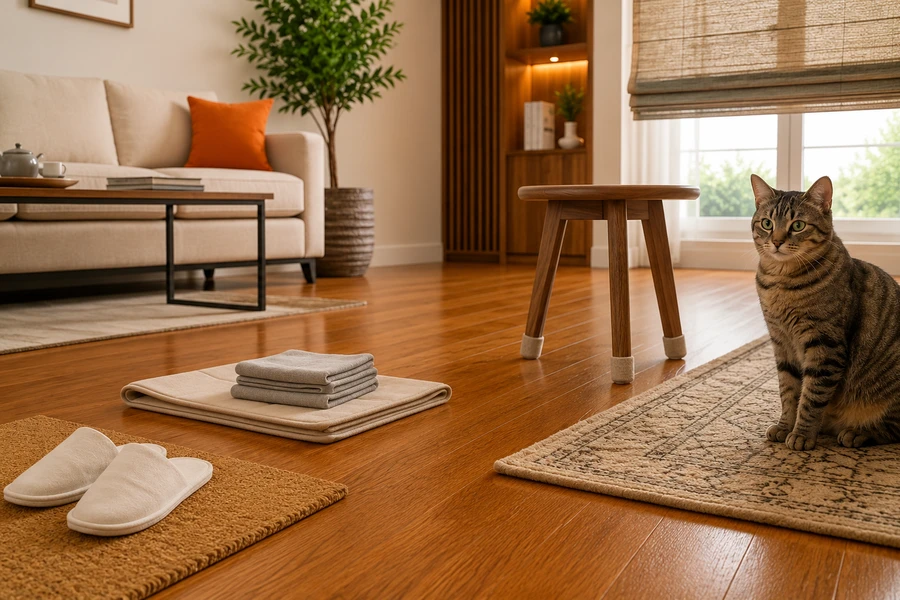 Small daily habits help protect hardwood floors between cleanings. This part focuses on prevention, an important part of wood floor maintenance.
- Remove Shoes at the Door: Shoes bring in grit and small stones that can scratch wood floors. A simple no-shoes rule helps protect the surface every day.
- Trim Pet Nails Regularly: Long pet nails can leave small scratches across wood floors. Regular trimming helps reduce daily wear.
- Wipe Paws After Walks: Wet paws bring dirt and moisture into the house. A quick wipe at the door helps keep the floor clean.
- Close Blinds During Peak Sunlight: Direct sunlight can fade wood color over time. Closed blinds during bright hours help reduce uneven fading.
- Watch Indoor Humidity Levels: Wood changes as indoor humidity rises and falls. Humidity between thirty and fifty percent helps protect hardwood floors.
- Use Chair Glides on Seating: Chair legs without glides can scratch the floor with daily movement. Felt or rubber glides help reduce this damage.
- Rotate Area Rugs Periodically: Rugs left in one spot shield the wood underneath from light. Moving them every few months keeps the color tone even.
These simple habits support your regular cleaning routine. Daily care helps reduce wear before it becomes easy to see.
Long Term Protection Against Scratches, Sunlight & Moisture
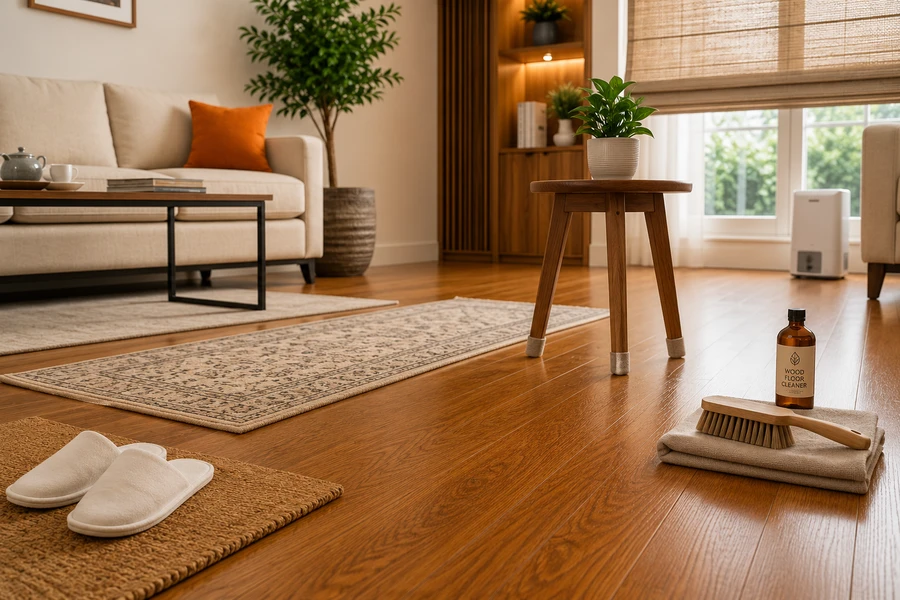 Daily habits help reduce everyday wear. Long term hardwood floor maintenance also needs a few extra steps to protect your floors.
Threat: Fading From Sunlight
Direct sunlight can fade wood color over time.
Fix: UV-blocking window film helps reduce fading. Rotating furniture from time to time also helps keep the floor color even.
Threat: Wear in High Traffic Areas
Hallways and entryways wear out faster than other rooms.
Fix: Runners and door mats help reduce daily foot traffic in these areas.
Threat: Humidity Changes During the Year
Wood expands in summer and shrinks in winter. These changes can put stress on the boards.
Fix: A whole-home humidifier or dehumidifier helps keep indoor humidity steady.
Threat: Hidden Leaks Near Appliances
Small leaks near dishwashers or exterior doors can go unnoticed for weeks.
Fix: Monthly checks help find soft spots or discoloration before the damage spreads.
Threat: A Worn Protective Finish
Protective finishes become thinner over time. Thin finishes leave the wood less protected.
Fix: A new protective coat every few years helps protect the floor before damage begins.
When Recoating Isn’t Enough
A fresh coat restores shine, but it has limits. Deep gouges, large stains, or uneven boards need a professional’s assessment. Full sanding and refinishing, usually needed after ten or more years, restores wood that a simple recoat cannot fix. Understanding this difference helps you maintain hardwood floors for many years.
Early action protects both the surface and the structure of hardwood floors. Small preventive steps help avoid costly repairs later.
Quick Recap: Best Way to Clean Hardwood Floors
If you’re short on time, here is a quick guide to cleaning hardwood floors.
- First, clear loose grit with a broom or dust mop
- Corners and edges need a pass with the hard floor vacuum setting
- Mix your pH-neutral cleaner exactly as the label directs
- Use a barely damp cloth for mopping, never soaking wet
- Clean small sections at a time for faster drying
- Dry the floor right away with a microfiber cloth
- Finish with a light buff for a natural, streak-free shine
Follow this order every time, and your finish stays protected for years.
Common Questions About Cleaning Hardwood Floors
Can I use a steam mop on hardwood floors?
No, steam mops are not safe for hardwood floors. Steam forces moisture into the seams between boards. This trapped moisture causes warping and can cloud the finish over time. A barely damp microfiber mop is the safer alternative.
Is vinegar safe for cleaning wood floors?
No, vinegar is not recommended for hardwood floors. Vinegar contains an acid that slowly breaks down the protective finish. Regular use leaves floors looking dull and worn. A pH-neutral wood floor cleaner protects the finish far better.
How long should I wait before walking on a cleaned floor?
Wait about fifteen minutes before walking on a freshly cleaned floor. This gives the surface enough time to dry fully. Walking on a damp floor can leave footprints or streaks behind.
Can I clean hardwood floors with just water?
Plain water alone is not enough for hardwood floors. Water fails to break down grease, oil, or embedded grime. A pH-neutral cleaner paired with water gives a deeper, safer clean.
Do I need different products for engineered wood floors?
No, the same pH-neutral cleaners work for engineered and solid hardwood. Both floor types share a similar surface finish. However, engineered floors still need minimal moisture during mopping.
How do I know if my floor needs refinishing instead of cleaning?
Deep scratches that reach bare wood signal a need for refinishing. Cleaning only addresses surface dirt, not structural wear. A flooring professional can confirm whether refinishing is necessary.
Are robot vacuums safe for hardwood floors?
Yes, robot vacuums are safe when set for hard floors, not carpet. The correct setting avoids scratching from spinning brush attachments. Always check the manufacturer’s flooring compatibility guide first.
What is the best way to clean hardwood floors without special products?
A soft broom, microfiber mop, and pH-neutral cleaner cover most cleaning needs. These basic tools handle daily dust and weekly deep cleaning effectively. Specialty products are only needed for tough stains.