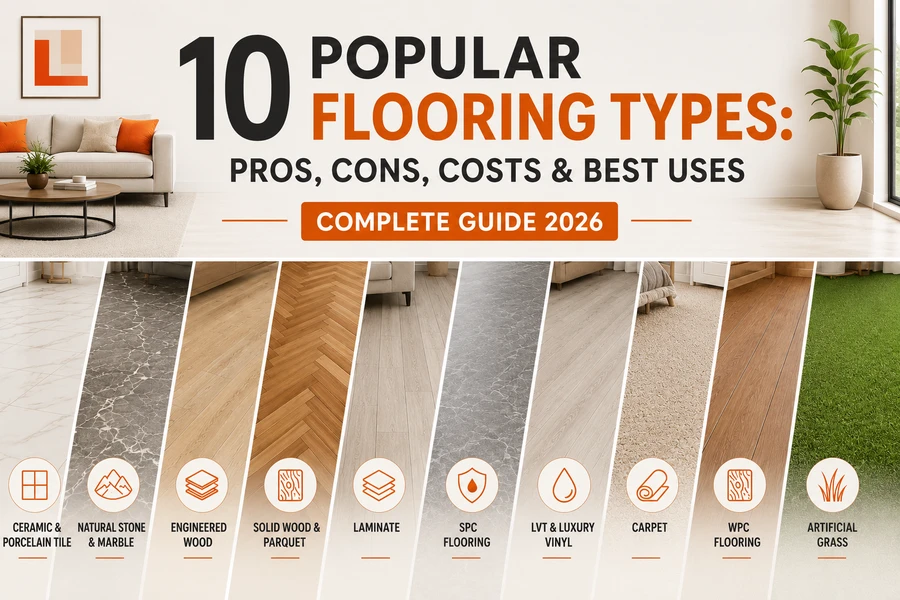
A few years ago, we chose solid wood flooring for a bathroom. It looked beautiful in the showroom. Within eight months, the wood swelled, and the edges started to lift. We had to remove it and install new flooring. That experience taught us how important it is to choose the right flooring material.
It also showed us why knowledge of different flooring types matters for renovation. That’s why Nova Floor team created this guide. It explains ten popular flooring options in simple words. You’ll find the pros and cons of each, and average Dubai market prices. By the end, choosing the right flooring will feel much easier for you.
Contents
Flooring Options Compared
Flooring comes in many materials, styles, and price ranges. Common types include tile, carpet, stone, wood flooring, laminate and vinyl flooring. Each one differs in cost, durability, and water resistance. Some work better in kitchens, while others suit bedrooms. Use the table below to compare all ten flooring types by cost, durability, and water resistance. Then read each section for more details.
| Flooring Type | Cost (AED/sqm) | Durability | Water Resistance |
| Ceramic & Porcelain Tile | 45–180 | High | Full |
| Natural Stone & Marble | 150–400 | Very High | Moderate, needs sealing |
| Engineered Wood | 100–300 | Medium to High | Moderate |
| Solid Wood & Parquet | 150–400 | High | Low |
| Laminate Flooring | 30–100 | Medium | Moderate |
| SPC Flooring | 45–150 | High | Full |
| LVT & Luxury Vinyl | 40–350 | Medium to High | Full |
| Carpet | 25–200 | Medium | Low |
| WPC | 90–200 | High | Full |
| Artificial Grass | 25–220 | High | Full |
These are estimated Dubai prices for supply and installation in 2026. Costs may change based on the brand, thickness, and project size.
10 Popular Types of Flooring in Dubai
1. Ceramic & Porcelain Tile Flooring
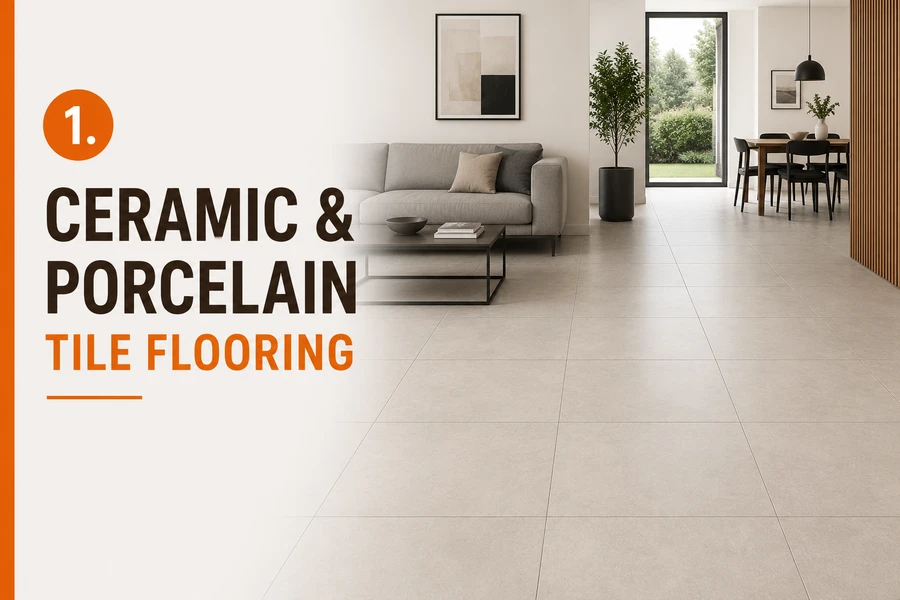
Tile flooring is one of the oldest types of flooring materials used in homes. It is made from clay, pressed into shape, and fired at high heat. Porcelain tiles use finer clay and reach higher firing temperatures than ceramic ones. This makes porcelain denser and less likely to absorb water. Ceramic tiles are lighter and easier to cut for smaller spaces.
Types of Tile Flooring
Glazed Ceramic: Carries a glossy coating that adds color and shine.
Unglazed Porcelain: Holds solid color all the way through, so chips stay less visible.
Polished Porcelain: Offers a smooth, reflective finish for a modern look.
Matte Porcelain: Has a textured surface that gives better grip underfoot.
Pros
- Handles heat and daily spills without damage.
- Easy to wipe clean with a damp cloth.
- Comes in many colors, patterns, and sizes.
- Resists scratches from pets and furniture.
- Lasts for decades with basic care.
Cons
- Feels cold underfoot without heating.
- Grout lines can trap dirt over time.
- Can crack if something heavy falls on it.
- Hard surfaces may tire your legs during long standing.
Best For
- Tile suits kitchens, bathrooms, and hallways with heavy daily use.
- Porcelain handles Dubai’s heat and humidity better than most materials.
- Choose ceramic for lighter traffic rooms on a smaller budget.
2. Natural Stone & Marble Flooring
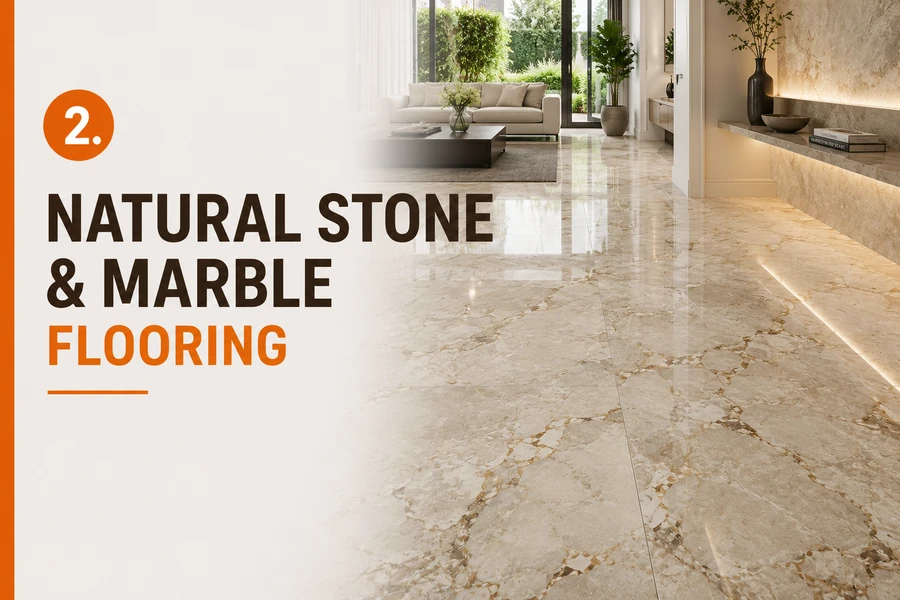
Natural stone flooring comes from rock cut and polished into slabs. Marble, granite, and travertine remain common choices among Dubai’s different types of flooring. Each slab carries its own veins, tone, and texture. The material also brings a cooling effect to warm rooms.
Types of Natural Stone Flooring
Marble: Polished stone with soft veining, prized for its luxury look.
Granite: Dense volcanic stone, tougher against scratches than marble.
Travertine: Porous stone with an earthy texture, common in outdoor areas.
Limestone: Soft sedimentary stone with a calm, natural finish.
Pros
- Keeps rooms cooler during hot months.
- Adds a premium look that raises property value.
- Lasts for decades with proper care.
- Shows a unique pattern on every slab.
- Handles heavy furniture without denting.
Cons
- Needs regular sealing to prevent stains.
- Feels slippery when wet without treatment.
- Costs more than most other flooring materials.
- May chip or crack under a heavy impact.
Best For
- Living rooms, lobbies, and entrance halls suit natural stone well.
- Marble fits villas aiming for a luxury finish.
- Avoid unsealed stone in bathrooms prone to spills.
3. Engineered Wood Flooring
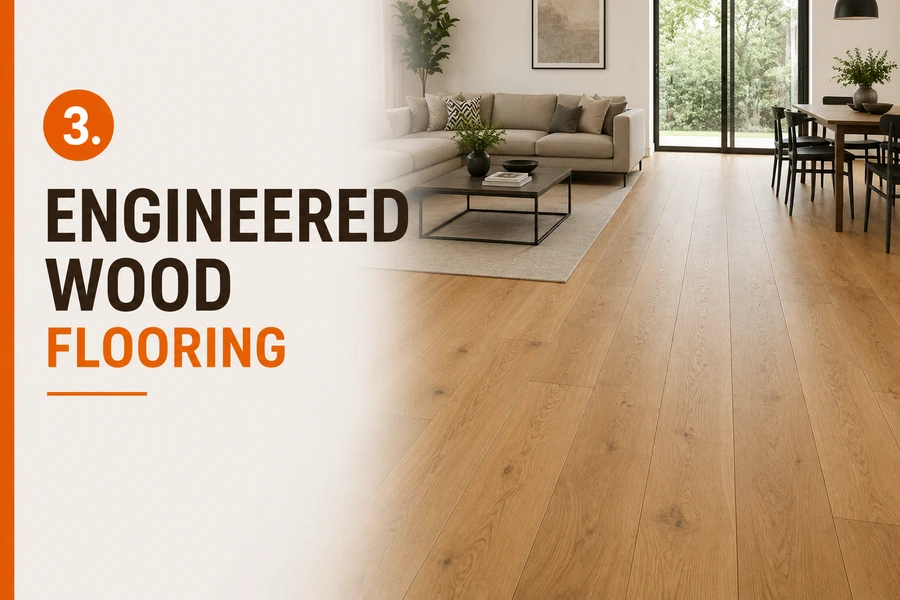
Engineered wood combines a real wood top layer with a plywood base. This layered build resists warping better than solid wood. It brings timber warmth without the same moisture risk. Among modern flooring options, it remains a strong pick for Dubai apartments.
Types of Engineered Wood Flooring
Oak Veneer: Light tone with visible grain, suited for bright interiors.
Walnut Veneer: Darker shade that adds warmth to a room.
Herringbone Engineered: Angled plank pattern for a classic design.
Pros
- Resists moisture better than solid wood floors.
- Installs faster than traditional hardwood flooring.
- Arrives pre-finished, so no sanding is needed.
- Offers real wood texture at a lower price.
- Works well with underfloor heating systems.
Cons
- Cannot be refinished as many times as solid wood.
- The top veneer layer wears down over the years.
- Still needs protection from standing water.
- Lower grades may show visible seams.
Best For
- Living rooms and bedrooms suit engineered wood well.
- Good choice for apartments with underfloor heating.
- Keep it away from bathrooms and spill-prone areas.
4. Solid Wood & Parquet Flooring
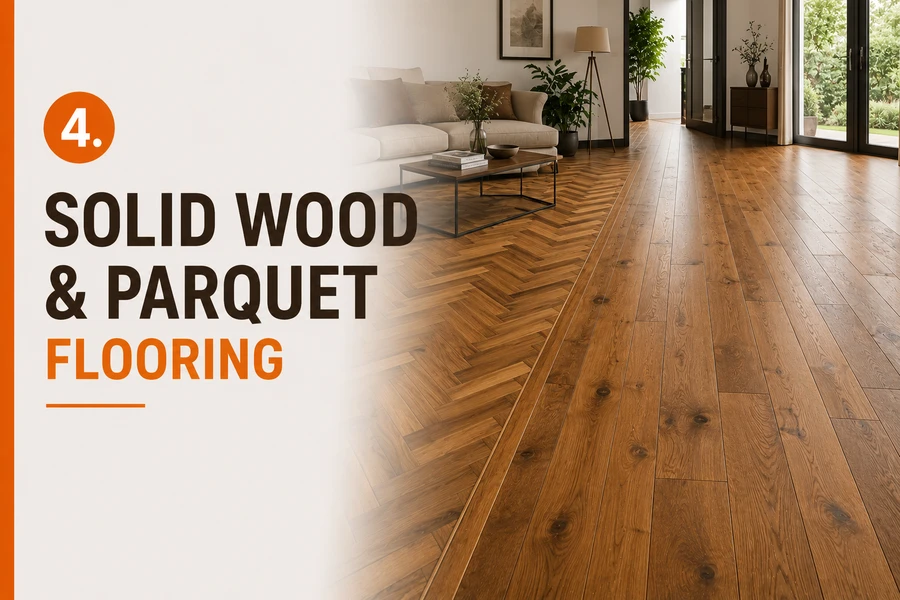
Solid wood flooring uses full planks cut from a single timber piece. Parquet arranges smaller wood pieces into geometric patterns. Oak, walnut, and teak remain common choices among these different types of flooring. This material brings a classic, timeless feel to any room.
Types of Solid Wood Flooring
Herringbone Parquet: Zigzag pattern formed from short wood strips.
Chevron Parquet: Angled planks that meet in a pointed pattern.
Plank Solid Wood: Long, straight boards laid in a simple row.
Block Parquet: Square wood blocks arranged in a grid pattern.
Pros
- Can be sanded and refinished many times.
- Adds strong resale value to a property.
- Ages well and develops a rich tone over time.
- Brings genuine warmth underfoot compared to tile.
Cons
- Reacts poorly to humidity and standing water.
- Costs more than engineered or laminate options.
- Needs periodic maintenance to keep its finish looking good.
- Not suitable for bathrooms or kitchens.
Best For
- Living rooms and studies suit solid wood well.
- Parquet patterns fit formal, elegant spaces.
- Avoid solid wood in bathrooms and wet areas.
5. Laminate Flooring
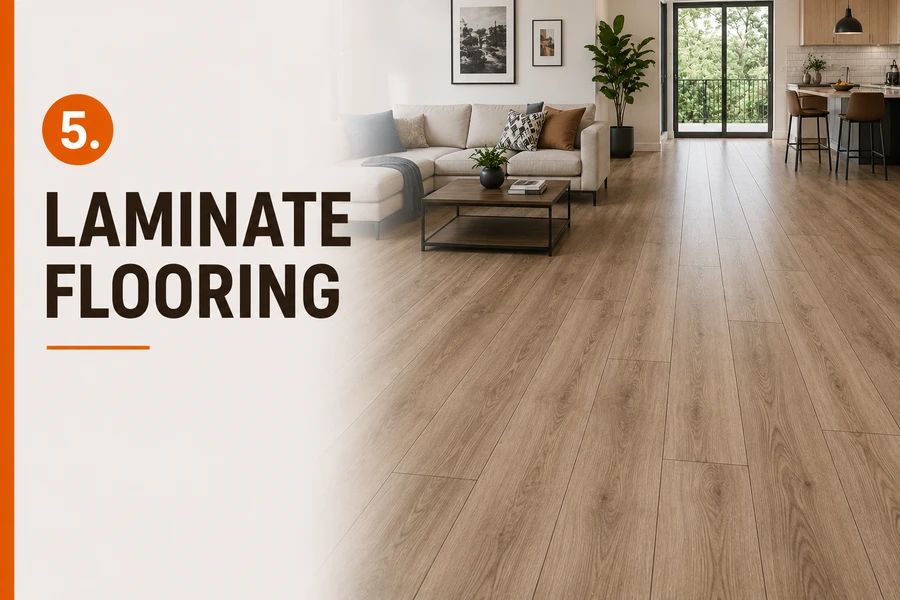
Laminate flooring has a printed layer that looks like wood or stone. A clear wear layer on top protects the surface from daily use. Below that, a dense fiberboard core gives each plank its strength and shape. It is a budget-friendly flooring option that comes in many styles.
Types of Laminate Flooring
High Gloss Laminate: Shiny surface that reflects light in modern rooms.
Textured Laminate: Grain pattern that mimics real wood underfoot.
Water Resistant Laminate: Sealed edges built to handle light moisture.
Pros
- Costs less than most wood or stone options.
- Installs quickly with a simple click system.
- Resists scratches from daily foot traffic.
- Cleans easily with a dry or damp mop.
Cons
- Swells if water sits on the surface too long.
- Cannot be sanded or refinished like real wood.
- Sounds hollow underfoot compared to solid materials.
- Lower grades fade faster under strong sunlight.
Best For
- Bedrooms and living rooms suit laminate well.
- Works well in rooms with light to moderate foot traffic.
- Keep laminate away from bathrooms and kitchen sinks.
6. SPC Flooring
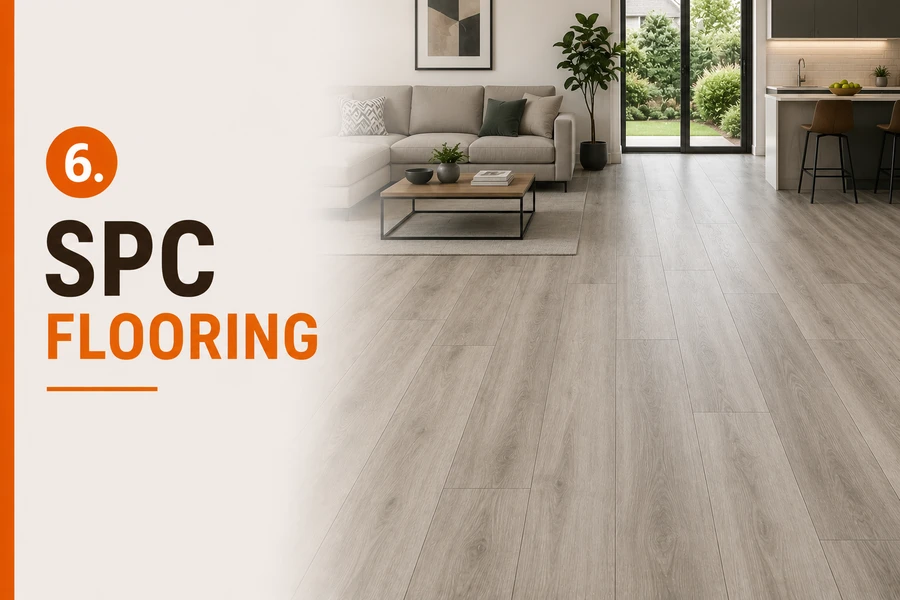
SPC stands for stone plastic composite, a rigid core material. Limestone powder mixes with PVC to form a dense, stable plank. A printed layer on top adds wood or stone designs. This makes SPC one of the toughest types of flooring for busy homes.
Types of SPC Flooring
Click Lock SPC: Interlocking planks that snap together without glue.
Herringbone SPC: Angled plank layout for a stylish pattern.
Stone Effect SPC: Surface print that copies natural stone texture.
Pros
- Stays fully waterproof under daily spills and mopping.
- Handles heat with very little expansion or warping.
- Resists scratches from pets and furniture legs.
- Installs faster than tile or solid wood.
- Keeps its shape in humid conditions.
Cons
- Feels harder underfoot than carpet or vinyl.
- Higher grades cost more than laminate.
- Can sound hollow in large open rooms.
- Direct sunlight may fade cheaper grades over time.
Best For
- Kitchens, bathrooms, and high traffic areas suit SPC well.
- Strong choice for Dubai homes facing daily humidity.
- Good option for rental units needing low upkeep.
7. LVT & Luxury Vinyl Flooring
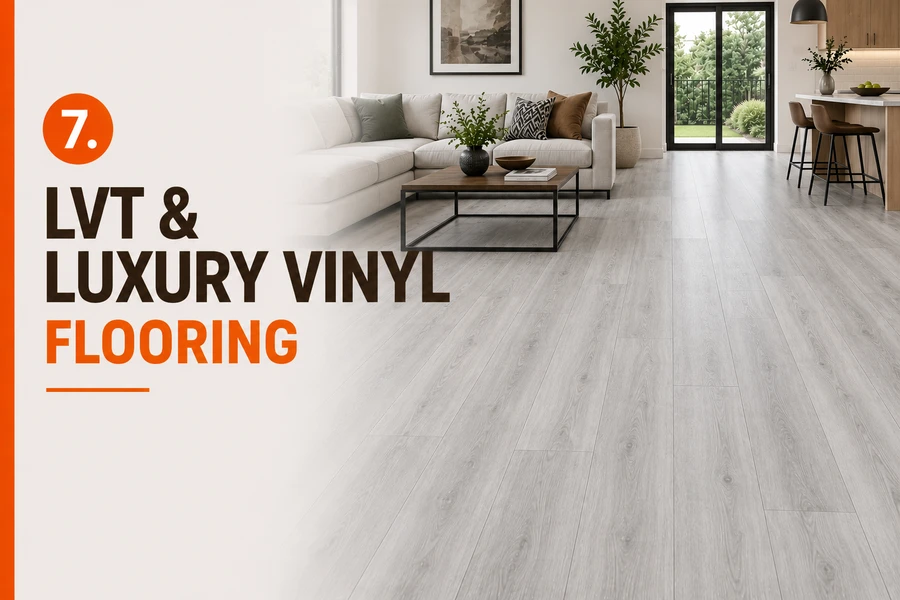
LVT stands for luxury vinyl tile, made from layered PVC sheets. A printed design layer sits under a clear protective coating. The backing layer adds softness and comfort underfoot. Among current flooring options, LVT balances comfort with strong durability.
Types of LVT Flooring
Vinyl Plank: Long strips designed to copy natural wood flooring.
Vinyl Tile: Square format that mimics ceramic or stone.
Loose Lay Vinyl: Heavy backing that stays in place without glue.
Pros
- Feels warmer and softer underfoot than tile or stone.
- Resists water fully across most product grades.
- Comes in realistic wood and stone finishes.
- Handles daily wear in busy households well.
Cons
- Sharp objects can cut or gouge the surface.
- Lower grades show wear faster in heavy traffic.
- Damaged planks or tiles may need to be replaced.
- Quality varies widely between different brands.
Best For
- Bedrooms, kitchens, and offices suit LVT well.
- Good pick for families wanting comfort and water resistance.
- Choose thicker grades for rooms with heavy daily use.
If you’re considering modern flooring options, learn more about what LVT flooring is and why it is popular for Dubai interiors.
8. Carpet Flooring
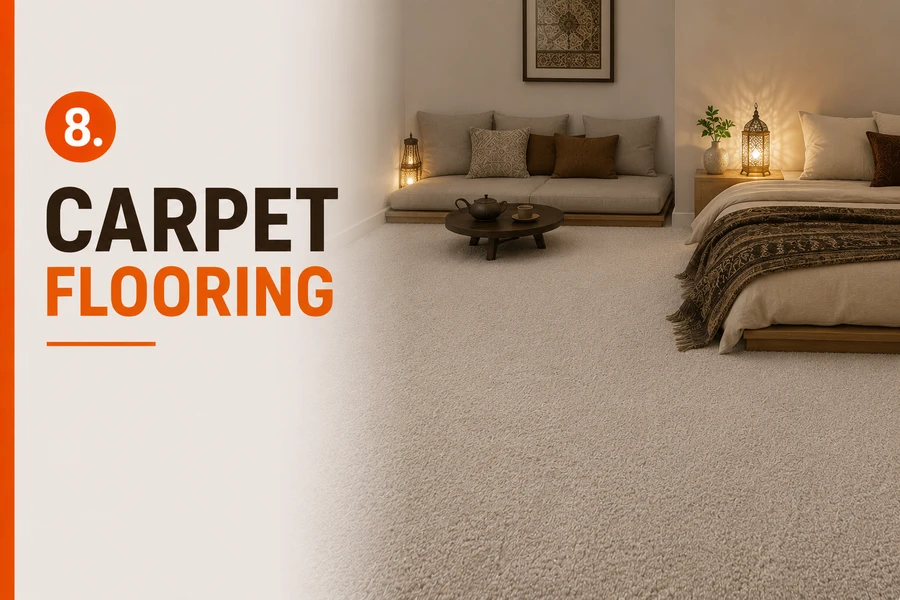
Carpet flooring uses woven or tufted fibers attached to a backing layer. Wool, nylon, and polyester remain the most common fiber choices. A cushioned underlay often sits beneath the carpet for added comfort. This soft option stands apart from the hard flooring types listed earlier.
Types of Carpet Flooring
Wool Carpet: Natural fiber known for softness and long life.
Nylon Carpet: Synthetic fiber built for heavy foot traffic.
Polyester Carpet: Budget fiber with strong stain resistance.
Sisal Carpet: Plant fiber with a textured, natural look.
Pros
- Feels soft and warm underfoot compared to hard floors.
- Absorbs sound and reduces noise between rooms.
- Cuts the risk of slipping for kids and elderly family members.
- Comes in many colors, textures, and patterns.
Cons
- Holds dust and allergens if not cleaned often.
- Stains show easily from spills and pet accidents.
- Can develop mold if it stays damp for too long.
- Does not last as long in busy areas.
Best For
Bedrooms and majlis areas suit carpet well.
Wool carpet fits formal living spaces and cooler rooms.
Avoid carpet in kitchens, bathrooms, and entryways.
9. WPC Flooring
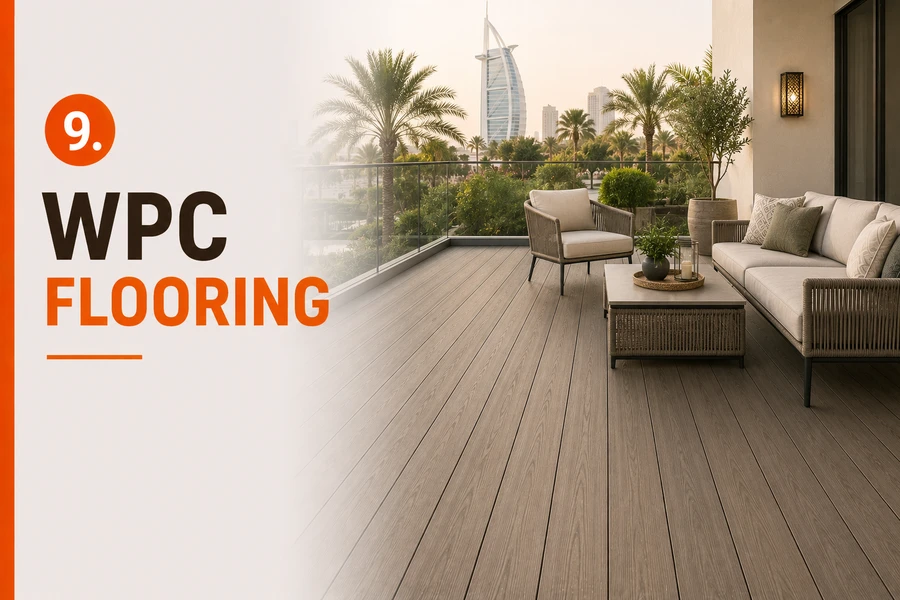
WPC stands for wood plastic composite, built from wood fiber and PVC. This blend forms a dense core that resists moisture better than real wood. A printed layer on top copies natural wood grain. WPC flooring offers the look of wood with better moisture resistance.
Types of WPC Flooring
WPC Click Flooring: Interlocking planks that snap together without glue.
Wood Effect WPC Flooring: Surface designed to look like natural wood.
Embossed WPC Flooring: Textured finish that adds a more realistic wood feel.
Pros
- Resists water fully, even in standing puddles.
- Handles direct sunlight with good fade resistance.
- Feels softer underfoot than SPC or tile.
- Stays stable through temperature changes.
Cons
- Costs more than laminate or basic vinyl.
- Heavier planks need careful handling during installation.
- Limited design range compared to LVT.
Best For
- Living rooms, bedrooms, kitchens, and wet areas suit WPC well.
- Strong choice for Dubai homes facing heat and humidity.
- Good option for homes wanting the look of natural wood with better moisture resistance.
10. Artificial Grass
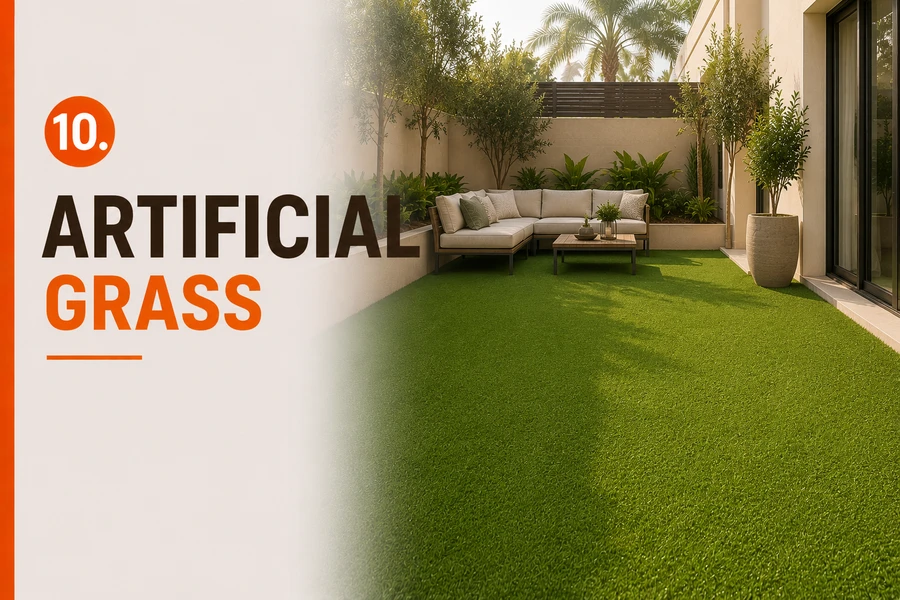
Artificial grass uses synthetic fibers built to copy natural lawn grass. A backing layer holds the fibers in place and allows drainage. UV treatment protects the surface from sun damage. This outdoor flooring choice completes the full range of ten types covered in this guide.
Types of Artificial Grass
Short Pile Turf: Low fiber height suited for play areas.
Long Pile Turf: Tall, lush fibers for a natural lawn look.
Putting Green Turf: Dense, flat surface built for golf practice.
Pros
- Stays green for a long time without watering or mowing.
- Handles Dubai heat without wilting or drying out.
- Feels soft and safe for children and pets.
- Drains quickly after rain or cleaning.
Cons
- Can feel warm underfoot during peak summer sun.
- Needs occasional brushing to keep fibers upright.
- Lower grades may look less realistic up close.
Best For
- Gardens, balconies, and rooftop terraces suit artificial grass well.
- Strong choice for villas wanting greenery without upkeep.
- Good option for play areas needing a soft, safe surface.
For commercial and multi-level spaces, discover what a mezzanine floor is and how it can maximize available space.
Choosing Flooring by Your Situation
Every home has different needs beyond room type and budget. This section helps you choose the right flooring based on real-life situations, not just material features. Pick the situation that matches your home and follow the recommendation.
If You Have Pets or Kids
SPC, WPC, and LVT resist scratches and everyday accidents the best. They also make it easy to clean up spills without leaving stains.
If You Are Renting Your Home
Click-lock SPC or laminate is a good choice because they do not need glue. You can remove and reuse them if you move to a new home.
If You Want Lower Long-Term Costs
SPC and WPC cost more than laminate at first, but they last much longer. Spending a little more now can save money on replacements later.
If You Are Renovating an Outdoor Space
WPC decking and artificial grass handle Dubai’s sun and heat well. Both need very little maintenance after proper installation.
Conclusion
You now know the real differences between ten common flooring materials. Cost, durability, and water resistance vary more than most buyers expect before research. A rushed choice, like the one I made years ago, often costs more later. Use the comparison table and situation guide together before you decide. Visit a showroom and feel each sample under your own feet. When you are ready to move forward, our team offers a free flooring estimate for your home.
Frequently Asked Questions
What is the most durable type of flooring?
Natural stone and SPC are among the most durable flooring types. Both can handle heavy foot traffic, scratches, and daily use for many years.
Is vinyl or laminate flooring better?
Vinyl is better for areas with water and humidity. Laminate has a harder surface but can swell if water gets into its core.
Which flooring type increases home value the most?
Natural stone and solid wood can add the most value to a home. Many buyers see these materials as high quality and long lasting.
Which flooring types should I avoid in humid rooms?
Avoid solid wood, laminate, and carpet in humid or wet rooms. Moisture can cause them to warp, swell, or develop mold over time.