Noah Williams is an interior designer and flooring expert at Nova Floor. In Dubai, he helps people pick the right floor, get it installed, and keep it looking good. He also writes simple, practical flooring and home care guides for readers in Dubai and around the world.
What Is Engineered Hardwood? Solid vs Engineered Hardwood Flooring Compared
Noah Williams
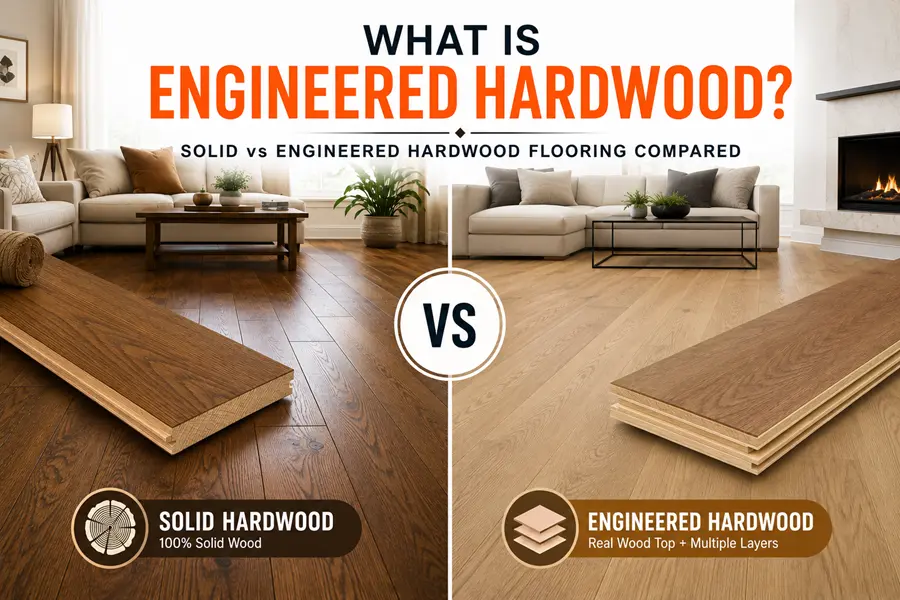
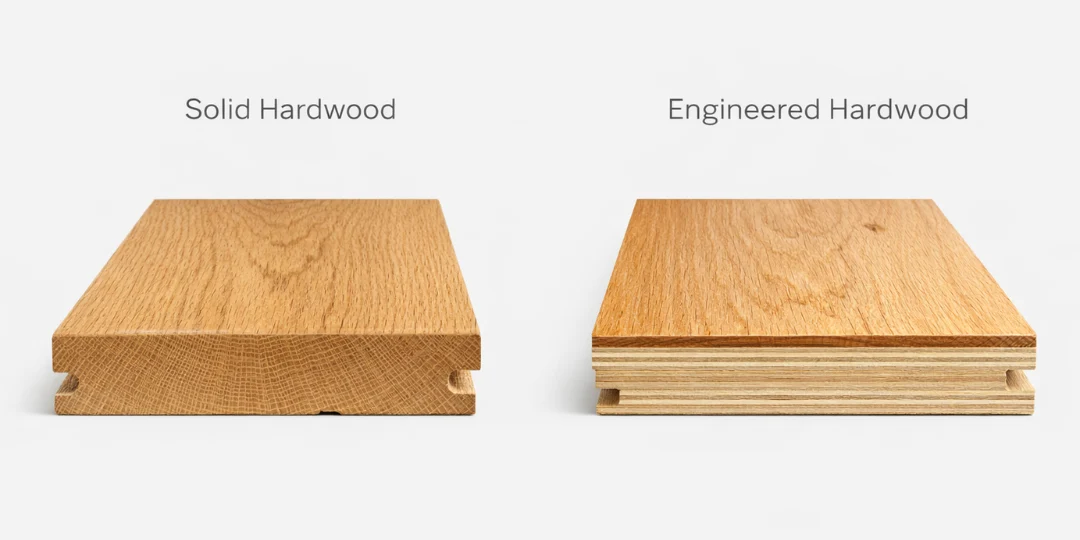
Engineered hardwood is real wood flooring built in layers. A thin sheet of natural hardwood sits on top. A stable core of plywood or fiberboard sits underneath. Solid hardwood flooring skips the layers entirely. Each plank comes from a single piece of wood, top to bottom.
Both options give you genuine wood underfoot. Neither one is a fake. The difference lives in the construction, and that construction decides where each floor performs well, how long it lasts, and how many times you can refresh it.
This guide by Nova Floor explains both materials in plain terms, then compares them across the nine factors that actually change your decision.
Contents
What Is Engineered Wood?
Engineered wood flooring is a broad category of manufactured wood products. Mills bond wood veneers, fibers, or strands together with adhesive under heat and pressure. The result behaves more predictably than a raw board.
You already know most of these products:
- Plywood. Thin veneers stacked at right angles to each other.
- HDF and MDF. Wood fibers compressed into a dense, uniform panel.
- OSB. Compressed wood strands, common in subfloors and sheathing.
- LVL. Layered veneer beams used in structural framing.
Solid lumber moves. It swells in humid air and shrinks in dry air. Engineering the wood into layers cancels out much of that movement. Each layer pulls in a different direction, so the panel holds its shape.
That principle is the entire reason engineered hardwood flooring exists.
What Is Engineered Hardwood Flooring?
Engineered hardwood flooring uses that layered idea and puts a real hardwood surface on top.
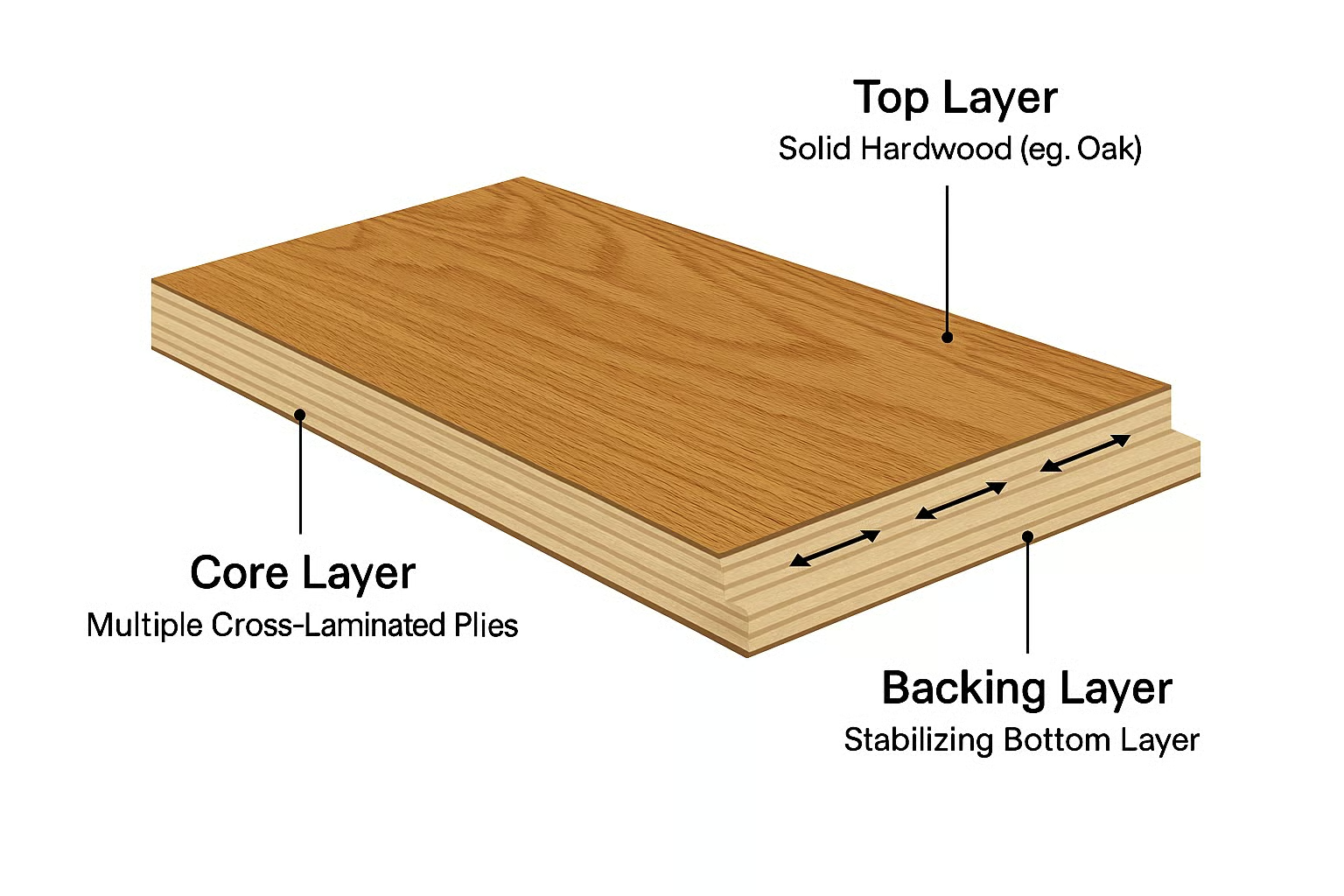
Each plank has three parts:
- The wear layer. This is the visible hardwood veneer, sliced or sawn from a real log. Oak, maple, hickory, walnut, birch, and dozens of exotic species all show up here. You see natural hardwood, real wood grain, and real color variation, because it is real wood.
- The core. Most quality planks use a plywood core of 5 to 9 layers. Manufacturers stack those layers in a crisscross pattern, which is why the industry calls it cross-laminated construction or a cross-layered core. Budget planks often use an HDF core instead. HDF holds a click-lock profile well and resists dents, but it swells badly once water reaches it.
- The backing. A balancing layer on the underside keeps tension even so the plank stays flat.
This multi-layer construction gives engineered wood flooring its dimensional stability. The board resists cupping, warping, and gapping when humidity swings through the seasons.
The One Spec That Decides Everything: Veneer Thickness
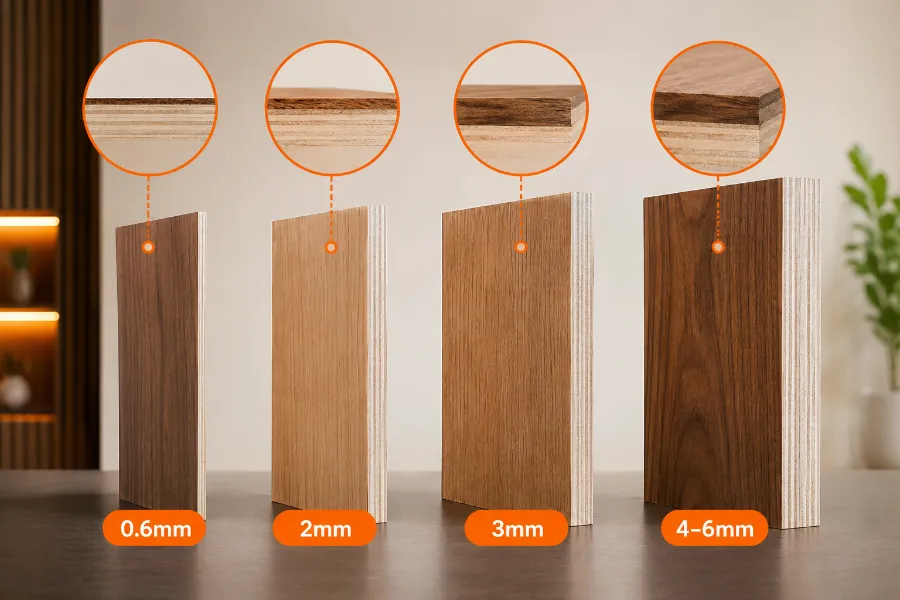
Wear layer thickness matters more than brand, price, or finish. It controls whether you own a floor you can renew or a floor you eventually throw away.
| Veneer thickness | What you can realistically do | Typical service life |
| 0.6mm to 1mm | Recoat the surface only. No sanding. | 15 to 25 years |
| 2mm | One light sanding, if the installer is careful | 25 to 40 years |
| 3mm | One to two full refinishes | 40 to 60 years |
| 4mm to 6mm | Two to four refinishes | 50 to 80 years |
The National Wood Flooring Association draws a hard line here. Its sand and finish guidelines state that a floor with less than 3/32 inch of wear thickness, roughly 2.5mm, should not go under a sander at all. Its refinishable certification program uses the same benchmark: 2.5mm for factory finished smooth flooring and 3.2mm for unfinished.
Practical tip: specs often appear as a fraction like 15/4mm. The first number is total board thickness. The second is the hardwood veneer. A 15/4mm plank gives you real refinishing headroom. A 12/0.6mm plank does not, no matter how premium the marketing sounds.
What Is Solid Hardwood Flooring?
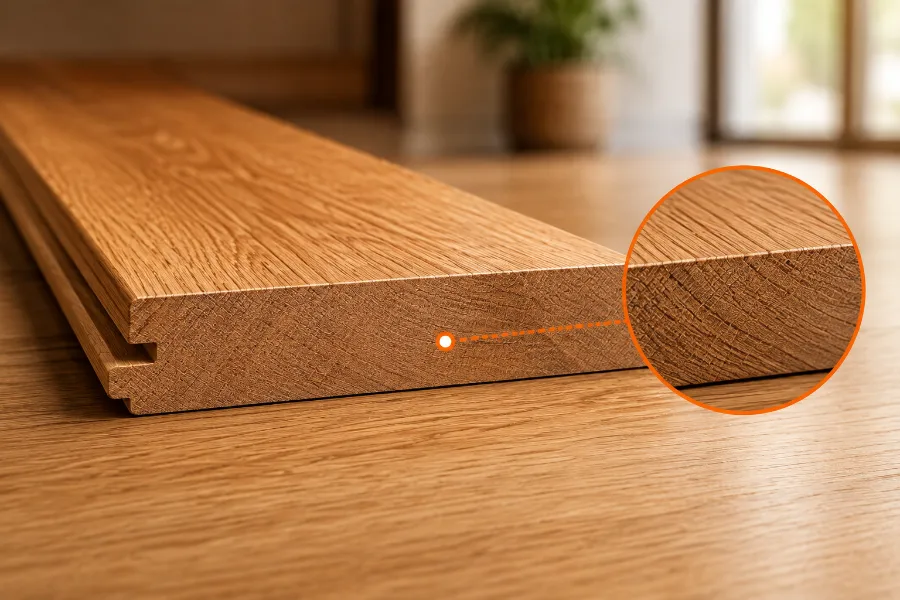
Solid hardwood flooring is exactly what the name says. A mill cuts each plank from a single piece of wood. No core, no veneer, no adhesive layers.
Standard solid wood planks measure 3/4 inch thick. Thinner 5/16 inch and 3/8 inch versions exist for low clearance rooms and staple down jobs.
Because the whole board is one wood species, the entire thickness above the tongue is usable material. That is the source of its biggest advantage and its biggest limitation at the same time. You can sand it many times. You also get the full expansion and contraction behavior of natural wood, every season, forever.
Common species and their Janka hardness ratings:
- Oak flooring: red oak at 1,290 and white oak at 1,360. The benchmark for a reason. Strong wood grain hides scratches, and it takes stain beautifully.
- Maple flooring: 1,450. Harder than oak, with a smooth, subtle grain that suits modern rooms. It stains unevenly, so many people keep it natural.
- Hickory flooring: 1,820. The toughest common domestic option. Best dent resistance of the three, with bold rustic character.
Higher Janka numbers mean better dent resistance. The number describes the species, though, not the floor type. A hickory engineered plank and a hickory solid plank dent at the same rate, because you are walking on hickory in both cases.
Solid vs Engineered Hardwood: Quick Comparison
| Factor | Solid Hardwood | Engineered Hardwood |
| Construction | Single piece of wood, 3/4 inch typical | Hardwood veneer over a plywood or HDF core |
| Thickness | 3/4 inch, plus 5/16 and 3/8 options | 3/8 inch to 3/4 inch |
| Plank width | Usually up to 5 inches | Commonly 5 to 12 inches |
| Moisture resistance | Low | Moderate to high |
| Refinishing | 4 to 6 times at 3/4 inch | 0 to 4 times, set by veneer thickness |
| Installation | Nail down or staple down | Nail, glue, staple, or float |
| Concrete subfloor | Needs a plywood buildout | Direct glue down or float |
| Radiant heating | Rarely approved | Widely approved |
| Basement | Not recommended | Suitable |
| Material cost | $4 to $12 per sq ft | $3 to $10 per sq ft |
| Installed cost | $11 to $25 per sq ft | $9 to $20 per sq ft |
| Lifespan | 50 to 100 years | 20 to 80 years, depending on veneer |
Now here is what those rows mean in a real house.
1. Construction
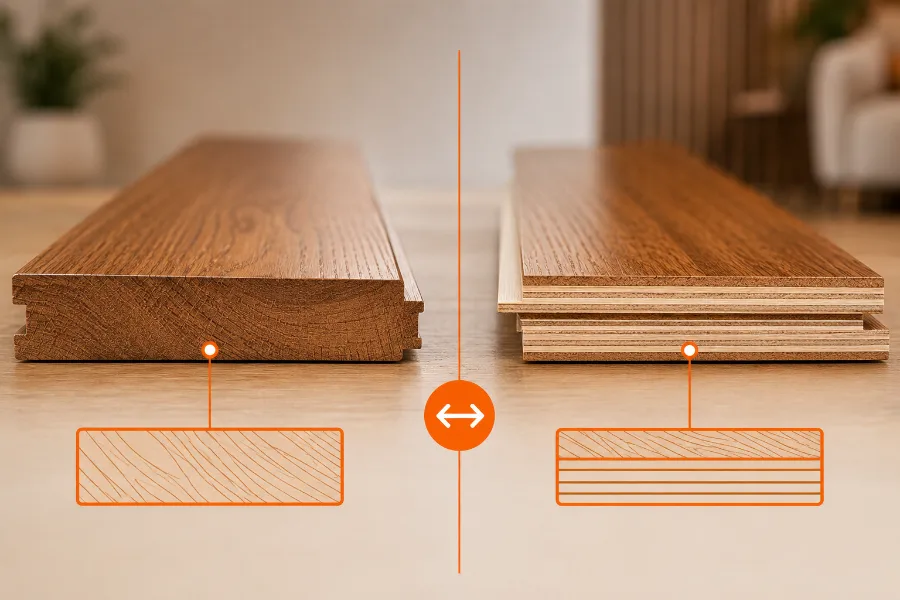
Solid hardwood behaves like one continuous piece of timber. It expands across its width when the air gets humid. It shrinks when the air dries out. Nothing restrains that movement except the fasteners and the expansion gap at the walls.
Engineered hardwood fights that movement internally. Adjacent core layers run perpendicular to each other, so one layer resists whatever the next layer tries to do. The plank moves far less across its width.
Wide plank flooring makes this obvious. A 7 inch solid board moves nearly three times as much as a 2 1/4 inch strip in the same conditions. That is why most wide plank floors on the market today use engineered construction.
2. Appearance
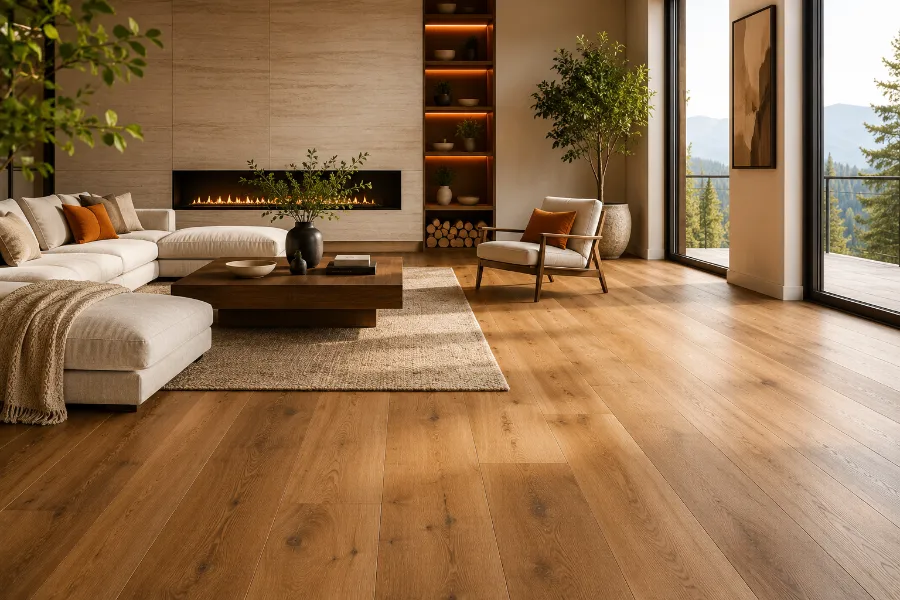
Side by side on a finished floor, most people cannot tell the two apart. Both show real wood grain, real knots, and real color variation, because both have a natural hardwood surface.
Engineered construction opens up a few looks that solid struggles to deliver:
- Planks 7 to 12 inches wide that stay flat
- Long boards up to 7 feet
- Softer and exotic wood species that are hard to mill as solid stock
- Wire brushed, hand scraped, and reactive stain finishes applied under factory conditions
Solid hardwood counters with one thing engineered cannot match: a completely open finishing future. Sand it down in year 20 and you can pick any color you want.
Most engineered products ship as prefinished hardwood with a factory applied protective finish. Factory finishes cure under UV light, so they usually outperform anything a crew can apply on site. Solid hardwood arrives either prefinished or unfinished. Unfinished planks let you sand the floor flat after installation and match a stain exactly.
3. Durability
The surface hardness comes from the wood species and the protective finish, not from the construction. Both floor types dent when you drop a cast iron pan.
Where they differ is what happens after damage.
Solid hardwood takes damage anywhere in its 3/4 inch body and still recovers. A deep gouge sands out. So do pet scratches, sun fading, and two decades of scuffs.
Engineered hardwood only recovers within the veneer. Scratch through a 0.6mm wear layer and you expose the core. At that point you replace the plank rather than repair it. Choose 3mm or more and this concern mostly disappears.
For scratch resistance and wear resistance in a busy household, prioritize three things in order: a hard species like hickory or white oak, a strong aluminum oxide protective finish, and a matte or textured surface that scatters light instead of highlighting every mark.
Long-term durability favors solid hardwood. Day-to-day wear resistance is a tie.
4. Moisture and Humidity Resistance
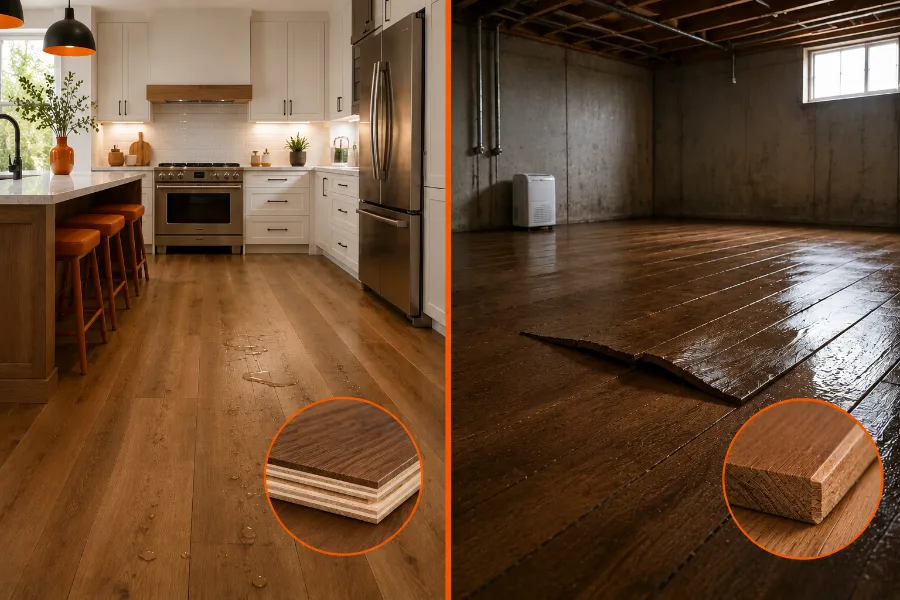
This is the clearest win for engineered hardwood, and it decides most projects.
Wood absorbs and releases moisture from the surrounding air. Industry guidelines recommend keeping your home between 30 and 50 percent relative humidity and 60 to 80 degrees Fahrenheit. Stay in that window and both floors behave.
Push outside it and solid hardwood reacts hard. Move a red oak floor from 30 percent humidity to 60 percent and a 5 inch board grows almost 1/10 of an inch. Across a 10 foot room that adds up to more than two inches of expansion. Enough to buckle a floor or crush the board edges together.
Engineered planks handle the same swing with a fraction of the movement. The cross-layered core simply refuses to travel that far. That gives you better humidity resistance, better tolerance for temperature fluctuations, and far less risk of cupping or warping.
One honest caution. Water-resistant flooring is not waterproof flooring. Standard engineered hardwood survives spills you wipe up and seasonal humidity shifts. It does not survive a dishwasher leak that sits overnight. A few manufacturers now sell sealed engineered systems rated as fully waterproof, and those are the only wood products worth considering near constant water.
Neither floor belongs in a full bathroom or a laundry room.
5. Refinishing Potential
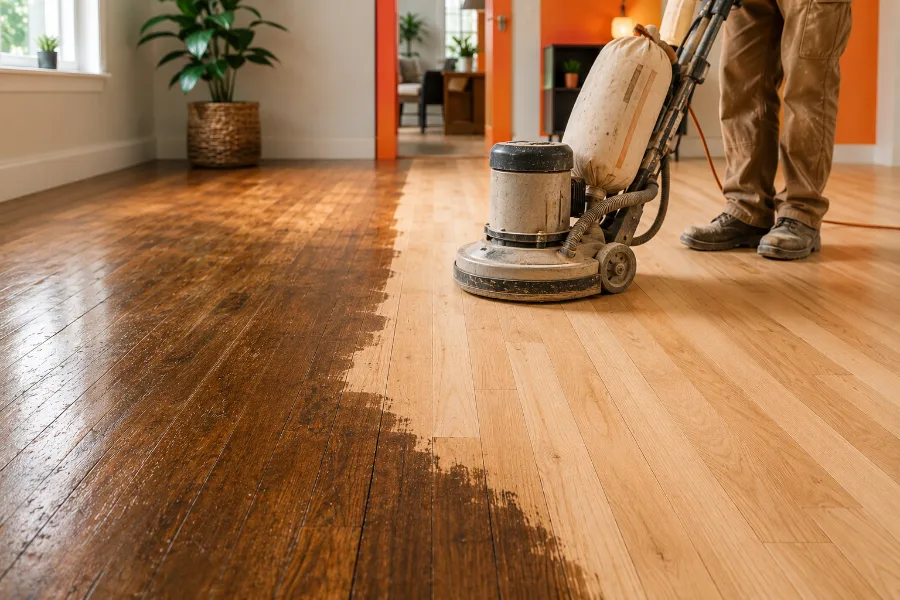
Sanding and refinishing is how a wood floor earns its keep over decades.
Solid hardwood at 3/4 inch: roughly 4 to 6 full refinishes. A careful sanding removes less than 1/32 inch, and you have about 1/4 inch of usable wood above the tongue.
Engineered hardwood: anywhere from zero to four, set entirely by the veneer thickness. Refer back to the table above.
Two points that save people money:
A full sand is rarely necessary. Most floors need one every 15 to 20 years. Between those, a screen and recoat refreshes the protective finish in a day for a fraction of the cost, and it removes almost no wood at all. You can do this on almost any engineered floor, even a thin one.
Distressed and hand scraped floors also resist refinishing by design. Sanding erases the texture you paid for. Recoating is usually the better move.
6. Installation
Installation flexibility separates these two more than any other practical factor.
Solid hardwood requires a wood subfloor and a nail-down installation or staple-down installation. It works above grade and on grade only. Putting solid hardwood over a concrete subfloor means building a plywood layer first, which adds cost and raises the floor height.
Engineered hardwood accepts all four methods:
- Nail-down installation over a wood subfloor
- Glue-down installation directly onto concrete, which gives the most solid feel underfoot
- Floating floor installation using click-lock edges over an underlayment, with no fasteners or adhesive
- Staple down, on thinner products
That flexibility unlocks three situations solid hardwood cannot serve:
Basement flooring. Below grade rooms sit against damp soil and swing in humidity. Engineered is the only wood option here.
Concrete slabs. Common in condos, apartments, and slab-on-grade homes across the southern states.
Radiant heating. Floors over radiant heat cycle through daily temperature changes. Most manufacturers approve engineered products for radiant systems and void the warranty on solid ones.
Engineered planks also run thinner, so they help you match the height of an adjoining floor or slide under a dishwasher without shimming.
Do not skip acclimation. Both floor types need time in the room to reach equilibrium with your home’s conditions before installation. Run the HVAC for at least five days first. Acclimation depends on conditions, not on a calendar, and skipping it causes most of the failures blamed on the flooring itself.
7. Cost
Material cost and installation cost pull in the same direction here, but the gap is smaller than people expect.
| Cost element | Solid Hardwood | Engineered Hardwood |
| Material | $4 to $12 per sq ft | $3 to $10 per sq ft |
| Labor | $5 to $10 per sq ft | $3 to $8 per sq ft |
| Total installed | $11 to $25 per sq ft | $9 to $20 per sq ft |
Premium engineered lines with thick sawn veneers close the gap entirely. A 4mm white oak engineered plank often costs more than a mid-grade solid oak plank.
Three cost factors people forget:
- Site finishing adds $2 to $7 per square foot. Unfinished solid hardwood needs sanding, staining, and three coats on site. Prefinished products skip that step and let you walk on the floor the same day.
- Subfloor prep can erase the savings. Leveling a slab, removing old flooring, or building a plywood layer changes the math fast.
- Floating installations cost the least in labor. A DIY capable homeowner can install one, which removes labor entirely.
A better metric than price per square foot is price per year of service. A $15 floor that lasts 60 years costs $0.25 per square foot annually. A $6 floor replaced twice in that window costs more.
8. Lifespan
Flooring lifespan comes down to how much sacrificial wood sits above the core or the tongue.
Solid hardwood: 50 to 100 years, and centuries-old floors in historic homes prove the ceiling is high. Every refinish resets the clock.
Engineered hardwood: 20 to 80 years. A 0.6mm veneer floor is a 20 year product. A 4mm to 6mm sawn veneer floor competes directly with solid.
The core matters too. A quality plywood core outlives an HDF core in any home with real humidity swings.
9. Best Uses Room by Room
| Space | Better choice | Why |
| Living room, bedroom, hallway | Either | Stable, dry, above-grade installation |
| Kitchen | Engineered | Spills and humidity from cooking |
| Basement | Engineered | Below grade, damp, temperature swings |
| Over a concrete slab | Engineered | Glue down or float with no buildout |
| Over radiant heating | Engineered | Approved for daily temperature cycling |
| Condo or apartment | Engineered | Slab subfloor and acoustic underlayment rules |
| Historic home restoration | Solid | Matches existing floors and refinishes forever |
| Stairs | Solid | Better for nosing and structural treads |
| Bathroom or laundry | Neither | Use tile or a waterproof product |
| Humid coastal climate | Engineered | Handles seasonal humidity swings |
| Very dry climate | Engineered | Less gapping in winter heating season |
Does Either Option Help Resale Value?
Wood flooring is one of the strongest returns in home improvement. The National Association of Realtors puts new wood flooring at roughly 118 percent cost recovery, and refinishing existing hardwood at 147 percent, the highest of any interior project it tracks.
Buyers rarely inspect a floor closely enough to identify the construction. What they notice is real wood versus a wood look imitation.
That said, solid hardwood carries a slight edge in premium markets and older homes, where buyers associate it with quality and permanence. A thick veneer engineered floor performs almost identically. A thin veneer floor near the end of its life does not, because the next owner inherits a replacement job.
Treat either one as a long-term investment. Treat a 0.6mm veneer as a finish, not an asset.
How to Choose: A Five Question Test
- Is the room below grade or over concrete? Choose engineered. This answer overrides everything else.
- Do you have radiant heating? Choose engineered and confirm the manufacturer approves it.
- How long will you own this home? Under 15 years, engineered makes practical sense. Over 30 years, solid rewards you with refinishes.
- Do you want planks wider than 6 inches? Choose engineered for stability.
- Does your climate swing hard between seasons? Engineered handles it with less movement.
If none of these apply and you are flooring a dry, above-grade room over a wood subfloor, solid hardwood is a straightforward and excellent choice.
Four Mistakes That Cost People Money
Buying engineered by price alone. The cheapest planks carry sub-1mm veneers. You are buying a disposable floor at a wood floor price.
Ignoring the core material. HDF core products list impressive hardness numbers, then swell permanently after one significant spill. Plywood cores handle moisture far better.
Assuming water resistant means waterproof. Standing water damages both floor types. Wipe spills promptly regardless of what you install.
Letting indoor humidity drift. No construction method saves a floor from a house that sits at 15 percent humidity all winter and 70 percent all summer. A humidifier or dehumidifier protects your investment better than any product upgrade.
Frequently Asked Questions
Is engineered hardwood real wood? Yes. The visible surface is a solid piece of natural hardwood sliced from a log. Only the hidden core uses layered material.
Can you refinish engineered hardwood? Yes, if the wear layer measures at least 2.5mm. Below that, industry guidelines advise recoating instead of sanding.
Which lasts longer? Solid hardwood, usually. A premium engineered floor with a 4mm to 6mm veneer narrows the gap to almost nothing.
Which one is better for pets? Species and finish matter more than construction. Pick hickory or white oak with a textured matte finish. If a dog scratches through a thin veneer, you replace the plank instead of sanding it, so favor a thicker wear layer.
Can I install engineered hardwood myself? A click-lock floating floor is realistic for a confident DIYer. Glue down and nail down jobs need a professional.
Does engineered hardwood sound hollow? Floating installations can. A quality underlayment, a thicker plank, or a glue down installation removes the effect.

Noah Williams
Interior Designer & Flooring Expert
Related Posts