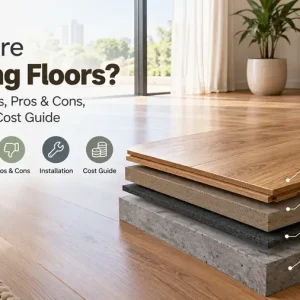
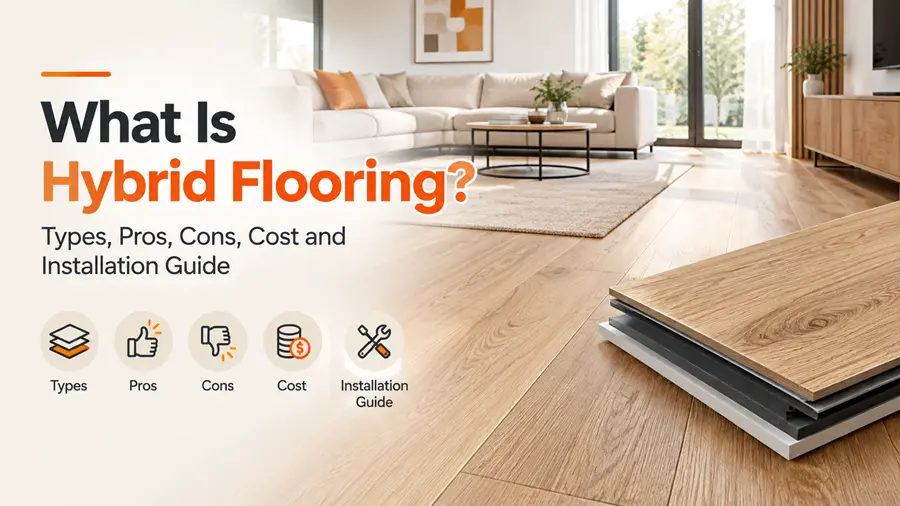
Hybrid flooring is a rigid floor covering that combines the water resistance of vinyl with the strength and realistic print of laminate. It has a rigid core made from stone composite or wood composite material, topped with a printed design layer and a clear wear layer. Most hybrid flooring installs as a floating floor with a click lock system, and many boards already come with an attached underlay.
Contents
What Is Hybrid Flooring?
Hybrid flooring earns its name because it borrows from two older flooring types. It uses the waterproof core technology found in vinyl plank and pairs it with the realistic wood or stone look you get from laminate. The result is a floor that handles moisture better than laminate and feels more solid underfoot than standard vinyl.
What Is Hybrid Flooring Made Of?
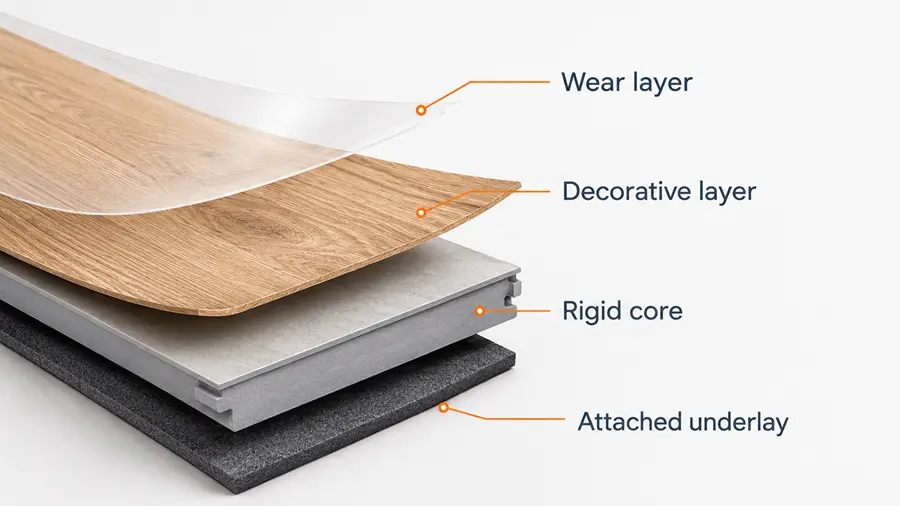
Every hybrid board is built from four main layers.
- Wear layer: a clear protective coating on top that resists scratches, stains and everyday wear.
- Decorative layer: a high resolution print that creates the wood grain or stone look.
- Rigid core: a dense board made from PVC combined with limestone powder or wood fibres. This layer gives the floor its strength and waterproof structure.
- Attached underlay: a foam or cork backing already bonded to the board. It adds comfort, sound absorption and a small amount of cushioning.
SPC vs WPC: What Is the Difference?
Hybrid flooring cores fall into two main types.
SPC stands for stone plastic composite. Its core is made from PVC and limestone powder, also called calcium carbonate. SPC is dense, rigid and thin, which makes it a strong choice for busy homes and light commercial spaces.
WPC stands for wood plastic composite. Its core uses PVC, wood fibres and a foaming agent, which makes the board lighter and slightly softer underfoot. WPC boards are usually thicker than SPC but less common now, since most Australian hybrid ranges have shifted to SPC cores.
Is Hybrid Flooring the Same as Vinyl Plank?
Not quite, though the two overlap a lot. Many products sold as hybrid flooring use an SPC core, which is also the core used in rigid core luxury vinyl plank. The main differences come down to branding, the locking system used, and whether the underlay is pre-attached. If a product has a rigid stone composite core, a click lock edge and a built-in backing, it will usually be marketed as hybrid rather than standard vinyl flooring.
Types of Hybrid Flooring
Stone Plastic Composite (SPC)
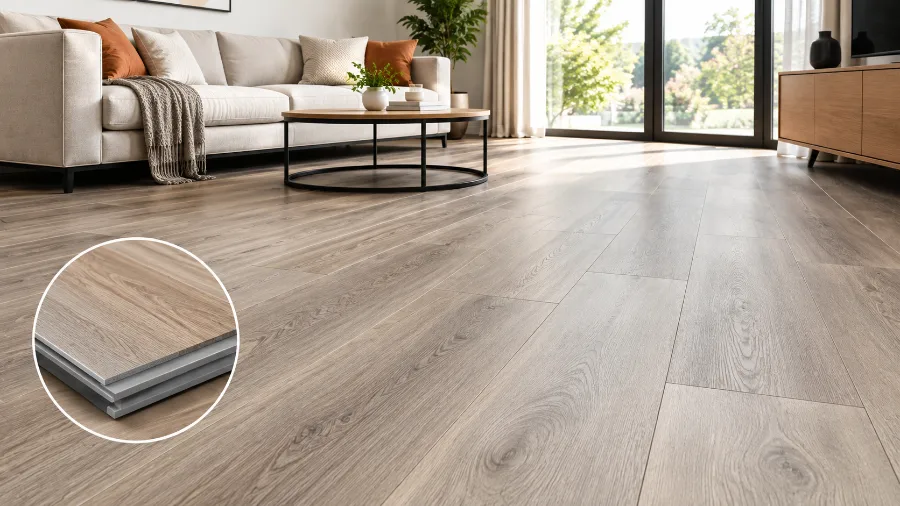
SPC Flooring is the most common hybrid core on the market today. Its density makes it resistant to dents and indentation, so it holds up well under heavy furniture, foot traffic and rolling equipment. This makes SPC a common pick for kitchens, hallways, retail stores and offices.
Wood Plastic Composite (WPC)
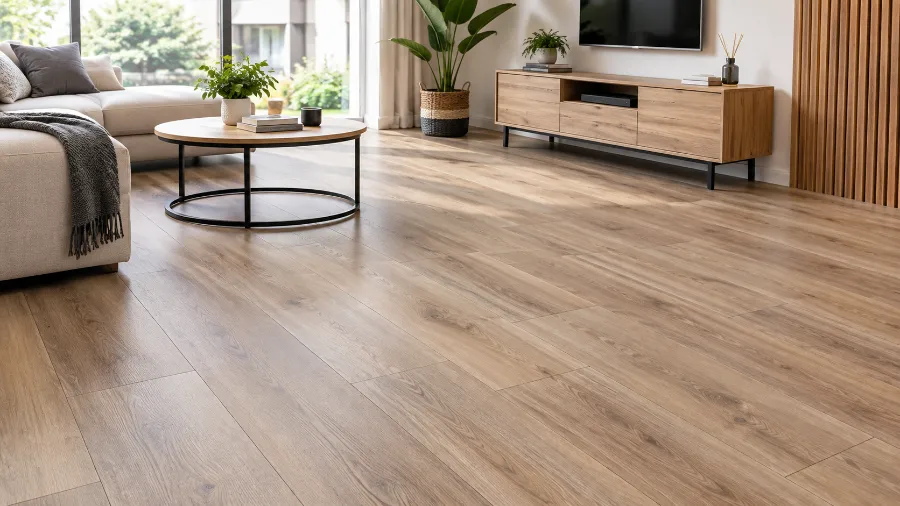
WPC boards feel warmer and slightly softer underfoot because of the foaming agent in the core. They suit bedrooms and living areas where comfort matters more than heavy duty performance. WPC is still available, but buyers should confirm the core type before assuming a product is WPC, since SPC now dominates most ranges.
SPC vs WPC Comparison
| Feature | SPC | WPC |
| Core material | PVC + limestone powder | PVC + wood fibres + foaming agent |
| Density | High | Lower |
| Comfort underfoot | Firmer | Softer, slightly warmer |
| Best for | High traffic homes, commercial spaces | Bedrooms, living areas |
| Typical thickness | 4 to 7mm | 6 to 8mm |
| Market availability | Widely available | Less common |
Pros of Hybrid Flooring
- Waterproof core: the rigid core does not swell or warp from spills or everyday moisture.
- Scratch and stain resistance: the wear layer protects against pet claws, furniture legs and daily wear.
- Realistic look: modern printing and embossing create a convincing timber or stone finish.
- Comfort and sound insulation: the attached underlay softens footsteps and reduces noise transfer.
- Low maintenance: regular sweeping and mopping keeps it looking new, with no sealing or waxing needed.
- Easier installation: the click lock system suits confident DIYers as well as professional installers.
- Works over many subfloors: hybrid flooring can go over concrete, timber, and some existing tile once it is flat.
- Suits homes and light commercial spaces: it holds up in kitchens, offices, retail stores and busy family homes.
Cons of Hybrid Flooring
- Cannot be resanded or refinished: a damaged plank has to be replaced, not repaired.
- Less authentic than natural materials: it looks close to real timber or stone but does not fully match the texture or feel.
- Needs a flat subfloor: an uneven base can cause clicking sounds, gaps or premature wear.
- Sun exposure can fade or warp it: prolonged direct sunlight can cause discolouration and, in some cases, expansion or peaking at the joints.
- Contains PVC: the core is plastic based, so it is not biodegradable and has limited recycling options.
- Can sound hollow: cheaper boards or poor subfloor prep can create a hollow feel or sound underfoot.
- Lower resale value than solid timber: buyers often see it as a durable but mid range option rather than a premium finish.
- Rubber and latex backed mats can stain it: some rubber compounds react with the wear layer and leave discolouration.
- Repairs can be hard to match: manufacturers update print batches often, so replacing a plank years later may not match perfectly.
How Much Does Hybrid Flooring Cost?
Hybrid flooring sits between laminate flooring and solid timber on price. Costs vary by brand, thickness, wear layer quality and where you buy it, but the ranges below give a realistic starting point for budgeting.
Supply Only Cost per Square Metre
| Quality tier | Typical price (per m², supply only) | What you get |
| Budget | $25 to $45 | Thinner boards, basic wear layer, shorter warranty |
| Mid range | $45 to $65 | Balanced thickness and wear layer, common for most homes |
| Premium | $65 to $120+ | Thicker boards, heavier wear layer, longer warranty, higher rated locking systems |
These figures reflect typical Australian pricing in 2026. Ask suppliers for an exact quote based on the product code you are considering, since pricing changes by season, brand and retailer.
Installed Cost per Square Metre
Installation labour alone usually runs $25 to $40 per square metre for a standard straight lay, roughly double that for a herringbone or chevron pattern. Once you add the board cost, most straightforward family home jobs land at $80 to $120 per square metre fully installed, with the overall market range stretching from around $60 per square metre for a simple budget job up to $150 or more per square metre for premium products or complex layouts. Stairs are usually priced separately, often around $100 per step.
What Affects the Price
- Wear layer thickness: a thicker wear layer usually means a higher price and longer warranty.
- Board thickness: thicker boards generally cost more and feel more solid underfoot.
- Locking system quality: stronger locking systems reduce gapping over time but add to the price.
- Brand and warranty length: established brands with longer warranties are usually priced higher.
- Commercial rating: boards rated for commercial use tend to cost more than residential only products.
Additional Costs to Budget For
- Subfloor levelling and moisture barrier prep, typically an extra $10 to $30 per square metre if your existing floor is not flat.
- Removal and disposal of your old flooring.
- Moving furniture before and after installation.
- Skirting or scotia removal and refitting.
- Trims, thresholds and stair nosing where the floor meets other surfaces, plus roughly $100 per step if you are carpeting stairs.
- A waste allowance, usually an extra 5 to 10 percent of material for cuts and mistakes.
Cost Comparison: Hybrid vs Other Flooring
| Flooring type | Typical installed cost (per m²) | Waterproof | DIY friendly |
| Laminate | $40 to $90 | No, unless water resistant rated | Yes |
| Hybrid flooring | $60 to $150 | Yes | Yes |
| Vinyl plank (LVP) | $50 to $130 | Yes | Depends on the product |
| Engineered timber | $110 to $200 | No | Sometimes |
| Solid timber | $150 to $300+ | No | Rarely |
These are broad national averages. Exact pricing depends on your city, the specific product and site conditions, so always confirm with a written quote.
Installation Guide
Tools and Materials Needed
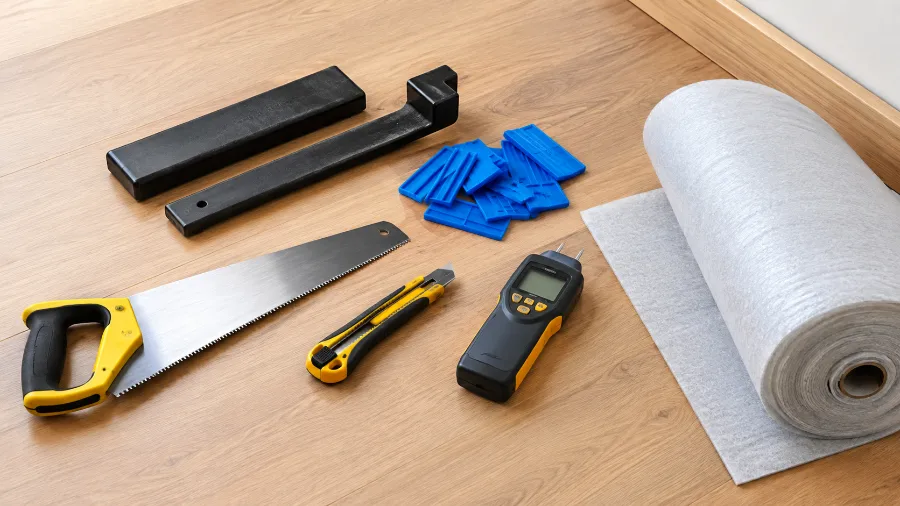
- Tapping block and pull bar for fitting boards near walls.
- Spacers to keep an even expansion gap.
- A fine tooth saw or utility knife for cutting boards.
- A moisture meter if you are installing over concrete.
- Underlay, only if your chosen product does not already have it attached.
Step by Step Installation Process
- Let the flooring acclimatise in the room for the time stated by the manufacturer, usually around 48 hours.
- Check the subfloor is clean, dry and flat, and fix any high or low spots.
- Plan your layout, including the direction of the boards relative to windows and doorways.
- Cut the first row to size and lay it against the starting wall, leaving an expansion gap.
- Click each following row into place, staggering the end joints for a natural look and added strength.
- Keep an expansion gap around the whole perimeter, including doorways and fixed objects.
- Fit transition strips or thresholds where the floor meets another room or flooring type.
- Refit skirting boards or add scotia to cover the expansion gap once the floor is finished.
Expansion Gaps and Room Size Limits
Hybrid flooring needs a small expansion gap around the edges of the room, since the boards move slightly with temperature changes. Large open plan areas may need extra expansion joints partway through the room. Always check the manufacturer’s instructions for exact gap sizes and maximum run lengths, since these vary by product.
Installing Over Tiles or Concrete
Hybrid flooring can usually go over existing tile or a concrete slab, as long as the surface is flat, clean and free of major cracks. Uneven grout lines or damaged tiles may need a levelling compound first to avoid pressure points that can damage the new floor.
Do You Need Underlay?
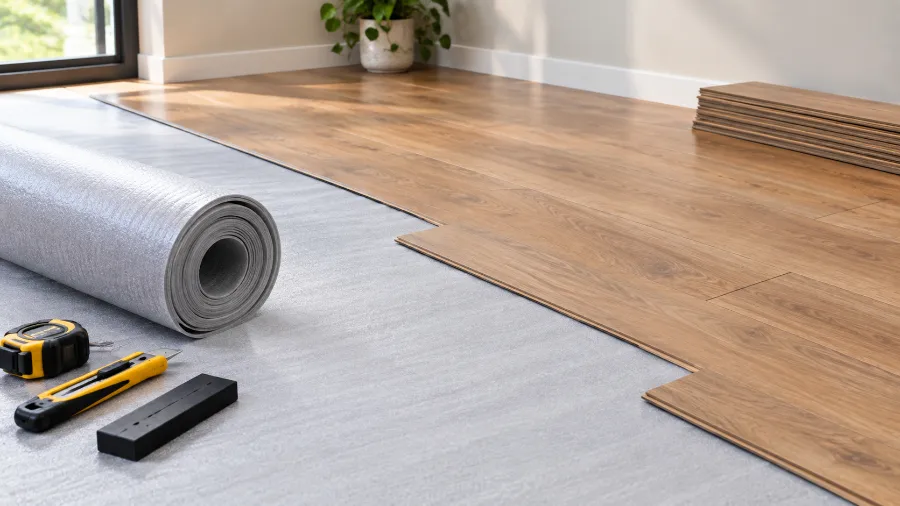
Most hybrid flooring already has underlay attached to the back of each board. Adding a second layer of underlay on top of this can cause the floor to feel unstable and can affect the locking system, so check your product specifications before adding anything extra.
Subfloor Requirements
Subfloor Flatness and Levelling
A flat subfloor is one of the most important requirements for a long lasting hybrid floor. Manufacturers usually specify a maximum unevenness over a set distance, and any dips or bumps beyond that should be corrected with a self levelling compound before installation.
Moisture Testing
Concrete slabs should be tested for moisture before installation, especially in newer builds or ground floor rooms. High moisture readings can affect the adhesive on some products or lead to long term issues, so it pays to check before you start.
Suitable Base Materials
Hybrid flooring can be installed over concrete, plywood, particleboard and, in many cases, existing vinyl or tile. It should not go over carpet, since carpet does not provide a firm, stable base.
Older Subfloors
Homes with older timber subfloors may need extra checks for movement, squeaks or uneven boards before laying hybrid flooring. Sorting out any structural issues first will help the new floor perform properly and avoid early damage.
Maintenance and Care
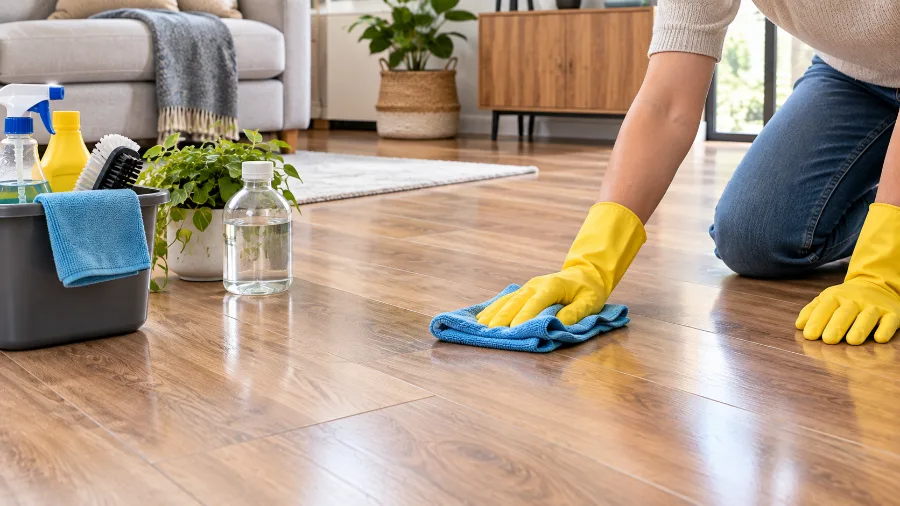 Daily and Weekly Cleaning
- Sweep or vacuum regularly to remove grit that can scratch the surface.
- Damp mop with a pH neutral cleaner made for hard floors.
- Wipe up spills straight away, especially in kitchens and bathrooms.
What to Avoid
- Steam mops, since heat and moisture can damage the joints over time.
- Wax, polish or oil based cleaners, which can leave a dull film.
- Scouring pads or steel wool, which can scratch the wear layer.
- Rubber or latex backed mats, which can cause discolouration on some products.
Preventing Damage
- Use felt pads under furniture legs.
- Place mats at entry points to trap grit before it reaches the floor.
- Lift furniture instead of dragging it across the floor.
How Long Does Hybrid Flooring Last?
A well maintained hybrid floor with a good quality wear layer can last well over a decade in a typical home, and premium products with thicker wear layers often last longer. Heavier foot traffic, direct sunlight and poor maintenance will shorten this, while a stable subfloor and proper care will help the floor reach its full lifespan.
Durability and Performance
 Wear Layer and Warranty Class
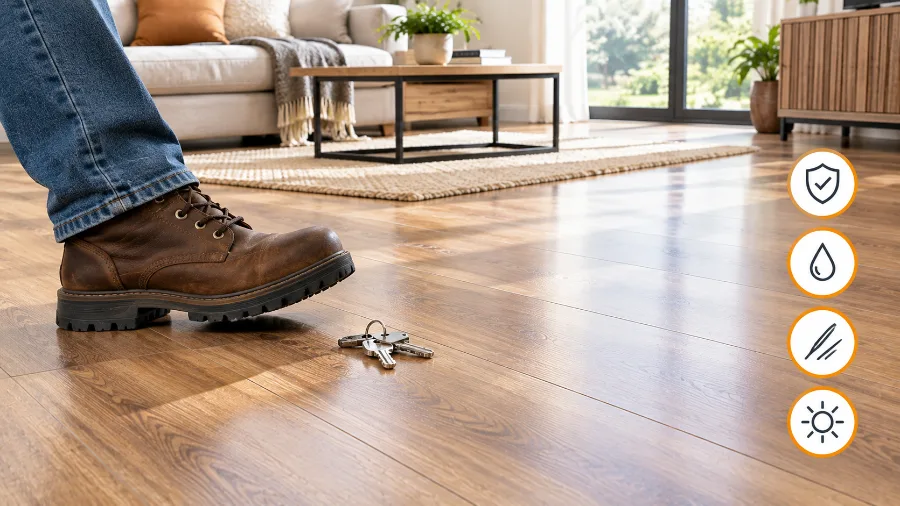
The wear layer thickness is the biggest factor in how long a hybrid floor stays scratch and stain free. Thicker wear layers usually come with longer manufacturer warranties, so it is worth checking this figure before buying.
Commercial vs Residential Ratings
Some hybrid products are rated for commercial use, meaning they are built to handle heavier and more constant foot traffic than a standard residential product. If you are flooring a busy office, shop or rental property, check the rating before choosing a product.
Acoustic Performance for Apartments
Hybrid flooring with a good attached underlay can reduce impact noise between floors, which matters in apartments and multi storey buildings. Some strata schemes have their own acoustic rules, so it is worth checking these before installing hard flooring in an apartment.
Underfloor Heating Compatibility
Many hybrid flooring products are compatible with underfloor heating, but the maximum surface temperature is usually limited to protect the core from warping. Always confirm compatibility and temperature limits with the manufacturer before installing over a heated subfloor.
Heat and Direct Sunlight
Prolonged direct sunlight can heat the surface of hybrid flooring enough to cause fading and, in some cases, expansion at the joints. Rooms with large windows or glass doors may need window coverings or UV protective film to reduce this risk.
Where Can You Install Hybrid Flooring?
Best Rooms for Hybrid Flooring
Hybrid flooring suits kitchens, bathrooms, laundries, living areas, bedrooms and hallways. Its waterproof core makes it a practical choice for wet areas that would rule out laminate or solid timber.
Commercial Applications
Hybrid flooring is also used in retail stores, offices, cafes and gyms, thanks to its durability and easy maintenance. Commercial rated products handle the higher foot traffic these spaces bring.
Where to Avoid It
Avoid using hybrid flooring outdoors, in saunas, around hot tubs, or in any area exposed to constant standing water. It is a waterproof board, not a full waterproofing system, so it is not designed to replace proper waterproofing membranes in wet rooms with floor wastes.
Hybrid Flooring vs Other Flooring Types
Hybrid vs Laminate
| Feature | Hybrid flooring | Laminate |
| Waterproof | Yes | Usually no, unless specifically rated |
| Feel underfoot | Firmer, cushioned by attached underlay | Can feel hollow without good underlay |
| Price | Mid range | Often lower |
| Best for | Wet areas and busy homes | Dry areas on a tighter budget |
Hybrid vs Vinyl Plank (LVP)
| Feature | Hybrid flooring | Vinyl plank (LVP) |
| Core | Rigid SPC or WPC | Can be rigid or flexible |
| Underlay | Usually pre-attached | Varies by product |
| Feel underfoot | Firm and stable | Can feel softer on flexible products |
| Installation | Click lock, floating | Click lock or glue down, depending on type |
Hybrid vs Solid Timber
| Feature | Hybrid flooring | Solid timber |
| Waterproof | Yes | No |
| Refinishing | Not possible | Can be sanded and refinished |
| Price | Mid range | Highest |
| Resale appeal | Good but secondary to timber | Strong |
Engineered timber sits closer to solid timber in look and price, but it still cannot match the waterproof performance of hybrid flooring. Tile is a strong alternative in wet areas, but it feels harder and colder underfoot than hybrid flooring.
Buying Considerations
- Choose SPC for high traffic areas and busy households, and WPC if comfort underfoot matters more than maximum durability.
- Check the wear layer thickness and board thickness before comparing prices between products.
- Read the warranty terms carefully, since residential and commercial warranties often differ.
- Look for low VOC or indoor air quality certification if air quality is a concern for your household.
- Order extra material to cover waste from cuts, usually an extra 5 to 10 percent on top of your room measurement.
- Ask for a sample and view it in your own room lighting before making a final decision.
Frequently Asked Questions
How much does hybrid flooring cost per square metre?
Prices vary by brand and quality tier, ranging from budget options to premium products with thicker wear layers. Get a quote based on the specific product to know the exact cost for your project.
What is the difference between SPC and WPC?
SPC uses a stone based core and is denser and firmer, making it suited to high traffic areas. WPC uses a wood fibre based core and feels softer and warmer underfoot.
Is hybrid flooring waterproof or just water resistant?
The board itself is waterproof. However, water can still get through the joints and reach the subfloor if it sits on the surface for a long time, so spills should still be cleaned up quickly.
Can hybrid flooring be installed over tiles?
Yes, as long as the tiles are flat, secure and free of major damage. Uneven areas may need levelling compound first.
Does hybrid flooring need underlay?
Most hybrid flooring already has underlay attached. Adding a second layer on top is usually not recommended and can affect how the floor performs.
Can hybrid flooring be used with underfloor heating?
Many products are compatible, but there is usually a maximum surface temperature limit. Check with the manufacturer before installing over heating.
How long does hybrid flooring last?
A well maintained floor with a good wear layer can last well over a decade, with premium products often lasting longer under normal household use.
Is hybrid flooring suitable for apartments and strata buildings?
Yes, especially products with a good attached underlay that helps reduce impact noise. Check your building’s acoustic requirements before installing.
Does hybrid flooring fade in direct sunlight?
Yes, prolonged direct sunlight can fade the surface and, in some cases, cause expansion at the joints. Window coverings can help protect exposed areas.
Can you repair a damaged hybrid plank?
Individual planks can usually be replaced, but they cannot be sanded or refinished like solid timber. Matching an older batch exactly can be difficult if the product has since changed.
Is hybrid flooring better than timber flooring?
It depends on your priorities. Hybrid flooring offers better waterproofing and a lower price, while solid timber offers a more authentic look and the ability to be refinished over time.
How long does installation take?
A straightforward room can often be installed in a day by an experienced installer. Larger homes, tricky layouts or subfloor repairs will add extra time.
Final Verdict: Is Hybrid Flooring Right for You?
Hybrid flooring is a strong choice if you want a waterproof, durable and low maintenance floor that still looks like timber or stone. It suits busy households, pet owners and wet areas where laminate and solid timber fall short. If you value a fully natural finish or the option to refinish your floor decades from now, solid timber may still be the better fit. For most homes and light commercial spaces, hybrid flooring offers one of the best balances of performance, look and price on the market today.