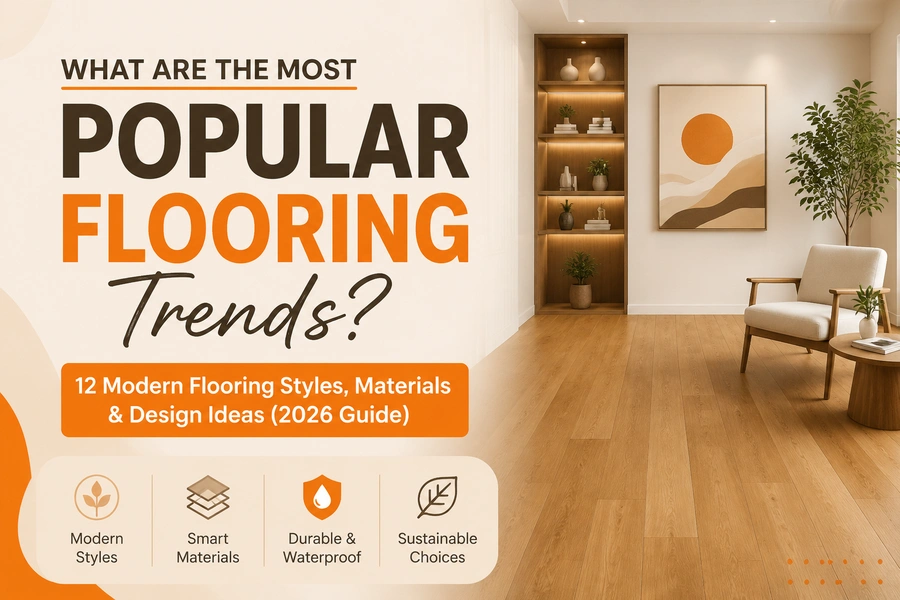
What Are the Most Popular Flooring Trends in 2026?
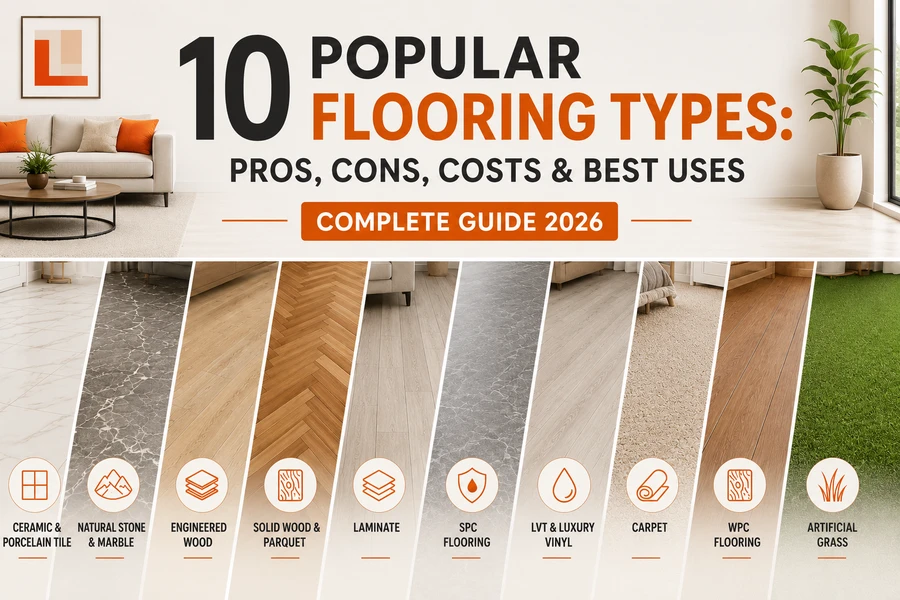
Homeowners want floors that feel warm, look natural, and hold up to real life. In 2026, the most popular flooring trends move away from cold, gray finishes and lean into natural wood tones, bold patterns, and waterproof materials that work in busy households. Wide plank hardwood, herringbone and chevron layouts, luxury vinyl flooring (LVP, LVT, SPC), large format tile, and sustainable options like cork and bamboo top the list. Matte and textured finishes are replacing high gloss, and pet owners now drive demand for scratch resistant, water resistant flooring.
This guide by Nova Floor breaks down all 12 popular flooring trends and compares materials side by side. It helps you choose the best flooring for your home, budget, and lifestyle.
Why Modern Flooring Trends Are Changing in 2026
Flooring choices follow how people actually live, not just what looks good in a photo. Three forces are reshaping the flooring market this year.
Lifestyle & Functional Living
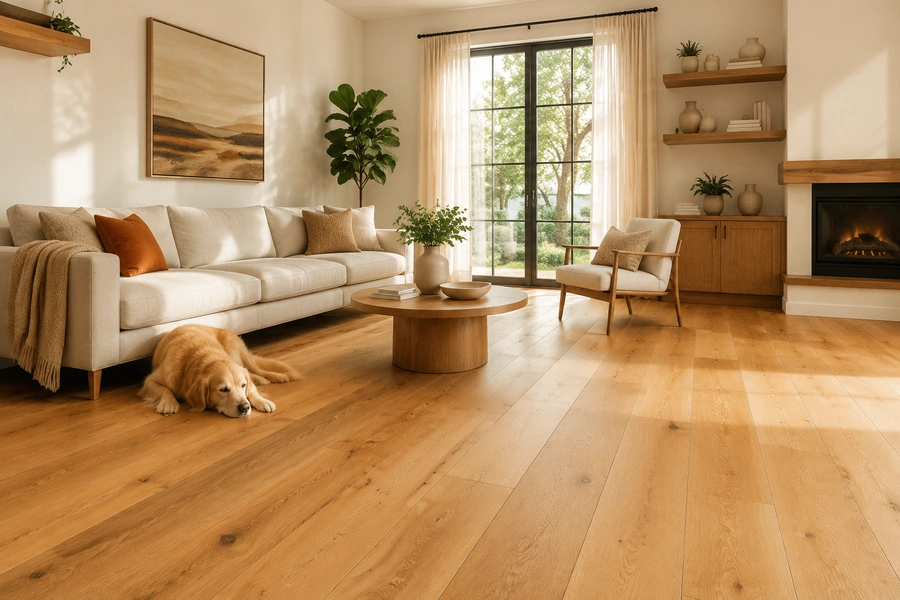 More people work from home, host guests more often, and share their space with kids and pets. Floors need to handle daily foot traffic and spills without showing every scratch. This pushes buyers toward durable flooring options that still look upscale, like engineered hardwood flooring and luxury vinyl flooring.
The Shift Toward Natural Materials
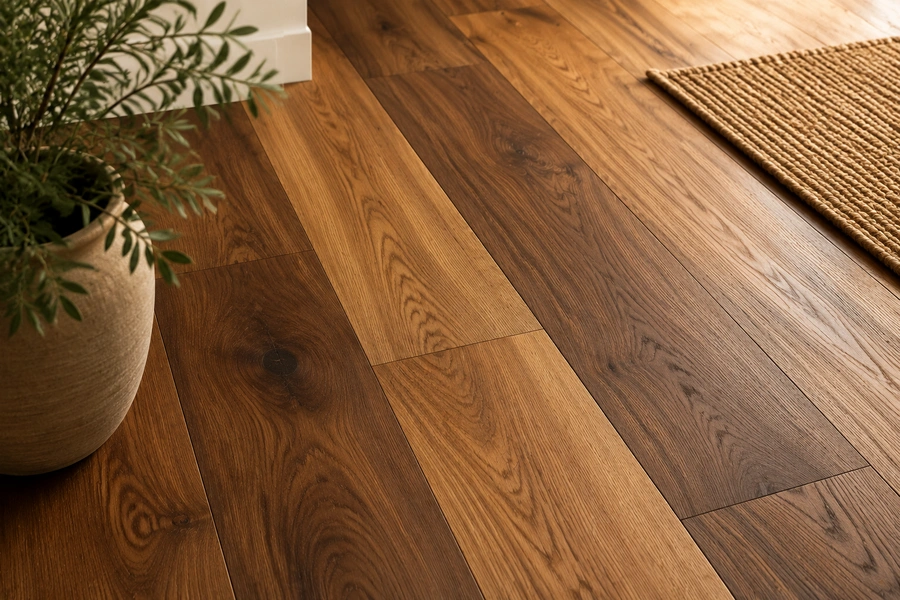 Cool gray tones dominated flooring for nearly a decade. That look is fading fast. Homeowners now want natural wood flooring that feels organic, warm oak, honey walnut, and earthy stone tones that bring a calm, lived-in feel to a room.
Sustainability & Low-Maintenance Design
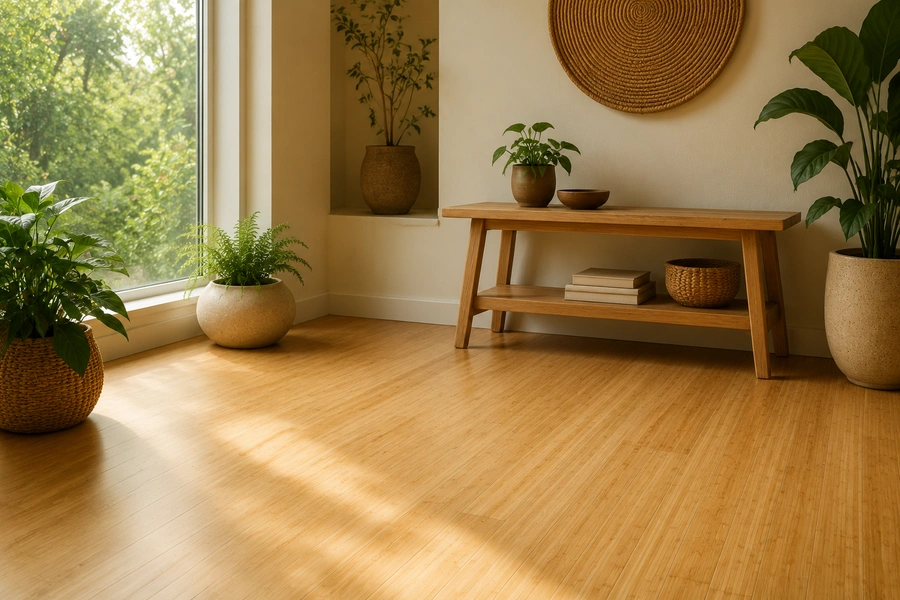 Buyers ask more questions about where materials come from and how long they last. Renewable options like bamboo and cork, along with low-VOC finishes, meet growing demand for sustainable flooring and healthier indoor air. At the same time, busy households want flooring that needs less upkeep, not more.
12 Modern Flooring Trends for 2026
1. Warm Wood Flooring Trends: Natural Oak, Walnut & Earthy Tones
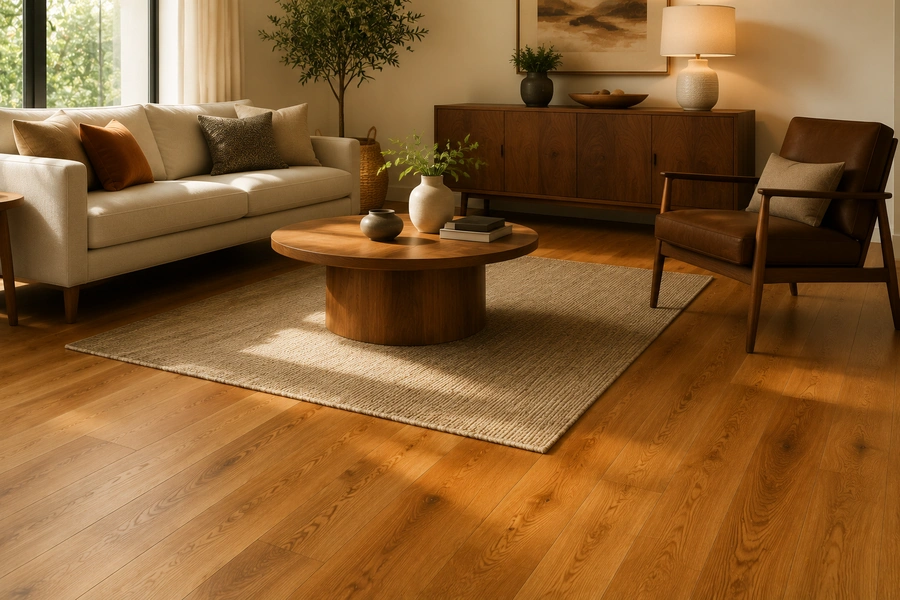 Natural wood flooring is back at the center of home design. Instead of gray-washed or heavily stained floors, 2026 favors the wood’s natural grain and color. Oak, walnut, and hickory show up in honey, caramel, and warm brown finishes that add texture and depth to a room. Engineered hardwood flooring makes this trend easier to afford, since it pairs a real wood veneer with a stable core that resists warping better than solid wood.
Best Rooms
Living rooms, dining rooms, and bedrooms benefit most from warm wood tones. The finish adds warmth without competing with furniture or wall color.
Pros & Cons
| Pros | Cons |
| Adds warmth and resale value | Scratches and dents with heavy use |
| Works with most design styles | Not ideal for wet areas like bathrooms |
| Solid wood can be refinished over time | Solid hardwood costs more than engineered |
2. Wide Plank Hardwood Flooring for Spacious, Modern Interiors
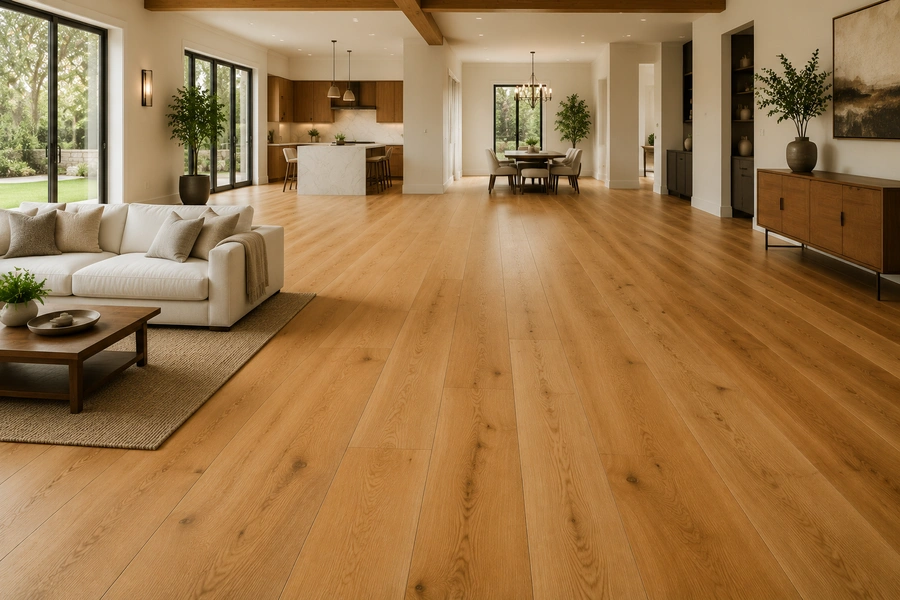 Wide plank flooring uses boards 5 to 10 inches wide or more, instead of the traditional 2 to 3 inch strip. Fewer seams mean the floor reads as one continuous surface, which makes rooms feel larger and more modern. This trend pairs well with open floor plans and minimalist interiors, and it remains one of the most requested modern flooring ideas among homeowners planning a renovation.
Wide Planks vs Traditional Planks
| Feature | Wide Plank | Traditional Plank |
| Width | 5 to 10+ inches | 2 to 3 inches |
| Visual effect | Open, seamless, modern | Traditional, busier pattern |
| Subfloor tolerance | Shows imperfections more | More forgiving of an uneven subfloor |
| Cost | Generally higher | Generally lower |
Where They Look Best
Wide plank floors work best in open concept living rooms, kitchens, and hallways where you want a clean, uninterrupted look across a large space.
3. Parquet Flooring Trends: Herringbone, Chevron & Versailles Patterns
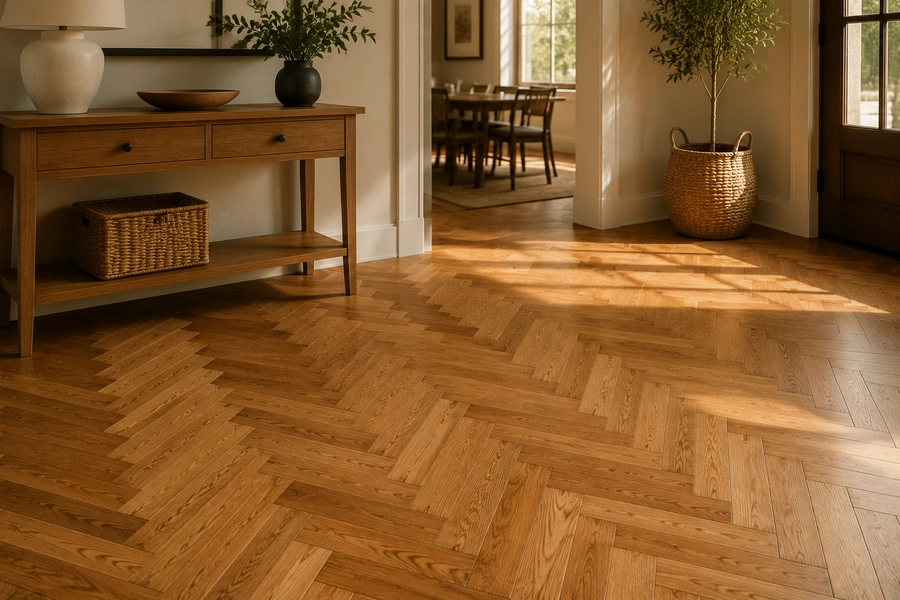 Patterned wood floors moved from luxury hotels into everyday homes. Herringbone flooring uses rectangular planks laid in a zigzag, chevron flooring uses angled cuts that meet in a sharp point, and Versailles panels create a more ornate, geometric layout. All three add visual interest to a room without relying on paint or wallpaper.
Why Patterned Floors Are Growing
Patterned floors give a room character on their own, so homeowners can keep walls and furniture simple. They also photograph well, which matters for resale listings and interior design content.
Best Interior Styles
Herringbone flooring suits transitional and traditional homes, chevron flooring fits modern and contemporary spaces, and Versailles panels work best in formal dining rooms or entryways with higher ceilings.
4. Luxury Vinyl Flooring (LVP, LVT & SPC) for Waterproof, Durable Homes
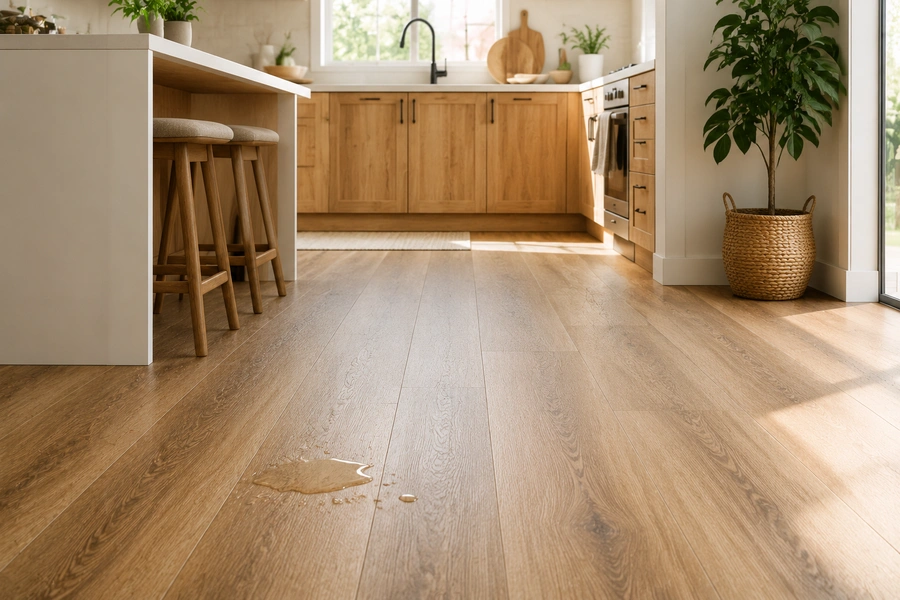 Luxury vinyl flooring covers three related products: LVP (luxury vinyl plank), LVT (luxury vinyl tile), and SPC flooring (stone plastic composite). All three use a printed layer that mimics wood or stone, topped with a wear layer that resists scratches and water. SPC adds a rigid stone composite core, which makes it more dent resistant and stable than standard LVP flooring.
Why Luxury Vinyl Remains Popular
Waterproof flooring that looks like real wood or stone, at a lower cost and with easier installation, keeps luxury vinyl flooring at the top of popular flooring trends year after year.
Best Applications
Kitchens, bathrooms, basements, and mudrooms benefit most, since these rooms deal with moisture and heavy daily traffic.
| Type | Core | Best For | Water Resistance |
| LVP flooring | Flexible vinyl | Wood-look floors | Waterproof |
| LVT flooring | Flexible vinyl | Tile-look floors | Waterproof |
| SPC flooring | Rigid stone composite | High-traffic, uneven subfloors | Waterproof, most dent-resistant |
5. Large Format Tile Flooring for Seamless Contemporary Spaces
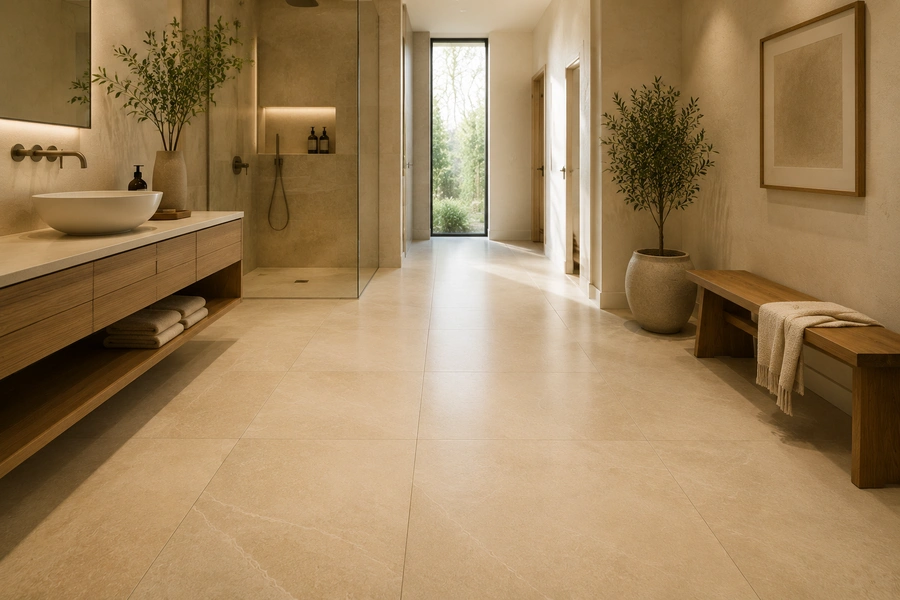 Large format tile flooring, typically 12×24 inches or bigger, cuts down on grout lines and gives floors a clean, continuous look. Fewer grout lines also mean less cleaning, since grout collects dirt and grime faster than the tile surface itself.
Porcelain vs Ceramic
| Feature | Porcelain | Ceramic |
| Density | Denser, less porous | More porous |
| Water resistance | Higher | Lower, better for dry areas |
| Best use | Bathrooms, kitchens, high traffic | Walls, low-traffic floors |
| Cost | Higher | Lower |
Popular Tile Sizes
12×24 and 24×24 inch tiles remain the most requested sizes, with some homeowners choosing 24×48 inch slabs for a true seamless effect in bathrooms and kitchens.
6. Natural Stone & Stone-Look Flooring Trends
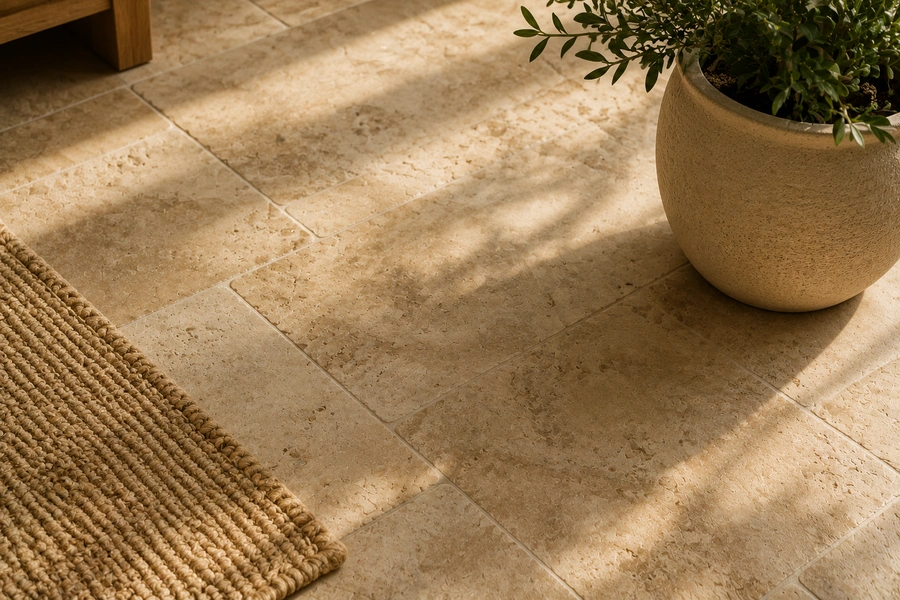 Natural stone flooring brings texture and one-of-a-kind veining that manufactured materials cannot fully copy. Each stone type offers a different look and level of upkeep.
Marble
Marble adds a classic, upscale look with soft veining, but it scratches and stains easily and needs regular sealing to hold up over time.
Travertine
Travertine has a warm, earthy texture with natural pits and holes. It works well in Mediterranean and rustic style homes but needs sealing to resist stains.
Limestone
Limestone offers a soft, matte look in muted tones. It is easier to work with than marble but still porous, so it needs sealing in wet areas.
Stone-Look Porcelain
Stone-look porcelain tile copies the appearance of marble, travertine, or limestone without the sealing and staining concerns, making it a popular budget-friendly alternative among durable flooring options.
7. Eco-Friendly Flooring Trends: Cork, Bamboo & Sustainable Materials
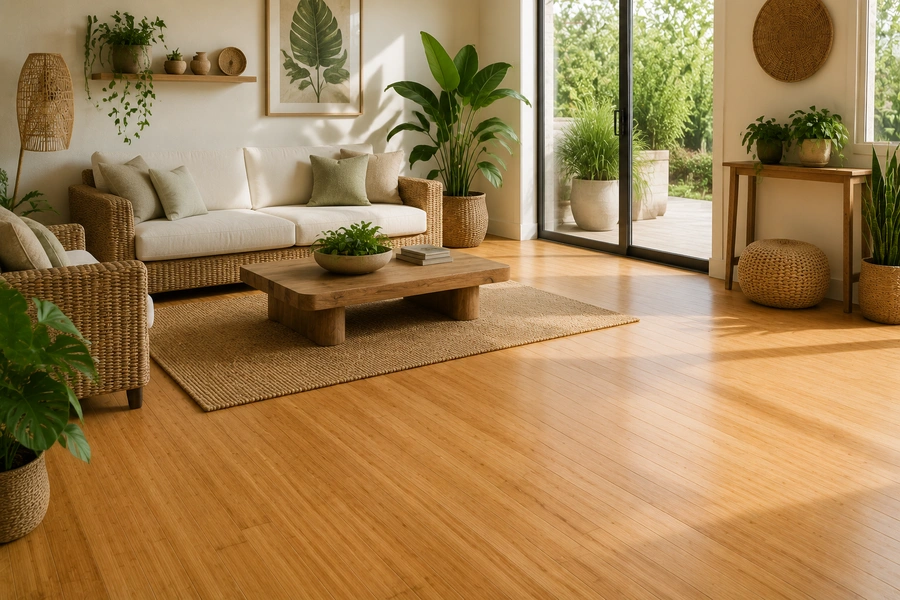 Sustainable flooring options grew in popularity as homeowners look for materials that are renewable and better for indoor air quality.
Renewable Flooring Options
Bamboo grows back in as little as 3 to 5 years, much faster than the hardwood trees used for traditional flooring. Cork comes from tree bark, harvested without cutting down the tree, so the tree keeps growing. Both offer a warm, natural look at a lower environmental cost than traditional hardwood flooring.
Low-VOC Choices
Look for flooring and adhesives labeled low-VOC or no-VOC. These release fewer chemicals into the air, which matters for homes with young kids, pets, or anyone sensitive to strong odors.
8. Matte, Brushed & Textured Flooring Finishes
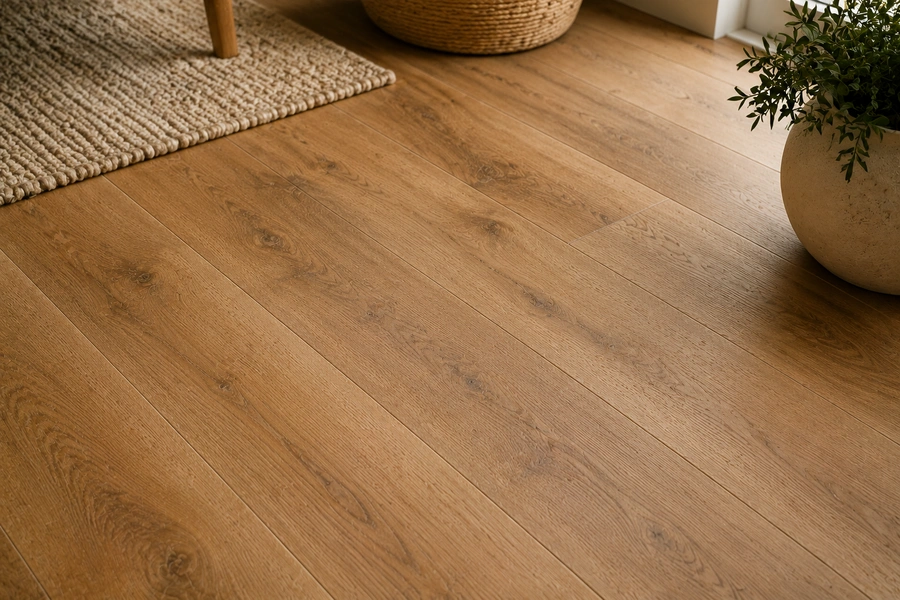 High-gloss floors are losing ground to matte and brushed finishes that hide scratches and dust better and feel more natural underfoot.
Why Matte Finishes Are Trending
Matte finishes reflect less light, which softens the look of a room and hides everyday wear like footprints and light scuffs.
Easy Maintenance Benefits
Because matte and brushed textures do not show smudges as easily, they need less frequent cleaning to look fresh, which appeals to busy households.
9. Soft Carpet Flooring Trends for Comfortable Living Spaces
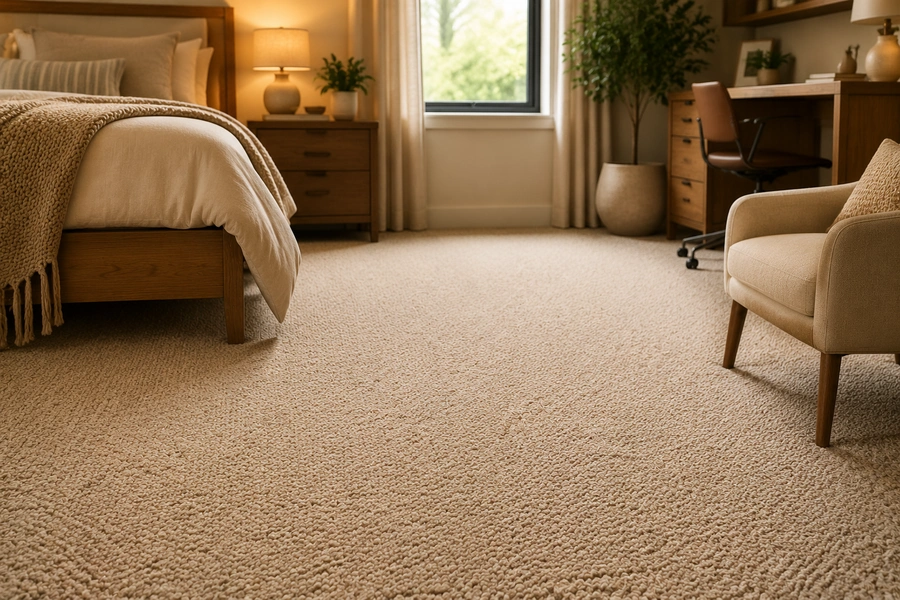 Carpet is not disappearing; it is shifting toward comfort focused spaces like bedrooms and home offices, while hard flooring takes over high-traffic areas.
Textured Carpet
Looped, cut-and-loop, and patterned textured carpets add visual interest and hide footprints and vacuum marks better than flat, smooth carpet.
Wool Carpet
Wool carpet costs more but lasts longer, resists stains naturally, and offers a soft, warm feel that synthetic fibers struggle to match.
10. Continuous Flooring with Indoor-Outdoor Design Flow
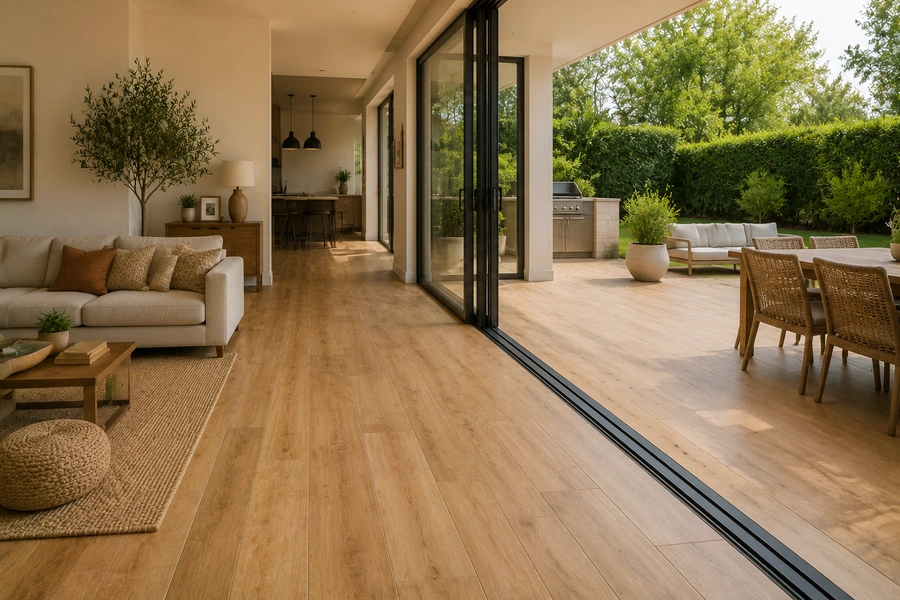 Homeowners increasingly choose one flooring material, or closely matched materials, that run from indoor living spaces to outdoor patios.
Open Floor Plans
Using the same wood-look or tile flooring across the kitchen, dining, and living areas makes an open floor plan feel larger and more connected.
Seamless Transitions
Matching or coordinating indoor tile with an outdoor porcelain paver creates a visual flow from the living room to the patio, which works well for homes with sliding or folding doors.
11. Statement Flooring with Bold Patterns & Mixed Materials
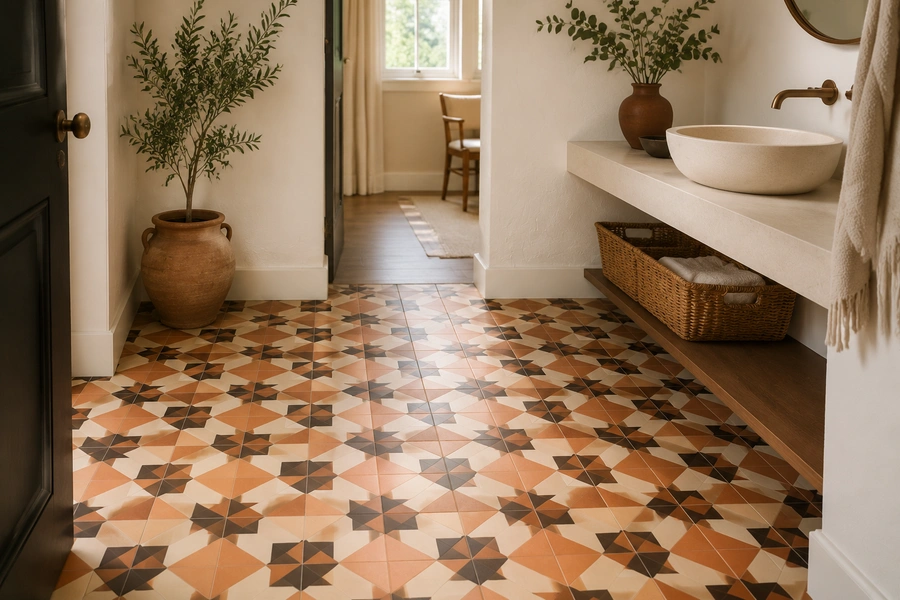 Some homeowners now treat the floor as a design feature on its own, not just a background surface.
Creative Layouts
Mixed wood tones, geometric tile inlays, and contrasting borders turn an entryway or kitchen floor into a focal point.
Feature Floors
A bold patterned tile in a mudroom or powder room, paired with simple walls, gives a small space personality without a full renovation.
12. Pet-Friendly & Family-Friendly Flooring That Combines Style and Durability
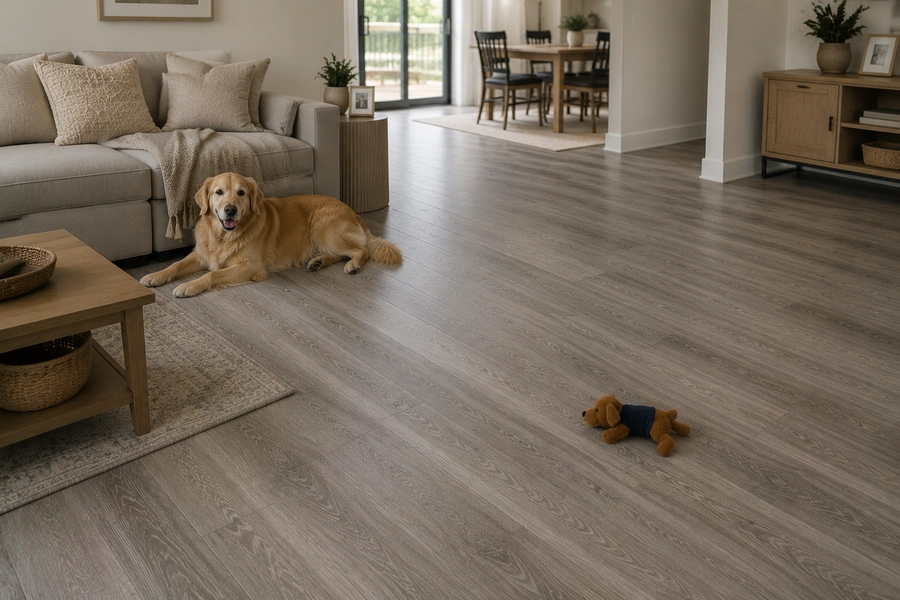 Pets and kids put floors through more daily stress than any other factor, which pushes many buyers toward tougher, more durable flooring options.
Scratch Resistance
SPC flooring and wire-brushed hardwood hide scratches better than smooth, high-gloss surfaces.
Water Resistance
Waterproof flooring like SPC and LVP flooring handles spilled water bowls, muddy paws, and kids’ accidents without warping.
Easy Cleaning
Textured, matte finishes with fewer grout lines make daily sweeping and mopping faster and easier.
Most Popular Flooring Materials Compared: Hardwood, Vinyl, Tile, Laminate, Stone & Carpet
| Material | Price Range (AED/m²)* | Durability | Water Resistance | Maintenance | Lifespan |
|---|---|---|---|---|---|
| Solid Hardwood | AED 150–500 | High, can refinish | Low | Moderate | 30 to 100 years |
| Engineered Hardwood | AED 135–300 | Moderate to High | Low to Moderate | Moderate | 20 to 30 years |
| Luxury Vinyl (LVP/LVT/SPC) | AED 55–135 | High | Waterproof | Low | 10 to 20 years |
| Tile (Porcelain/Ceramic) | AED 60–240 | Very High | High to Waterproof | Low | 25 to 50+ years |
| Natural Stone | AED 150–480 | High, needs sealing | Low, needs sealing | High | 50+ years |
| Laminate Flooring | AED 30–100 | Moderate | Low to Moderate | Low | 15 to 25 years |
| Carpet | AED 25–260 | Low to Moderate | Low | Moderate to High | 5 to 15 years |
Best Flooring Trends for Every Room in Your Home
Living Room
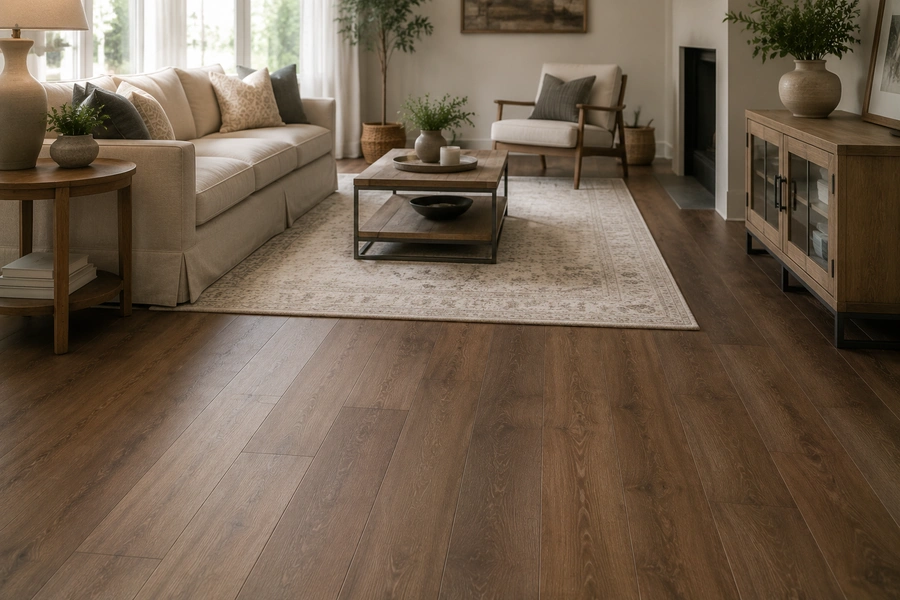 Wide plank hardwood or engineered wood works well here, since the room sees moderate traffic and benefits from a warm, open look.
Kitchen
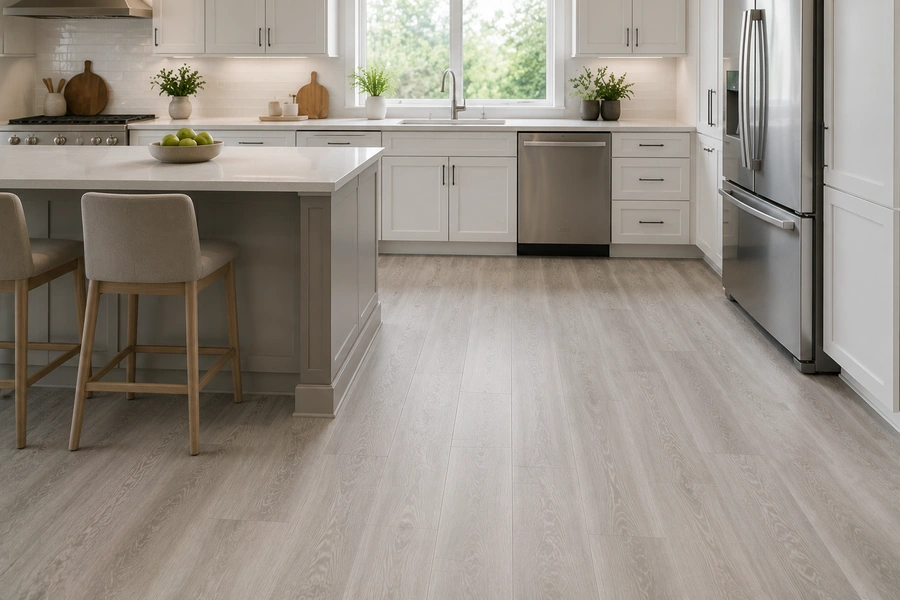 SPC or LVP flooring handles spills and standing while cooking, and large format tile offers a similar waterproof, low-maintenance option.
Bathroom
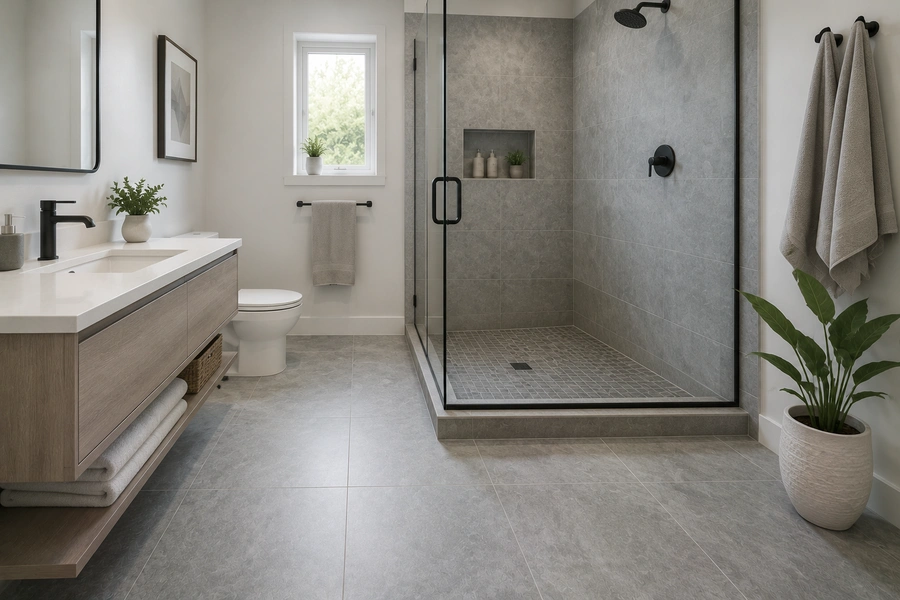 Porcelain tile or SPC flooring resists moisture better than wood, making either a safer long-term choice for wet areas.
Bedroom
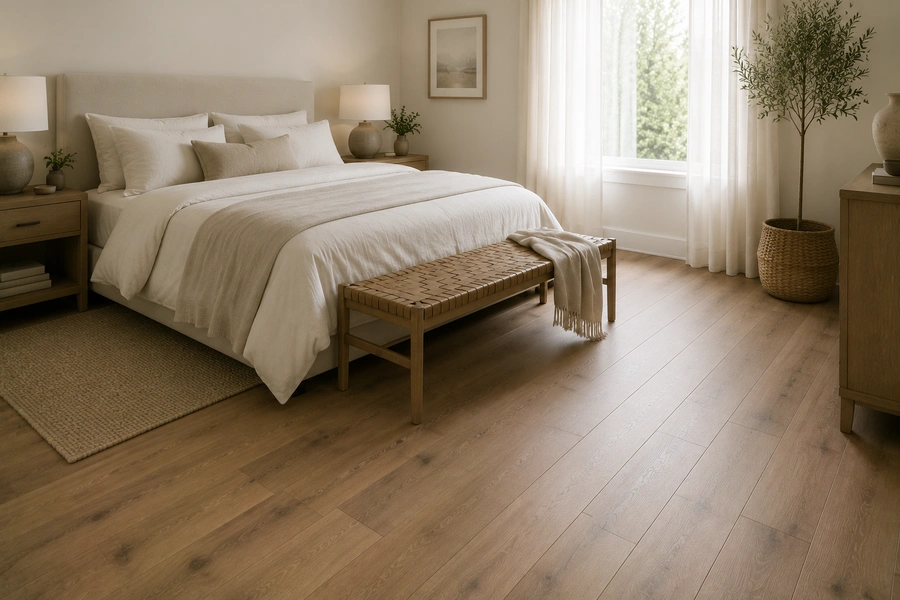 Carpet or engineered hardwood adds comfort and warmth underfoot, especially in colder climates.
Home Office
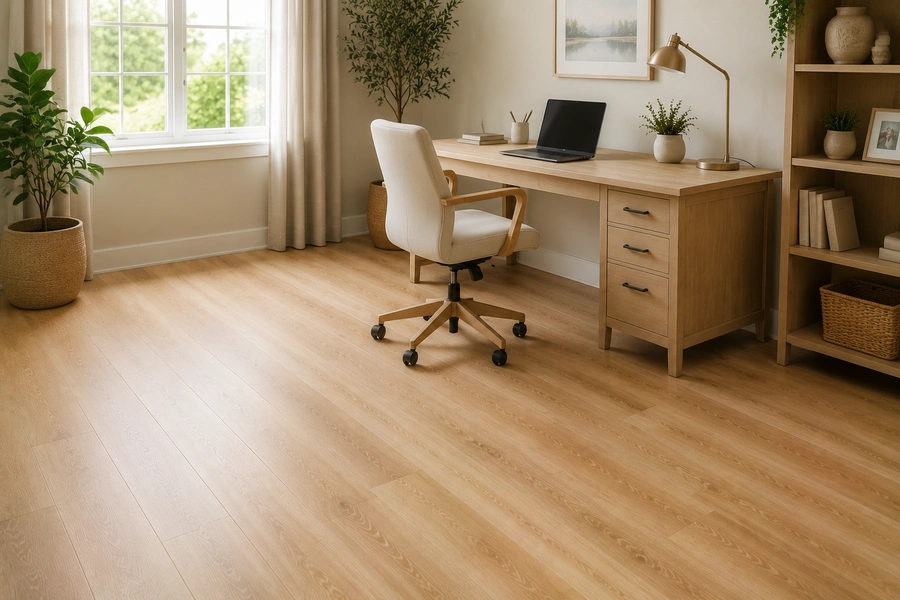 Wood-look LVP flooring balances comfort and durability for rolling office chairs, without the cost of solid hardwood.
Entryway
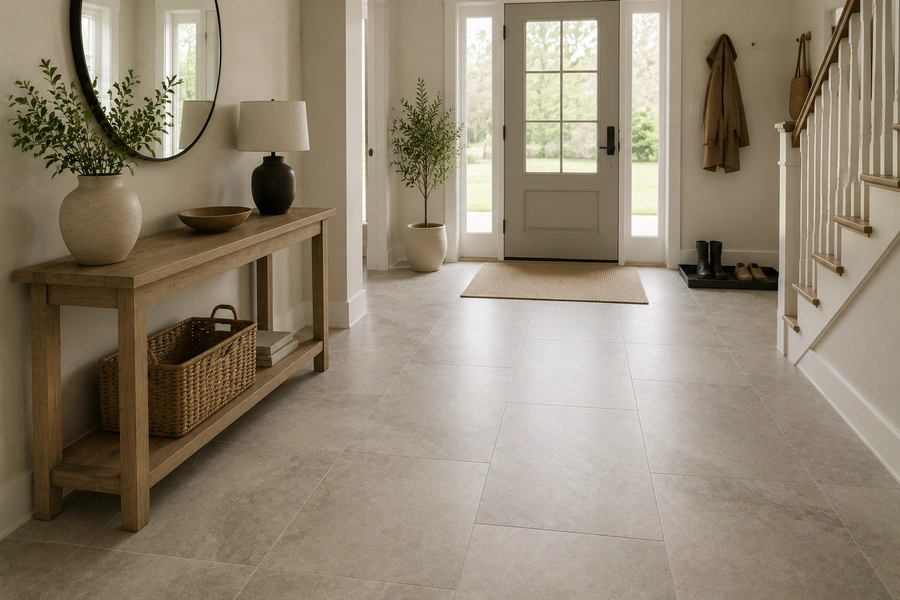 Large format tile or stone-look porcelain handles dirt, water, and heavy foot traffic right at the front door.
Timeless Flooring Trends That Never Go Out of Style
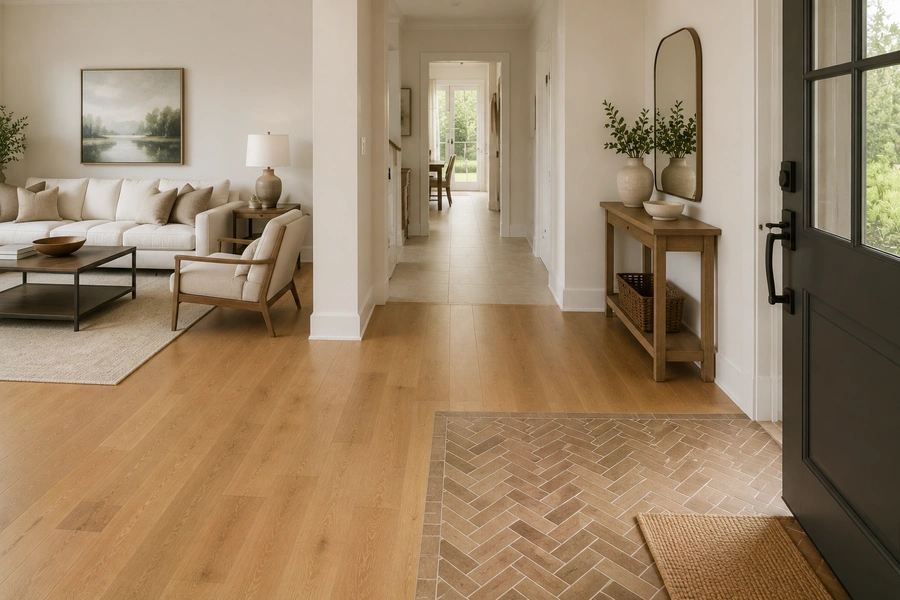 Some flooring choices stay popular no matter the year. Natural oak in medium to warm tones, classic herringbone flooring, and neutral large format tile all avoid the trend cycle because they pair with almost any design style and do not date as quickly as bold colors or heavy textures.
Flooring Trends That Are Losing Popularity
Cool Gray Floors
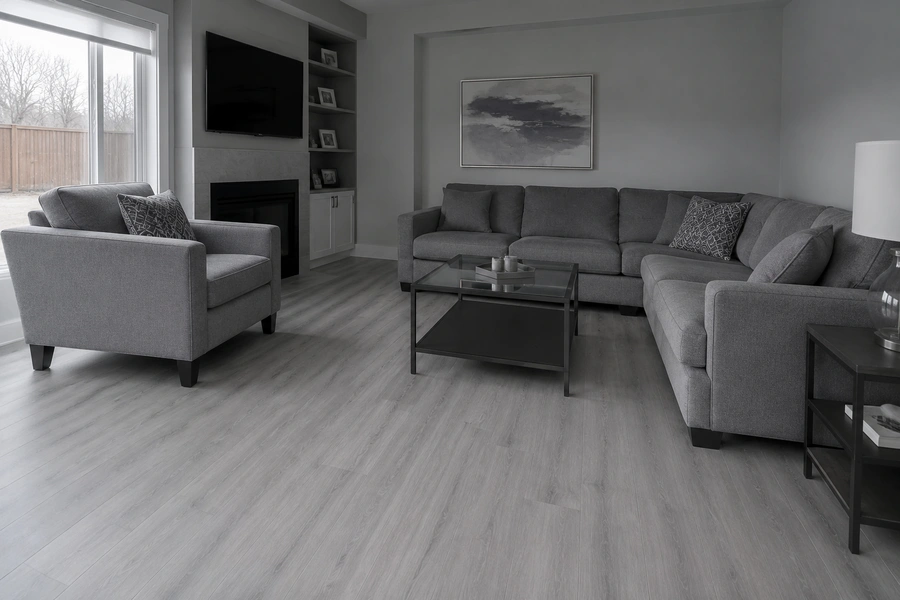 Gray-washed wood and cool gray tile, once the default choice for a decade, now read as dated. Warmer, natural tones have replaced them in most new builds and renovations.
High-Gloss Finishes
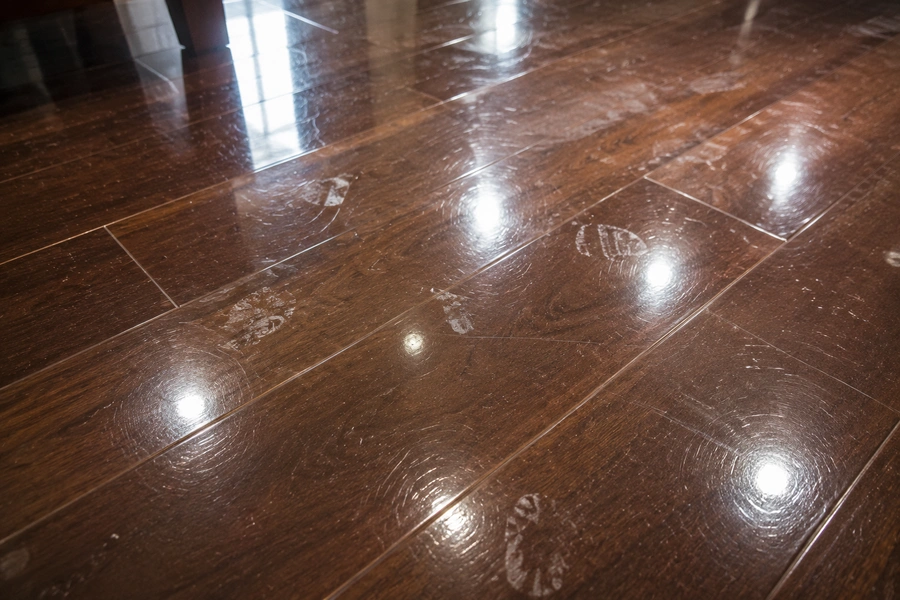 Glossy floors show scratches, dust, and footprints more easily than matte finishes, which is why fewer homeowners choose them today.
Narrow Wood Planks
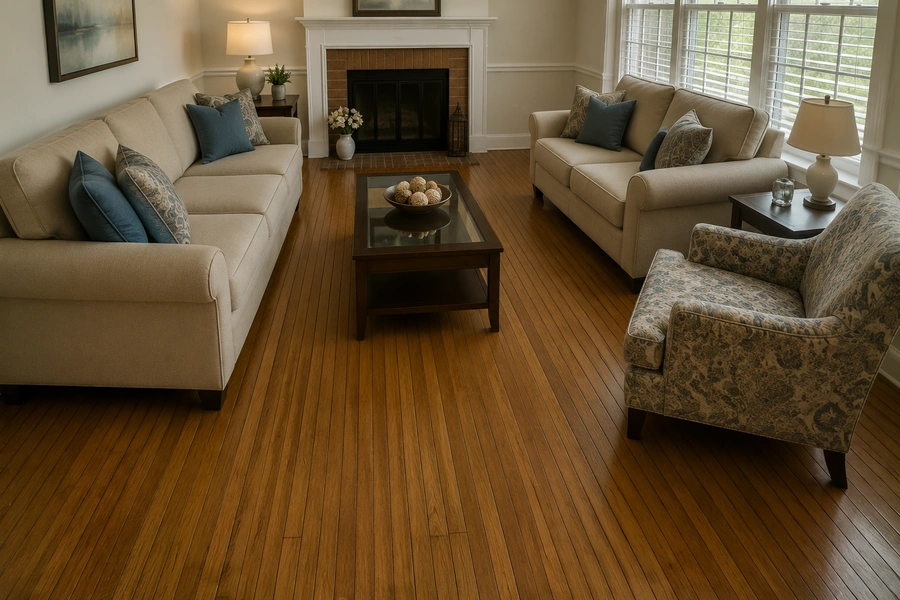 Traditional 2 to 3 inch strip flooring is losing ground to wide plank flooring, which creates a more open, modern feel.
How to Choose the Best Flooring Trend for Your Home, Budget & Lifestyle
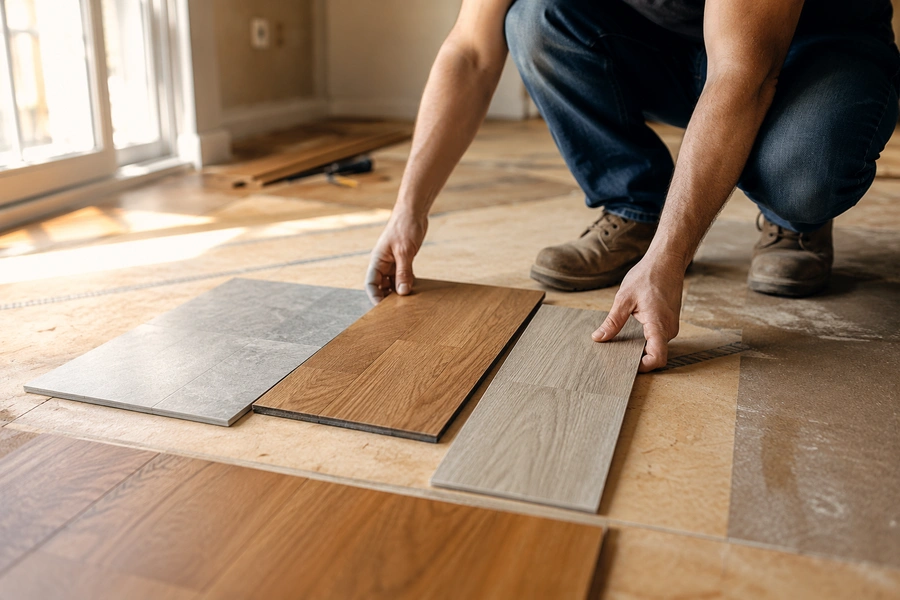 Start with how the room gets used. High-moisture rooms like kitchens and bathrooms need waterproof flooring such as SPC or tile, while bedrooms and living rooms have more flexibility. Next, set a realistic budget, since material and installation costs vary widely between laminate, luxury vinyl, and solid hardwood flooring.
Consider your household too. Homes with pets or young kids benefit from scratch resistant, waterproof materials, while a low-traffic guest room can handle a higher-maintenance material like natural stone or solid wood. Finally, think about how long you plan to stay in the home. Durable, timeless materials protect resale value, while trendy patterns work well if you plan to update again within 5 to 10 years.
Flooring Trend Comparison Chart: Cost, Durability, Maintenance & Lifespan
| Flooring Type | Cost | Durability | Maintenance | Typical Lifespan |
| Wide Plank Hardwood | High | High | Moderate | 30 to 100 years |
| Herringbone / Parquet Flooring | Moderate to High | Moderate to High | Moderate | 30+ years |
| LVP / LVT Flooring | Low to Moderate | High | Low | 10 to 20 years |
| SPC Flooring | Moderate | Very High | Low | 15 to 25 years |
| Large Format Tile | Moderate | Very High | Low | 25 to 50+ years |
| Natural Stone | High | High | High | 50+ years |
| Cork / Bamboo | Moderate | Moderate | Moderate | 10 to 25 years |
| Carpet | Low to Moderate | Low to Moderate | Moderate to High | 5 to 15 years |
Common Flooring Mistakes to Avoid Before Installing New Floors
- Choosing flooring based only on photos without seeing a physical sample in your home’s lighting
- Skipping subfloor prep, which can cause new flooring to warp or crack early
- Picking a high-maintenance material like natural stone or solid hardwood for a high-moisture room
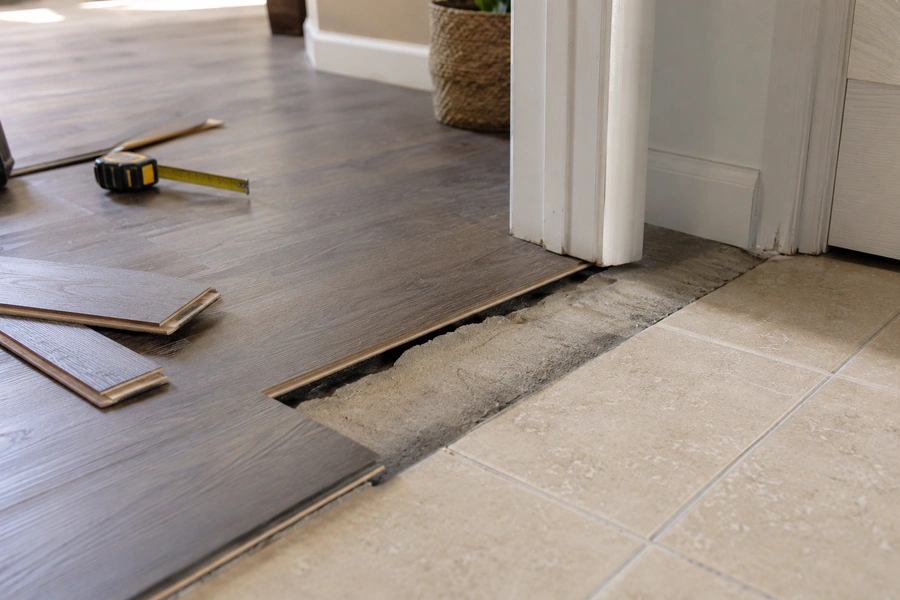
- Ignoring how flooring transitions between rooms, which can create awkward height differences
- Underestimating installation cost while only budgeting for materials
- Choosing trendy patterns for the whole home instead of a feature area, which can limit resale appeal
Frequently Asked Questions About Popular Flooring Trends
What is the most popular flooring trend in 2026?
Wide plank hardwood and waterproof luxury vinyl flooring (LVP, LVT, SPC) rank among the most requested flooring trends in 2026, along with herringbone and chevron patterns.
Is LVP or SPC flooring better?
SPC flooring has a rigid stone composite core, making it more dent resistant and stable on uneven subfloors, while LVP flooring is more flexible and often less expensive.
What flooring trend is losing popularity?
Cool gray floors, high-gloss finishes, and narrow wood planks are all losing popularity in favor of warmer tones, matte finishes, and wide plank flooring.
What is the most durable flooring for pets?
SPC flooring and wire-brushed hardwood resist scratches and water damage better than smooth, glossy floors, making them popular choices for pet owners.
Is hardwood flooring still popular in 2026?
Yes, hardwood flooring remains popular, especially wide plank and engineered hardwood in warm oak and walnut tones.
What flooring is best for resale value?
Natural wood tones, large format neutral tile, and classic patterns like herringbone tend to hold resale value better than bold, trend-specific choices.
Final Thoughts
Flooring trends in 2026 favor natural materials, wider planks, waterproof performance, and finishes that fit real life. Whether you choose wide plank hardwood, SPC flooring, large format tile, or a mix of materials, the best choice matches your room’s needs, your household, and how long you plan to stay in your home. Focus on durability and timeless tones first, then use pattern and texture to add personality.