
Noah Williams is an interior designer and flooring expert at Nova Floor. In Dubai, he helps people pick the right floor, get it installed, and keep it looking good. He also writes simple, practical flooring and home care guides for readers in Dubai and around the world.
How to Clean Baseboards | 10 Easy Ways to Remove Dust, Dirt & Grime
Noah Williams
Baseboards sit at floor level, so they catch almost everything. Dust drifts down from higher surfaces. Pet hair, crumbs, and dirt from shoes settle along the top edge. Vacuums, chair legs, and shoes leave scuff marks on the front.
The good news is that dirty baseboards are easy to fix. Most only need a vacuum, a microfiber cloth, and a mild cleaning solution. Tougher jobs, like grease, stains, and stuck-on grime, need a few extra tools.
This guide by Nova Floor Experts explain how to clean baseboards 10 different ways. It also shows you how to pick the right method for painted, white, wood, MDF, and vinyl baseboards, which mistakes to avoid, and how often to clean.
Contents
How to Clean Baseboards
To clean baseboards, remove loose dust with a vacuum brush attachment or a dry microfiber cloth. Then wipe them with a cloth dipped in warm water and a little dish soap, wrung out until barely damp. Scrub corners with a soft toothbrush, rinse with plain water, and dry right away.
Basic steps:
- Move furniture away from the wall and dust higher surfaces first.
- Vacuum the baseboards with a soft brush attachment.
- Wipe them with a barely damp microfiber cloth and warm, soapy water.
- Scrub corners and grooves with a soft toothbrush or cotton swab.
- Wipe with a cloth dampened in plain water, then dry with a clean towel.
This routine removes dust, dirt, and light scuff marks in most homes. Use the methods below for grease, stains, and heavy grime.
What You Need to Clean Baseboards
Tools
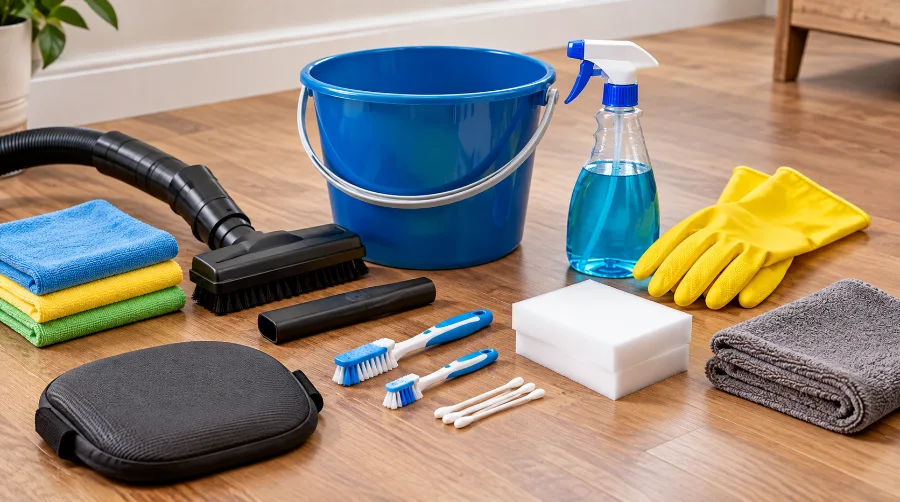
- Microfiber cloths: Have at least three. Use one for dusting, one for washing, and one for rinsing.
- Vacuum: Use a soft brush attachment and a crevice tool.
- Bucket or large bowl
- Spray bottle
- Soft-bristled toothbrush and cotton swabs for corners and grooves
- Melamine foam sponge (often sold as a “magic eraser”) for scuff marks
- Dry towel for drying
- Knee pad or folded towel to protect your knees
- Rubber gloves (optional)
Optional tools: a steam cleaner with a detail nozzle, and an extendable flat mop or telescoping duster for cleaning without bending.
Simple Cleaning Solutions
You don’t need strong chemicals to clean baseboards. These homemade cleaning solutions handle most jobs.
| Cleaning solution | Recipe | Best for |
| Dish soap solution | 1 teaspoon dish soap + 4 cups (1 quart) warm water | Everyday cleaning on most sealed baseboards |
| Vinegar solution | 1 cup white vinegar + 4 cups warm water | Dull film, sticky residue, light grime |
| Baking soda paste | 2 tablespoons baking soda + 1 tablespoon water | Stains, crayon, and stubborn spots |
| Castile soap solution | 1 tablespoon castile soap + 4 cups warm water | Gentle cleaning on painted and sealed wood |
Safety notes:
- Don’t mix castile soap with vinegar. The acid breaks down the soap and leaves an oily film.
- Never mix bleach with vinegar or ammonia. These combinations release toxic gases.
- Label every spray bottle so no one grabs the wrong one.
Before You Start: How to Prep Your Baseboards
A few minutes of prep makes the job faster and protects your baseboards.
- Clean from the top down. Dust ceiling fans, shelves, window sills, and walls before you clean the baseboards. Dust falls, so baseboards come near the end, and floors come last.
- Move furniture. Pull couches, beds, and dressers a few feet from the wall. Ask for help with heavy pieces.
- Check for cracks and gaps. Look at the caulk line along the top, the corners, and any peeling paint. Water can seep into these gaps. It can make MDF swell and trap moisture behind the trim, where mold can grow. Use less water in these spots.
- Spot test new cleaners. Try any cleaner on a hidden spot first, like behind a door. Let it dry and check for dull spots or color change.
- Protect your knees. Use a knee pad, or sit on a low stool and slide along the wall.
10 Easy Ways to Clean Baseboards
Each method below solves a different problem. Start with the gentlest one that fits the job, and move to stronger methods only if you need to.
1. Dust Baseboards With a Microfiber Cloth
Best for: light dust between deeper cleanings
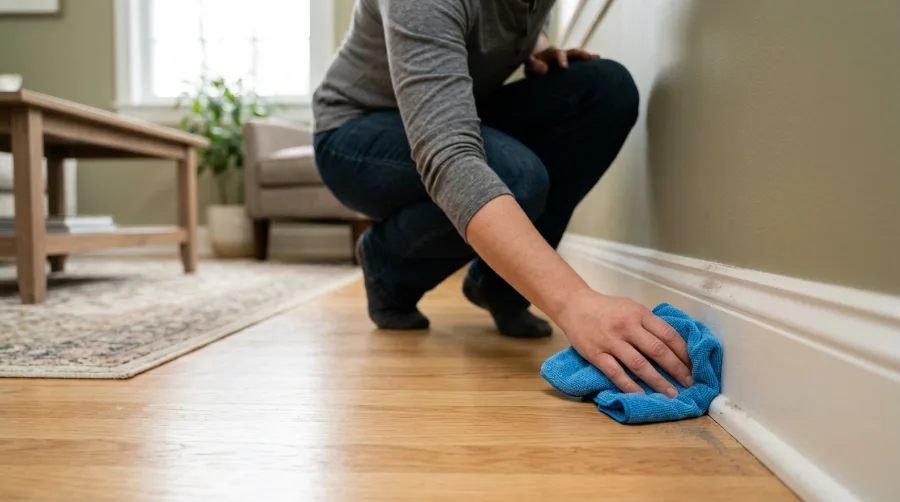
Microfiber grabs and holds dust better than cotton rags, which tend to push it around. A dry cloth is often enough for baseboards you clean regularly.
- Take a clean, dry microfiber cloth.
- Wipe the top edge first, holding the cloth flat against it.
- Wipe the front face from one end of the wall to the other.
- Wipe the bottom edge where the baseboard meets the floor.
- Fold the cloth to a clean side as it fills with dust.
Tip: A microfiber dusting mitt lets you use your fingertips to reach into grooves.
2. Vacuum Baseboards With a Brush Attachment
Best for: very dusty baseboards, pet hair, and homes with allergies
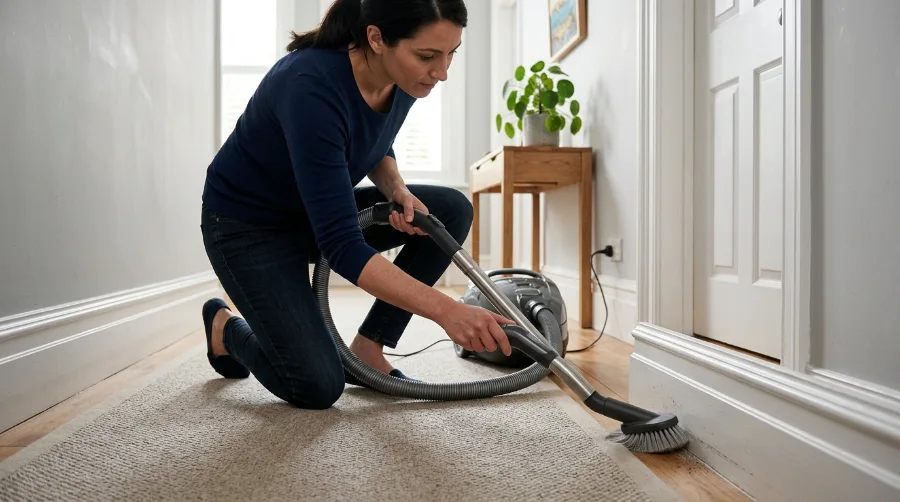
Vacuuming pulls dust away instead of spreading it into the air. Always vacuum before wet cleaning. Water mixed with loose dust turns into muddy streaks.
- Attach the soft-bristled dusting brush to your vacuum hose.
- Move it slowly along the top edge, then along the face.
- Switch to the crevice tool for corners, the gap along the floor, and tight spots behind doors.
- Vacuum the floor along the wall when you finish.
Tip: Vacuum your baseboards every time you vacuum the floors. It only adds a few minutes and keeps dust from building up.
3. Wash Baseboards With Dish Soap and Warm Water
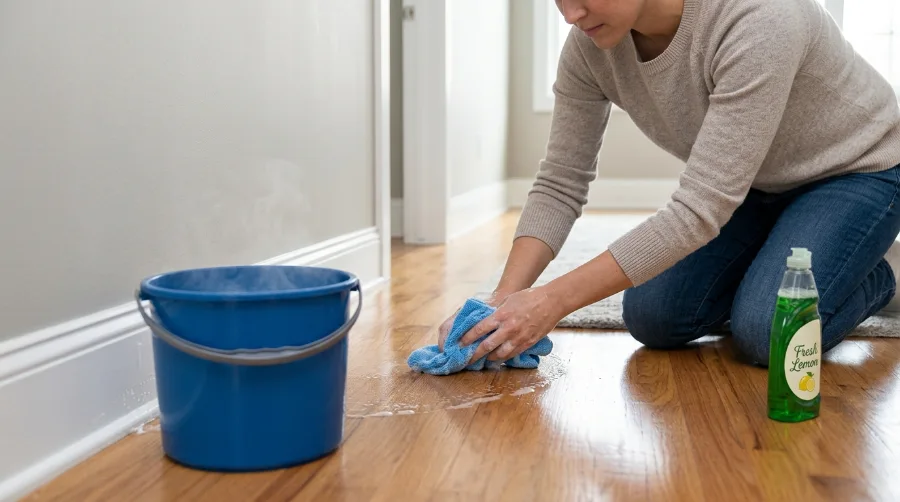
Best for: dirty baseboards, fingerprints, and everyday grime
This is the most useful method for most homes. It’s gentle enough for most painted and sealed surfaces.
- Mix 1 teaspoon of dish soap into 4 cups of warm water.
- Dip a microfiber cloth and wring it out until it’s barely damp. It shouldn’t drip.
- Wipe a 3- to 4-foot section, starting with the top edge.
- Rinse the cloth often. Change the water when it turns gray.
- Wipe the same section with a second cloth dampened in plain water.
- Dry it with a towel before moving on.
Why rinse? Soap left on baseboards dries into a sticky film. That film attracts new dust and dirt faster.
Other option: For very dirty baseboards, some people use about 1 teaspoon of powdered laundry detergent in a gallon of hot water. It works well, but it has a stronger smell and needs a thorough rinse.
4. Clean Dirty Baseboards With a Vinegar Solution
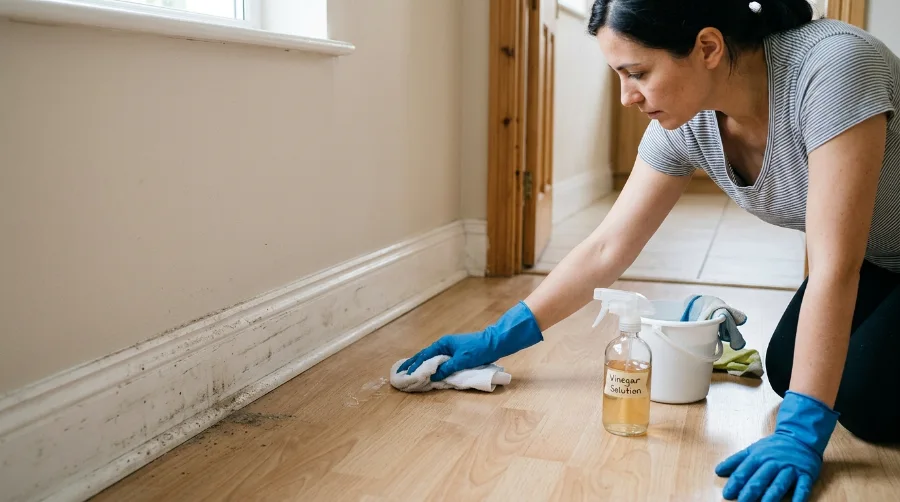
Best for: dull film, sticky residue from old cleaners, and light grime on painted baseboards and vinyl flooring.
White vinegar is a mild acid. It cuts through residue that soap sometimes leaves behind.
- Mix 1 cup of white vinegar with 4 cups of warm water in a spray bottle.
- Spray the solution onto your cloth, not onto the baseboard. This controls moisture and stops drips.
- Wipe the baseboard from top to bottom.
- Wipe again with a cloth dampened in plain water.
- Dry the area with a towel.
Don’t use vinegar on: waxed, oiled, or unsealed wood. Also watch for drips if your floor is marble, limestone, or travertine. Vinegar can etch natural stone.
The vinegar smell fades once the baseboards dry.
5. Remove Scuff Marks With a Magic Eraser
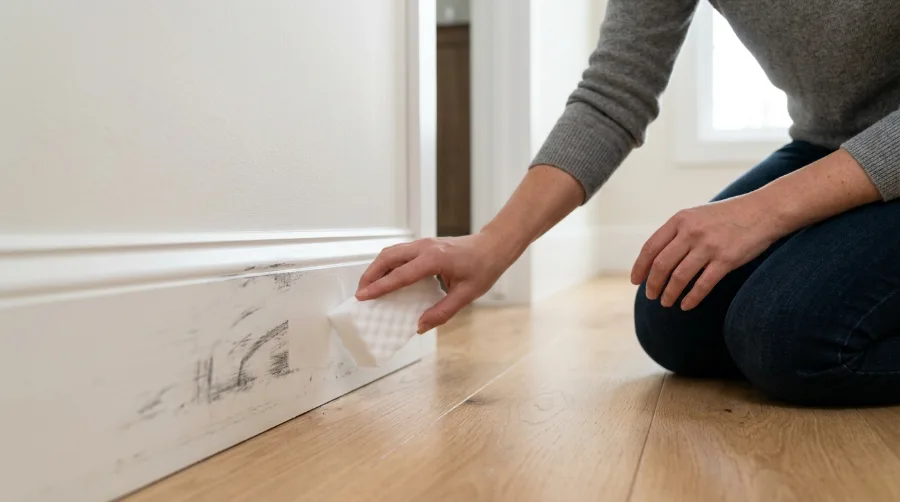
Best for: black scuff marks from shoes, vacuums, and furniture
A melamine foam sponge works like very fine sandpaper. It removes marks by wearing away a thin layer of the surface. That’s why it works so well, and also why it can damage paint.
- Wet the sponge and squeeze out the extra water.
- Test it on a hidden spot first.
- Rub the scuff mark with light pressure and short strokes.
- Wipe the area with a damp cloth to remove any residue.
Caution: Magic erasers work best on semi-gloss and gloss paint. On flat, matte, or eggshell paint, they can leave a patch that looks shinier or duller than the area around it. Don’t use them on stained or varnished wood.
Gentler option for light scuffs: Rub the mark with a tennis ball or a clean white pencil eraser.
6. Lift Stains With a Baking Soda Paste
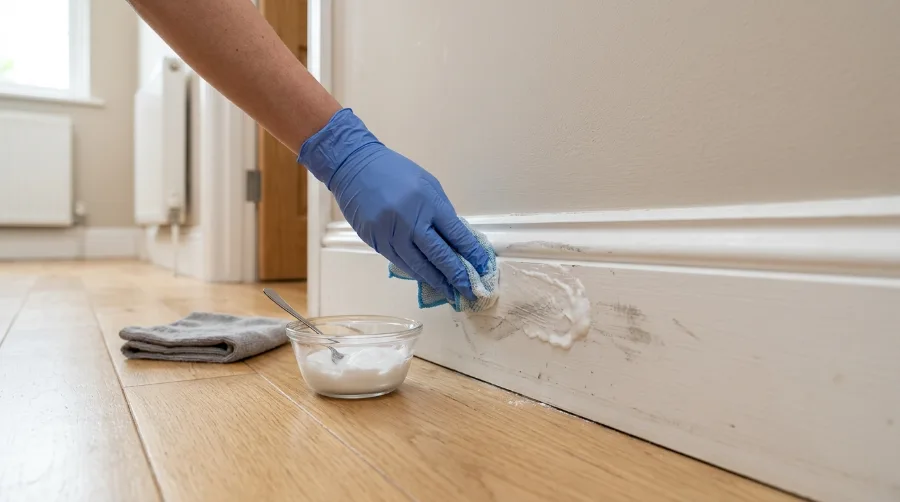
Best for: stubborn stains, crayon, food splatter, and dingy spots on white baseboards
Baking soda is a mild abrasive. It scrubs away stains without the harshness of scouring pads or powders.
- Mix 2 tablespoons of baking soda with 1 tablespoon of water to make a thick paste.
- Spread the paste on the stain with a cloth or soft toothbrush.
- Let it sit for a few minutes.
- Rub gently in small circles.
- Wipe the area clean with a damp cloth, then dry it.
Caution: Rub lightly on flat or eggshell paint, and test a hidden spot first.
7. Cut Kitchen Grease With a Degreaser
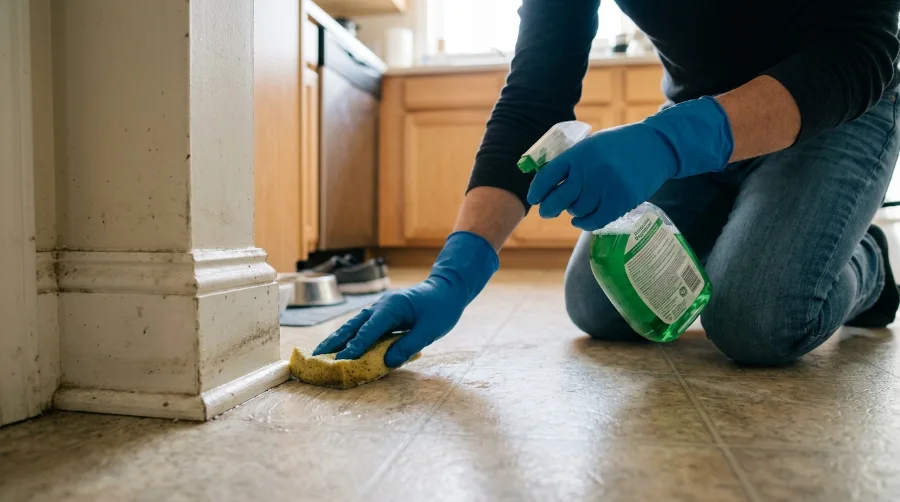
Best for: kitchen and dining room baseboards with a sticky layer of grease
Cooking releases tiny drops of grease into the air. They land on nearby surfaces, including baseboards. Dust then sticks to the grease and forms a grime that plain water can’t remove.
- Vacuum or dust the baseboards first.
- Spray a degreaser or all-purpose cleaner onto the baseboard. Check the label to make sure it’s safe for painted surfaces or wood.
- Let it sit for the time the label recommends.
- Wipe with a microfiber or terry cloth.
- Wipe again with plain water, then dry.
No degreaser? Use hot water with a few extra drops of dish soap. Dish soap is made to break down grease.
If you cook often, wipe kitchen baseboards every week or two so grease doesn’t build up.
8. Clean Corners and Grooves With a Toothbrush or Cotton Swab
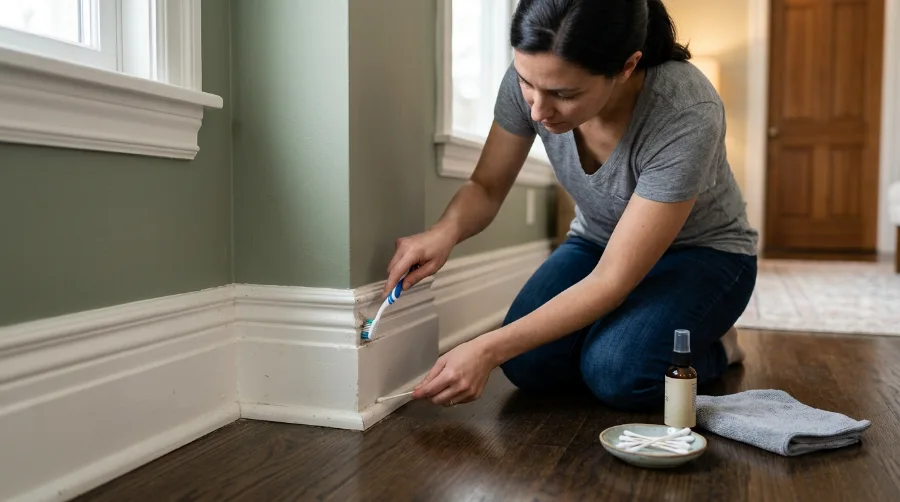
Best for: detailed baseboards, carved trim, inside corners, and quarter round or shoe molding
Cloths slide over grooves and miss the dirt packed inside. Small tools reach the spots cloths can’t.
- Dip a soft toothbrush into your dish soap solution and tap off the extra water.
- Scrub along the grooves with short strokes.
- Use a damp cotton swab for tight inside corners.
- Wipe away the loosened dirt with a cloth.
Tip: Wrap a thin cloth around a plastic putty knife. Slide it along the gap where the baseboard meets the floor to pull out trapped dirt and pet hair.
9. Loosen Stuck-On Grime With a Steam Cleaner
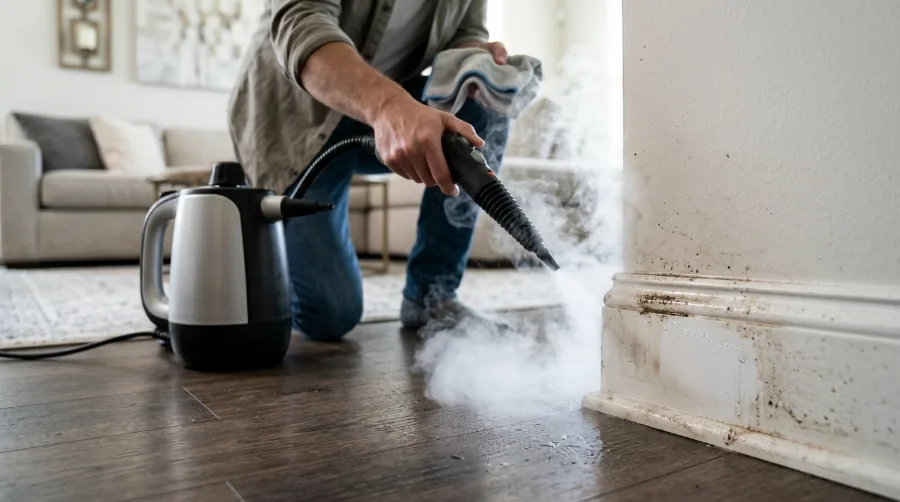
Best for: old, baked-on grime in move-in cleaning, mudrooms, and entryways (sealed surfaces only)
Heat softens stuck-on grime so it wipes away with little scrubbing and no chemicals.
- Dust or vacuum the baseboards first.
- Attach the detail nozzle and let the steamer heat up.
- Test a hidden spot to make sure the paint or finish holds up.
- Place a towel on the floor below to catch drips, especially on wood floors.
- Steam a short section and keep the nozzle moving. Don’t hold it in one place.
- Wipe the area right away with a microfiber cloth.
Don’t steam: MDF baseboards, unsealed or waxed wood, peeling or cracked paint, or freshly painted trim. Paint can take several weeks to fully cure. Steam can soften paint and push moisture into seams.
10. Clean Baseboards Without Bending Using a Flat Mop or Extension Pole
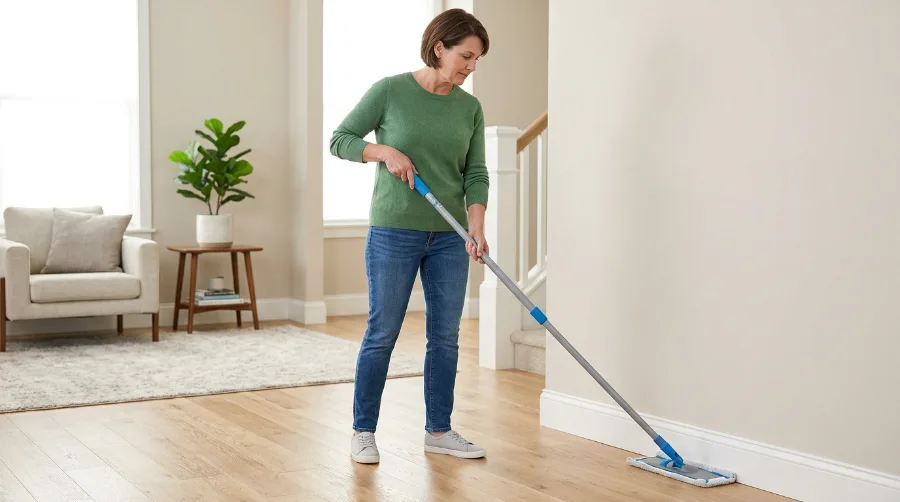
Best for: people with back or knee pain, large homes, hallways, stairs, and quick upkeep
You don’t always need to kneel to clean baseboards. These tools let you clean while standing:
- An extendable flat microfiber mop
- A telescoping duster with a pivoting head
- An extension pole with a microfiber cloth secured by rubber bands
- A long-handled soft broom
- A vacuum wand with a brush attachment
How to clean with a flat mop:
- Use a dry pad first to dust the top edge and face.
- For wet cleaning, spray a light mist of cleaning solution onto the pad, not the wall.
- Tilt the mop head so the pad lies flat against the baseboard.
- Walk slowly along the wall.
- Switch to a fresh pad when the first one gets dirty.
Keep in mind: Standing tools handle dust and light dirt well. Scuff marks, corners, and heavy grime still need close-up work. A low stool can make that part easier on your body.
Which Baseboard Cleaning Method Should You Use?
Match the problem to the method. This table helps you pick the right one quickly.
| Problem | Best method | Main tools | Effort |
| Light dust | #1 Microfiber cloth | Dry microfiber cloth | Low |
| Thick dust or pet hair | #2 Vacuum | Brush attachment, crevice tool | Low |
| General dirt and fingerprints | #3 Dish soap wash | Dish soap, microfiber cloth | Medium |
| Dull film or residue | #4 Vinegar solution | White vinegar, spray bottle | Medium |
| Black scuff marks | #5 Magic eraser | Melamine foam sponge | Low |
| Stains and crayon | #6 Baking soda paste | Baking soda, toothbrush | Medium |
| Kitchen grease | #7 Degreaser | Degreaser, terry cloth | Medium |
| Dirt in grooves and corners | #8 Detail cleaning | Toothbrush, cotton swabs | High |
| Baked-on grime | #9 Steam cleaner | Steamer, detail nozzle | Medium |
| Back or knee pain | #10 Standing tools | Flat mop, extension pole | Low |
How to Clean Baseboards by Material
The right cleaning method depends on what your baseboards are made of. A method that’s safe for vinyl can ruin MDF.
Not sure what you have? Look at a cut end, often inside a closet or behind a door. Real wood shows a grain pattern. MDF looks like smooth, pressed brown fibers with no grain, and it’s almost always painted. Vinyl feels flexible and slightly rubbery.
Painted Baseboards
Most baseboards are painted wood or painted MDF. The paint’s sheen decides how hard you can scrub.
- Semi-gloss and gloss paint: These are the most washable. Dish soap, vinegar, and magic erasers are all fine.
- Satin, eggshell, and flat paint: Use a soft cloth and light pressure. Spot test magic erasers and baking soda first.
- Avoid: acetone, paint thinner, and scouring powders. Test rubbing alcohol before using it, because it can soften latex paint.
- Worn or chipped paint: Cleaning won’t fix it. Touch up the area with matching paint instead.
White Baseboards
White baseboards show dust, scuff marks, and yellowing faster than any other color. They need a little more upkeep.
- Dust weekly so gray buildup doesn’t settle in.
- Remove scuff marks with a magic eraser if the paint is semi-gloss or gloss.
- Brighten dingy baseboards with the dish soap wash, followed by a plain water rinse.
How to fix yellowed white baseboards: First, figure out why they turned yellow.
- Surface film: Grease, cigarette smoke, and dirt can leave a yellow film on top of the paint. A degreaser or dish soap solution removes it.
- Aging paint: Oil-based paint naturally yellows over time, especially in rooms with little sunlight. The color change is in the paint itself, so cleaning won’t remove it.
Quick test: Clean a small spot with a degreaser. If it turns white again, the yellow was surface film, so keep cleaning. If it stays yellow, the paint has aged, and the only fix is to repaint. If you paint latex over old oil-based paint, use a bonding primer first so the new paint sticks.
Skip bleach. It won’t reverse yellowed paint and can damage some finishes.
Wood Baseboards (Stained or Natural)
Stained wood baseboards are usually sealed with polyurethane, varnish, lacquer, oil, or wax. The finish protects the wood, so treat it gently.
- Use a cleaner made for finished wood, or a few drops of dish soap in warm water.
- Wring your cloth until it’s barely damp.
- Wipe in the same direction as the wood grain.
- Dry the baseboards right away.
- Skip vinegar on waxed or oil-finished wood. Skip magic erasers and steam cleaners too.
- Apply wood polish a few times a year if you like the shine. Use a thin coat. Too much polish builds up and attracts dust.
Is your wood sealed? Place one drop of water on a hidden spot. If it beads up, the finish is sealed. If it soaks in and darkens the wood, the wood is unsealed. Dust unsealed wood and use only a wood cleaner.
MDF Baseboards
MDF (medium-density fiberboard) is made from pressed wood fibers and glue. It’s common in newer homes because it costs less than solid wood. The paint protects it, but raw MDF soaks up water and swells. Once it swells, it usually doesn’t go back to its original shape.
- Dust and vacuum often so you need less wet cleaning.
- Use a barely damp cloth. Never soak the surface or spray it directly.
- Dry each section right away.
- Take extra care around nail holes, seams, the bottom edge, and cracked caulk. Water gets in through these spots.
- Never use a steam cleaner on MDF.
If your MDF has swollen: Sand the raised area smooth and repaint, or replace the damaged section. Seal the edges with caulk and paint so it doesn’t happen again.
Vinyl Baseboards
Vinyl baseboards, also called cove base, are common in kitchens, bathrooms, basements, and offices. They handle water well and are the easiest type to clean.
- Use the dish soap or vinegar solution.
- Remove scuff marks with a magic eraser.
- Avoid acetone and paint thinner, which can soften vinyl.
- Keep water from getting behind the top edge, where it can loosen the adhesive.
How to Remove Common Stains From Baseboards
| Stain | What to use | How to remove it |
| Scuff marks | Magic eraser, tennis ball, or pencil eraser | Rub lightly, then wipe with a damp cloth |
| Crayon | Baking soda paste or magic eraser | Warm the wax with a hair dryer on low, then rub gently |
| Permanent marker | Rubbing alcohol on a cotton ball | Dab the mark instead of rubbing hard. Test first on painted surfaces |
| Grease | Degreaser or hot, soapy water | Let the cleaner sit, wipe, then rinse |
| Yellow film from smoke or cooking | Degreaser or dish soap solution | Wash, rinse, and repeat if needed |
| Mildew spots (bathrooms) | Dish soap and water | Scrub, then dry completely. If spots keep coming back, look for a leak or moisture problem |
| Pet marks | Enzyme cleaner made for pet stains | Follow the label, then wipe with plain water |
Common Baseboard Cleaning Mistakes to Avoid
- Wet cleaning before dusting. Water turns loose dust into muddy streaks. Always dust or vacuum first.
- Using too much water. Extra water can swell MDF, warp wood, and drip onto floors. A barely damp cloth is enough.
- Skipping the top edge. The flat top of the baseboard collects the most dust. Wipe it first.
- Scrubbing too hard. Heavy pressure can remove paint and leave dull patches. Let the cleaner do the work.
- Using harsh chemicals. Bleach, ammonia, acetone, and abrasive powders can damage paint and finishes.
- Leaving soap behind. Soap residue turns sticky and attracts dirt. Finish with a plain water rinse.
- Mopping before cleaning baseboards. Dirt falls onto your clean floors. Clean baseboards first and floors last.
- Ignoring cracks and gaps. Water can seep into cracked caulk and open seams. Clean these spots with less water.
- Using dirty water or cloths. Dirty water spreads grime around. Change the water when it turns gray.
- Relying only on wipes. Disinfecting wipes and baby wipes are handy for quick spot cleaning. But they can leave a residue, so do a full wash and rinse every so often.
How Often Should You Clean Baseboards?
Dust or vacuum baseboards every one to two weeks, and wash them every one to three months. Clean more often if you have pets, young kids, allergies, or heavy foot traffic.
| Home situation | Dust or vacuum | Wash |
| Average home | Every 2 weeks | Every 2–3 months |
| Pets or young kids | Weekly | Monthly |
| Kitchen | Weekly | Every 2–4 weeks |
| Bathroom | Weekly | Monthly |
| Allergies in the home | Weekly | Monthly |
| Low-traffic rooms, like guest rooms | Monthly | Every 3–6 months |
These are general guidelines. If your baseboards look gray or feel gritty, it’s time to clean them.
Baseboard Maintenance Tips to Keep Them Clean Longer
Good baseboard maintenance means less scrubbing later. These habits keep dust, dirt, and scuff marks under control.
- Vacuum baseboards when you vacuum floors. It’s the easiest way to stop dust from building up.
- Dust walls and high surfaces regularly. Dust on walls, shelves, and ceiling fans eventually falls onto baseboards.
- Clean one room at a time. A single room takes about 15 to 20 minutes, which makes the job feel smaller.
- Use doormats and a shoes-off rule. Less dirt comes into the house, so less ends up on baseboards.
- Wipe spills and splashes right away. Fresh spills come off easily. Dried ones may stain.
- Put felt pads on chair legs and keep furniture a few inches from the wall to prevent scuffs.
- Try a dryer sheet as a final wipe. Some people find it slows dust buildup. Results vary, and it can leave a light residue, so skip it if anyone in your home is sensitive to fragrance.
- Check caulk once a year. Fill cracks or gaps along the top edge so water and dust can’t get in.
- Keep touch-up paint on hand. Label the can with the room and sheen, so you can fix chips quickly.
FAQs About Cleaning Baseboards
What is the best way to clean baseboards?
The best way to clean baseboards is to vacuum them with a brush attachment first, then wipe them with a microfiber cloth dipped in warm water and a little dish soap. Rinse with plain water and dry right away. This works for most painted, wood, and vinyl baseboards.
What is the best cleaning solution for baseboards?
A mix of 1 teaspoon of dish soap and 4 cups of warm water is the best all-purpose cleaning solution for baseboards. It removes dirt and light grease without damaging paint. For dull film or residue, use 1 cup of white vinegar in 4 cups of warm water instead.
Can I use vinegar to clean baseboards?
Yes, diluted white vinegar is safe for most painted and vinyl baseboards. Mix 1 cup of vinegar with 4 cups of warm water. Don’t use it on waxed, oiled, or unsealed wood, and keep it from dripping onto natural stone floors.
How do you clean baseboards without bending over?
Use an extendable flat mop, a telescoping duster, or a vacuum wand with a brush attachment. For wet cleaning, spray a light mist of cleaning solution onto a microfiber mop pad and slide it along the baseboard. Standing tools work best for dust and light dirt.
How do you get scuff marks off baseboards?
Rub the scuff marks gently with a damp magic eraser, then wipe the area with a damp cloth. Test it on a hidden spot first, especially on flat or eggshell paint. For light scuffs, a tennis ball or white pencil eraser often works too.
How do you clean white baseboards that have turned yellow?
Clean a small spot with a degreaser or dish soap solution. If it turns white, the yellow was surface grime, so clean the rest the same way. If it stays yellow, the paint itself has aged. You’ll need to repaint, using a bonding primer first if the old paint is oil-based.
Is it safe to use a magic eraser on baseboards?
A magic eraser is safe on most semi-gloss and gloss painted baseboards if you use light pressure. It can dull flat, matte, and eggshell paint, and it can damage stained or varnished wood. Always test a hidden spot first.
Should you clean baseboards before or after mopping?
Clean baseboards before you mop. Dust and dirt fall onto the floor as you clean the baseboards. Mopping last picks up that mess, so you only clean the floors once.
Do dryer sheets keep baseboards clean longer?
Some people wipe baseboards with a dryer sheet after cleaning to slow dust buildup. Results vary, and dryer sheets can leave a light residue and scent. Regular vacuuming does more to keep baseboards clean.
How long does it take to clean baseboards?
Dusting or vacuuming the baseboards in one room takes about 5 to 10 minutes. A full wash with rinsing and drying takes about 15 to 30 minutes per room, depending on the room’s size and how dirty the baseboards are.
Final Thoughts
Cleaning baseboards doesn’t take special skills or expensive products. Start with the gentlest method that fits the job, use as little water as possible, and always dust before you wash. Know your baseboard material so you can avoid damage. A few minutes of regular baseboard maintenance each week keeps dust from turning into grime that’s much harder to remove.

Noah Williams
Interior Designer & Flooring Expert