
Noah Williams is an interior designer and flooring expert at Nova Floor. In Dubai, he helps people pick the right floor, get it installed, and keep it looking good. He also writes simple, practical flooring and home care guides for readers in Dubai and around the world.
How to Get Dog and Cat Pee Smell Out of Carpet: 7 Effective Cleaning Methods

Noah Williams
Your carpet looks clean, but the room still smells like a litter box. That’s because pet urine soaks below the surface, and most quick fixes only treat the top. This guide shows you how to get dog pee smell out of carpet, and cat pee too, whether the accident happened five minutes ago or five months ago.
Quick answer: To get pee smell out of carpet, blot up as much urine as you can, rinse the spot with cool water, then soak it with an enzymatic cleaner. Let the cleaner sit and air-dry fully. Enzymes break down the uric acid crystals that cause the smell. For old or deep stains, rinse with a wet vac first, and treat the underlay if the odour keeps coming back.
Contents
Why Is Pet Urine Smell So Hard to Get Out of Carpet?
Pet urine smell is hard to remove because it causes three problems at once. Water and soap only fix one of them.
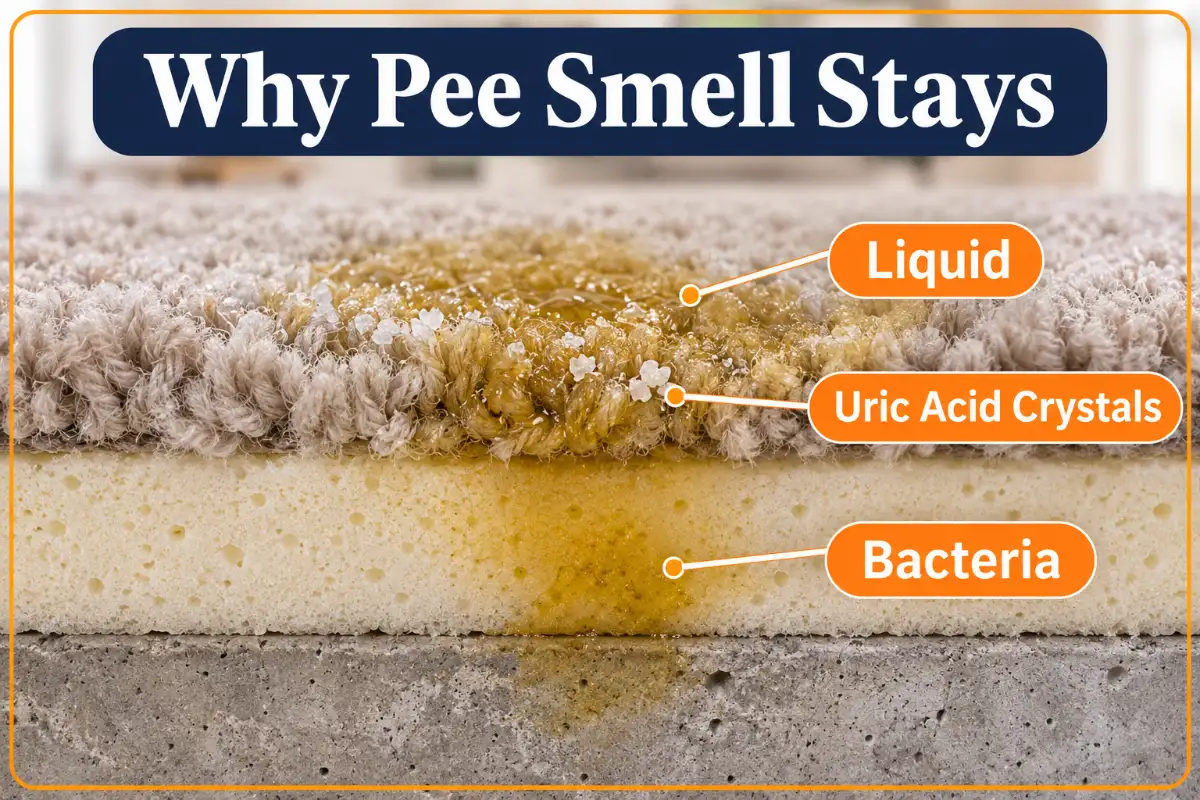
- The liquid soaks through the carpet fibres into the underlay (padding) and sometimes the floor below.
- Uric acid crystals stay behind after the urine dries. They don’t dissolve in water. They cling to fibres and underlay.
- Bacteria feed on what’s left and release sharp, ammonia-like gases. The smell gets stronger over time.
This is also why the smell often comes back on humid days. Moisture in the air rewets the dried salts and crystals, and they release odour again. In the UAE, many pet owners notice an old accident “come back to life” during the sticky summer months, especially in coastal areas.
Why Cat Pee Smells Worse Than Dog Pee
Cat urine is more concentrated than dog urine. It also contains compounds that turn more pungent as bacteria break them down. Cats tend to return to the same spot, so one corner can hold many layers of old urine.
Before You Start: Find Every Urine Spot
You can’t clean what you can’t find. Old, dry spots are often invisible. Check these places first:
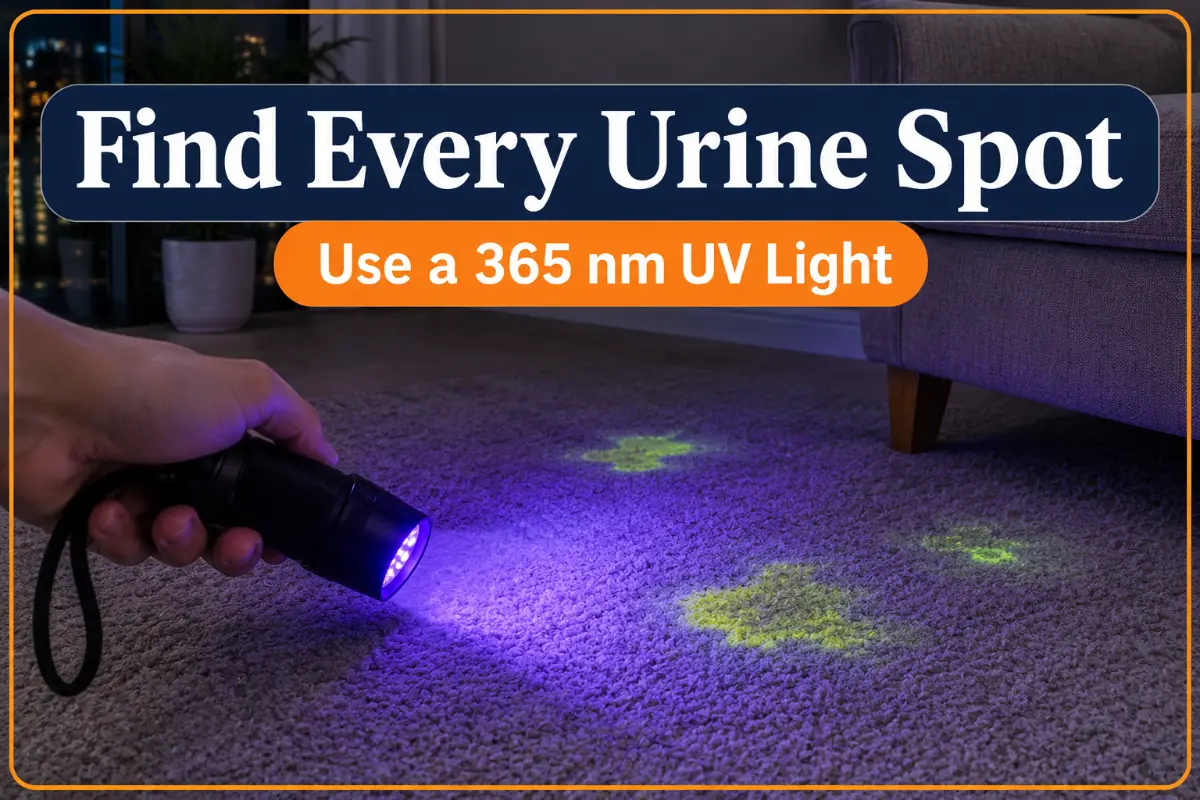
- Use a UV black light. Turn off the lights at night and scan the carpet. Dried urine glows yellow-green. A 365 nm torch shows urine more clearly than cheaper 395 nm models.
- Use your nose. Get close to the carpet near walls, corners, doors and furniture legs. Pets favour these spots.
- Press down on suspect areas. If the carpet feels stiff, crunchy or damp underneath, urine may have reached the underlay.
- Mark each spot. Put painter’s tape around the edge so you can find it in daylight.
Treat an area about 5–8 cm (2–3 inches) wider than the visible stain. Urine spreads sideways as it sinks, so the spot underneath is usually bigger than the one on top.
What You’ll Need
You probably have most of these at home:
- White paper towels or old white cloths (coloured cloths can bleed dye)
- Cool water and a spray bottle
- Distilled white vinegar
- Baking soda
- 3% hydrogen peroxide (sold at most pharmacies)
- Clear, dye-free dish soap
- An enzymatic pet urine cleaner
- A wet/dry vacuum or carpet extractor (for old or large stains)
- Rubber gloves
- A UV black light (optional but helpful)
Safety first: Always test any cleaner on a hidden patch of carpet, like inside a wardrobe. Wait until it dries and check for colour change. Keep pets and children away until each area is dry.
How to Get Dog Pee Smell Out of Carpet: 7 Methods That Work
Use this table to pick the right method for your stain. Most stains need two or three methods used together.
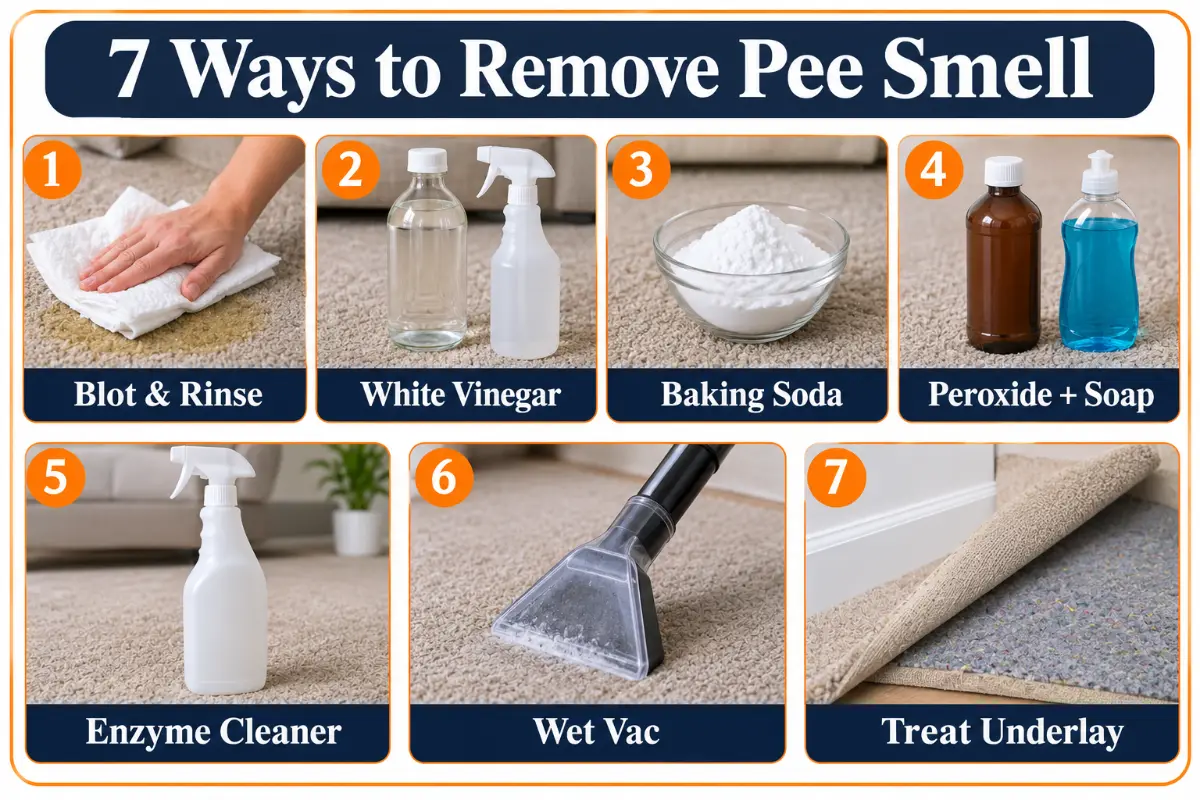
| Method | Best For | Removes Stain? | Removes Odour? | Time Needed |
| 1. Blot and rinse | Fresh accidents | Yes, if fast | Partly | 10 minutes |
| 2. White vinegar | Fresh and mild dried urine | Partly | Yes, short-term | 30 min + drying |
| 3. Baking soda | Leftover odour after cleaning | No | Yes, surface | Overnight |
| 4. Peroxide + dish soap | Stubborn yellow stains | Yes | Yes | 1 hour + drying |
| 5. Enzymatic cleaner | Dried urine, cat pee, repeat spots | Yes | Yes, at the source | 1–2 days |
| 6. Wet vac / extractor | Old, large or deep stains | Yes | Yes, with Method 5 | 1 hour + drying |
| 7. Treat the underlay | Smell that keeps coming back | Yes | Yes, permanently | Half a day |
Our recommendation: If you only buy one product, buy an enzymatic cleaner. It’s the only common option that breaks down uric acid instead of covering it up.
Method 1: Blot and Rinse Fresh Urine Right Away
Speed matters most with a fresh accident. The less urine reaches the underlay, the less smell you’ll fight later.
- Blot, don’t rub. Fold a thick layer of paper towels and press down hard. Stand on it if you can. Swap for dry towels until they come up almost dry.
- Rinse with cool water. Pour a small amount of cool water on the spot. Never use hot water, because heat can set the stain and the smell.
- Blot again. Press out as much water as you can.
- Move to Method 5. Spray an enzymatic cleaner on the damp area to finish the job.
Tip: Lay a stack of paper towels on the spot, put a heavy book on top and leave it for 15 minutes. This pulls up more liquid than hand blotting. It also stops a yellow ring forming as the spot dries. That ring is urine wicking up from below, the same wicking that causes brown rings after coffee spills.
Method 2: White Vinegar Solution
White vinegar is a mild acid. It helps neutralise the alkaline salts in dried urine and cuts odour. It’s cheap, safe on most carpets and good for fresh or mildly old spots.
- Mix 1 part white vinegar with 1 part cool water in a bowl or spray bottle.
- Soak the area well. The solution needs to reach as deep as the urine did.
- Let it sit for 10 to 15 minutes.
- Blot firmly with dry towels until the spot is just damp.
- Let it air-dry, or move to Method 3 while it’s still damp.
What to expect: The room will smell of vinegar for a few hours, and that fades as it dries. Vinegar works well on fresh accidents, but it won’t fully break down old uric acid crystals. If the smell returns after a few days, use an enzymatic cleaner.
Method 3: Baking Soda to Absorb Leftover Odour
Baking soda pulls moisture and odour out of carpet fibres. It works best as a finishing step, not a first step.
- Make sure the spot is damp, not soaking wet.
- Cover the area with a thick layer of baking soda.
- Leave it for at least 8 hours, or overnight. Keep pets away so they don’t eat it or track it around.
- Vacuum it up well, going over the spot in several directions.
Good to know: Don’t pour vinegar onto baking soda. The fizz looks impressive, but the two cancel each other out. Use them one after the other, not mixed.
Method 4: Hydrogen Peroxide and Dish Soap for Stubborn Stains
This mix lifts yellow urine stains and kills odour-causing bacteria. It’s strong, so use it carefully.
- Test first. Peroxide can lighten dark carpets, wool and some dyes. Test a hidden spot and let it dry fully before you continue.
- Sprinkle a thin layer of baking soda over the stain.
- In a bowl, mix 1 cup (240 ml) of 3% hydrogen peroxide with 1 teaspoon (5 ml) of clear dish soap.
- Slowly pour or spray the mix over the baking soda. Work it into the fibres gently with gloved fingers or a soft brush.
- Let it sit for about 1 hour, then blot.
- Let it dry fully, then vacuum.
Two safety rules:
- Mix a fresh batch each time. Don’t store it in a closed spray bottle, because peroxide can build up pressure.
- Never mix hydrogen peroxide and vinegar in the same container. Together they make an acid that irritates skin, eyes and lungs.
Method 5: Enzymatic Cleaner (Best for Dried Urine and Cat Pee)
An enzymatic cleaner is the most reliable way to get urine smell out of carpet for good. It contains enzymes and helpful bacteria that break down the proteins and uric acid in urine. Once those are gone, nothing is left to smell.
Use this method for dried stains, repeat spots and almost any cat urine.
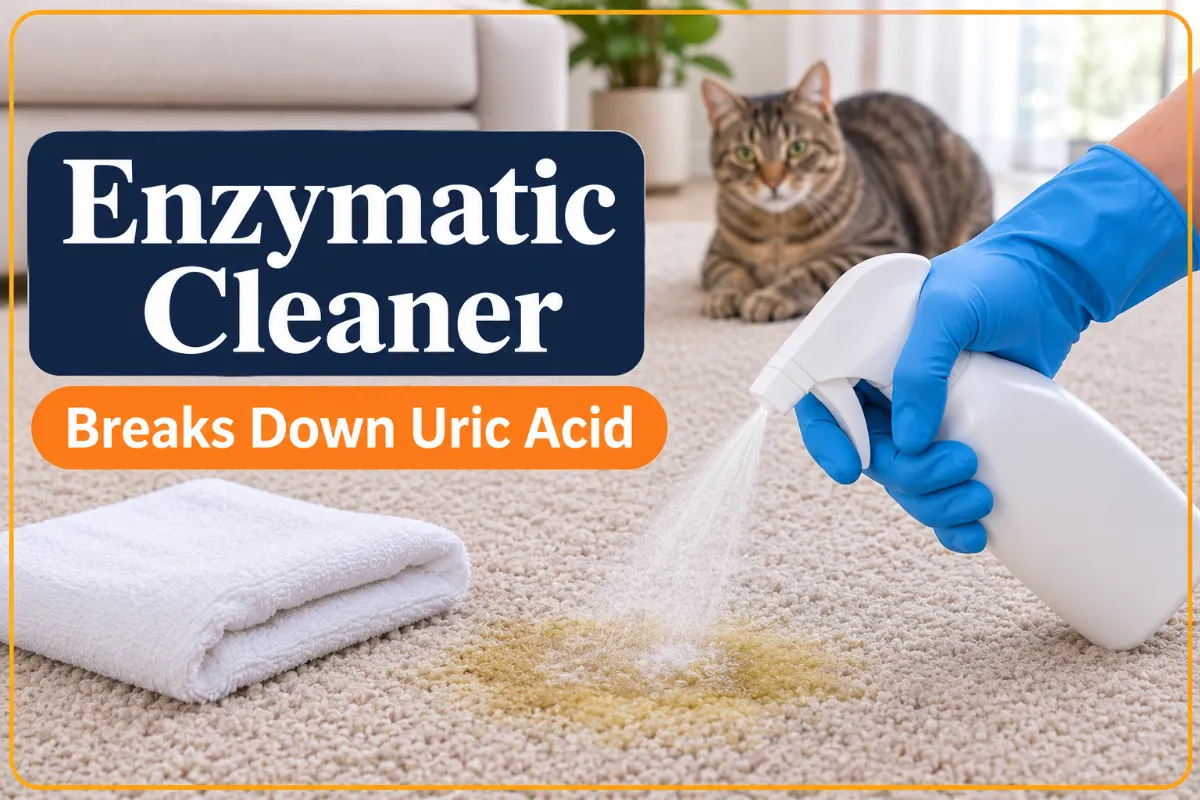
- Check the label. Look for “enzymatic” or “bio-enzymatic” and “pet urine”. Follow the dwell time on the bottle.
- Remove other cleaners first. If you already used vinegar, peroxide or soap, rinse the spot with cool water and blot. Leftover chemicals can stop enzymes working.
- Soak the spot. Use enough to reach the underlay, because a light mist only treats the surface. A small spot may need half a cup (about 120 ml) or more.
- Cover it loosely. Place a damp towel over the area. This keeps it moist longer, so the enzymes work longer.
- Let it air-dry completely. This can take 24 to 48 hours. Don’t use a hair dryer or heater, since heat kills enzymes.
- Sniff test. If you still smell urine once it’s dry, repeat. Old cat spots often need two or three rounds.
Why it’s worth the wait: Vinegar and baking soda reduce odour, but enzymes remove the source. That’s the difference between a smell that returns next month and one that’s gone.
Method 6: Deep Rinse With a Carpet Extractor or Wet Vac
If a spot has been soaked many times, it holds more waste than any spray can reach. A wet vac or carpet extractor flushes it out.
- Fill the machine with cool, clean water only. Skip the cleaning solution, because soap residue attracts dirt and blocks enzymes.
- Turn off any heat setting.
- Spray water onto the spot, then suck it back up.
- Repeat until the water in the tank looks clear, not yellow.
- While the carpet is still damp, apply an enzymatic cleaner (Method 5) and let it dry.
If you don’t own a machine, a professional carpet cleaner can do this step for you.
Avoid steam cleaners on urine. High heat can bond urine proteins to carpet fibres and lock in the stain and smell. Only steam clean after the urine is fully removed.
Method 7: Treat or Replace the Carpet Underlay (Padding)
Sometimes you clean the carpet perfectly and the room still smells. That usually means urine reached the underlay or the floor beneath it, and no surface cleaner can fix that.
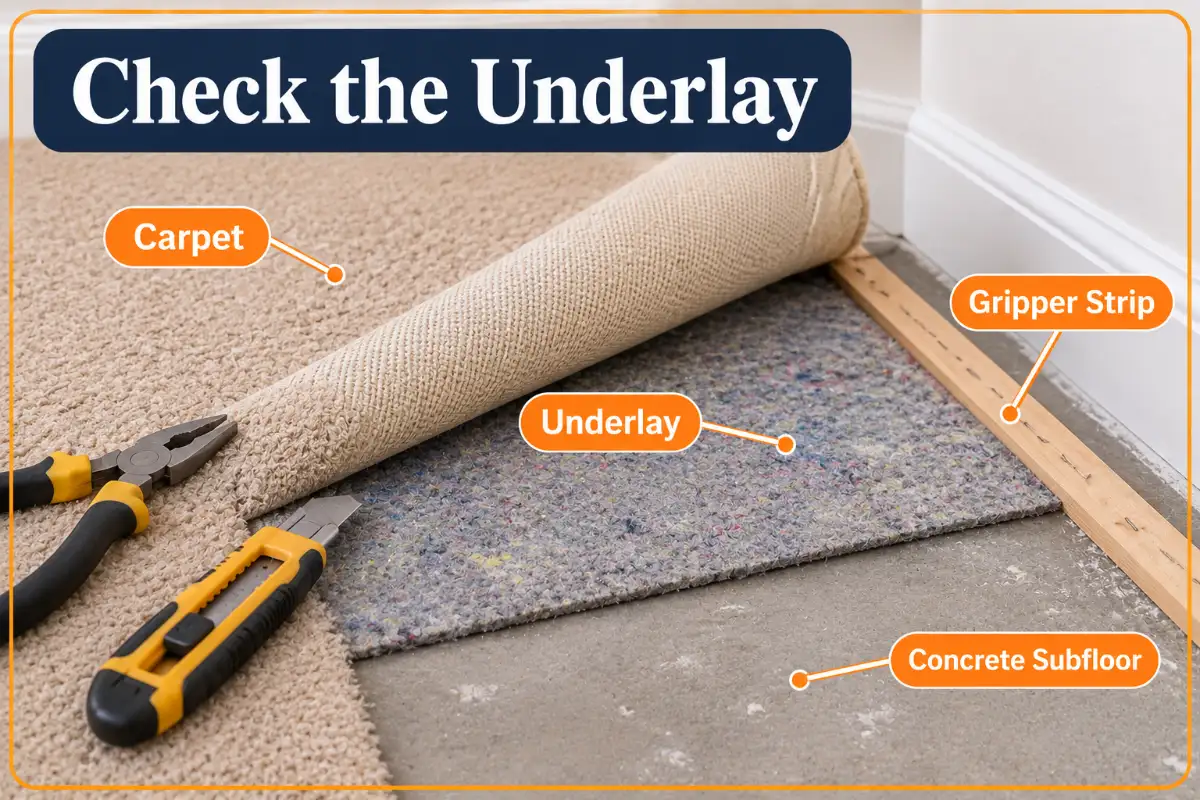
Signs the underlay is soaked:
- The smell returns after every cleaning.
- The smell gets worse on humid days.
- The spot feels squishy or damp when you press it.
- A black light shows a large glowing area, or the stain has spread under nearby carpet.
Steps:
- Lift the carpet. Go to the nearest corner or wall. Grip the carpet edge with pliers and pull it gently off the gripper strip. Fold it back.
- Check the underlay. If the stain went through, cut out that section with a utility knife, slightly wider than the stain.
- Check the gripper strip. These wooden strips soak up urine too. Replace any that are stained or smell.
- Clean the floor beneath. Most UAE apartments and villas have a concrete subfloor. Concrete is porous, so soak the stain with an enzymatic cleaner and let it dry fully. Concrete can take a day or more.
- Seal the spot. Paint the dry area with a shellac-based stain-blocking primer to seal in any odour left in the concrete or wood.
- Fit new underlay. Cut a new piece of the same thickness and tape or staple it in place. For pet homes, a waterproof carpet underlay stops future accidents soaking through.
- Treat the carpet back. Spray the underside of the carpet with enzymatic cleaner, let it dry and stretch it back onto the gripper.
Re-stretching carpet tightly can be tricky. If it looks wavy afterwards, a carpet fitter can fix it in an hour or two. Renting? Check with your landlord before lifting fitted carpet.
How to Get Cat Pee Out of Carpet: What’s Different
Cat urine needs more effort than dog urine. Here’s what changes:
- Go straight to enzymes. Vinegar alone rarely works on cat urine. Use Method 1, then Method 5.
- Use more cleaner. Cats often pee in one small spot many times, so it can be soaked deep. Saturate it.
- Expect repeat rounds. Plan for two or three enzyme treatments on old spots.
- Check the underlay early. If a cat has used the same corner for weeks, Method 7 is often the only full fix.
- Rule out health problems. A cat peeing outside the litter box often has a medical reason, such as a urinary tract issue, bladder inflammation or kidney disease. Call your vet. A male cat who strains in the litter box and can’t pee is an emergency. Get him seen the same day.
How to Get Rid of Dog Pee Smell for Good
Dogs pee where they smell old urine. If even a trace stays in the carpet, your dog’s nose tells him, “This is the spot.” So getting rid of dog pee smell does two jobs: it freshens your home and stops repeat accidents.
- Fresh dog urine: Use Method 1, then Method 5. That’s enough for most single accidents.
- Old or repeat spots: Find every spot with a black light. Then use Method 6, Method 5, and Method 7 if needed.
- Marking: Male and female dogs both mark. Spaying or neutering often reduces marking. Block access to marked spots while you clean and retrain.
Fresh vs Dried Urine: Your Cleaning Plan
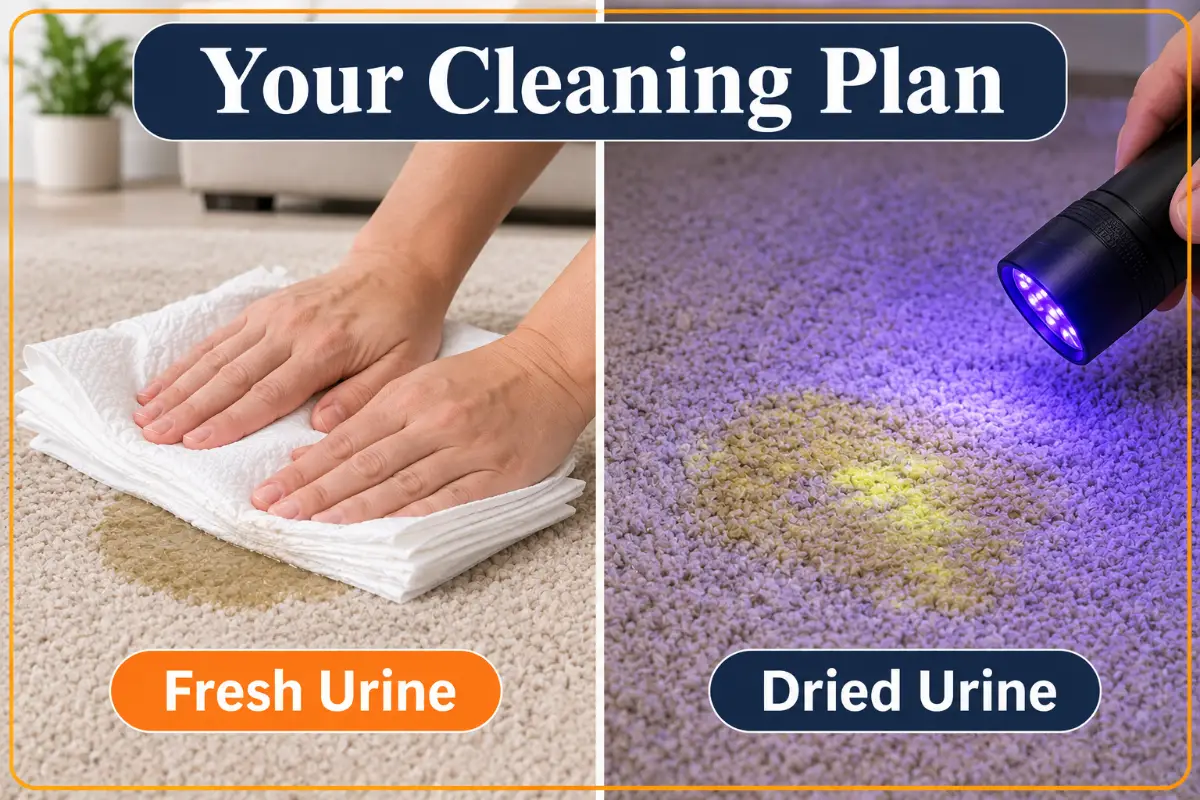
Fresh urine (still wet):
- Blot hard (Method 1).
- Rinse with cool water and blot again.
- Apply an enzymatic cleaner (Method 5) and let it air-dry.
- Finish with baking soda (Method 3) if any odour remains.
Dried urine (old stain or unknown spot):
- Find the full area with a black light.
- Rinse with a wet vac or extractor (Method 6).
- Use peroxide on any yellow stain left behind (Method 4), then rinse.
- Apply an enzymatic cleaner and let it fully dry (Method 5).
- If the smell comes back, treat the underlay (Method 7).
How to Treat Urine on Different Carpet Fibres
Your carpet’s fibre decides which methods are safe. Check the label on the back of the carpet or your purchase invoice.
| Fibre | Safe to Use | Be Careful With |
| Nylon | Vinegar, enzymes, wet vac | Peroxide can fade some dyes, so test first |
| Polyester | Most methods | Soap residue, so rinse well |
| Polypropylene | Most methods, including peroxide (very colourfast) | Soap residue, so rinse well |
| Wool | Vinegar solution, cool water, wool-safe enzyme cleaners | Peroxide, bleach, high-pH cleaners and heat |
| Sisal, jute, seagrass | Blotting, minimal moisture, professional dry cleaning | Soaking or wet vacs, because water can brown and shrink plant fibres |
8 Common Mistakes That Make Urine Smell Worse
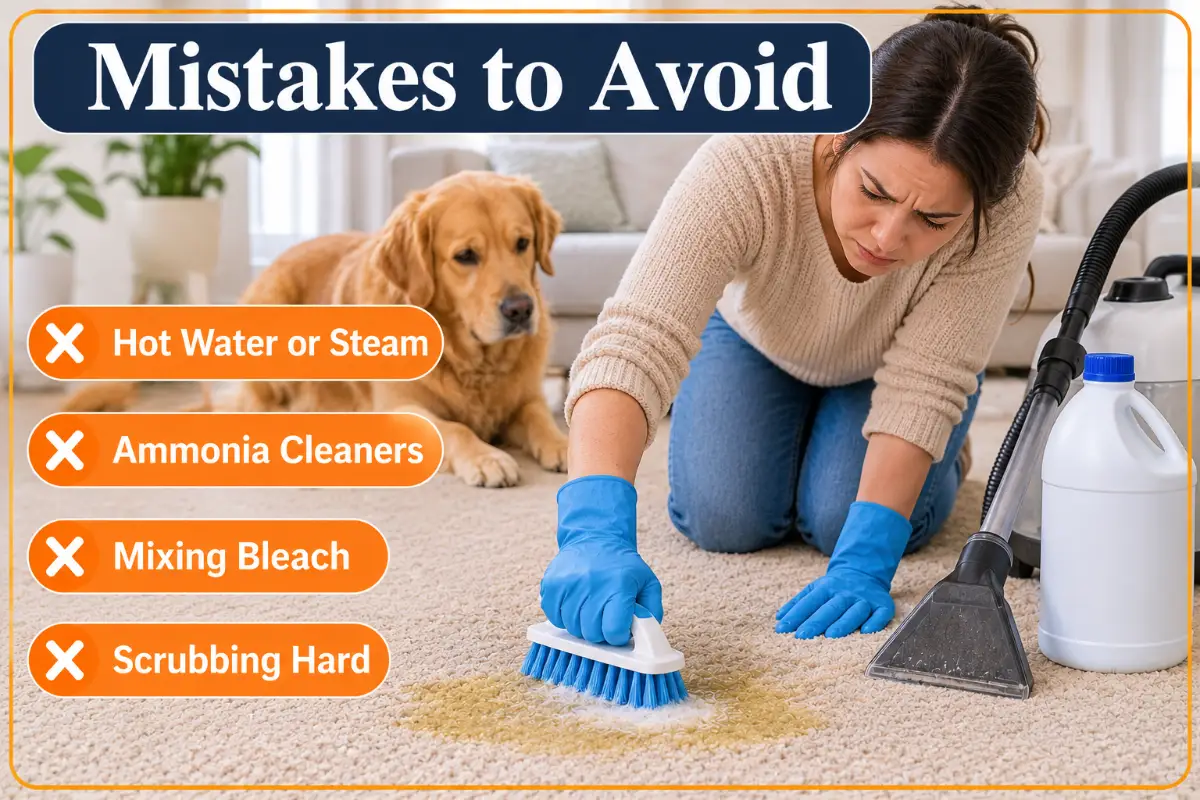
- Using hot water or steam. Heat can set urine stains and odour into the fibres.
- Cleaning with ammonia. Urine already smells like ammonia. An ammonia cleaner can make your pet think the spot is a toilet.
- Mixing chemicals. Bleach and ammonia make toxic gas. So do bleach and vinegar. Keep bleach away from pet stains entirely, since it can also ruin carpet colour.
- Rubbing or scrubbing hard. This spreads urine wider and frays fibres. Blot instead.
- Using air fresheners or scented sprays. They hide the smell for a day, but the source stays and your pet can still smell it.
- Using too little cleaner. Urine went deep, so your cleaner must go deep too.
- Mixing enzymes with other cleaners. Vinegar, peroxide and soap residue can weaken enzymes. Rinse first.
- Letting pets back too soon. Wait until the spot is fully dry. Damp spots draw pets back to the same place.
Can You Save the Carpet, or Should You Replace It?
Most pee-damaged carpet can be saved. Use this guide to decide:
- Clean it if the smell is gone after one or two enzyme treatments.
- Replace the underlay patch if the smell keeps returning from one or two spots (Method 7).
- Replace the carpet if urine has gone through the backing in many places, the fibres stay stained after treatment, or the backing has started to peel away.
If you’re replacing flooring in a room your pet uses heavily, consider a material that’s easier to clean. Carpet tiles let you swap out a single soiled tile instead of the whole floor. Waterproof SPC flooring and luxury vinyl tiles (LVT) don’t absorb urine, so they suit hallways and litter box areas. Add a washable rug for comfort. Our guide to flooring costs in Dubai helps you compare budgets.
When Should You Call a Professional Carpet Cleaner?
DIY methods handle most pet accidents. Call a professional when:
- The smell fills a whole room or several rooms.
- A black light shows many large spots.
- Urine has soaked into the underlay in several places.
- You have wool, silk, sisal or other delicate carpet.
- You’ve tried enzymes twice and the smell keeps coming back.
Ask the company if they offer pet urine treatment or subsurface extraction, because a regular clean won’t reach the underlay.
How to Stop Your Pet From Peeing on the Carpet Again
Cleaning fixes the smell. These steps help fix the cause:
- See your vet first. Sudden accidents in a trained pet often signal a health problem, such as a urinary infection, diabetes or kidney issues.
- Clean old spots fully. If a spot still smells to your pet, they’ll go back to it.
- For dogs: Take them out more often, especially after meals, naps and play. Praise them right after they pee outside.
- For cats: Keep one litter box per cat, plus one extra. Scoop daily, and put boxes in quiet spots away from food bowls.
- Make the spot less inviting. Place a food bowl, toy or piece of furniture over a cleaned spot for a few weeks.
- Keep the whole carpet fresh. Regular deep cleaning stops small odours building up. Here’s how to clean a carpet without a machine.
- Never punish accidents. It makes pets anxious, and anxious pets often hide to pee.
Frequently Asked Questions
Does vinegar get rid of dog pee smell in carpet?
Yes, for fresh or mild stains. A 1:1 mix of white vinegar and cool water neutralises urine salts and cuts odour. It does not fully break down dried uric acid crystals, so old or repeat stains usually need an enzymatic cleaner too.
How long does it take an enzyme cleaner to remove urine smell?
Most enzymatic cleaners need 24 to 48 hours to work fully. The spot must stay damp while the enzymes work and then air-dry completely. Old cat urine may need two or three treatments before the smell is gone.
Why does my carpet smell like pee when it’s humid?
Dried urine salts and uric acid crystals absorb moisture from the air. When they get damp, they release odour again. This means urine is still in the carpet or underlay. Treat the area with an enzymatic cleaner, and check the underlay if the smell continues.
Can I steam clean carpet to remove urine smell?
Not as a first step. High heat can bond urine proteins to carpet fibres and lock in the smell. Remove urine first with cool water and an enzymatic cleaner. Steam clean only after the odour is completely gone.
Is cat pee harder to get out of carpet than dog pee?
Usually, yes. Cat urine is more concentrated and gets stronger as bacteria break it down. Cats also return to the same spot, which builds up layers of urine. Most cat stains need an enzymatic cleaner, and some need the underlay replaced.
Can I use bleach to clean pet urine from carpet?
No. Bleach can permanently discolour carpet, and it releases toxic gas if it mixes with ammonia in urine or with vinegar. Use an enzymatic cleaner, white vinegar or 3% hydrogen peroxide instead, and test any cleaner on a hidden spot first.

Noah Williams
Interior Designer & Flooring Expert