
Noah Williams is an interior designer and flooring expert at Nova Floor. In Dubai, he helps people pick the right floor, get it installed, and keep it looking good. He also writes simple, practical flooring and home care guides for readers in Dubai and around the world.
How to Clean Concrete Floors | DIY Methods for Sealed and Unsealed Floors
Noah Williams
Quick answer: Sweep first, then match the cleaner to the finish. Sealed, polished, and painted concrete need a pH-neutral cleaner and a damp microfiber mop. Bare concrete can take an alkaline degreaser, but needs a double rinse and fast drying. Stains are separate jobs with separate products. Keep vinegar and every other acid off any finished floor.
Most ruined concrete floors were not worn out by traffic. They were damaged by someone cleaning them with the wrong product. A gallon of vinegar on a polished slab will leave dull patches that never buff out, and the only real repair is stripping and recoating the entire room.
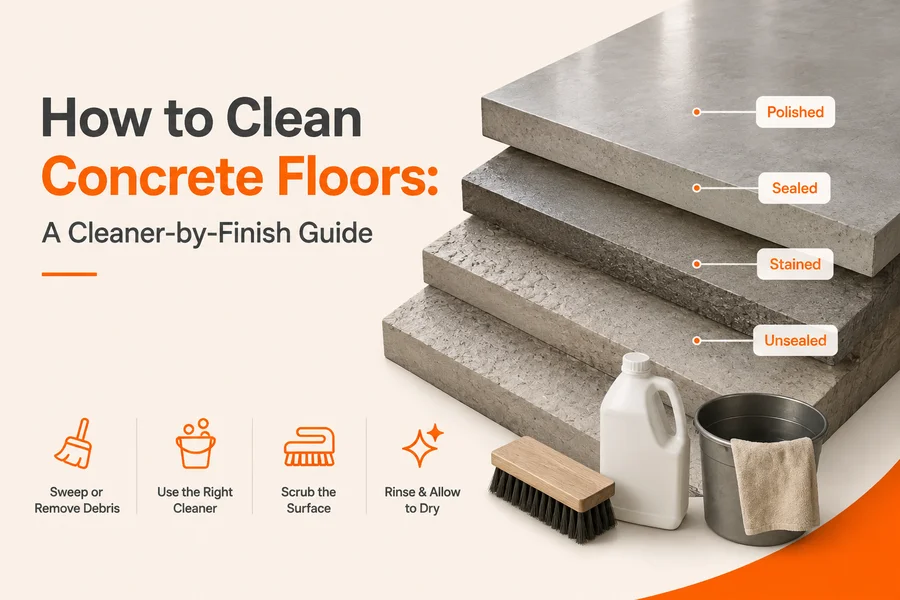
This guide by Nova Floor Experts covers the two decisions that determine everything else: what finish you have, and which cleaner belongs on it.
Contents
Start Here: Which Finish Do You Have?
Concrete behaves like a hard sponge. Air pockets run through the slab and pull liquid down into it, which is why a spill on bare concrete disappears in minutes and resurfaces weeks later as a dark shadow.
Once concrete is sealed, coated, or polished, none of that applies. You are no longer cleaning concrete, you are cleaning a thin film sitting on top of it, and your job changes from cleaning the slab to protecting that film.
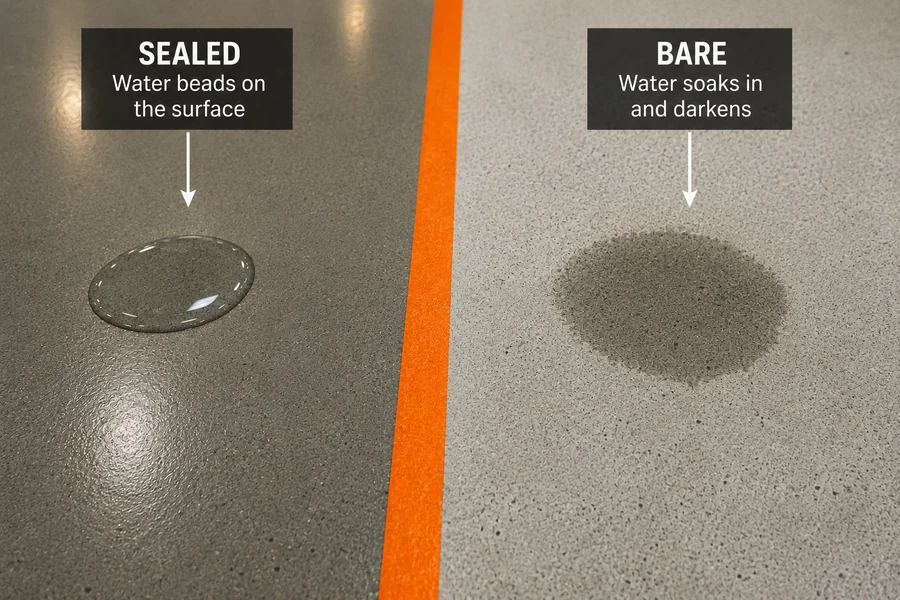
The water test (two minutes)
Pour about a tablespoon of water on the floor and wait three minutes.
- Water beads and sits on top → sealed
- Water sinks in and leaves a dark ring → bare
Test three or four spots. Sealer wears through first in walking paths and near doorways, so a single test can easily give you the wrong answer. Mixed results mean the sealer is failing, clean it gently and plan to recoat.
The fingernail test
Scratch a hidden corner, inside a closet or behind an appliance. If a thin plastic-like film lifts, you have a topical sealer. If nothing lifts, you have either bare concrete or a penetrating sealer.
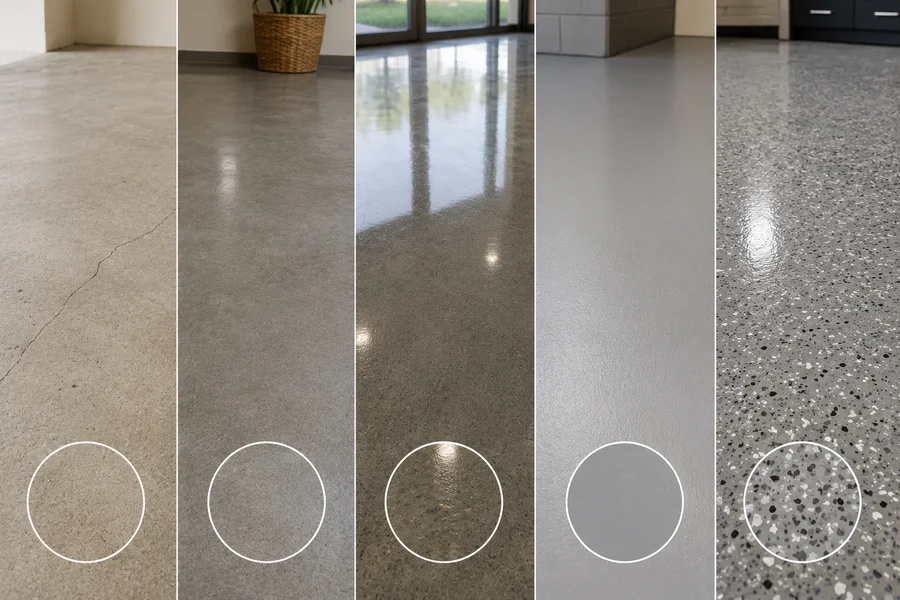
Finish reference table
| Finish | How to identify it | What to clean it with |
| Bare / unsealed | Chalky, matte, absorbs water, sheds dust | Alkaline degreaser or TSP substitute; minimal water; rinse twice |
| Penetrating sealer | Looks natural and flat, but water beads | pH-neutral cleaner, damp mop |
| Topical sealer | Visible gloss, faintly plastic to the touch | pH-neutral only; no abrasive pads |
| Polished | High shine, very hard underfoot | pH-neutral cleaner, microfiber only |
| Painted | Solid opaque color, chips along edges | Mild dish soap only; no solvents or degreasers |
| Epoxy coating | Thick gloss, often with color flakes | Mild degreaser, soft pad |
| Acid-stained | Mottled color beneath a clear coat | Treat as sealed; always spot-test |
Choosing a Cleaner
This is where most people go wrong, and it is the reason a stain that should have lifted in ten minutes ends up permanent.
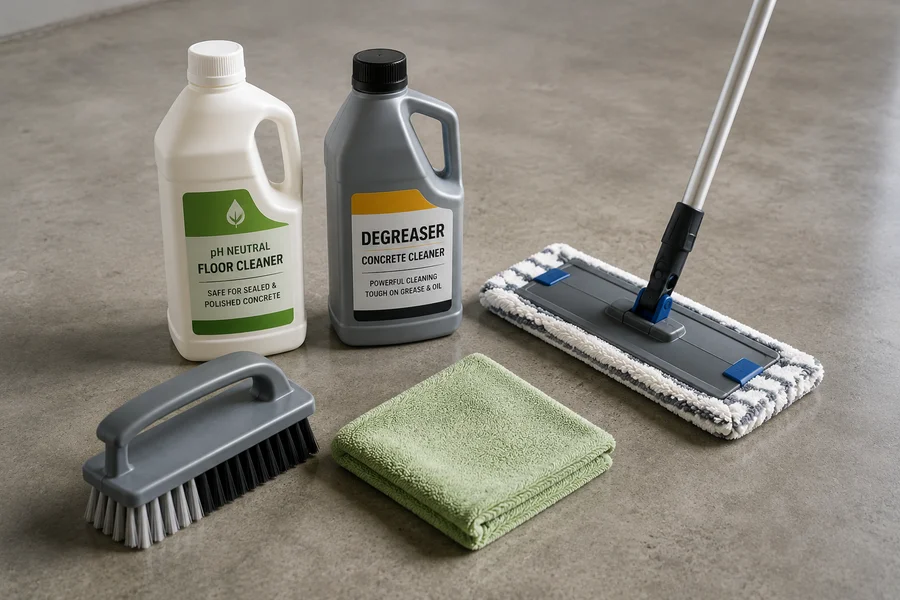
pH-neutral cleaner (pH 6–8). Your default for any finished floor. It lifts soil without attacking sealer, color, or polish. Look for the words “neutral floor cleaner” on the label. Widely available: Zep Neutral pH Floor Cleaner Concentrate, Black Diamond Stoneworks Floor Cleaner, Bona Stone Tile & Laminate Cleaner.
Alkaline degreaser (pH 9–13). Dissolves petroleum. This is the right call for garage slabs, workshops, and any bare concrete carrying oil. It has to be rinsed off completely or it leaves a tacky film that attracts dirt faster than the dirt you removed. Widely available: Oil Eater Cleaner & Degreaser, Zep Heavy-Duty Concrete Cleaner.
Oxygenated cleaner. Best all-round choice for organic growth, algae, moss, and the green film on shaded exterior slabs. Far gentler on surrounding plants than chlorine bleach. Widely available: Wet & Forget Outdoor, 30 Seconds Outdoor Cleaner, OxiClean Versatile Stain Remover (as a DIY mix).
Acid cleaner (pH below 6). Dissolves rust and mineral scale, and simultaneously eats the cement binder. Small spots on bare exterior concrete only.
Enzyme cleaner. The only product that genuinely resolves pet urine in porous concrete. Enzymes break down the uric acid crystals that bleach and ammonia merely cover up.
TSP or a phosphate-free substitute. The classic pre-paint deep clean. Painters have used it for decades because it strips grease without leaving a film that blocks coatings.
Dish soap. Fine for light mopping at roughly two tablespoons per gallon of warm water. Use more and you build a soap film that dulls the floor and re-soils it faster.
Why not vinegar?
Only on bare exterior concrete, only for small spots, diluted 1:1, and rinsed within fifteen minutes.
Vinegar’s reputation as a universal cleaner does not survive contact with a sealed floor. The acid etches sealers and polished surfaces into cloudy patches that do not buff out. Even on bare concrete there is a cost, acid opens the pores, so a slab you clean with vinegar repeatedly will stain faster for the rest of its life.
Cleaning Sealed, Polished, and Painted Concrete
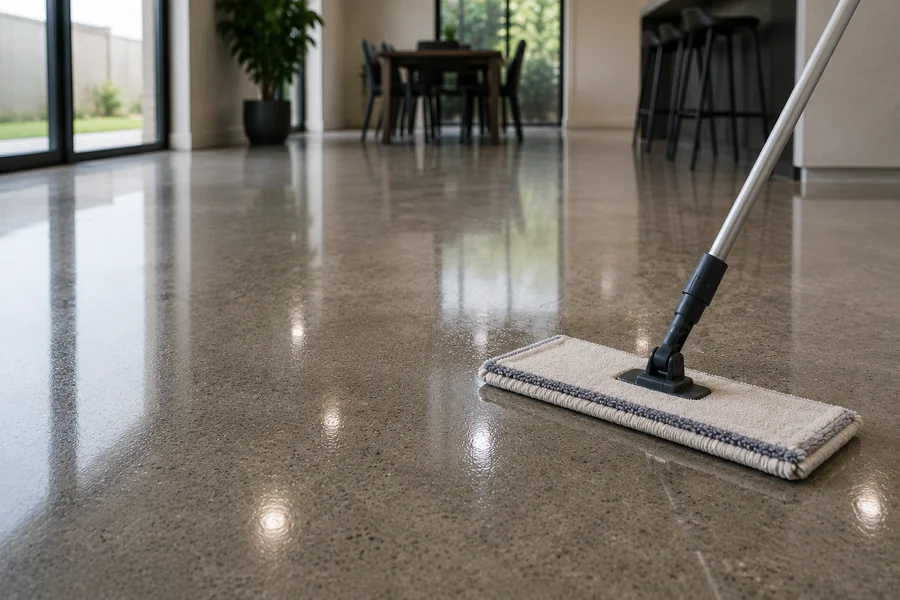
These are the floors in finished kitchens, lofts, living rooms, and basements. Keeping them looking new is mostly about doing less, not more.
The daily habit that matters most
Dust mop or vacuum. That is the entire job.
Grit, not dirt, is what destroys a sealed floor. Every footstep grinds sand into the finish. No single scratch is visible, but within a year they read collectively as a dull traffic lane down the middle of the room.
Use a flat microfiber dust mop in straight overlapping passes, pushing debris toward one collection point rather than lifting the head mid-room. If you vacuum, switch off the beater bar, a spinning brush flings grit sideways and scuffs gloss.
Weekly mopping
- Sweep or vacuum the entire floor first. Mopping over grit is mopping with sandpaper.
- Mix a pH-neutral cleaner per the label instructions. When in doubt, mix it weaker.
- Wring the mop out thoroughly. It should be damp; standing water dulls sealer and works into control joints.
- Work in sections of roughly six feet square, starting at the far corner and finishing at the door.
- Rinse with plain water and a second clean mop head. Skipping this is the single most common cause of haze.
- Air dry. Buff with a dry microfiber cloth if you want extra shine.
Polished concrete
Grinding and densifying make polished concrete genuinely scratch-resistant, but it remains vulnerable to two things: acid and abrasive pads. Use pH-neutral cleaner and microfiber, nothing else.
When walkways go dull, the answer is almost never a stronger chemical. It is mechanical, buffing with a fine diamond pad. Rental centers carry burnishers, though anything above a few hundred square feet is worth handing to a contractor.
Painted concrete
Paint is thinner and softer than any sealer. Mild dish soap, warm water, a soft mop, gentle rinse. Skip solvents, degreasers, ammonia, and stiff brushes, all of them lift paint at the edges, and once peeling starts it spreads across the room.
Homes built before 1978: paint from that era may contain lead. Do not sand, scrape, or dry-abrade it. Test it, or hire a contractor certified under the EPA’s Renovation, Repair and Painting (RRP) Rule.
Cleaning Bare, Unsealed Concrete
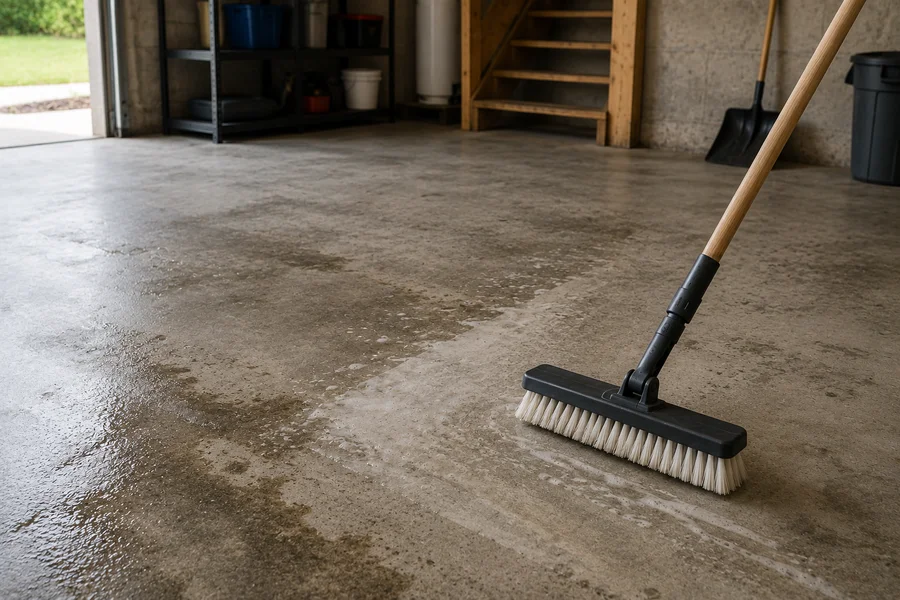
Bare slabs tolerate much stronger chemistry and much less water. Plan where the dirty water will go before you start, open the windows, and wear gloves.
Routine
Sweep with a stiff broom, then vacuum the fine powder the broom leaves behind. Bare concrete constantly sheds dust as it wears, which is why unsealed garages and basements never quite feel clean.
For light washing, a quarter cup of dish soap in a gallon of warm water is plenty. Keep the mop damp, not soaked.
Deep clean
- Clear the room and vacuum until no loose dust remains.
- Mix roughly a quarter cup of TSP substitute into a gallon of hot water. Gloves and eye protection.
- Spread it across a small section with a stiff nylon brush or push broom.
- Let it dwell 10–15 minutes. Do not let it dry on the slab.
- Scrub firmly, then mop or wet-vac the dirty solution up.
- Rinse twice with clean water. This is not optional. Residue left in the pores will wreck any sealer or paint applied later.
- Dry with fans and open windows.
When to skip water entirely
Some interior slabs have no floor drain and poor airflow. In those rooms, wet cleaning creates more problems than it solves, the water soaks in, cannot escape, and returns as a musty smell.
Vacuum thoroughly instead, spot-treat stains with a paste, and seriously consider sealing the floor so future cleaning becomes trivial.
Removing Stains
Match the chemistry to the stain. Scrubbing harder with the wrong product forces the stain deeper into the pores.
| Stain | What works | What backfires |
| Fresh oil or grease | Clay cat litter or baking soda, pressed in, left overnight, swept up | Hosing it, which spreads the slick wider |
| Old oil | Alkaline degreaser, 15-minute dwell, nylon brush, hot rinse, repeat | Acid, which etches a halo around the stain |
| Rust | Oxalic acid remover formulated for masonry, bare concrete only | Vinegar, which barely touches real iron oxide |
| Mold and mildew | Detergent scrub, rinse, dry fast, then fix the moisture source | Bleach alone, which is mostly water and cannot reach growth in the pores |
| Efflorescence | Dry-brush first, then a dedicated efflorescence remover | Wetting it first, which redissolves the salts back into the slab |
| Paint | Plastic putty knife, then a citrus-based stripper | Metal scrapers and wire brushes |
| Tire marks | Alkaline degreaser and a nylon brush, on a cool floor | Solvents on any coated surface |
| Pet urine | Enzyme cleaner, covered with plastic 12 hours, blotted dry | Bleach or ammonia, which mask odor temporarily |
| De-icing salt | Repeated plain water rinses | Wire brushes, which leave steel fragments that rust |
Test any new product on a hidden square foot and wait a full day before judging it. Some reactions only appear once the surface dries.
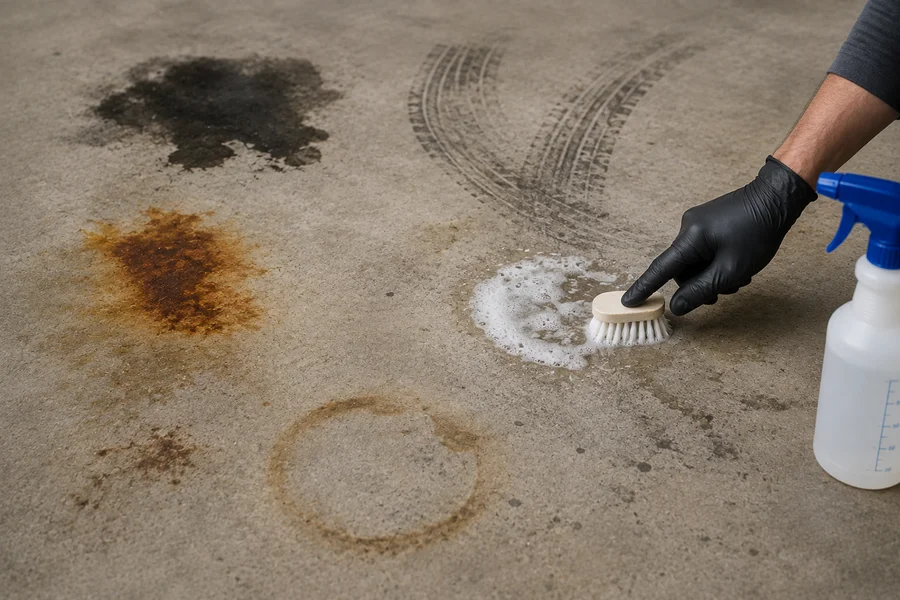
Garage Floors
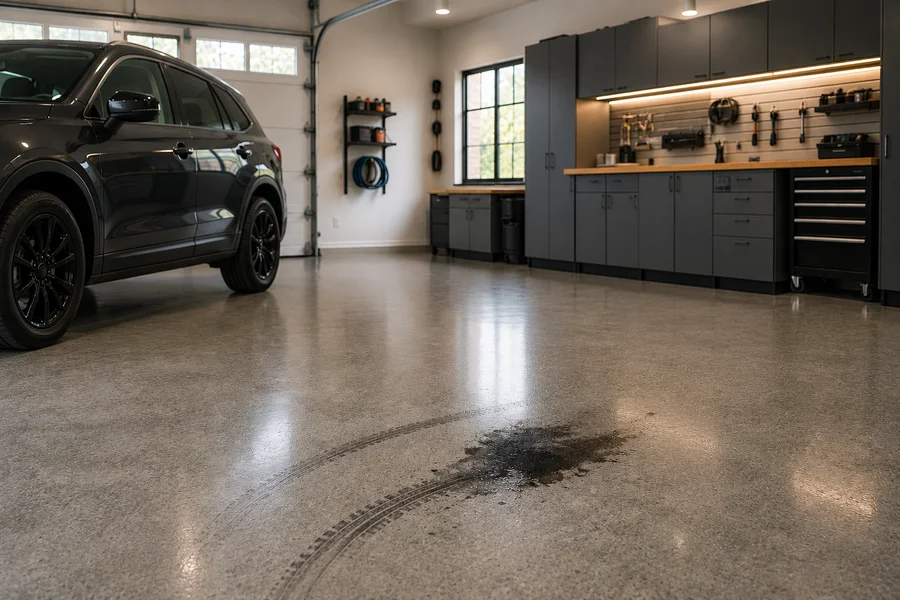
Garages take the worst abuse of any slab: motor oil, road salt, hot tire residue, and dropped tools.
- Sweep weekly with a push broom.
- Treat oil the same day it drops. Cover with clay cat litter, grind it in underfoot, leave overnight, sweep up. The absorbent pulls oil out before it bonds.
- Scrub tire marks with a degreaser on a cool floor. Hot tires deposit soft plasticizers that bond to bare concrete, never work on a slab you just parked on.
- Rinse salt away monthly in winter. De-icing salt causes progressive pitting and flaking.
- Deep clean twice a year with a degreaser, or a pressure washer if the garage drains outward.
Cleaning Frequency
| Location | Sweep / vacuum | Mop or wash | Deep clean |
| Sealed or polished interior | Daily | Weekly | Every 3–6 months |
| Apartment slab | 2–3× weekly | Weekly | Twice a year |
| Unsealed basement | Weekly | Monthly | 2–4× a year |
| Garage | Weekly | As spills occur | Twice a year |
| Patio or walkway | Weekly | Seasonally | 1–2× a year |
| Driveway | Monthly | Seasonally | Annually |
Adjust for reality. Three dogs and a sandy yard doubles this. A spare room nobody enters halves it.
Maintenance That Cuts Your Cleaning Time
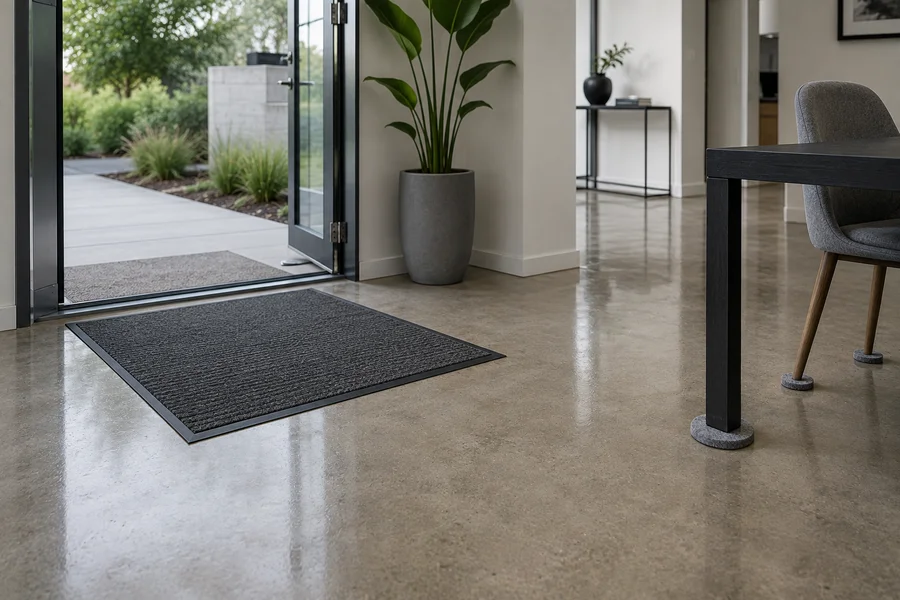
The best concrete floor care is stopping dirt before it lands.
- Mats at every entry. Most grit arrives on the soles of shoes.
- Felt pads under furniture legs. Metal legs scratch sealer and leave rust rings on bare slabs.
- Wipe spills on bare concrete immediately. You have minutes, not hours.
- Keep cat litter in the garage. It prevents nearly every oil stain that would otherwise become permanent.
- Repeat the water test each spring. When water stops beading, it is time to recoat.
- Recoat on schedule: roughly every 1–3 years for exterior topical sealers, 3–5 years for interior topical sealers, 5–10 years for penetrating sealers.
Mistakes That Damage Concrete Floors
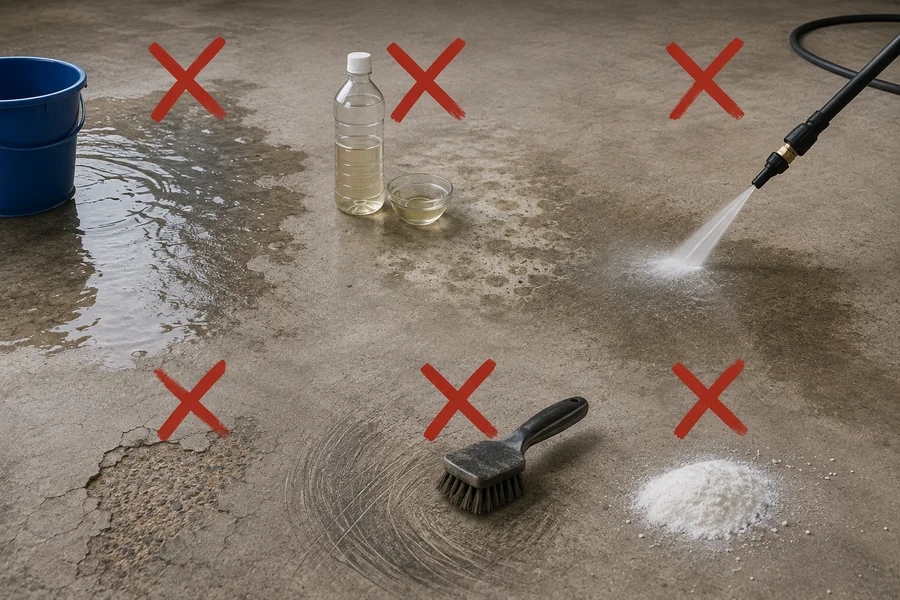
- Mopping before sweeping. Wet grit is liquid sandpaper.
- Acid on a finished floor. Vinegar, citrus, and pine cleaners all etch. The dull patches are permanent.
- Flooding an interior slab. Water soaks in and returns as odor and mold.
- Skipping the rinse. Residue hazes the surface and re-soils it faster.
- Reaching for a stronger product before identifying the stain. Chemistry beats force every time.
- Pressure washing decorative, painted, or cracked concrete. Water driven into a crack widens it.
- Sealing or painting a damp slab. The coating bubbles and peels within months.
- Dry grinding without dust control. Respirable silica causes permanent lung damage, OSHA’s silica standard (29 CFR 1926.1153) requires wet methods or HEPA extraction for a reason.
- Mixing products. Bleach with ammonia or acid produces toxic gas.
- Treating every slab the same. A garage floor and a polished living room floor need opposite care.
For tiled surfaces that require similar deep cleaning, learn how to clean shower tiles and grout effectively.
Frequently Asked Questions
What is the best cleaner for concrete floors? It depends entirely on the finish. Use a pH-neutral cleaner on sealed, polished, painted, and stained concrete. Use an alkaline degreaser or TSP substitute on bare concrete and garage slabs. Use an oxygenated cleaner on exterior algae and moss. There is no single product that covers all three.
Can I use a steam mop on concrete? Occasionally, on sealed or polished floors, at the lowest setting, always moving. Never on bare or waxed floors, steam drives moisture into the slab, and trapped moisture feeds mold.
Why does my floor look hazy after mopping? Almost always leftover cleaner. Rinse the whole floor with plain water and a clean mop. If the haze survives that, the sealer itself has worn out and needs recoating.
How do I stop my concrete floor from making dust? Vacuuming buys you a day. The lasting fix is a concrete densifier or a penetrating sealer, which hardens the surface so it stops shedding.
Is bleach safe on concrete floors? Diluted bleach is acceptable for disinfecting bare exterior concrete. It is a poor mold treatment on porous slabs because it is mostly water and cannot reach growth in the pores. Never use it on sealed, polished, or colored concrete, and never mix it with anything.
How long should concrete dry before painting or sealing? New concrete needs at least 28 days to cure. Cleaned concrete typically needs 24–72 hours. Confirm with a calcium chloride test (ASTM F1869) or a relative humidity probe (ASTM F2170) rather than guessing.
Can I pressure wash concrete indoors? Only where a working floor drain exists, some garages and workshops qualify. In a finished basement or an apartment, use a mop and a wet vacuum.
What if a stain will not come out? Some are permanent, particularly old oil and deep rust in bare concrete. At that point your options are grinding, staining the floor darker, applying an opaque coating, or covering it.

Noah Williams
Interior Designer & Flooring Expert
Related Posts