
Noah Williams is an interior designer and flooring expert at Nova Floor. In Dubai, he helps people pick the right floor, get it installed, and keep it looking good. He also writes simple, practical flooring and home care guides for readers in Dubai and around the world.
How To Clean Shower Tiles and Grout | 10 Pro Ways for Cleaning
Noah Williams
Shower tiles are easy to maintain when you use the right cleaner and cleaning method for the surface. The best way to clean shower tiles and grout is to loosen soap scum and mineral buildup first, clean the tile and grout separately, rinse away residue, and dry the surfaces thoroughly.
For most ceramic and porcelain showers, a mild tile-safe cleaner and a soft brush are enough for regular cleaning. Grout needs more attention because it is more porous than the tile surface. Cement-based grout is porous and can absorb stains, while epoxy grout is much more resistant to staining, according to the Tile Council of North America (TCNA).
This guide by Nova Floor explains how to clean shower tiles and grout safely, remove common stains, choose the right cleaning method, and keep your shower cleaner for longer.
Contents
Quick Answer: What Is the Best Way to Clean Shower Tiles and Grout?
For routine cleaning:
- Remove bottles, mats, and other items from the shower.
- Rinse the walls with warm water.
- Apply a suitable tile cleaner.
- Let the cleaner sit for the time recommended on its label.
- Scrub the tiles with a soft sponge or non-abrasive brush.
- Clean grout lines separately with a suitable grout brush.
- Rinse thoroughly with clean water.
- Use a squeegee to remove excess water.
- Dry the walls and grout with a clean microfiber cloth.
Important: Do not use the same cleaner on every type of tile. Vinegar and other acidic cleaners should not be treated as universal shower cleaners. Acids can damage acid-sensitive natural stone and can also attack cement-based grout. TCNA specifically warns that acids can damage cement-based grout.
Choose the Right Cleaning Method First
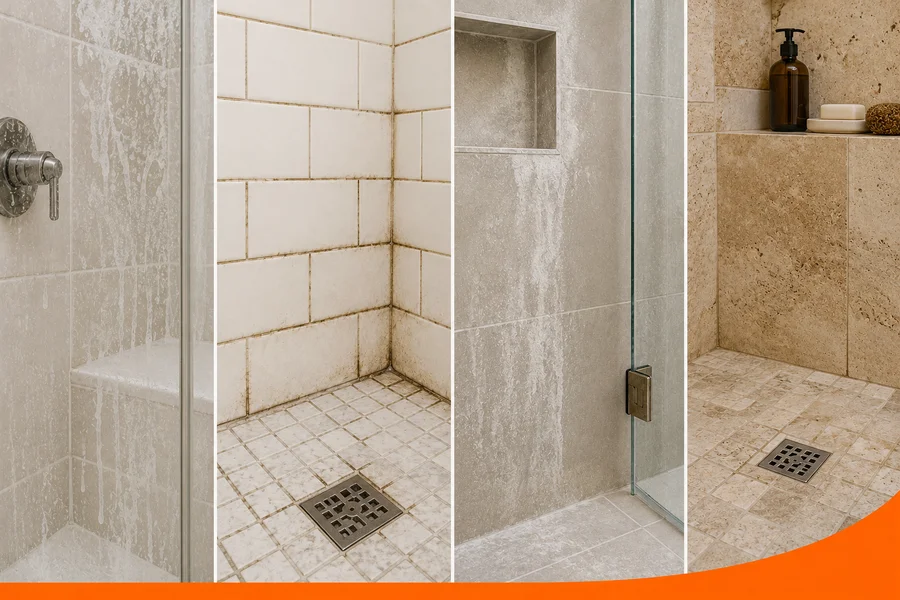
The safest cleaner depends on both the tile material and the type of buildup.
| Shower Problem | Suitable Surface | Recommended Approach | Avoid |
| Light soap scum | Ceramic, porcelain | Mild tile cleaner + soft brush | Harsh abrasives |
| Dirty grout | Ceramic, porcelain | Grout cleaner + grout brush | Wire brushes |
| Hard-water deposits | Ceramic, porcelain, glass | Suitable mineral-deposit cleaner | Acidic products on natural stone |
| Mold or mildew | Suitable tile and grout | Appropriate mold treatment | Mixing cleaning chemicals |
| Natural stone | Marble, travertine, limestone, slate | pH-neutral stone cleaner | Vinegar and strong acids |
| Routine maintenance | Most shower surfaces | Mild cleaner + squeegee | Leaving water to dry |
When you are unsure about a cleaner, test it on a small, hidden area first and follow the tile, grout, and cleaning-product manufacturer’s instructions.
The U.S. Environmental Protection Agency (EPA) also recommends following product directions and taking appropriate precautions when using cleaning products.
What You Need to Clean Shower Tiles and Grout
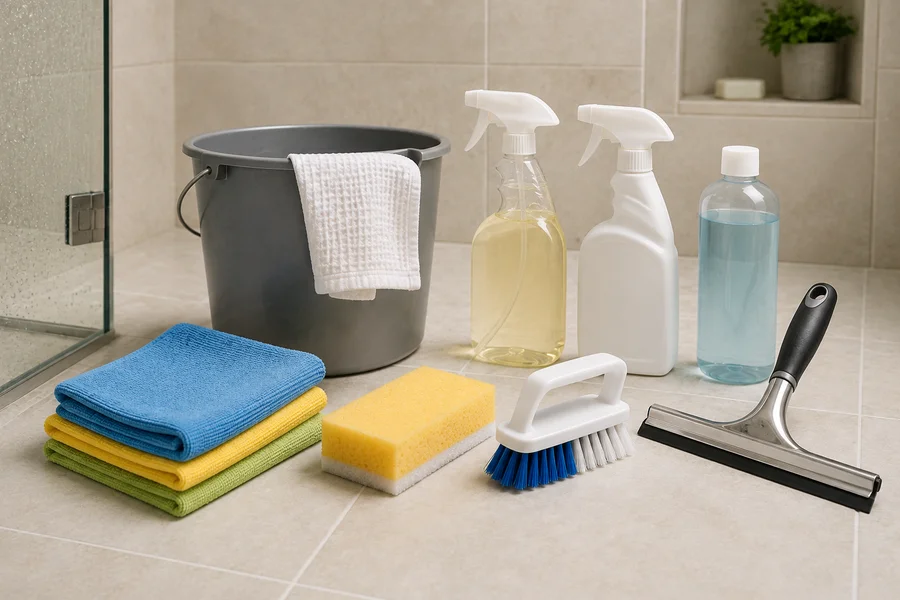
You do not need a large collection of cleaning products.
For most showers, keep these supplies available:
- Microfiber cloths
- Soft sponge
- Soft-bristle cleaning brush
- Narrow grout brush
- Squeegee
- Bucket of clean water
- Tile-safe cleaner
- pH-neutral stone cleaner for natural stone
- Appropriate grout or mold cleaner when needed
- Gloves when recommended by the product label
Avoid using abrasive pads, metal scrapers, or stiff wire brushes unless the surface manufacturer specifically recommends them. These tools can scratch tile finishes or damage grout.
How to Clean Shower Tiles Step by Step
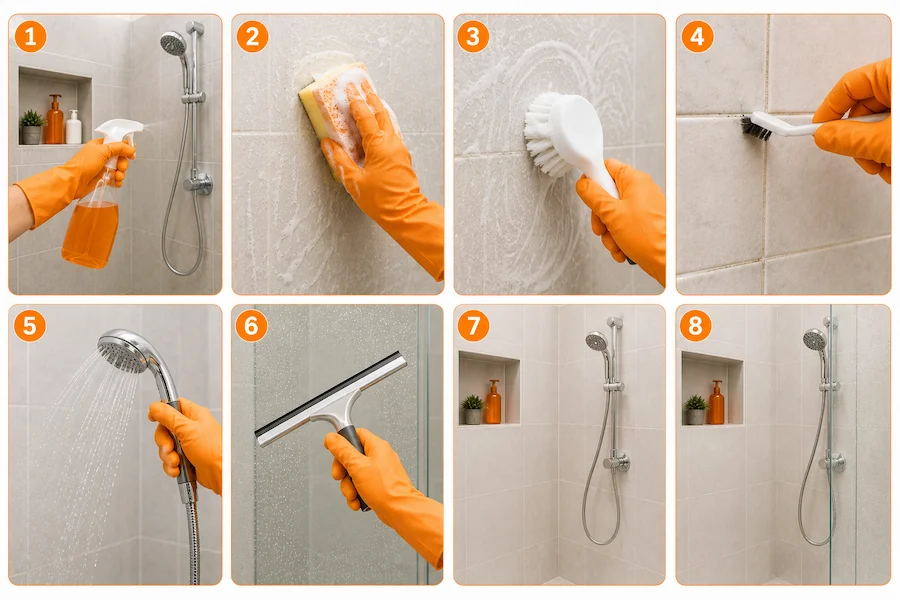
1. Clear the Shower
Remove shampoo bottles, soap, razors, bath mats, and other items from the shower.
This gives you access to the entire surface and prevents dirt from collecting around bottles and corners.
2. Ventilate the Bathroom
Turn on the exhaust fan and open a door or window if appropriate.
Good ventilation helps reduce exposure to cleaning-product fumes and helps control moisture. EPA recommends increasing ventilation during and after cleaning where appropriate.
3. Rinse the Tiles With Warm Water
Start by rinsing the shower walls with warm water.
This loosens surface dirt, soap residue, and other buildup before you begin scrubbing. It also helps prevent loose debris from being pushed across the surface during cleaning.
4. Apply the Right Cleaner
Apply a tile-safe cleaner to the surface.
For routine cleaning, use a mild product rather than immediately reaching for a strong chemical. Follow the cleaner manufacturer’s instructions for dilution, application, and contact time.
Allowing the product to remain on the surface for the recommended time gives it an opportunity to loosen soap scum and other deposits before you scrub.
5. Clean the Tile Surface
Use a soft sponge or non-abrasive brush to clean the tiles.
Work in manageable sections, paying particular attention to:
- Corners
- Around fixtures
- Behind shower products
- Tile joints
- Areas that stay wet
- Lower sections of the shower wall
Do not press aggressively. If buildup does not come away easily, allow the appropriate cleaner more time to work instead of increasing pressure.
6. Clean the Grout Separately
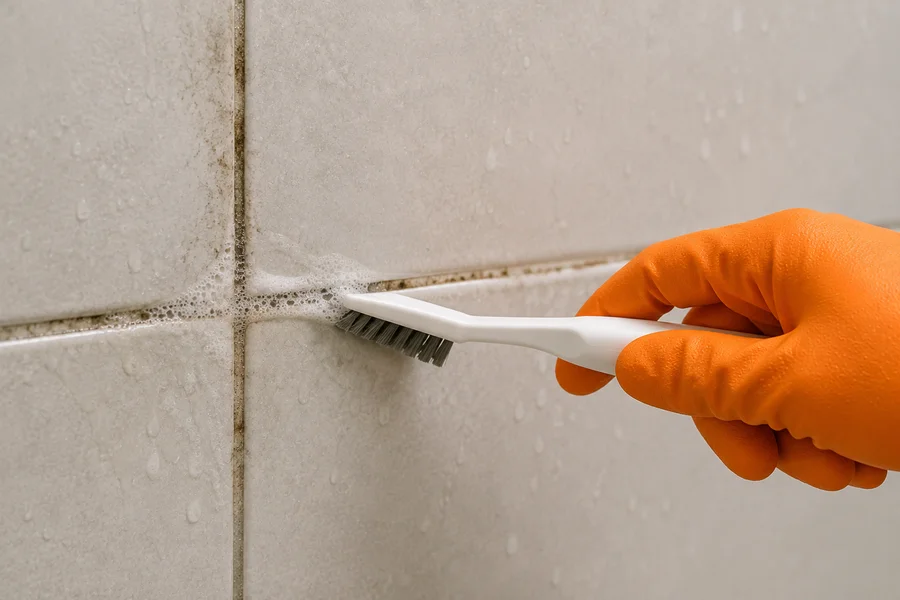
Tile and grout should not always be cleaned in exactly the same way.
Cement-based grout is porous and can absorb stains. TCNA explains that acids can attack the cement component of grout, which is why acidic cleaners such as vinegar should not be treated as a general grout-cleaning solution.
Use a grout-safe cleaner and a suitable soft or medium grout brush.
Work along the grout lines rather than scrubbing the entire wall aggressively.
7. Rinse Thoroughly
Rinse the entire shower with clean water.
Leftover cleaning product can leave a film on the surface and may attract more dirt.
Make sure cleaner is removed from:
- Tile faces
- Grout lines
- Corners
- Shower niches
- Around fixtures
8. Squeegee the Walls
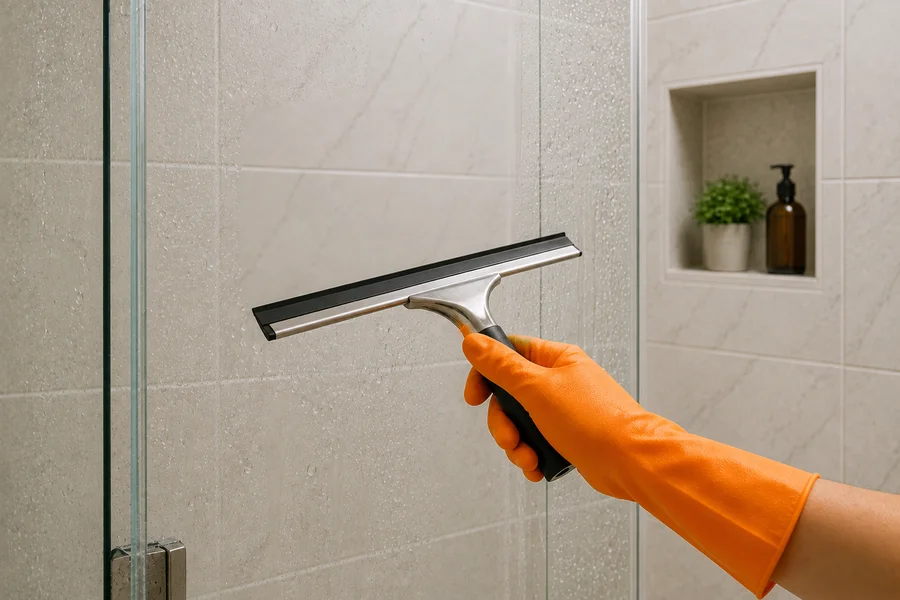
Use a squeegee to remove standing water from the shower walls.
This simple step can help reduce future water spots, mineral deposits, and soap buildup.
9. Dry the Shower
Finish with a clean microfiber cloth where necessary.
Pay extra attention to corners, grout joints, ledges, and areas where water tends to remain.
How to Clean Shower Grout
Grout often looks dirty before the tile itself does because its surface can hold moisture, soap residue, minerals, and stains.
Start with the mildest appropriate cleaning method.
For Lightly Dirty Grout
Use a suitable grout cleaner and a soft grout brush. Work along the joints, then rinse thoroughly.
For Heavily Stained Grout
Use a grout cleaner designed for the specific type of grout.
Follow the product instructions for contact time, brushing, rinsing, and ventilation.
Do not assume that a stronger chemical is always better. The wrong cleaner can discolor grout or damage surrounding surfaces.
For Black or Dark Grout
First determine whether the discoloration is dirt, mildew, mold, or damaged grout.
If the staining remains after proper cleaning, the problem may not be surface dirt. Old caulk, damaged grout, or moisture behind the surface may require repair rather than additional scrubbing.
How to Clean Different Types of Shower Grout
Different grout types require different care.
Cement Grout
Cement-based grout is porous and can absorb moisture and staining.
TCNA recommends sealing cementitious grout to help protect it from staining and notes that acidic cleaners can attack the cement in grout.
Use a grout-safe cleaner and avoid harsh cleaning methods that can wear away the surface.
Regular sealing, where appropriate, can make cement grout easier to maintain.
Sanded Grout
Sanded grout is commonly used for wider joints.
Use a suitable grout brush and avoid aggressive scrubbing that can damage the grout surface.
Unsanded Grout
Unsanded grout is generally used for narrower joints.
It can be more vulnerable to scratching, so use a soft cleaning brush rather than a harsh abrasive tool.
Epoxy Grout
Epoxy grout is less porous and more resistant to staining than traditional cement grout.
However, that does not mean every cleaner or cleaning method is suitable.
TCNA notes that epoxy grout has high stain resistance compared with cementitious grout. Follow the grout manufacturer’s recommendations before using strong chemicals or high-temperature cleaning methods.
How to Clean Different Shower Tile Types
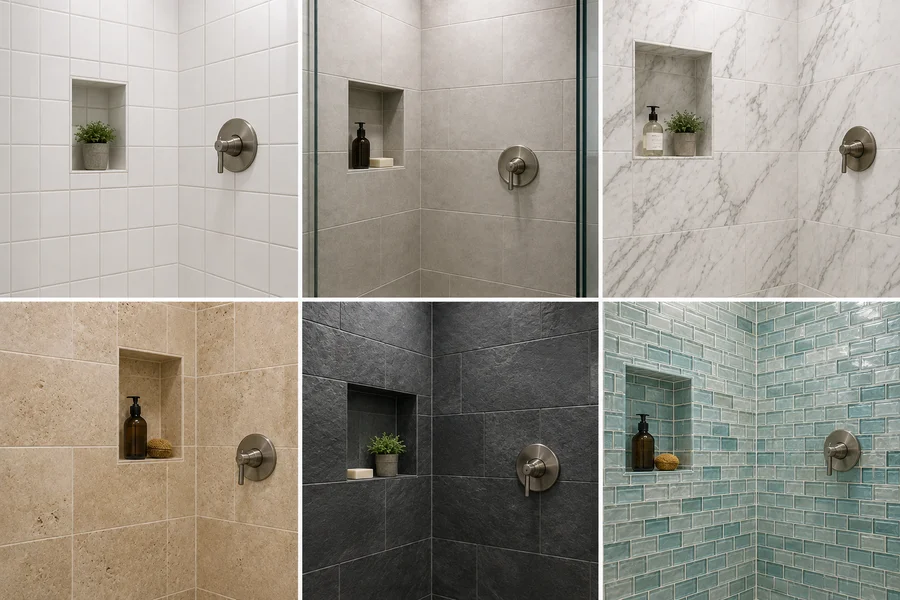
Ceramic Shower Tiles
Ceramic tiles are generally straightforward to maintain.
For regular cleaning, use a mild tile-safe cleaner with a soft sponge or brush. Rinse well and dry the surface after cleaning.
Porcelain Shower Tiles
Porcelain is durable and relatively easy to maintain, but dirt can still accumulate on textured finishes and grout lines.
Use a suitable porcelain or tile cleaner and avoid harsh abrasives that may affect the finish.
Marble Shower Tiles
Marble requires more careful cleaning.
Do not use vinegar, lemon juice, or other acidic cleaners unless the stone manufacturer specifically confirms that the product is suitable.
Use a pH-neutral cleaner designed for natural stone.
Travertine and Limestone
Travertine and limestone are also acid-sensitive natural stones.
Avoid household acids and aggressive cleaners. Use products specifically designed for natural stone and follow the stone manufacturer’s recommendations.
Slate Shower Tiles
Slate can have a textured surface that collects soap and dirt.
Use a stone-safe cleaner and a suitable soft brush. Avoid aggressive scrubbing that can damage the surface or finish.
Glass Shower Tiles
Glass tile is generally non-porous, but soap scum and mineral deposits can make it look cloudy.
Use a glass- and tile-safe cleaner, a soft sponge, and thorough rinsing.
Avoid abrasive pads that can scratch the glass surface.
How to Remove Common Shower Tile and Grout Problems
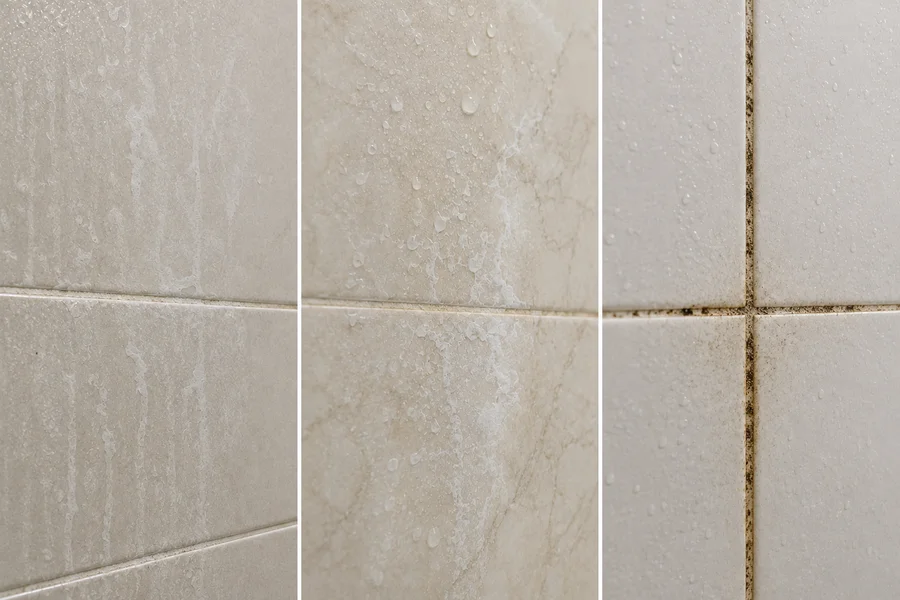
How to Remove Soap Scum
Soap scum is usually a combination of soap residue, body oils, minerals, and moisture.
Start with a suitable bathroom or tile cleaner. Allow it to work according to the product directions, then wipe or gently scrub the surface.
For regular prevention, rinse the walls and use a squeegee after showering.
How to Remove Hard-Water Stains
White or cloudy deposits are often caused by mineral buildup from water.
On compatible ceramic, porcelain, or glass surfaces, use a cleaner specifically intended for mineral or hard-water deposits.
Do not automatically use vinegar or another acidic cleaner. Natural stone such as marble, limestone, and travertine can be damaged by acids, while acidic products can also attack cement-based grout.
How to Remove Mold and Mildew
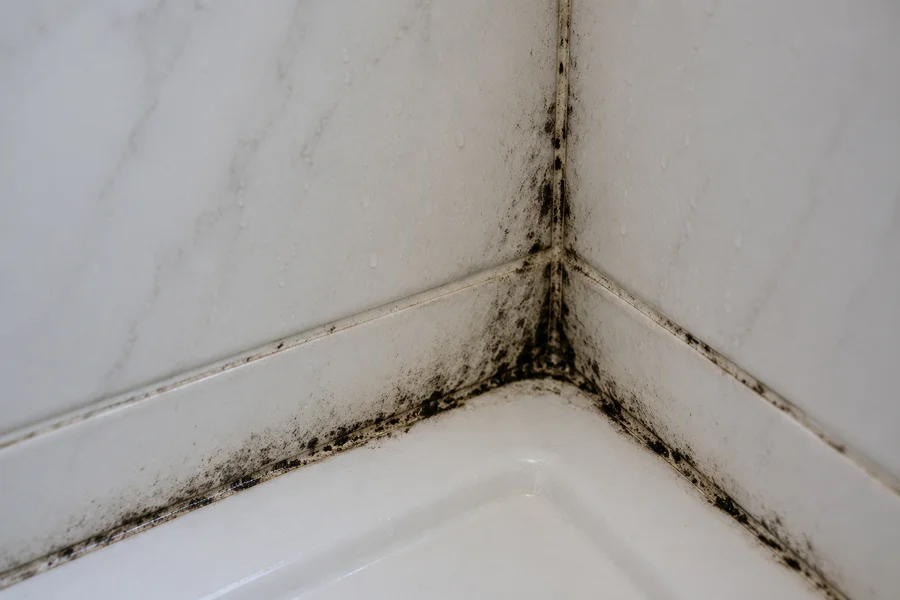
Mold and mildew require more than ordinary surface cleaning.
Start by identifying where the growth is located. Surface discoloration on tile or grout can sometimes be cleaned, while mold inside deteriorated caulk may require the old caulk to be removed and replaced.
EPA recommends addressing the moisture problem that allows mold to grow. For recurring bathroom mold, EPA recommends improving ventilation, cleaning hard surfaces with detergent and water, and drying them completely.
EPA also does not recommend chlorine bleach as a routine mold-cleanup practice. Never mix bleach with ammonia-containing or other incompatible cleaning products because toxic fumes can result.
If mold keeps returning despite cleaning and drying the shower, investigate the underlying moisture problem rather than repeatedly applying stronger cleaners.
How to Clean Yellow or Brown Shower Stains
Yellow or brown staining can have different causes, including:
- Mineral deposits
- Soap residue
- Rust
- Surface deterioration
- Staining from cleaning products
Identify the type of stain before choosing a cleaner.
A product that works on mineral deposits may not be appropriate for rust, natural stone, or colored grout.
Can You Clean Shower Tiles Without Scrubbing?
Yes, but “without scrubbing” does not mean that every shower can be cleaned without mechanical action.
You can reduce scrubbing by:
- Allowing the cleaner enough contact time
- Using warm water first
- Choosing a cleaner designed for the specific buildup
- Cleaning regularly before buildup becomes heavy
- Using a squeegee after each shower
- Using steam where the surface and manufacturer’s instructions allow it
Steam can be useful on some suitable tile and grout surfaces, but it is not automatically safe for every material.
Always check the recommendations for your tile, grout, sealant, and steam-cleaning equipment before using high-temperature steam.
How to Clean Shower Glass and Doors
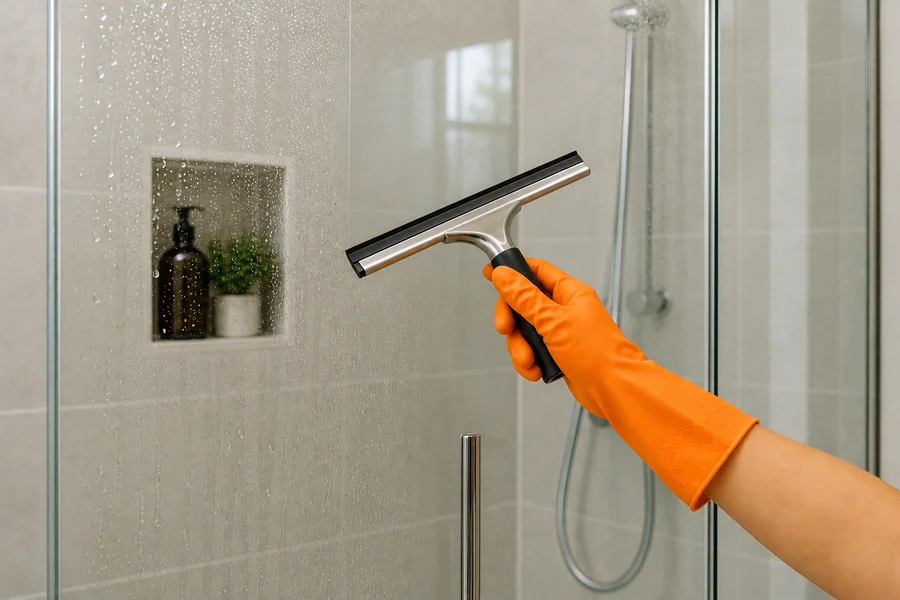
Shower glass can develop soap scum, mineral spots, and cloudy deposits even when the tile itself is clean.
To clean shower glass:
- Rinse the glass.
- Apply a suitable glass or shower cleaner.
- Allow the product to work according to its instructions.
- Wipe with a non-abrasive sponge or microfiber cloth.
- Rinse thoroughly.
- Use a squeegee to remove remaining water.
- Dry the edges and corners.
If mineral deposits have remained on the glass for a long time, they may become difficult to remove. In some cases, the glass may be etched rather than simply dirty.
How to Clean the Showerhead and Fixtures
Do not forget the showerhead, taps, handles, and other fixtures.
Mineral deposits can build up around water outlets and metal surfaces.
Use a cleaner appropriate for the fixture’s material and finish. Avoid abrasive tools that can scratch plated or polished surfaces.
If the manufacturer provides specific cleaning instructions, follow those instructions instead of using a generic bathroom cleaner.
How to Keep Shower Tiles and Grout Clean Longer
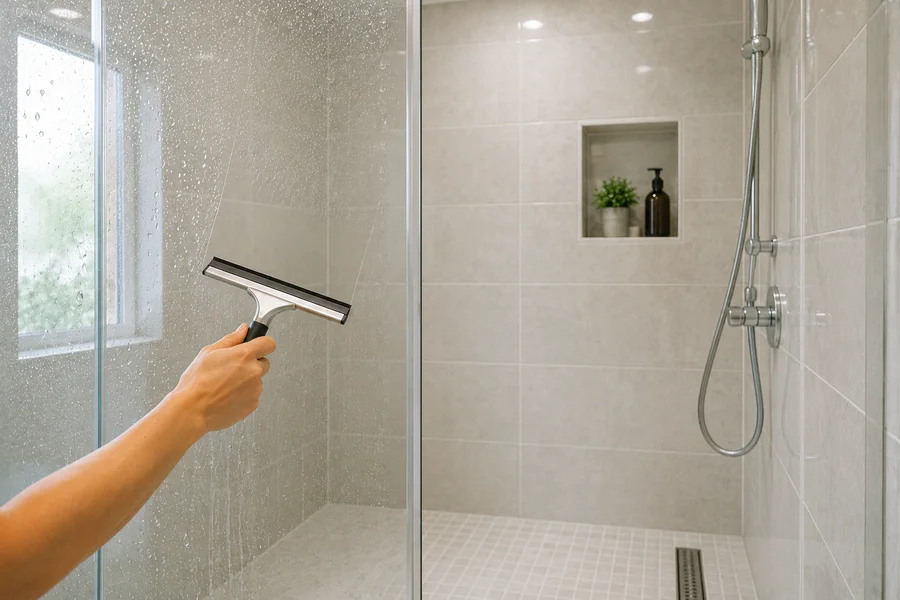
The easiest shower to clean is the one that does not develop heavy buildup in the first place.
After Every Shower
- Use a squeegee on the walls and glass.
- Remove standing water where possible.
- Keep the bathroom ventilated.
- Avoid leaving wet bottles and containers directly on surfaces.
Weekly
- Clean tile surfaces.
- Clean grout lines where needed.
- Wipe fixtures and shower glass.
- Check corners and areas behind bottles.
Periodically
- Inspect grout for cracks or missing sections.
- Check caulk for mold, separation, or deterioration.
- Check whether cement grout needs resealing.
- Look for recurring moisture problems.
EPA identifies moisture control as an important part of preventing and controlling mold growth.
When Cleaning Is Not Enough
Some shower problems cannot be solved with another cleaning product.
Consider repair or professional assessment when you notice:
- Cracked grout
- Missing grout
- Loose tiles
- Repeated mold growth
- Damaged or separated caulk
- Water getting behind the tile
- Permanently etched natural stone
- Deep staining that does not respond to appropriate cleaning
- Grout that continues to deteriorate after cleaning
Adding stronger chemicals will not repair damaged grout or loose tiles.
If the underlying surface has failed, the correct solution may be regrouting, recaulking, tile repair, or replacement.
Common Shower Tile Cleaning Mistakes
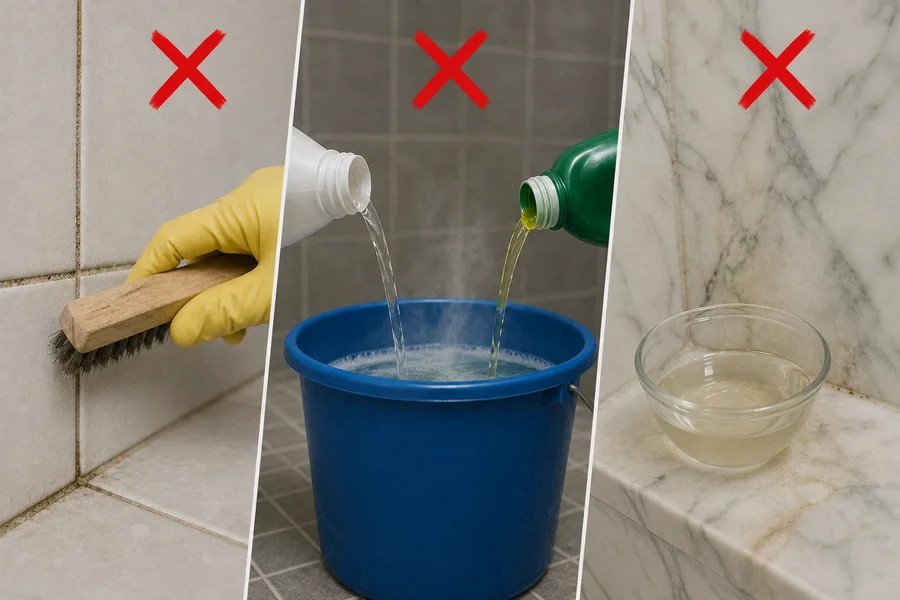
Using Vinegar on Natural Stone
Acidic cleaners can damage marble, travertine, limestone, and other acid-sensitive stone.
They can also attack cement-based grout.
Mixing Cleaning Chemicals
Never mix cleaning products together or add bleach to other chemicals. EPA warns that mixing cleaning products can create toxic vapors.
Using a Wire Brush
A wire brush can scratch tile finishes and damage grout.
Leaving Cleaner on the Surface Too Long
More contact time does not always mean better cleaning.
Follow the product label.
Scrubbing Too Aggressively
Heavy pressure can damage grout, finishes, and delicate surfaces.
Cleaning Without Rinsing
Cleaner residue can leave a film and attract dirt.
Ignoring Ventilation
Good ventilation helps reduce exposure to cleaning-product fumes and helps control moisture. EPA recommends increasing ventilation during and after cleaning where appropriate.
Cleaning Only the Tile Surface
The tile may look clean while grout lines, corners, caulk, and shower niches still hold buildup.
How Often Should You Clean Shower Tiles and Grout?
For a regularly used shower, use a squeegee after each shower and perform a more thorough cleaning at least weekly.
The exact frequency depends on:
- Number of people using the shower
- Ventilation
- Water deposits
- Shower usage
- Tile and grout type
- Presence of soap scum
- Moisture levels
A shower that stays damp for long periods may require more frequent cleaning than a well-ventilated, quickly drying shower.
For other hard-surface floors, see how to clean concrete floors and remove everyday dirt and buildup.
How Often Should Shower Grout Be Sealed?
Not every type of grout needs the same sealing schedule.
TCNA explains that sealing is generally recommended for cementitious grout because it helps protect the porous grout from staining. Epoxy grout has different stain-resistance characteristics and generally does not require the same sealing approach.
Instead of resealing on a fixed schedule without checking the surface, follow the grout or sealer manufacturer’s recommendations and inspect the grout periodically.
Frequently Asked Questions
What Is the Best Cleaner for Shower Tiles and Grout?
For routine cleaning, a mild tile-safe cleaner is usually the best starting point for compatible ceramic and porcelain surfaces.
Grout may require a separate grout cleaner, while natural stone needs a pH-neutral stone-safe product.
Can I Use Vinegar to Clean Shower Tiles?
Vinegar can be suitable for some acid-resistant surfaces, but it should not be treated as a universal shower cleaner.
TCNA explains that acids can react with and damage cement-based grout because it contains cement.
Avoid vinegar and other acidic cleaners on acid-sensitive natural stone unless the stone manufacturer confirms that they are safe.
How Do I Clean Very Dirty Shower Grout?
Use a grout cleaner designed for the type of grout, allow the recommended contact time, and gently scrub with an appropriate grout brush.
If staining remains, determine whether the grout is damaged or needs repair instead of repeatedly using stronger chemicals.
How Do I Clean Shower Grout Without Scrubbing?
You can reduce scrubbing by using an appropriate cleaner with sufficient contact time, regular maintenance, steam where the surface allows it, and frequent rinsing and drying.
Heavy buildup may still require mechanical cleaning.
How Do I Remove Hard-Water Stains From Shower Tiles?
Use a cleaner designed for mineral deposits on surfaces that are compatible with that product.
Always check the tile material first because acidic mineral-removal products can damage natural stone.
How Do I Remove Mold From Shower Grout?
Start by addressing the moisture source and improving ventilation.
EPA recommends cleaning mold from hard surfaces with detergent and water and drying the area completely. EPA does not recommend bleach as a routine mold-cleanup solution.
If mold is inside deteriorated caulk or continues returning, cleaning alone may not solve the problem.
Is Steam Cleaning Safe for Shower Grout?
Steam can be useful on some tile and grout surfaces, but it is not universally safe.
Check the recommendations for your tile, grout, sealant, and steam-cleaning equipment before using high-temperature steam.
Should I Clean Tile and Grout With the Same Product?
Not always.
Tile and grout have different properties, and natural stone requires different care from ceramic or porcelain.
Choose the cleaner based on both the surface and the type of buildup.
When Should Shower Grout Be Replaced Instead of Cleaned?
Consider replacement when grout is cracked, missing, crumbling, permanently damaged, or repeatedly affected by moisture problems.
Cleaning cannot repair failed grout.
Final Takeaway
Cleaning shower tiles and grout is easier when you match the cleaning method to the surface.
For most ceramic and porcelain showers, start with a mild tile-safe cleaner, a soft brush, thorough rinsing, and regular drying. Give grout separate attention because cement-based grout is porous and can absorb stains.
For natural stone, use stone-safe products and avoid inappropriate acidic cleaners. For mold, hard-water deposits, heavily stained grout, and damaged caulk, identify the underlying problem before choosing a stronger treatment.
For recurring mold, moisture control is especially important. EPA recommends improving ventilation and fixing moisture problems rather than relying only on chemical treatments.
Most importantly, regular squeegeeing, ventilation, and quick drying can prevent buildup and reduce the need for aggressive deep cleaning.
If your shower tiles or grout are damaged rather than simply dirty, cleaning may not be the right solution. In that situation, professional tile assessment, repair, regrouting, or replacement can provide a longer-lasting result.

Noah Williams
Interior Designer & Flooring Expert
Related Posts