
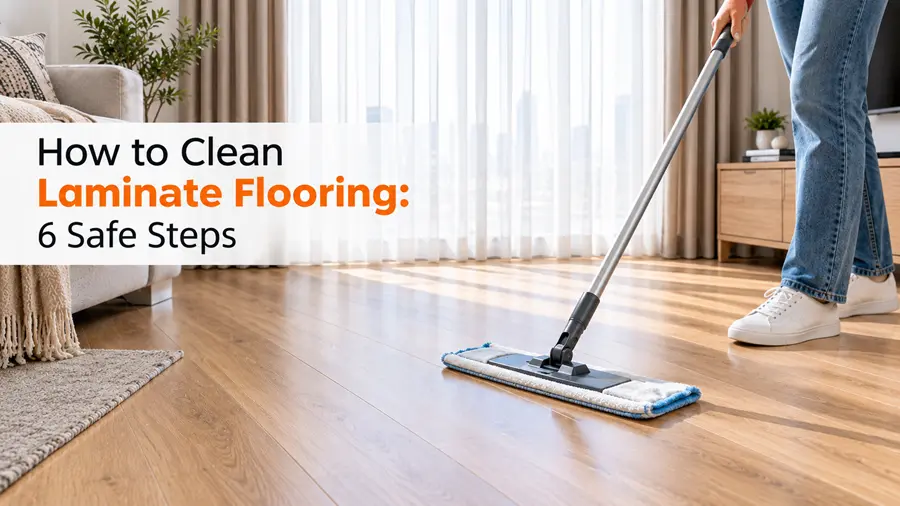
To clean laminate flooring, vacuum or dust-mop to remove grit, then spray a pH-neutral laminate cleaner onto a microfiber mop pad, not the floor. Mop along the length of the planks and dry damp areas right away. Never use steam mops, wax, oil soaps, bleach, abrasive pads, or standing water.
Key takeaways
- Grit causes scratches; water causes permanent damage. Dry-clean first, every time.
- Use as little moisture as possible. A mop pad should feel barely damp, never wet.
- Choose a pH-neutral cleaner (roughly pH 6–8). Plain water on a microfiber pad is often enough.
- Laminate cannot be sanded or refinished, so prevention matters more than on hardwood.
- In the UAE, fine sand and dust mean dry-cleaning more often than guides written for Europe or the US suggest.
Contents
What Is Laminate Flooring, and Why Does It Need Different Cleaning?
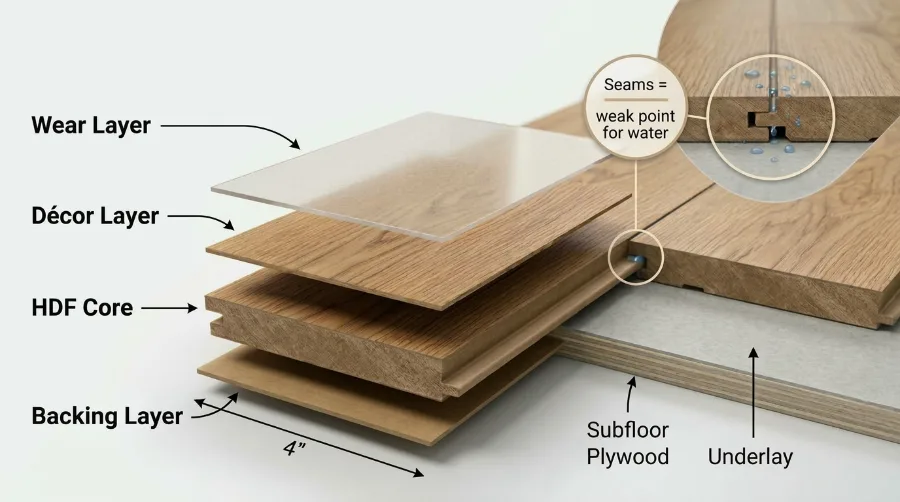
Laminate is a layered, man-made floor: a moisture-sensitive fiberboard core under a printed décor layer, protected by a clear, hard wear layer.
From bottom to top, a laminate plank has:
- Backing layer: stabilizes the plank.
- HDF core (high-density fiberboard): compressed wood fibers. This is the part that swells if water gets in.
- Décor layer: a high-resolution photo of wood or stone.
- Wear layer: a transparent, melamine-based coating that resists scratches and stains.
Two facts shape every cleaning rule in this guide:
- The seams are the weak point. Water rarely harms the surface itself, but water that seeps into the joints swells the core. Swollen edges (“peaking”) are permanent.
- The wear layer can’t be renewed. Unlike solid hardwood, laminate cannot be sanded or refinished. Abrasives, harsh chemicals and polish buildup cause damage you can’t undo.
Is your floor actually laminate? (Check before you clean)
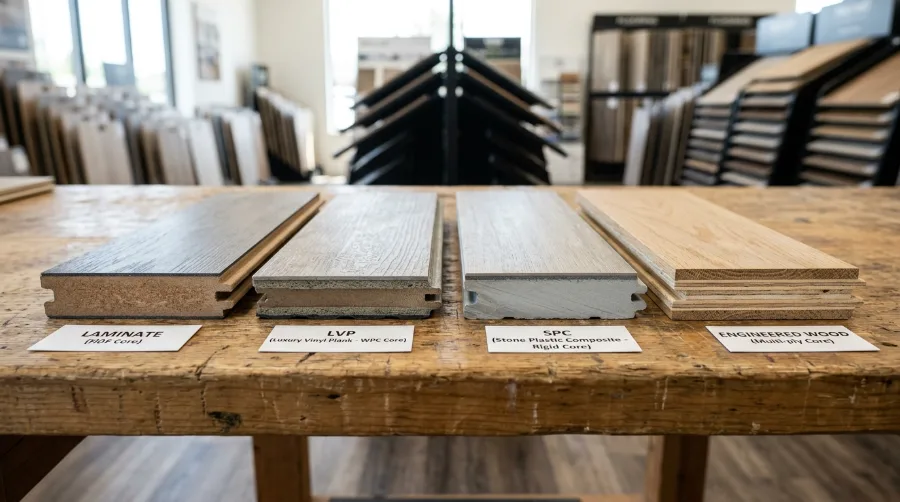
| Floor type | How to tell | Cleaning difference |
| Laminate | Hard surface; brown fiberboard visible at cut edges (check at a door threshold or vent) | Minimal moisture, pH-neutral cleaner |
| LVP (luxury vinyl plank) | Softer and slightly warmer underfoot; planks flex; vinyl core | More water-tolerant; similar method |
| SPC Flooring (stone plastic composite) | Rigid like laminate, but the core is grey/white stone-plastic, not brown fiberboard; waterproof | Tolerates more moisture; same gentle products |
| Engineered hardwood | Real wood veneer with visible grain layers on the edge | Use hardwood-specific products |
If you’re unsure, use the laminate method. It’s the gentlest and safe on all four.
What Do You Need to Clean Laminate Floors?
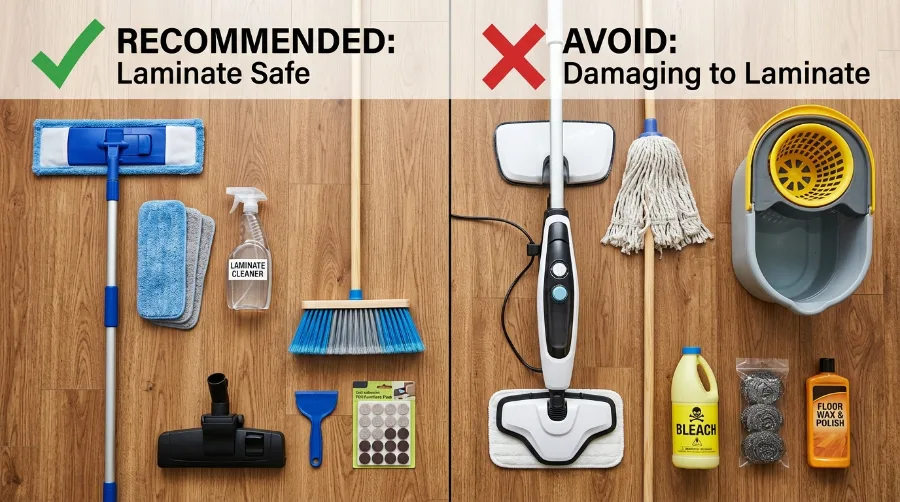
You need a vacuum with a hard-floor setting or a microfiber dust mop, a flat microfiber mop with 2–3 spare pads, a pH-neutral laminate cleaner, and a dry microfiber cloth.
| ✅ Use | ❌ Avoid |
| Vacuum with hard-floor setting (beater bar off) or soft roller | Rotating beater-bar/carpet brush |
| Flat microfiber mop + spare pads | String mops, sponge mops, bucket-and-squeegee |
| Spray bottle or spray mop | Pouring or splashing solution on the floor |
| pH-neutral laminate cleaner | Bleach, ammonia, oil soaps, wax, “mop & shine” products |
| Soft-bristle broom | Stiff brooms, steel wool, scouring powder |
| Plastic scraper or old plastic card | Metal scrapers or knives |
| Felt pads, laminate-safe rug pads | Rubber- or latex-backed mats (can discolor laminate) |
How Do You Clean Laminate Flooring? (6 Steps)
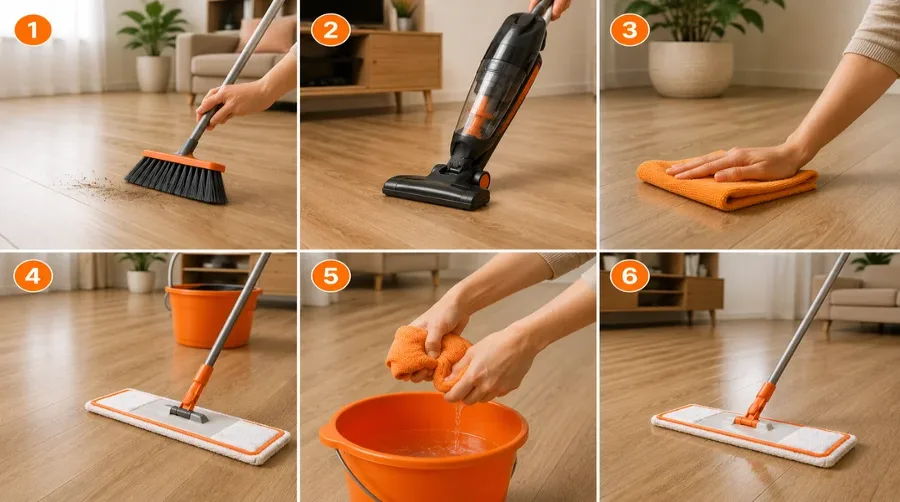
This routine takes about 15–20 minutes for an average room.
Step 1: Remove grit and dust first
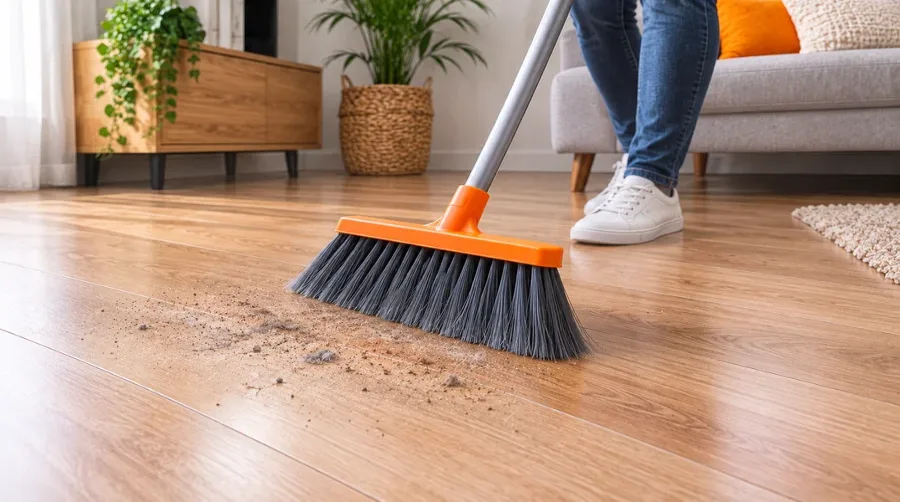
Vacuum on the hard-floor setting, or use a microfiber dust mop. Cover edges, corners, under furniture and doorways. Why: Sand and grit act like sandpaper. Mopping over them drags them across the wear layer.
Step 2: Prepare a laminate-safe solution
Use a pH-neutral cleaner labeled for laminate, diluted exactly as directed. For a simple DIY option, add a few drops of mild, fragrance-free dish soap to about 4 liters of warm (not hot) water. For light dirt, plain water is enough. Why: More product doesn’t mean cleaner floors. Extra soap is the most common cause of streaks and sticky film.
Step 3: Apply to the pad, not the floor
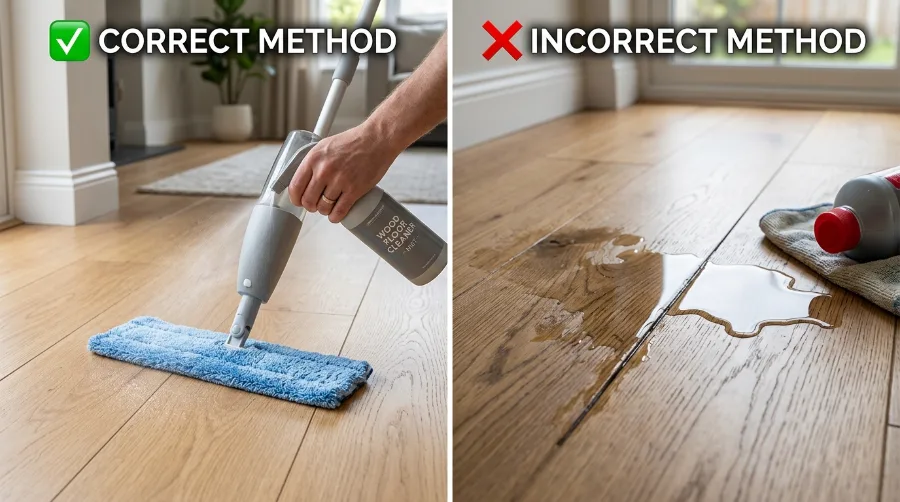
Mist the microfiber pad, or wring it until it feels only barely damp. Don’t spray large areas of floor directly. Why: Liquid sprayed on the floor pools along the seams. A damp pad controls exactly how much moisture touches the planks.
Step 4: Mop along the length of the planks
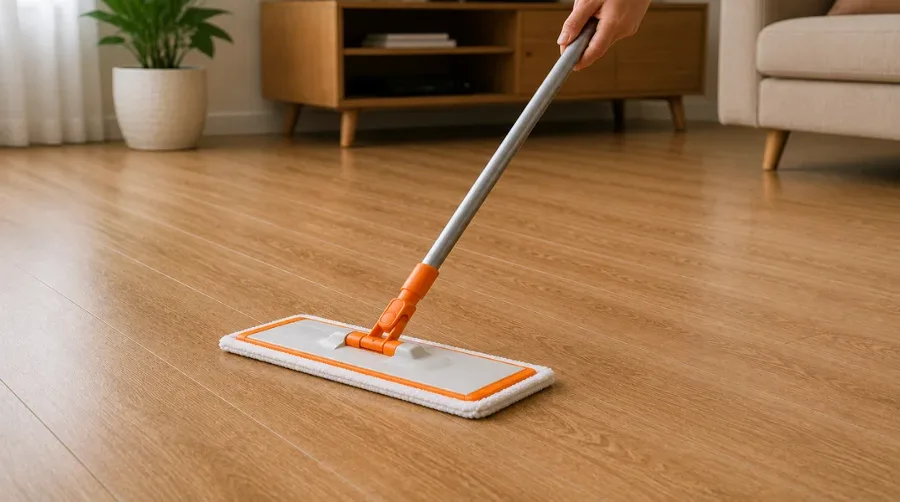
Work in small sections (about 1–2 m²), moving with the plank direction. Start at the far side of the room and mop toward the exit. Swap or rinse the pad as soon as it looks dirty. Why: Mopping across planks pushes dirt into the joints. A dirty pad just spreads grime and causes haze.
Step 5: Dry as you go
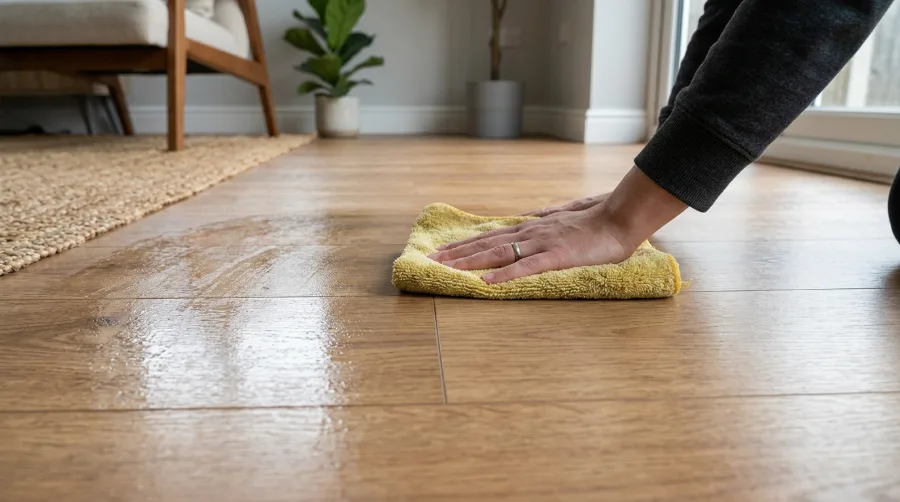
Follow each section with a dry microfiber cloth or dry pad, so no visible moisture remains after a minute or two. Why: The longer moisture sits, the more chance it has to reach the seams. Some care guides cite 10–15 minutes as the point where risk rises, but don’t wait that long.
Step 6: Inspect at a low angle and spot-clean
Crouch down with light coming from behind the floor. Streaks, sticky spots and missed areas show up clearly. Spot-clean only those areas (see the stain table below).
Can You Use Vinegar on Laminate Floors?
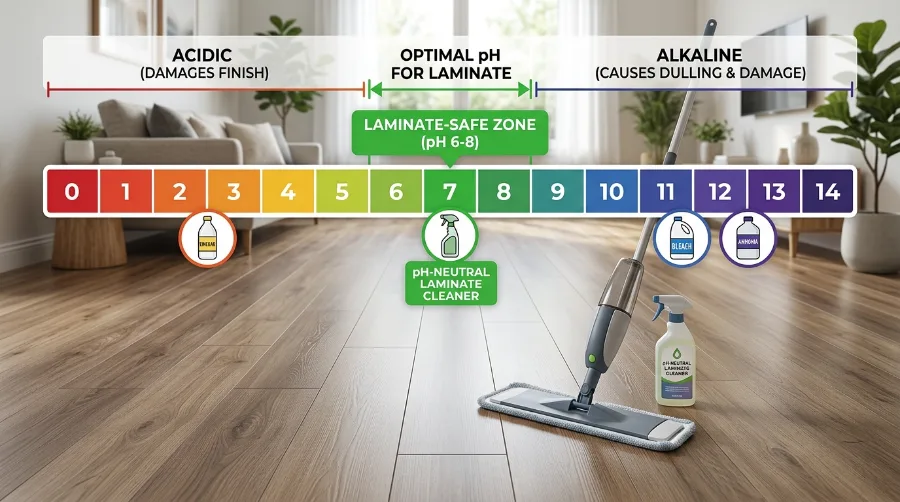
Occasionally and well-diluted, it usually won’t cause harm. But many flooring experts don’t recommend vinegar for routine cleaning, and some laminate manufacturers advise against it entirely.
Here’s why sources disagree:
- For: Diluted vinegar cuts film and leaves few streaks. Some manufacturers and retailers suggest a weak vinegar-and-water mix.
- Against: Vinegar is acidic. Regular use may gradually dull the wear layer. It also lacks detergents, so it doesn’t lift greasy dirt well.
Our recommendation at Nova Floor: Use a pH-neutral laminate cleaner for routine cleaning. If you do use vinegar, check your floor’s warranty first, dilute it (about 1 cup of white vinegar per 4 liters of water), apply it sparingly to the pad, and don’t make it a weekly habit. Never mix vinegar with bleach.
Can You Use a Steam Mop on Laminate?
No. Steam forces heat and moisture into the seams and core, which can cause swelling, lifting edges and peeling. Many laminate warranties are voided by steam use, even on “water-resistant” floors.
How Do You Remove Stains from Laminate Flooring?
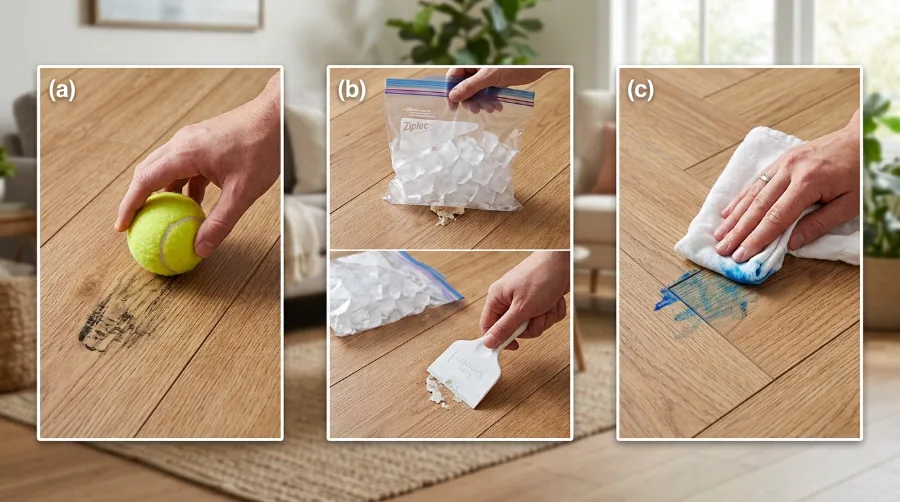
Match the method to the stain, use the smallest amount of product possible, and test any solvent in a hidden spot first.
| Stain | Method | Don’t |
| Food, juice, coffee, soft drinks | Blot immediately, wipe with a damp microfiber cloth, dry | Let it dry or sit on seams |
| Grease / cooking oil | A drop of pH-neutral cleaner or dish soap on a damp cloth, then wipe and dry | Leave degreaser sitting on the surface |
| Scuff marks (shoes, chairs) | Rub gently with a clean tennis ball or pencil eraser | Scrub with abrasive pads |
| Gum, candle wax | Harden with ice in a sealed bag, then lift with a plastic scraper | Use metal knives |
| Crayon, ink, permanent marker | Dab with a little isopropyl (rubbing) alcohol on a cloth, then wipe with a damp cloth and dry | Rub hard (it spreads the stain) |
| Nail polish | Dab a tiny amount of acetone on a cloth on the spot only; ventilate; wipe and dry at once | Pour acetone or let it sit |
| Paint | Wet water-based paint: wipe with a damp cloth before it dries. Dried paint: lift carefully with a plastic scraper. Oil-based: test any solvent in a hidden spot first | Sand, or use solvents liberally |
| Pet urine | Blot fully, clean with pH-neutral cleaner, dry thoroughly, check the seams | Leave it; it can seep into seams and cause odors |
| Sticky residue | Damp microfiber with a drop of mild soap, then a clean damp pass, then dry | Add more product |
Safety note: Solvents like acetone and alcohol can damage some finishes. Use only a few drops, test first, keep the area ventilated, and check your manufacturer’s stain guide if your floor is under warranty.
How Do You Deep Clean Laminate Floors?
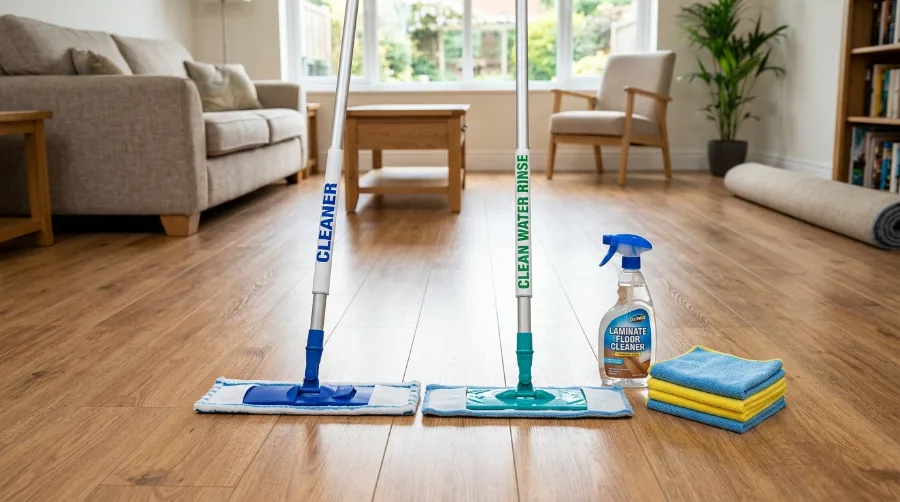
Deep clean every 2–3 months, or when the floor looks dull or feels sticky. Use the same 6-step method, but slower and in smaller sections, and finish with a clean-water rinse pass.
- Move light furniture and rugs (lift, don’t drag).
- Vacuum twice, including edges and under furniture.
- Mop small sections with pH-neutral cleaner on a fresh microfiber pad.
- Rinse pass: go over each section with a separate pad dampened with clean water only. This removes leftover cleaner that causes haze.
- Dry each section immediately.
- Treat remaining stains using the table above.
Why Does My Laminate Look Streaky, Cloudy or Dull?
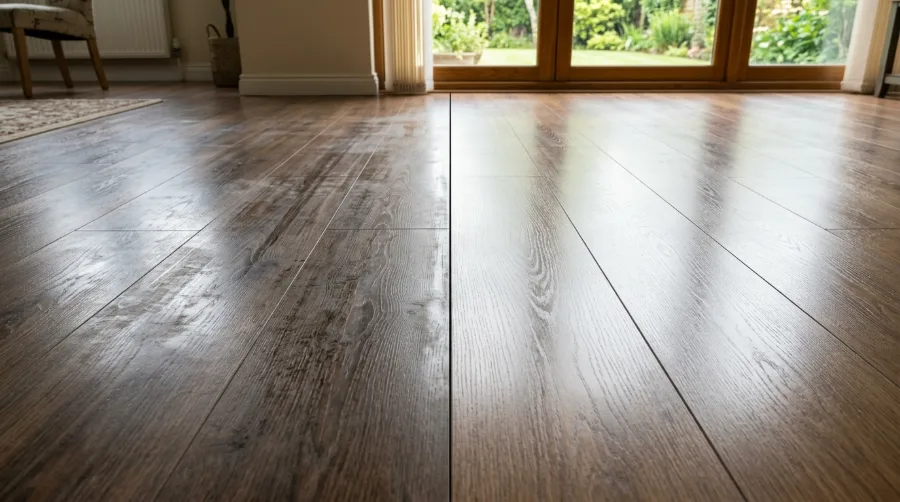
Streaks and haze almost always come from residue, either too much product or the wrong product, not from dirt.
| Problem | Likely cause | Fix |
| Streaks | Too much cleaner, dirty pad, mopping across planks | Less product, clean pad, mop along planks, dry as you go |
| Cloudy / white film | Soap, oil or “shine” product buildup | Clean-water rinse pass; for stubborn film, a laminate-specific residue remover |
| Sticky floor | Excess soap or sugary spills | Damp clean-water pass, then dry |
| Dull patches | Abrasive pads, magic erasers, harsh cleaners | Prevention only; the wear layer can’t be restored |
| Whitened or swollen edges | Water in the seams | Can’t be reversed; affected planks need replacing |
How Do You Make Laminate Floors Shine Without Wax?
Clean residue off first, because clean laminate already shows its designed finish. Then buff with a dry microfiber cloth.
Many modern laminates have an intentionally matte finish to look like natural wood, so “dull” may simply be the design. Never wax or use furniture polish, which builds a slippery film that attracts dirt. If you want more sheen, use only a polish made specifically for laminate, and test it first.
How Do You Clean Laminate Floors in Dubai and the UAE?
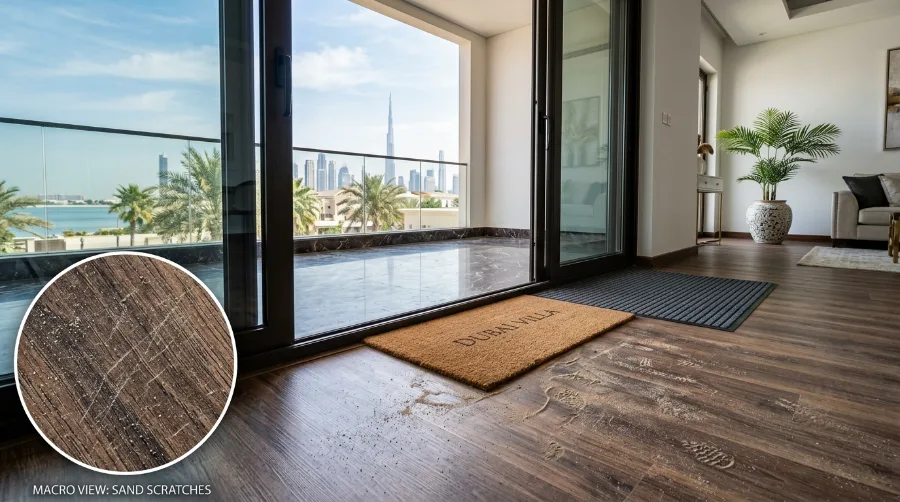
Clean more often and control sand harder. The UAE climate is tougher on laminate than most cleaning guides assume, because fine sand, airborne dust, strong sun and AC-driven humidity swings all affect the floor.
- Sand and dust: dry-clean more often. Fine desert sand is one of the biggest scratch risks for laminate in UAE homes. During dusty and windy periods, vacuum or dust-mop high-traffic areas daily, not weekly. Place non-rubber-backed doormats both outside and inside every entrance, including balcony and garden doors. Shake mats out often, because a sandy mat becomes the problem.
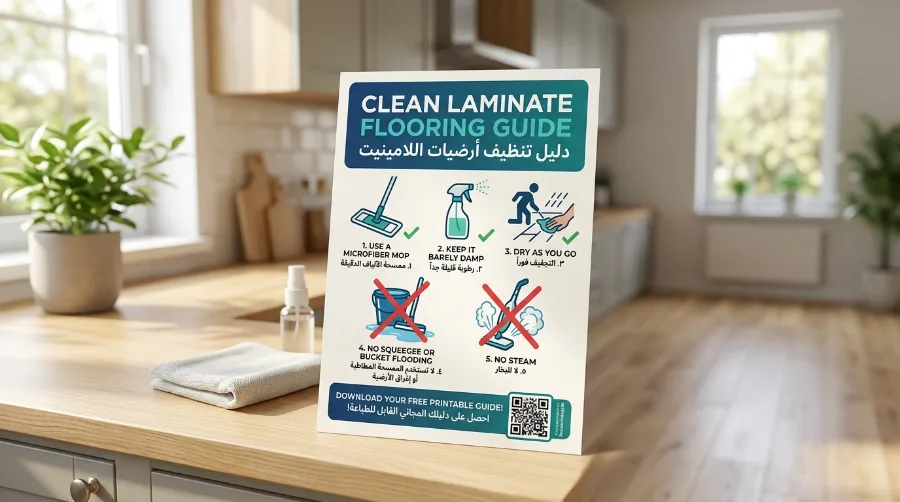
- Brief your cleaner or domestic helper. Many UAE homes are cleaned with the bucket-and-squeegee or wet-mop method used on tile and marble. That method is fine for stone but damaging for laminate. Share simple house rules: microfiber mop only, barely damp pad, no pouring water, dry as you go, no steam.
- Sunlight: protect against UV fading. Floor-to-ceiling windows and strong year-round sun can fade some laminates over time. Use blinds or curtains in the hottest hours, and move rugs occasionally so the floor fades evenly.
- AC and humidity: keep conditions steady. Laminate expands and contracts with temperature and humidity. Large swings, such as a sealed apartment left without AC through a summer away, increase the risk of gaps or lifting. If you travel, consider leaving AC on a moderate setting. Never block the expansion gap at walls with silicone or heavy fixed furniture.
- Kitchens and coastal homes. In kitchens, wipe spills immediately even on water-resistant laminate. Water-resistant is not the same as waterproof. In beachside communities, treat sand control as part of your weekly routine.
How Often Should You Clean Laminate Floors?
Dry-clean high-traffic areas daily to a few times a week, damp mop weekly, and deep clean every 2–3 months.
| Task | Typical home | Pets, kids, or dusty UAE periods |
| Vacuum / dust mop | 2–3× per week | Daily |
| Wipe spills | Immediately | Immediately |
| Damp mop | Weekly | Weekly, plus spot-mopping |
| Deep clean + rinse pass | Every 2–3 months | Every 1–2 months |
| Check mats, felt pads, seams | Monthly | Every 2 weeks |
What Mistakes Should You Avoid When Cleaning Laminate?
- Mopping before vacuuming, which drags grit across the surface.
- Spraying cleaner directly on the floor, which pools liquid in the seams.
- Using a steam mop, which causes swelling and can void the warranty.
- Using oil soaps, wax or “mop & shine” products, which leave hazy buildup.
- Using magic erasers or abrasive pads, which leave permanent dull spots.
- Using a beater-bar vacuum, which leaves fine scratches.
- Wet-mopping like tile, with a bucket, squeegee or soaked string mop.
How Do You Protect Laminate Floors from Scratches and Damage?
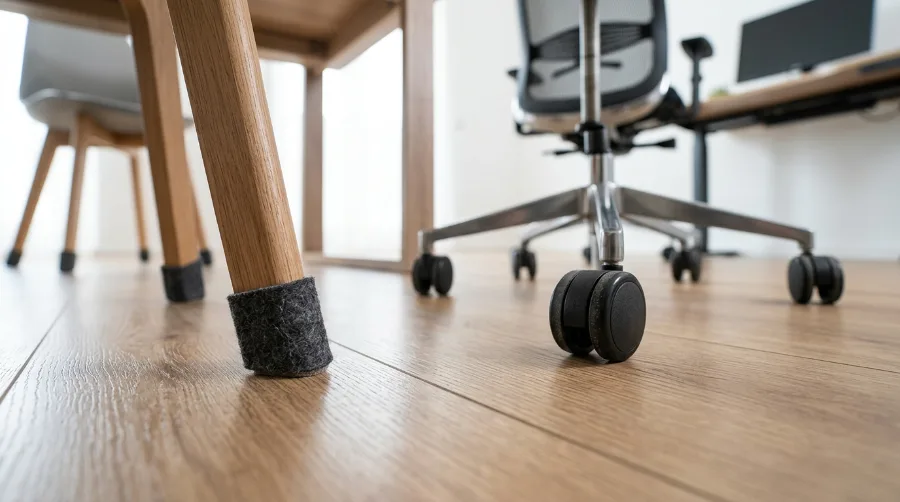
Keep grit out, keep furniture soft-footed, and keep water off.
- Entrance mats inside and outside doors; avoid rubber- or latex-backed mats directly on laminate.
- Felt pads on chair and table legs; check and replace them regularly.
- Rubber or soft castors on office chairs, or a chair mat.
- Lift furniture; never drag it.
- Trim pets’ nails and wipe paws after walks.
- Laminate-safe rug underlays under area rugs.
- No high heels or sports cleats on the floor where possible.
Can You Fix Scratches or Water Damage on Laminate?
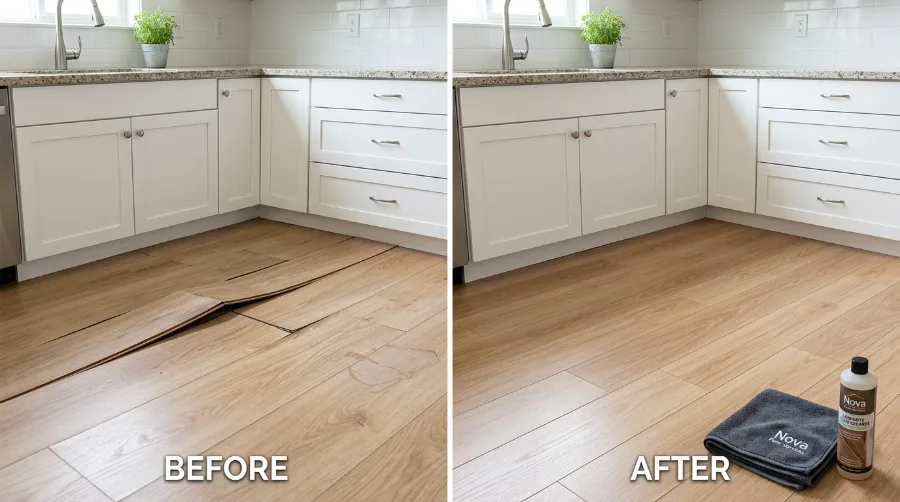
Light scratches can often be disguised; swelling from water damage cannot be reversed.
- Light surface scratches: buff gently with microfiber, or use a color-matched laminate touch-up marker.
- Deeper scratches or chips: a laminate repair kit with color-matched wax filler.
- Swollen, peaked or lifted planks: the core has absorbed water. The fix is replacing the affected planks, which is often possible with click-lock systems.
Damaged planks or worn floors?Nova Floor’s team can replace individual planks or recommend water-resistant laminate flooring & SPC flooring suited to UAE homes.
Frequently Asked Questions
What is the best way to clean laminate floors?
Vacuum or dust-mop first, then damp-mop with a pH-neutral laminate cleaner applied to a microfiber pad, working along the planks and drying as you go.
Can I use plain water to clean laminate?
Yes. A barely damp microfiber pad with plain water handles most routine cleaning. Just never leave water standing on the floor.
Can I use dish soap on laminate floors?
Yes, in very small amounts: a few drops per bucket. Too much soap leaves a sticky, streaky film.
Can I use a Swiffer on laminate?
Dry pads are fine for dust. Wet pads and spray mops are acceptable only if they release little liquid and you dry the floor afterwards. Check your flooring warranty, as some manufacturers advise against certain wet systems.
Are robot vacuums and mops safe for laminate?
Robot vacuums are safe and help with daily sand and dust. For robot mops, choose low-water settings and models that don’t leave the floor visibly wet.
Can I use bleach or ammonia on laminate?
No. Both can damage the wear layer and cause discoloration.
Why is my laminate floor sticky after mopping?
Usually it’s too much cleaner or soap. Do a pass with a clean, barely damp pad and plain water, then dry the floor.
Do I need to do anything special the first time I clean new laminate?
Yes. After installation, vacuum all dust and debris thoroughly before any damp cleaning, then do a light pass with a laminate cleaner on a microfiber pad.
What’s the Most Important Rule for Cleaning Laminate?
Cleaning laminate comes down to three rules: remove grit first, use minimal moisture, and use pH-neutral products. In the UAE, add one more: control sand at every entrance. Follow these and your laminate can look good for its full lifespan.





)