
Noah Williams is an interior designer and flooring expert at Nova Floor. In Dubai, he helps people pick the right floor, get it installed, and keep it looking good. He also writes simple, practical flooring and home care guides for readers in Dubai and around the world.
How to Clean Hardwood Floors Safely | Complete Care & Maintenance Guide
Noah Williams
The safest way to clean hardwood floors is to remove loose dirt and grit first, then use a cleaner recommended for your floor’s finish with minimal moisture. Avoid soaking the floor, steam cleaning, abrasive tools, and unsuitable household cleaners because excess moisture and harsh products can damage the wood or its protective finish.
Whether you have solid or engineered hardwood, the right cleaning method depends on the wood, surface finish, traffic, and manufacturer’s care instructions. In this guide by Nova Floor Experts, you’ll learn how to clean hardwood floors step by step, which cleaners to use, how often to clean them, how to remove common stains, how to protect the finish, and when cleaning is no longer enough.
Contents
Quick Answer: How to Clean Hardwood Floors
To clean hardwood floors safely:
- Remove loose dirt and grit with a microfiber dust mop or soft-bristle broom.
- Vacuum the floor using a hard-floor setting or soft brush attachment.
- Choose a hardwood cleaner recommended for your floor’s finish.
- Damp clean with minimal moisture using a clean microfiber mop if your flooring instructions allow it.
- Work in small sections so you can control the amount of moisture.
- Remove excess moisture promptly and never leave standing water on the floor.
- Spot-clean remaining marks with a finish-compatible cleaner and soft cloth.
Clean spills as soon as they happen and follow the flooring manufacturer’s care instructions. Avoid steam mops, abrasive cleaners, excessive water, and unapproved cleaning products.
What You Need to Clean Hardwood Floors
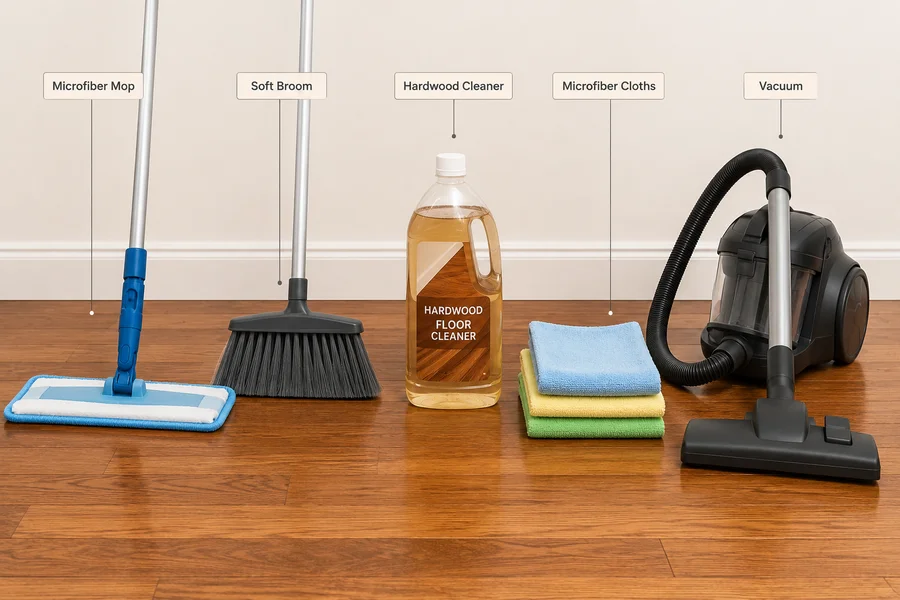
You do not need a large collection of products to clean hardwood floors. The right tools help remove grit without scratching the finish and let you control moisture during cleaning.
| Tool or Supply | Why You Need It |
| Microfiber dust mop or soft-bristle broom | Removes loose dust, sand, and grit |
| Vacuum with a hard-floor setting | Picks up fine debris from corners, seams, and baseboards |
| Flat microfiber mop | Allows controlled cleaning with minimal moisture |
| Hardwood floor cleaner | Removes dirt without using an unsuitable household cleaner |
| Soft microfiber cloths | Helps clean spills and small marks |
| Doormats | Reduces dirt and grit entering the room |
| Felt furniture pads | Helps reduce scratches and scuff marks |
Before You Start
Check your flooring manufacturer’s care instructions before using a new cleaner or maintenance product. Different hardwood floors can have different finishes, and a product that works on one floor may not be suitable for another.
If you are unsure about your floor’s finish or cleaning requirements, check the original flooring documentation or contact the manufacturer, flooring supplier, or installer.
How to Clean Hardwood Floors Step by Step
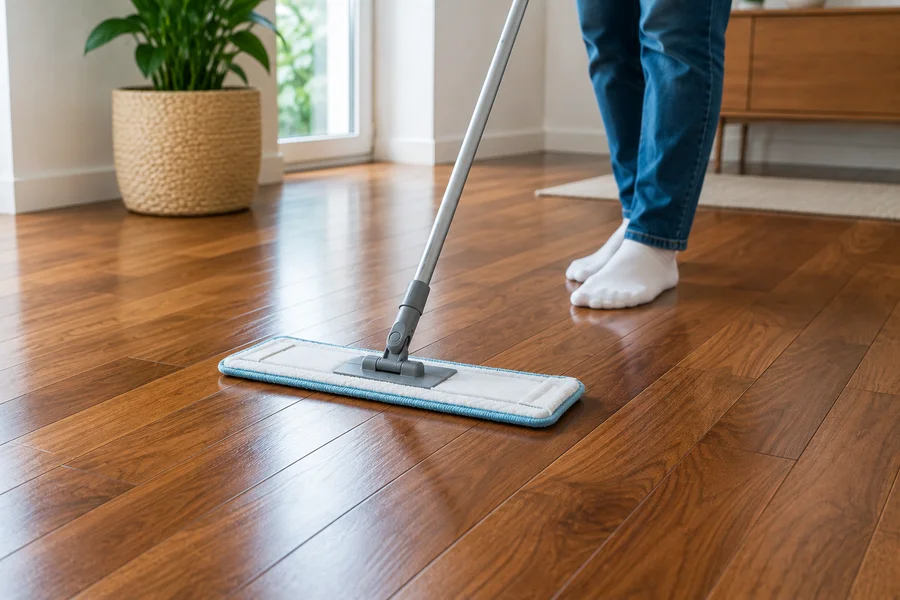
The safest routine starts with dry cleaning and uses only the amount of moisture permitted for your flooring. Follow these steps for routine care of finished solid or engineered hardwood floors.
Step 1: Remove Dust and Grit
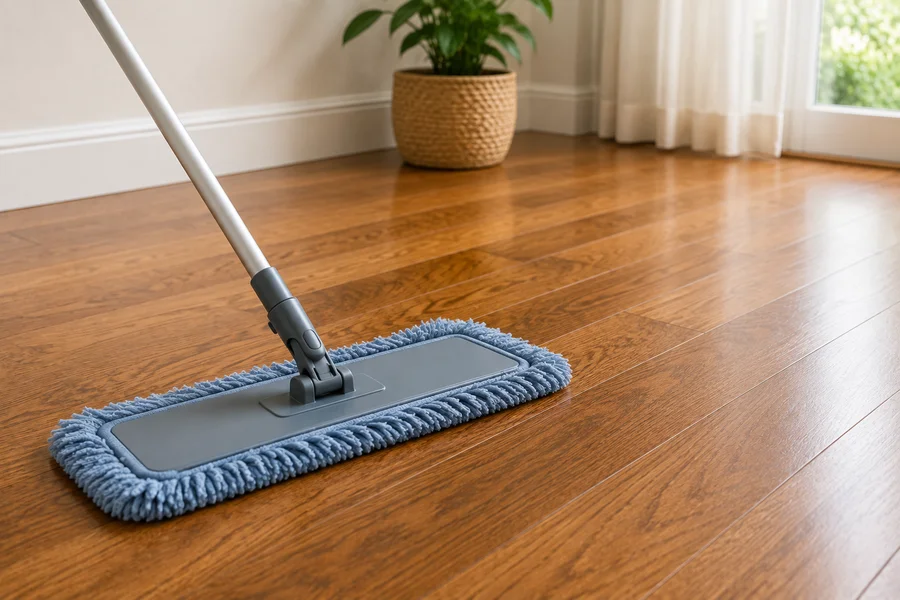
Start with a microfiber dust mop or soft-bristle broom. Pay extra attention to entrances, hallways, kitchens, and other high-traffic areas where sand and grit can collect.
Removing abrasive particles before wet or damp cleaning helps prevent them from being dragged across the floor and scratching the protective finish.
Do not skip this step when visible dirt is present. Mopping over loose grit can spread abrasive particles across the surface.
Step 2: Vacuum the Floor
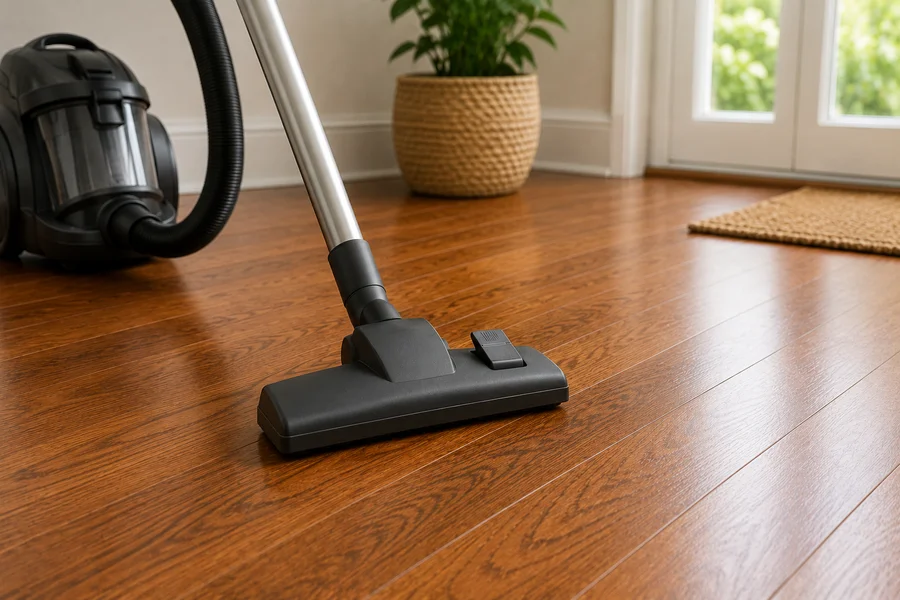
Vacuum after dusting to remove fine debris from corners, seams, and along baseboards.
Use the hard-floor setting or a soft brush attachment. If your vacuum has a rotating brush or beater bar, turn it off when cleaning hardwood unless the flooring manufacturer specifically states that it is safe.
Move the vacuum carefully instead of repeatedly dragging it over the same area.
Step 3: Choose a Hardwood-Safe Cleaner
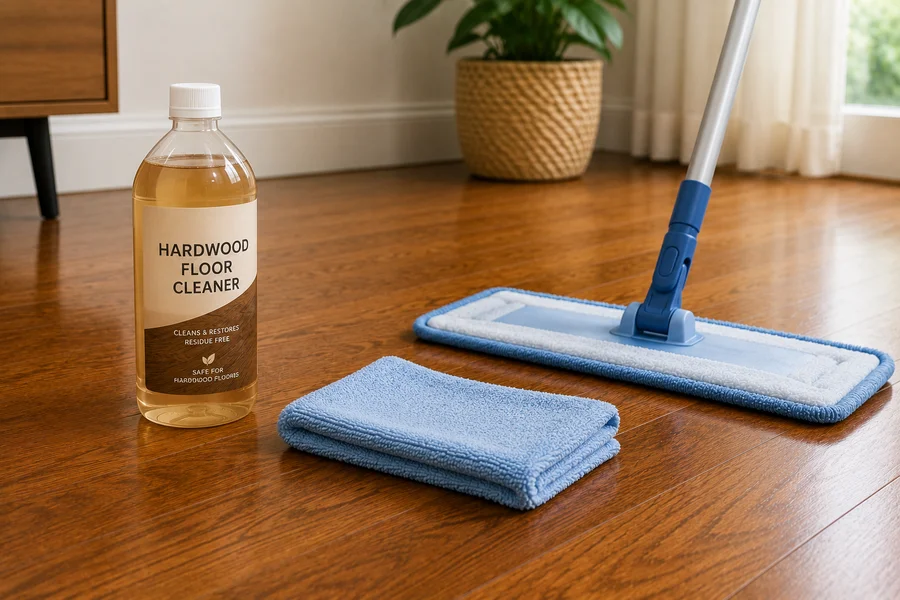
Use a cleaning product recommended for your floor’s finish.
A cleaner made specifically for hardwood is generally a more predictable choice than a generic household cleaner. Do not assume that a product designed for tile, vinyl, laminate flooring, or another flooring material is automatically suitable for hardwood.
Follow the cleaner’s label instructions and use the recommended amount. Using more product does not necessarily produce a cleaner floor and may leave residue.
Step 4: Damp Clean With Minimal Moisture
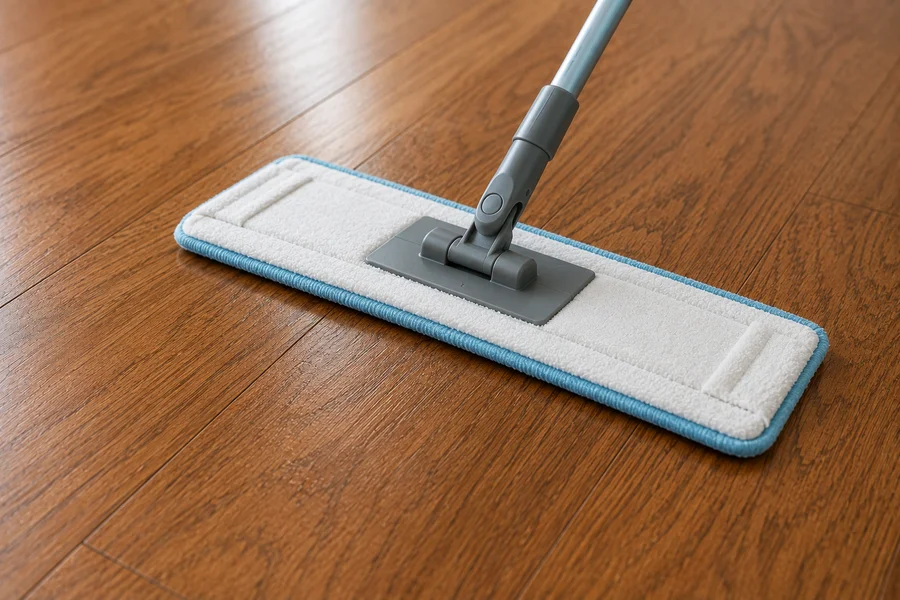
If your flooring manufacturer’s instructions allow damp cleaning, use a flat microfiber mop that is nearly dry or only slightly damp.
Apply the cleaner according to its instructions rather than flooding the floor. Work in small sections and do not allow water or cleaning solution to pool on the surface.
Hardwood does not need to be saturated to get clean. Controlled moisture is more important than using a large amount of water.
Step 5: Clean in Manageable Sections
Move the mop in a controlled direction, following the wood grain where practical.
Replace or rinse the microfiber pad when it becomes dirty so you are not spreading grit and residue across the floor.
For a large room, divide the floor into smaller sections instead of applying cleaner over the entire surface at once.
Step 6: Remove Excess Moisture
Do not leave visible water sitting on hardwood.
If the floor remains wet after cleaning, make a dry microfiber mop pass or wipe the area with a clean, dry microfiber cloth.
Allow the floor to dry completely before replacing rugs or moving furniture back into the area.
Step 7: Spot-Clean Remaining Marks
For sticky spots, small spills, or isolated marks, apply a small amount of a finish-compatible hardwood cleaner to a soft cloth and clean the affected area by hand.
Avoid aggressive scrubbing, abrasive pads, and large amounts of liquid.
How Often Should You Clean Hardwood Floors?
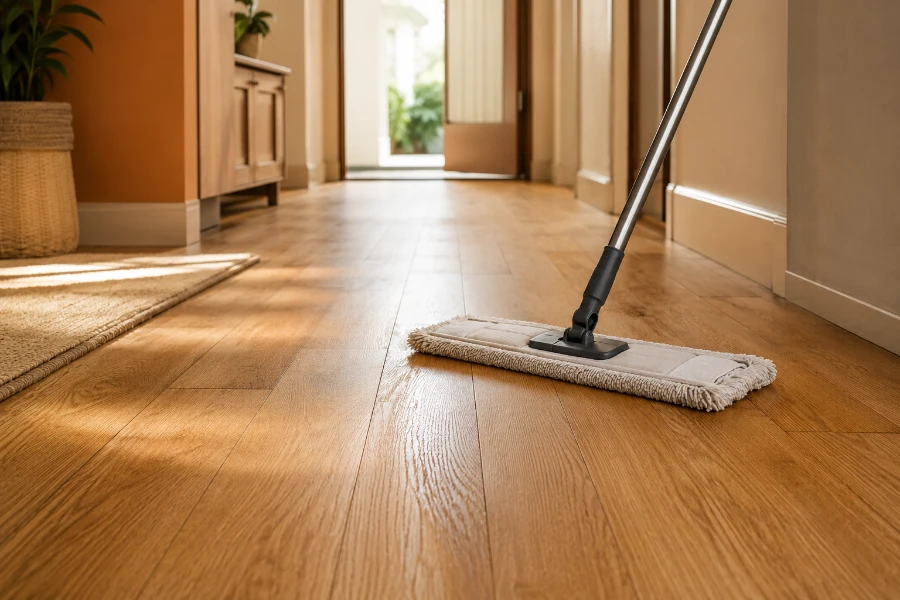
There is no single cleaning schedule that works for every hardwood floor. The ideal frequency depends on foot traffic, pets, children, outdoor dirt, and the type of finish.
A practical routine is:
| Cleaning Task | Recommended Frequency |
| Dust or sweep | Daily or as needed |
| Vacuum | Weekly or as needed |
| Clean spills | Immediately |
| Spot clean | Whenever marks or sticky residue appear |
| Damp clean | When dirt or residue builds up |
| Deep clean | Based on traffic and manufacturer’s instructions |
Homes with pets, children, frequent visitors, or direct access to outdoor areas may need more frequent cleaning. Lower-traffic rooms may need less.
The goal is not to wet-clean hardwood as often as possible. The goal is to remove abrasive dirt and buildup while using as little moisture as the flooring instructions allow.
What Is the Best Cleaner for Hardwood Floors?
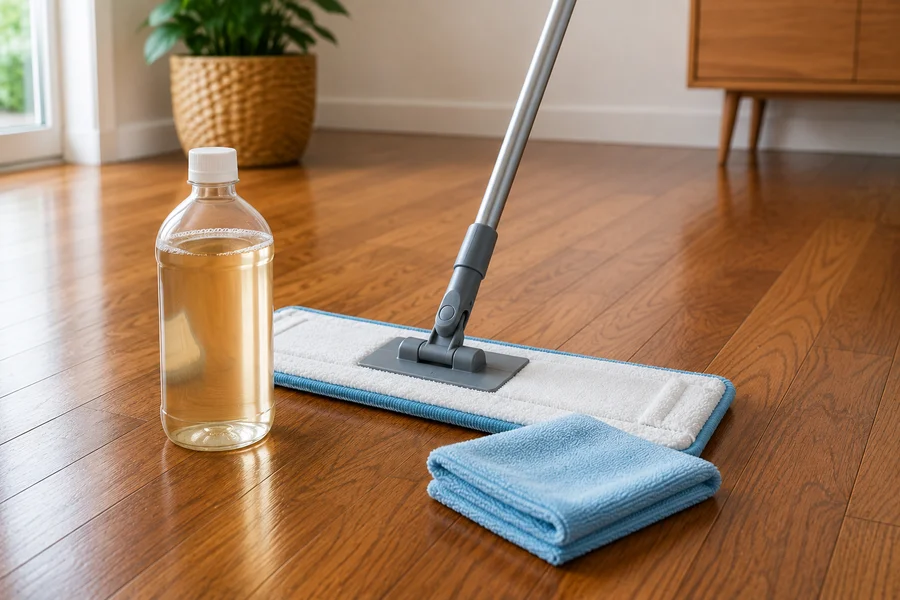
The best cleaner for hardwood floors is one that is specifically recommended for your floor’s finish and compatible with the manufacturer’s care instructions.
For many finished hardwood floors, a dedicated hardwood cleaner is a more predictable choice than homemade cleaning solutions.
Hardwood Floor Cleaner
Choose a product labeled for hardwood floors and follow its dilution and application instructions.
Some hardwood cleaners are formulated to clean without leaving heavy residue, while specific products may be designed for particular finishes. Always check the label before use.
If a cleaner leaves a visible film, residue, or unexpected change in appearance, stop using it and check whether it is compatible with your floor’s finish.
Can You Clean Hardwood Floors With Water?
You can use a small amount of water when your flooring manufacturer’s instructions allow damp cleaning.
Use a nearly dry or barely damp microfiber mop rather than a soaking-wet mop. Never leave standing water on the floor.
If water remains visible after cleaning, remove it promptly.
Can You Use Vinegar on Hardwood Floors?
We do not recommend using vinegar as a routine hardwood floor cleaner.
Vinegar is acidic, and repeated use may affect or dull some floor finishes. A hardwood cleaner recommended for your floor’s finish is a safer and more predictable choice.
If a flooring manufacturer specifically recommends a vinegar-based cleaning method for its product, follow those instructions instead of using a generic recipe.
Can You Use Dish Soap on Hardwood Floors?
It is best not to use dish soap as your default hardwood floor cleaner unless the flooring or finish manufacturer specifically recommends it.
Dish soaps vary in formulation and may leave residue when used incorrectly. A cleaner specifically formulated for hardwood flooring is generally easier to control.
Can You Use Oil Soap?
Do not use a generic oil soap on hardwood unless it is specifically compatible with your floor’s finish.
Oil-finished hardwood may require a cleaner designed specifically for oiled floors. This is different from applying a generic oil soap to a polyurethane or other surface-finished floor.
Always check the flooring manufacturer’s recommendations before using oil-based cleaning or maintenance products.
How to Clean Different Hardwood Floor Finishes
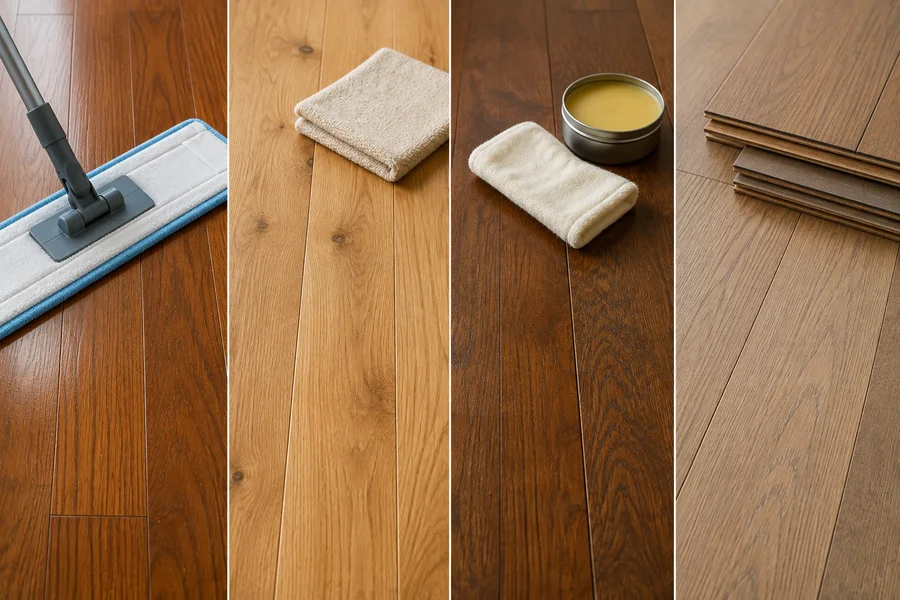
Hardwood floors do not all have the same protective finish. Before using a new cleaning product, identify the finish from your flooring documentation or manufacturer’s care instructions.
Polyurethane and Other Surface-Finished Floors
Many modern hardwood floors have a protective coating over the wood.
These floors generally allow routine cleaning with an appropriately damp microfiber mop when the manufacturer’s instructions permit it.
Use a cleaner designed for the finish and avoid excessive water, abrasive tools, and steam cleaning unless specifically approved.
Factory-Finished Hardwood
Many prefinished hardwood floors use durable factory-applied finishes, including UV-cured or aluminum-oxide coatings.
These finishes can provide strong surface protection, but they still require appropriate cleaning products and controlled moisture. Follow the manufacturer’s instructions for routine cleaning and maintenance.
Oil-Finished Hardwood Floors
Oil-finished floors can require a different maintenance routine from many polyurethane-finished floors.
Use products specifically designed for the oil finish when recommended. A cleaner intended for a surface-finished hardwood floor may not be appropriate for an oil-finished product.
Follow the manufacturer’s cleaning and maintenance instructions, including any recommended maintenance treatment.
Wax-Finished Hardwood Floors
Wax-finished floors require products compatible with the existing wax layer.
Avoid cleaners or treatments that can dissolve, build up, or leave residue on the wax.
If you are unsure whether your floor has a wax finish, check the flooring documentation or contact a flooring professional rather than relying on a homemade test.
Unfinished Hardwood
Unfinished wood is more vulnerable to moisture and staining because it does not have the same protective surface coating as finished flooring.
Do not use a routine wet-mopping method unless the flooring manufacturer or a qualified flooring professional specifically recommends it.
Engineered Hardwood
Engineered hardwood has a real-wood surface layer over a multi-layer construction. Its cleaning requirements depend on the surface finish and manufacturer’s specifications.
Do not assume that engineered hardwood is waterproof simply because its construction is more dimensionally stable than solid wood.
Remove loose dirt first, use minimal moisture when permitted, and follow the cleaning instructions supplied with the flooring.
Not Sure Which Finish You Have?
Do not rely on a homemade water test to identify the finish.
Instead, check the original flooring documentation, contact the manufacturer, or ask your flooring supplier or installer.
Using an unsuitable cleaner can create problems that are more difficult to correct than ordinary dirt.
Hardwood Floor Cleaning Mistakes to Avoid
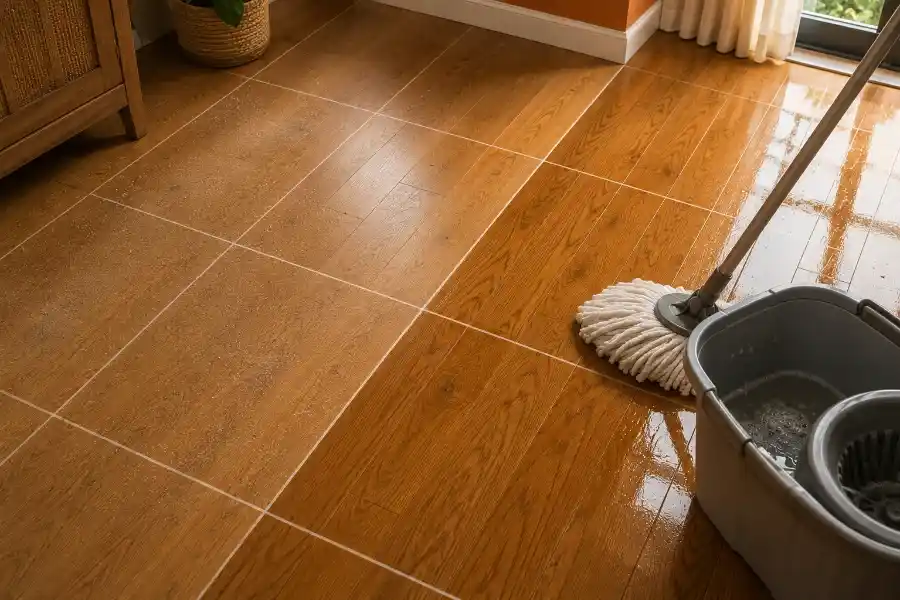
Even a good cleaning routine can damage hardwood when the wrong tools, products, or techniques are used.
1. Using Too Much Water
Hardwood does not need to be saturated to get clean.
Excess moisture can enter joints and affect the wood or finish. Use only the amount of moisture permitted by your flooring instructions and remove standing water promptly.
2. Using a Steam Mop
Avoid steam cleaning unless the flooring manufacturer specifically states that the floor is suitable for it.
Heat and moisture can create unnecessary risks for wood and some finishes.
3. Using Abrasive Tools
Steel wool, rough scrubbers, abrasive powders, and harsh pads can scratch or dull the protective finish.
Use soft microfiber materials for routine cleaning.
4. Using the Wrong Vacuum Setting
A rotating brush or beater bar can mark some hardwood finishes.
Use a hard-floor setting or an attachment designed for hardwood.
5. Using Unapproved Household Cleaners
Bleach, ammonia-based products, strong acids, abrasive powders, and other unsuitable cleaners can damage or dull some finishes.
Choose products designed for your floor and follow the manufacturer’s instructions.
6. Letting Spills Sit
Clean spills promptly rather than allowing liquid to remain on the surface.
Quick action reduces the chance of moisture reaching seams or causing stains.
7. Applying Wax or Polish Without Checking the Finish
Some products can leave buildup or interfere with the appearance of an existing finish.
Always check compatibility before applying polish, wax, oil, or another maintenance treatment.
8. Cleaning Without Removing Grit First
Mopping over sand and dirt can drag abrasive particles across the floor and contribute to fine scratches.
Always remove loose debris before damp cleaning.
If you’re maintaining a similar wood-look surface, learn how to clean laminate flooring without damaging its finish.
How to Remove Common Hardwood Floor Stains
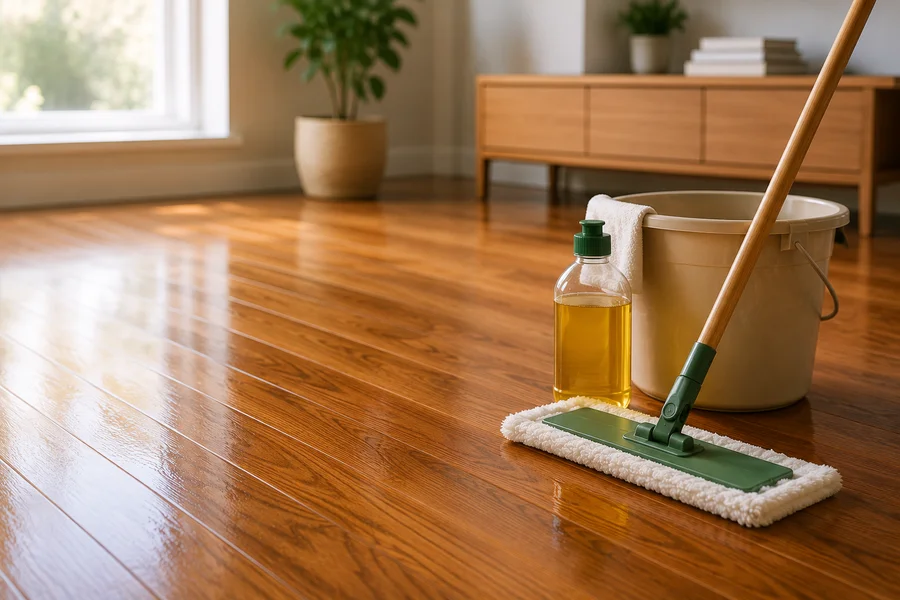
The right stain-removal method depends on the type of stain and the finish on your hardwood floor.
Start with the least aggressive method and avoid scrubbing the surface.
| Stain or Mark | Safer First Step |
| Water or drink spill | Blot immediately with a soft, dry or barely damp cloth |
| Sticky residue | Use a small amount of finish-compatible hardwood cleaner on a soft cloth |
| Scuff marks | Gently wipe with a clean microfiber cloth |
| Food or grease | Remove the residue promptly with a finish-compatible cleaner |
| Crayon | Carefully remove the material without scratching the finish |
| Chewing gum | Harden the gum before carefully lifting it from the surface |
| Candle wax | Allow the wax to harden, then carefully lift it without scratching |
| Pet urine | Blot immediately and use a flooring-compatible cleaner |
| Mud | Allow loose material to dry, then remove it gently before cleaning |
| Deep black stains | Seek professional assessment if the stain has penetrated the wood |
Never use an abrasive pad or aggressive chemical simply because a stain is difficult to remove.
If the finish has already been damaged or the stain has penetrated the wood, cleaning alone may not restore the floor.
How to Remove Water Marks
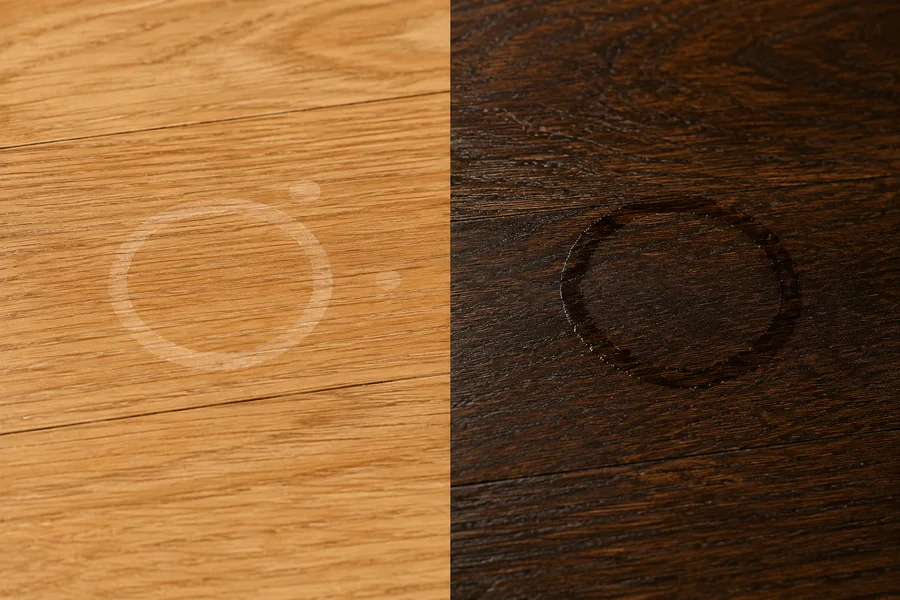
Light or white water marks may sometimes be related to moisture affecting the surface finish and may respond to appropriate cleaning.
Dark or persistent water stains can indicate that moisture has penetrated deeper into the wood.
Avoid repeatedly applying stronger household remedies. If the stain remains after proper cleaning, professional assessment may be more appropriate.
How to Remove Pet Stains
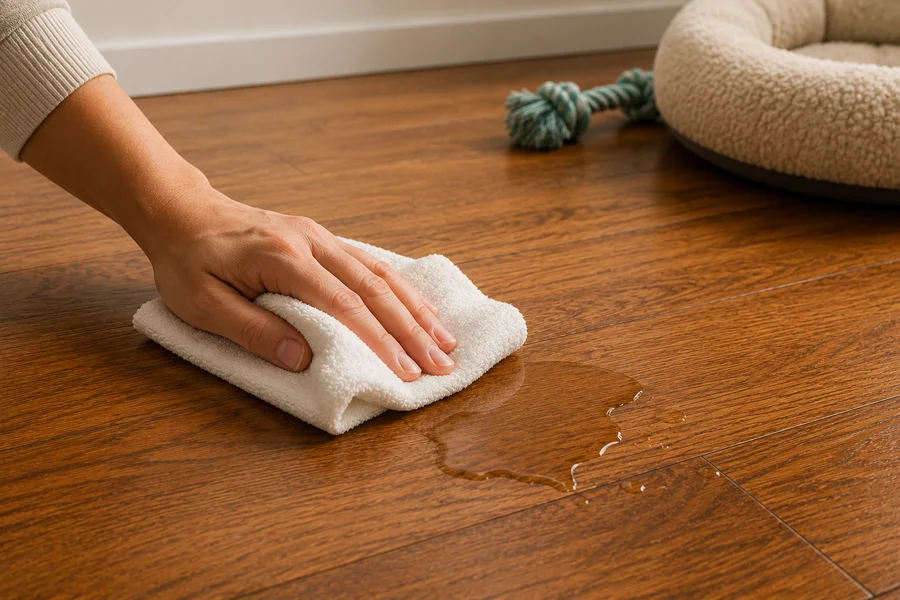
Clean pet accidents as soon as possible and use a product specifically approved for your floor’s finish.
Avoid flooding the area with cleaner, particularly around plank joints and seams.
Persistent odor, dark staining, swelling, or discoloration may indicate that moisture has penetrated deeper into the flooring. In such cases, surface cleaning may not be enough.
How to Remove Scuff Marks
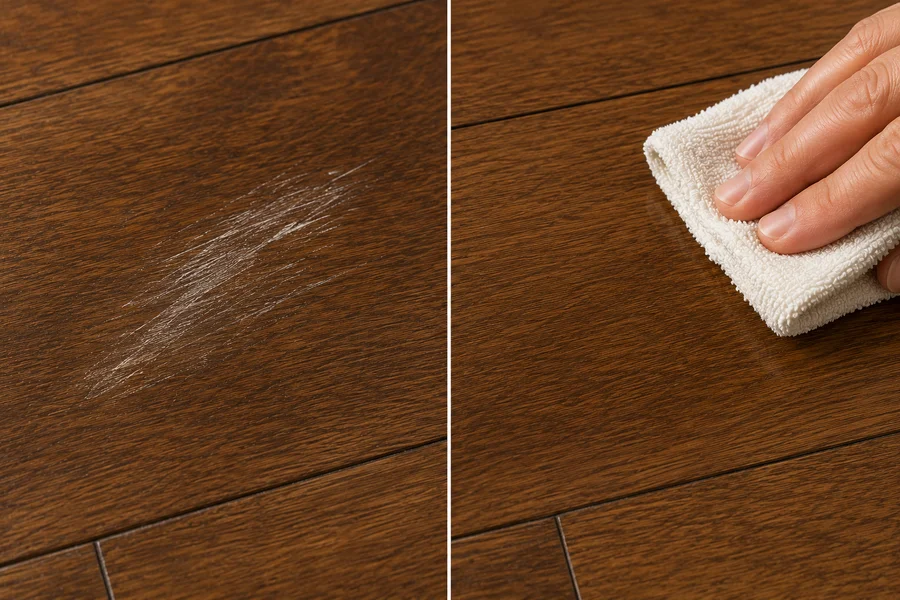
Start with a clean, dry microfiber cloth.
If the mark remains, use a small amount of a finish-compatible hardwood cleaner and gently wipe the area.
Avoid abrasive pads or aggressive rubbing because they can remove or dull the finish.
How to Maintain Hardwood Floors
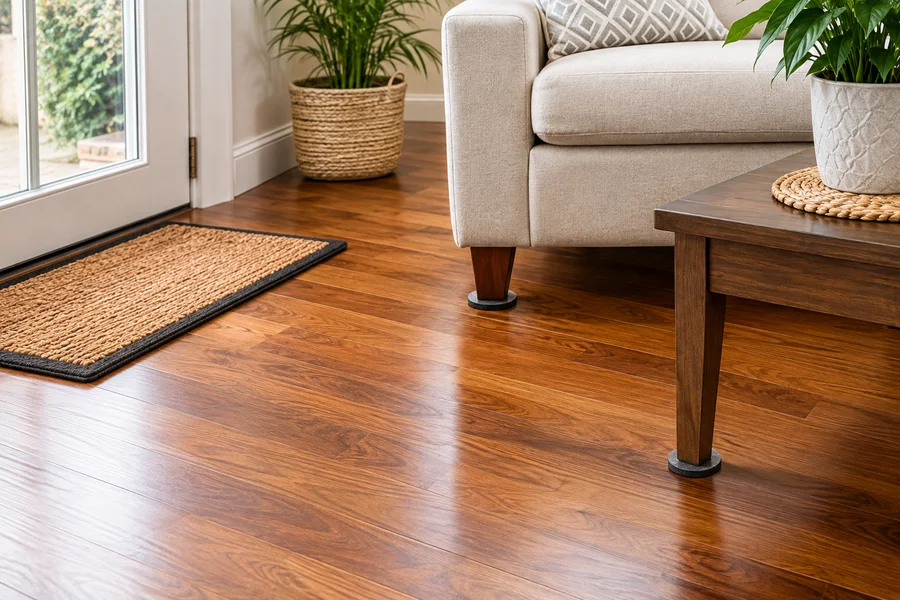
Good maintenance reduces how often you need intensive cleaning and helps protect the finish between deeper cleaning sessions.
For another wood-based flooring option, learn how to clean cork flooring safely and preserve its natural finish.
Use Doormats
Place suitable mats at exterior entrances to reduce the amount of sand, grit, and dirt reaching the hardwood.
Clean the mats regularly so they do not become a source of additional debris.
Use Furniture Pads
Place felt pads under chairs, tables, sofas, and other movable furniture.
Replace worn pads when necessary and lift furniture rather than dragging it across the floor.
Keep Pet Nails Trimmed
Long pet nails can create scratches, particularly in high-traffic areas.
Keep pets’ nails appropriately trimmed and clean areas where outdoor grit can collect.
Clean Spills Quickly
Do not allow water, drinks, pet accidents, or other liquids to remain on the floor.
Blot spills with a soft cloth and clean the area using a finish-compatible product when needed.
Reduce Abrasive Dirt
Regularly remove sand and grit from areas where people walk most often.
This is particularly useful around entrances, hallways, kitchens, and balcony doors.
Protect the Floor From Strong Sunlight
Extended exposure to direct sunlight can contribute to color changes or fading in some hardwood floors.
Use curtains, blinds, or other suitable window treatments where appropriate, and follow the flooring manufacturer’s recommendations.
Maintain Suitable Indoor Humidity
Wood naturally responds to changes in temperature and humidity.
As a general wood-flooring guideline, maintaining indoor relative humidity around 30% to 50% can help reduce excessive seasonal movement. However, the flooring manufacturer’s recommended range should always take priority.
If you notice gaps, cupping, crowning, swelling, or other changes in the floor, investigate the indoor conditions and contact a flooring professional if necessary.
Frequently Asked Questions
How often should I clean my hardwood floors?
Remove dust and grit regularly, vacuum as needed, and damp clean when the floor develops visible dirt or residue and the flooring instructions allow it. Homes with pets, children, or heavy foot traffic may require more frequent cleaning.
Can I mop hardwood floors?
Yes, when the flooring manufacturer’s instructions allow damp cleaning. Use a nearly dry or barely damp microfiber mop and avoid leaving standing water on the floor.
Can I use vinegar on hardwood floors?
Vinegar is not the preferred routine cleaner for hardwood because its acidity may affect some finishes with repeated use. A hardwood cleaner approved for your floor’s finish is a safer choice.
Can I steam clean hardwood floors?
Avoid steam cleaning unless the flooring manufacturer specifically states that the floor is suitable for it. Heat and moisture can damage some hardwood floors and finishes.
What is the best cleaner for hardwood floors?
A hardwood floor cleaner recommended for your specific finish is generally the safest choice. Always follow the product label and flooring manufacturer’s care instructions.
Can I use a vacuum on hardwood floors?
Yes. Use a hard-floor setting or an attachment designed for hardwood, and avoid a rotating brush if it can contact the floor’s finish.
How do I clean hardwood floors without streaks?
Use the correct amount of finish-compatible cleaner, avoid over-wetting the mop, clean in manageable sections, and replace dirty microfiber pads as needed.
How do I make hardwood floors shine again?
First remove dirt and residue using the correct cleaning method. If the floor remains dull after proper cleaning, the finish may need professional maintenance rather than additional cleaner or polish.
Can I use dish soap to clean hardwood floors?
Do not use a generic dish-soap solution as your default hardwood cleaner unless the flooring or finish manufacturer recommends it. Different products can leave residue or behave differently with different finishes.
How do I clean engineered hardwood floors?
Remove loose dirt first, then follow the cleaning instructions for the engineered floor’s specific finish. Use minimal moisture when permitted and do not assume that engineered hardwood is waterproof.
When should hardwood floors be refinished?
Refinishing may be considered when the protective finish is significantly worn, deep scratches have reached the wood, or surface damage cannot be corrected through routine cleaning or maintenance. The appropriate solution depends on the floor’s construction and condition.

Noah Williams
Interior Designer & Flooring Expert