
Noah Williams is an interior designer and flooring expert at Nova Floor. In Dubai, he helps people pick the right floor, get it installed, and keep it looking good. He also writes simple, practical flooring and home care guides for readers in Dubai and around the world.
How to Clean Cork Flooring Safely | 6 Proven Tips & Tricks
Noah Williams
Walk across a cork floor barefoot and you will feel why so many homeowners fall in love with it. It is soft, warm, quiet underfoot, and surprisingly kind to your joints compared to tile or hardwood. But that same soft, natural texture comes with a catch.
Cork is far more sensitive to water, heat, and harsh chemicals than most other flooring, and one wrong cleaning habit can leave it cracked, swollen, or dull far sooner than it should be. The good news is that keeping cork flooring looking its best does not take special skill or expensive tools. It just takes the right routine.
This guide by Nova Floor Experts walks you through exactly how to clean cork flooring safely, step by step, so it stays beautiful for years instead of months.
Contents
Is Cork Flooring Easy to Clean?
Yes, cork flooring is easy to clean once you know the right steps. It does not need harsh chemicals or heavy scrubbing. The key is to keep it dry and use gentle tools. A quick daily sweep and a light weekly clean are usually all it needs.
How Cork Flooring Reacts to Water, Heat, and Chemicals
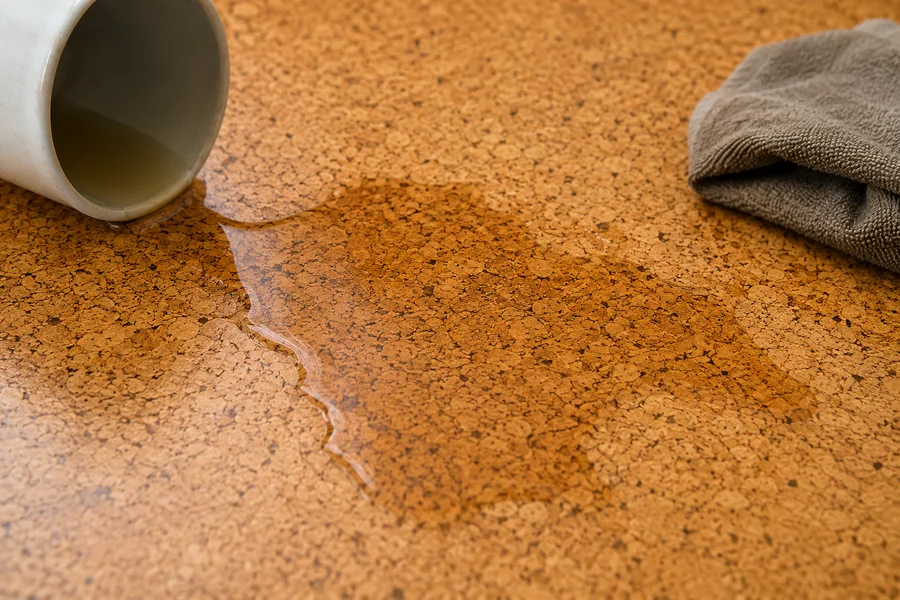
Cork comes from the bark of a tree. It is full of tiny air pockets, which is why it feels soft and springy under your feet. But those same air pockets can soak up water like a sponge. If water sits on a cork for too long, it can seep into the seams and cause the floor to swell or lift.
Heat can also harm cork. Strong sunlight or a heater placed too close can dry out the finish and make it crack over time. Harsh chemicals, like bleach or ammonia, can strip the protective coating on top of the cork. Once that coating is gone, the cork underneath is exposed and can wear out much faster.
This is why gentle cleaning matters so much. You are not just cleaning the surface. You are protecting the material underneath it.
What You Will Need Before You Start Cleaning
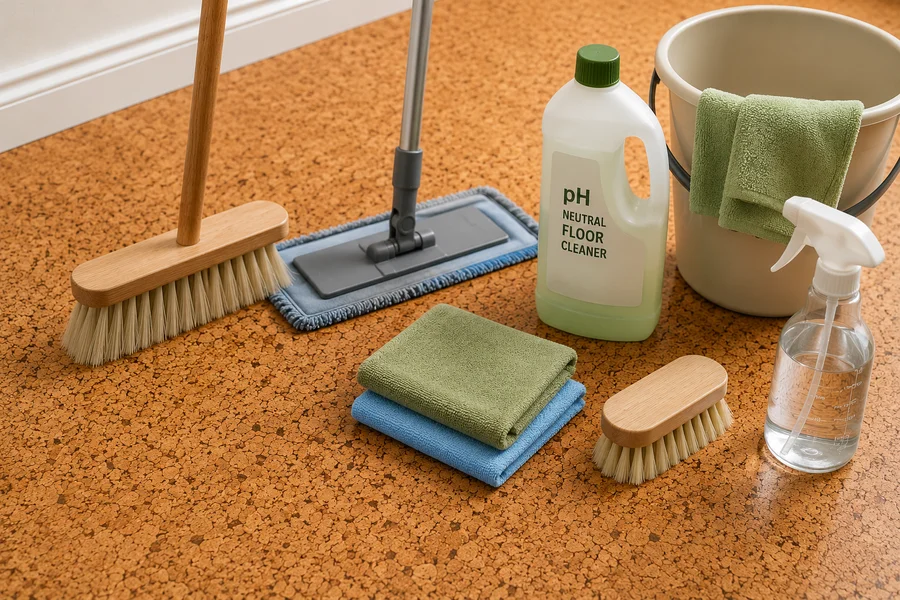
You do not need many tools to clean cork flooring well. Here is a simple list to gather before you begin.
- A soft bristle broom or a dust mop
- A vacuum with a hard floor setting and no beater bar
- A soft, slightly damp cloth or mop
- A mild, pH neutral floor cleaner
- A dry towel for drying the floor after cleaning
- Felt pads for furniture legs, to prevent scratches
How to Clean a Cork Floor the Right Way: Step by Step
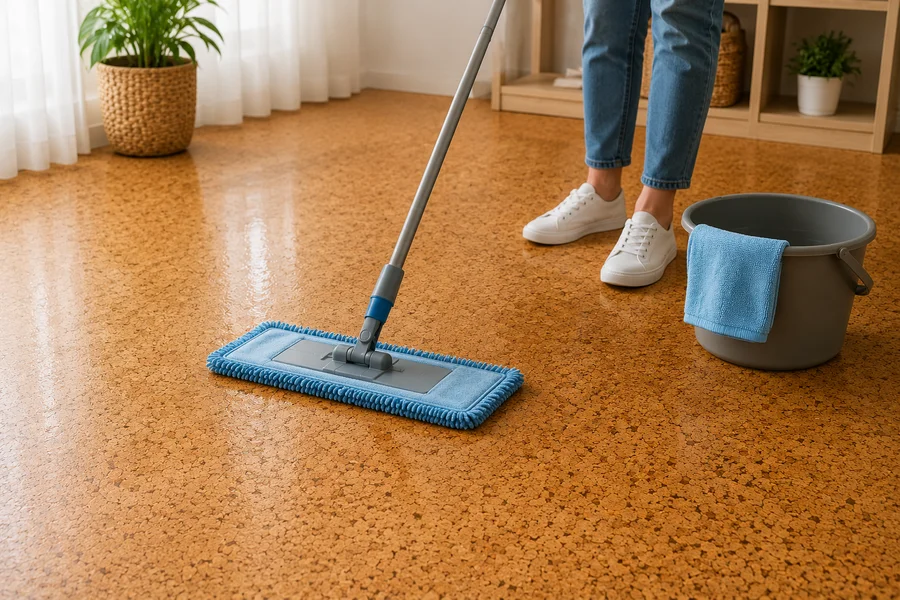
Cork floors need gentle care because they are softer than tile or hardwood and can absorb water easily. Following the right cleaning order protects the finish, prevents warping, and keeps the floor looking new for years. Here is the complete step by step method explained simply.
Step 1: Sweep or Vacuum the Floor First
Before any water touches the floor, all loose dirt and grit must be removed. This step matters because tiny particles left behind can scratch the surface once mopping begins, acting almost like sandpaper under the mop.
- Use a soft broom or a vacuum set for hard floors
- Avoid the beater bar attachment since it can scratch the surface
- Grit left behind can grind into the finish while mopping
- Pay extra attention near doors, entryways, and windows since these areas collect the most dust
Step 2: Prepare Your Cleaning Solution
A gentle cleaning solution keeps the cork floor safe from damage. Using the wrong type of cleaner or water that is too hot can weaken the protective coating over time, so this step should be done carefully.
- Use warm water, not hot water, to protect the finish
- Add a small amount of a mild, pH balanced cleaner made for wood or cork floors
- Avoid strong, scented, or foaming cleaners since they wear down the protective layer
- Mix gently until the solution looks light and evenly blended
Step 3: Wring Out Your Mop Well
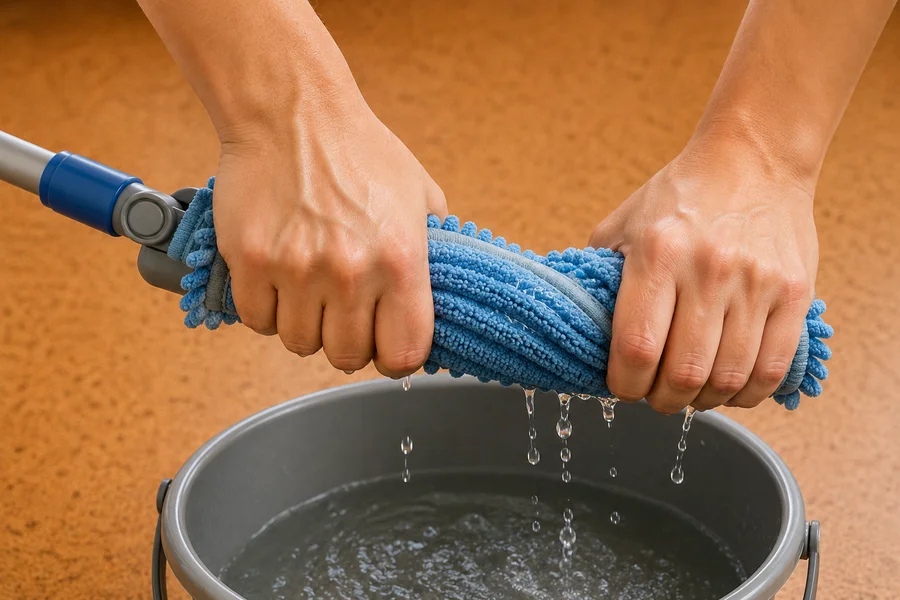
This is one of the most important steps in the entire process. Cork absorbs water quickly, so using a mop that is too wet is the most common cause of long term damage.
- Wring the mop until it feels only slightly damp
- Make sure no water drips from the mop before touching the floor
- If any drops fall, wring it again
- A properly wrung mop should feel barely moist, almost dry to the touch
Step 4: Mop the Floor in Small Sections
Cleaning the floor in small sections helps avoid uneven drying and prevents walking on wet areas. This method also makes the cleaning process more controlled and effective.
- Clean the room in small sections, moving from one corner toward the door
- Use light, even strokes instead of pressing down hard
- Rinse the mop often to avoid spreading dirt back onto the floor
- Avoid walking on sections that are still wet
Step 5: Go Over the Floor with a Dry Mop
Drying the floor right after mopping helps stop water from settling into the seams. Skipping this step is one of the main reasons cork floors swell or warp over time.
- Use a dry mop or a clean, absorbent towel right after mopping each section
- This helps remove leftover moisture before it seeps into the seams
- Treat this step as required, not optional
- It helps protect the floor from long term water damage
Step 6: Let the Floor Air Dry Fully
Letting the floor dry completely is the final and equally important step. Walking on a damp floor can push moisture deeper into the seams and undo all the careful cleaning done earlier.
- Give the floor enough time to dry fully before walking on it
- Drying time depends on room temperature, humidity, and airflow
- Avoid moving furniture back until the floor feels completely dry
- This step protects the results of all previous steps
Daily and Weekly Cork Floor Cleaning Routine
A simple routine keeps dirt and grit from building up and scratching your floor over time.
Daily Cleaning
- Sweep the floor with a soft broom or dust mop to remove loose dirt and dust.
- Pay extra attention to entryways, where sand and grit collect most.
- Wipe up any spills right away, since standing liquid is the biggest risk to cork.
Weekly Cleaning
- Vacuum the floor using the hard floor setting, without the beater bar attachment.
- Lightly damp mop the floor with a mild, pH neutral cleaner mixed with water.
- Dry the floor with a clean towel so no moisture is left sitting on the surface.
What to Clean Cork Floors With (and What to Avoid)
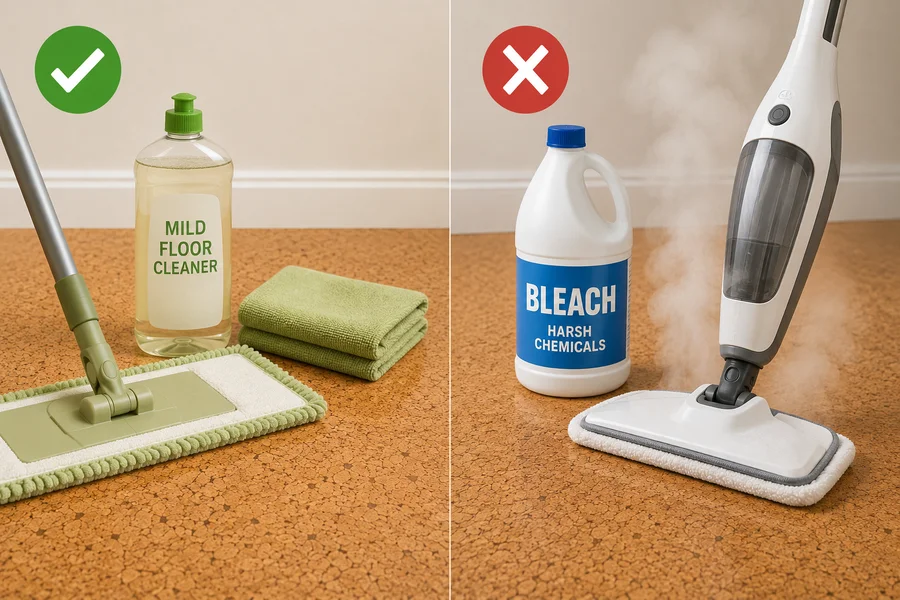
Safe Cleaning Agents
- Mild, pH neutral floor cleaners made for wood or cork
- A small amount of dish soap mixed with warm water
- Plain warm water for light daily cleaning
Products and Habits That Damage Cork
- Bleach, ammonia, or other strong chemical cleaners
- Wax based polishes, which can leave a cloudy film
- Steam mops or soaking wet mops
- Abrasive scrub pads or stiff bristle brushes
- Letting water or spills sit on the floor for a long time
How to Clean Cork Floors Naturally
If you prefer to avoid store bought cleaners, there are a few gentle, natural options that work well on cork.
Using Vinegar Safely on Cork Floors
White vinegar mixed with water can clean cork floors safely if you use it correctly. Mix one part white vinegar with about ten parts warm water. Dip a soft mop into the mixture, wring it out well, and clean the floor as usual. Always use a light hand, since vinegar that is too strong can wear down the floor’s finish over time.
Other Natural Cleaning Methods
- Warm water with a few drops of mild dish soap
- A soft cloth dampened with plain water for quick touch ups
- Baking soda paste for gently lifting small, stuck on spots, wiped away right after
Can You Steam Clean Cork Floors?
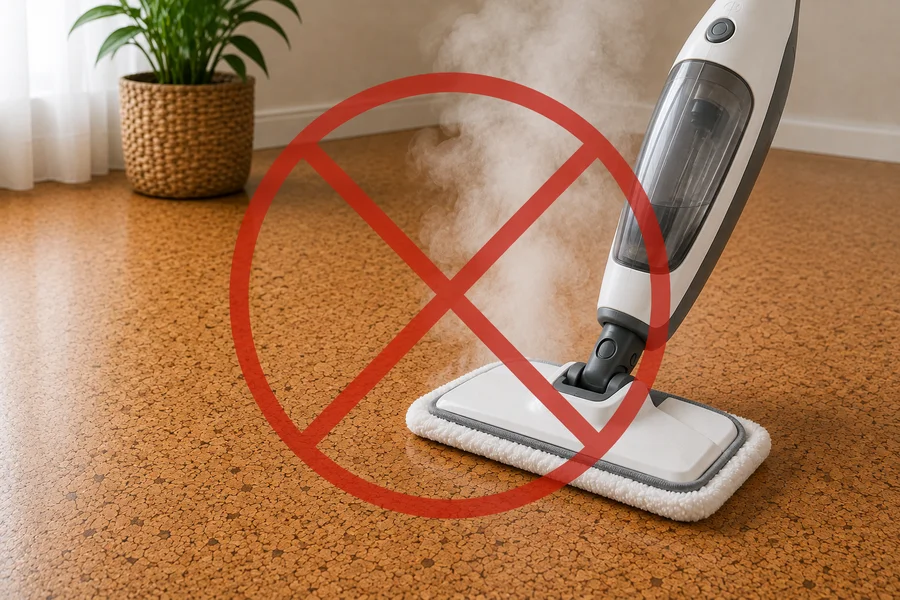
No, you should not steam clean cork floors. Steam mops release hot water vapor directly onto the floor, and both the heat and the moisture can damage cork over time. The steam can soften the finish, cause swelling, and shorten the life of your floor. Stick to a lightly damp mop instead.
How to Remove Stains, Spills, and Scuffs from Cork Flooring
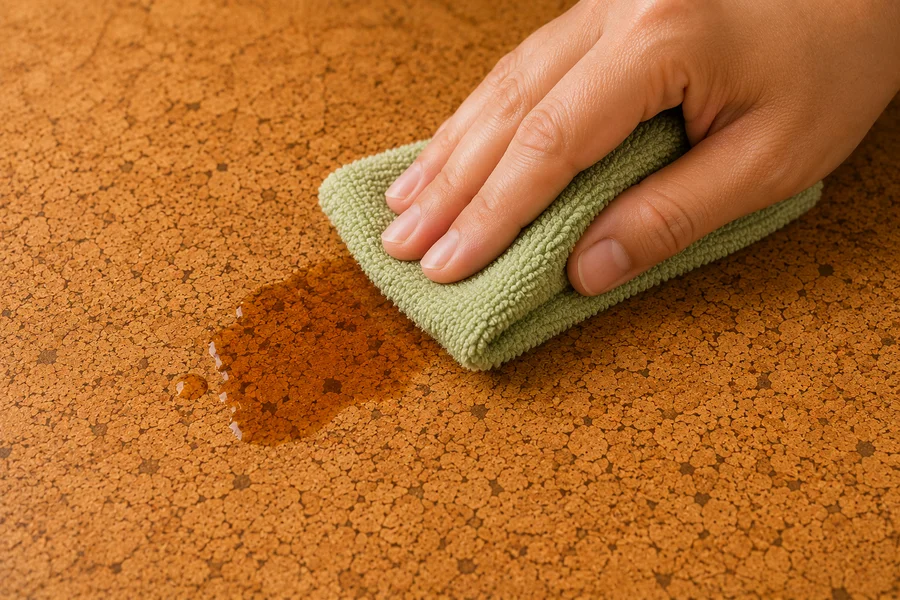
- Wipe up spills immediately with a dry or slightly damp cloth.
- For sticky spots, use a small amount of mild soap and warm water on a soft cloth.
- Gently rub scuff marks with a soft cloth and a bit of the diluted vinegar mixture.
- Never scrub hard or use a rough sponge, since this can scratch the finish.
- For stubborn stains, repeat gentle cleaning a few times rather than pressing harder.
How to Deep Clean and Refinish Cork Flooring
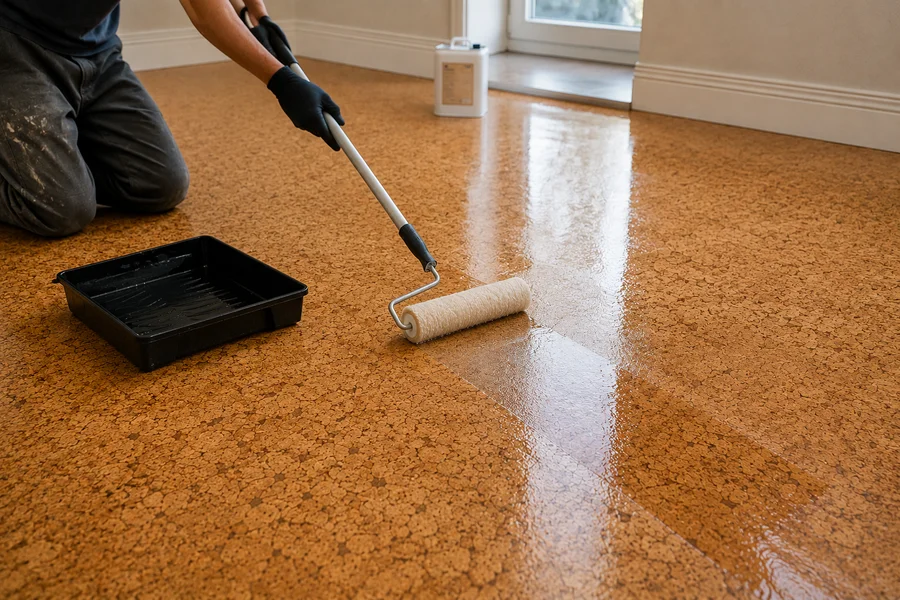
Over time, even a well cared for cork floor will need more than regular cleaning. Refinishing restores the protective layer on top and brings back its shine.
Signs Your Cork Floor Needs Resealing
- The surface looks dull or faded, even after cleaning
- Water no longer beads up on the surface and soaks in instead
- You notice small scratches or worn spots in high traffic areas
- The floor feels rougher than it used to
How Often to Refinish
Most cork floors need resealing every three to five years, though this depends on how much foot traffic they get. Busy areas like kitchens and hallways may need it sooner. A yearly check of how the floor looks and feels will help you catch the right time to refinish.
Common Mistakes That Damage Cork Flooring
- Using too much water when mopping
- Cleaning with bleach or other strong chemicals
- Letting spills sit instead of wiping them up right away
- Skipping felt pads under furniture legs
- Using a steam mop or soaking the floor
- Placing the floor in direct, constant sunlight without any protection
- Waiting too long to reseal a worn floor
How Cork Flooring Compares to Other Flooring for Cleaning and Maintenance
Cork flooring needs gentler care than harder floors like tile or laminate, but it is easier to maintain than carpet. Unlike carpet, cork does not trap dust and allergens, so a quick sweep keeps it fresh. Unlike hardwood, cork is more sensitive to standing water, so spills need faster attention. Compared to vinyl, cork feels warmer and softer underfoot, but it also needs a gentler touch when cleaning, since vinyl flooring can handle stronger cleaners without damage. Knowing these differences helps you set the right care routine from the start.
If your home also features hardwood flooring, learn how to clean hardwood floors while maintaining their natural appearance.
Frequently Asked Questions
Q1. How often should I clean cork flooring?
Sweep or dust mop cork flooring daily to remove grit, and damp mop it once a week. This simple routine prevents dirt buildup and keeps the floor looking fresh without extra effort.
Q2. Can I use a regular mop on cork floors?
Yes, but the mop should only be slightly damp, never soaking wet. A regular soft mop works fine as long as you wring it out well and dry the floor afterward.
Q3. Does cork flooring scratch easily?
Cork can scratch if furniture is dragged across it or if grit is left on the surface. Using felt pads under furniture legs and sweeping regularly will greatly lower the risk of scratches.
Q4. How do I get rid of a musty smell on cork floors?
A musty smell usually means moisture has been trapped somewhere. Clean the floor with a lightly damp mop and mild cleaner, then let it dry fully. If the smell continues, check for water sitting underneath the flooring or nearby leaks.
Q5. Is cork flooring waterproof?
No, cork flooring is water resistant, not waterproof. It can handle light moisture from cleaning, but standing water or heavy spills left too long can cause it to swell or warp.
Q6. What is the best cleaner for cork floors?
The best cleaner is a mild, pH neutral floor cleaner made for wood or cork surfaces. Strong chemicals like bleach or ammonia can strip the finish, so a gentle cleaner mixed with warm water is always the safer choice.
Q7. How long does cork flooring take to dry after mopping?
Most cork floors dry within a short while after a light damp mop, as long as the room has normal airflow. Rooms with poor ventilation or high humidity may take a bit longer, so it is best to wait until the floor feels completely dry before walking on it.
Conclusion
Cork flooring is easy to care for once you understand how it reacts to water, heat, and chemicals. Sweep it daily, damp mop it weekly, and always dry it fully after cleaning. Avoid harsh chemicals, steam mops, and standing water, and watch for signs that it is time to reseal. With this simple routine, your cork floor can stay soft, warm, and beautiful for many years to come.

Noah Williams
Interior Designer & Flooring Expert