
Noah Williams is an interior designer and flooring expert at Nova Floor. In Dubai, he helps people pick the right floor, get it installed, and keep it looking good. He also writes simple, practical flooring and home care guides for readers in Dubai and around the world.
How to Get Mold Out of Carpet: 7 Effective Cleaning & Prevention Tips

Noah Williams
You notice a musty smell. You lift the corner of the carpet. And there it is: green, grey or black spots.
Take a breath. Small patches of carpet mold are common. You can often clean them yourself in one afternoon. The trick is doing it in the right order, so you kill the mold without spreading it through your home.
This guide walks you through it. You’ll learn how to spot mold, which cleaners work, how to dry carpet properly, and when to call a pro or replace the carpet.
Contents
Quick Answer: How Do You Get Mold Out of Carpet?
First, stop the water source. Then put on gloves, goggles and an N95 mask. Check the carpet backing and padding. Brush off loose mold or use a HEPA vacuum. Treat the spot with a carpet-safe antifungal spray or a 1:1 mix of white vinegar and water. Blot it, then dry the area completely within 24 to 48 hours. If the mold covers more than about 10 square feet (roughly 1 m²), has reached the padding, or came from sewage or floodwater, call a professional.
Mold or Mildew? How to Spot Mold in Your Carpet
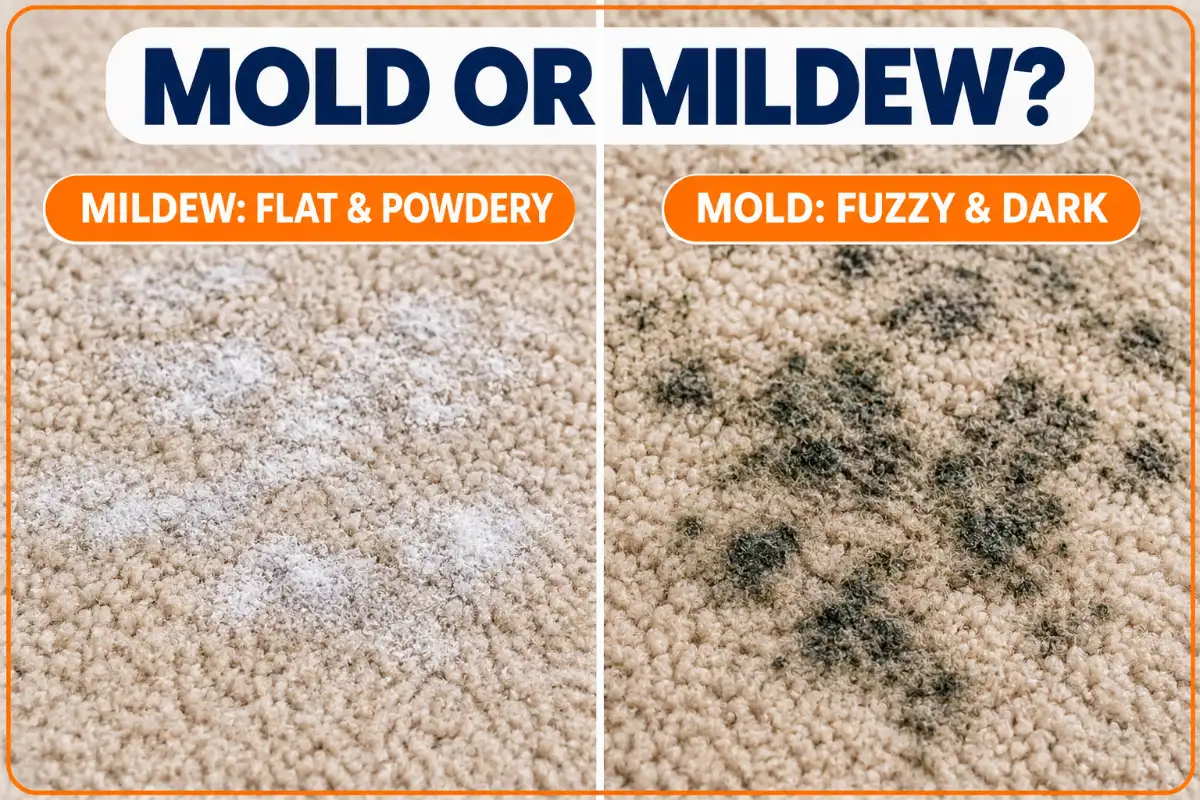
Mildew is mold in its early stage. It looks flat and powdery. It’s usually white, grey or yellow. Mold is fuzzier and darker. Both need the same fix.
Visible Signs of Carpet Mold
- Fuzzy spots in green, grey, black or white
- Round stains that look darker in the center
- Yellow or brown patches that weren’t there before
- Spots near walls, under furniture, near AC units or by doors
The Musty Smell
Your nose often finds mold before your eyes do. The smell is damp and earthy. It gets stronger on humid days. If it returns soon after you air out the room, mold may be hiding below the surface.
Signs of Mold Under the Carpet
Mold often grows on the underside of carpet and padding first. Watch for:
- Carpet that stays damp for more than a day
- Edges that lift or curl
- Spots that feel spongy underfoot
- A water stain on a nearby wall or ceiling
What Causes Mold in Carpet?
Mold needs three things: spores, food and water. Spores float in every home. Carpet gives them food, like dust, skin flakes and old spills. So water is the one thing you can control.

Common causes include:
- Spills that never dried. Juice, coffee, pet accidents or mop water.
- Leaks. Pipes, windows, washing machines or the roof.
- AC problems. A blocked AC drain line or a full drip tray can leak onto carpet without you noticing.
- High humidity. Coastal cities like Dubai and Abu Dhabi get very humid in summer. That damp air settles into carpet fibers.
- Closed-up homes. A villa locked up for the summer with the AC off traps hot, wet air.
- Wet carpet cleaning. Carpet shampooed and left damp for days.
- Carpet in wet rooms. Bathrooms, laundry rooms and kitchens stay damp.
- Plant pots and pet bowls placed straight on the carpet.
Is Moldy Carpet Dangerous?
A small patch is not an emergency for most healthy adults. But mold isn’t harmless either.
Mold can cause sneezing, a runny nose, red eyes and skin rashes. It can also trigger asthma attacks in people who are allergic to it. Kids, older adults and anyone with asthma or a weak immune system feel it most.
Here’s something many people miss. Dead mold can still cause allergic reactions. So you need to remove it, not just kill it.
Skip the DIY if you have asthma, allergies, a lung condition or a weak immune system. Ask someone else to do it, or call a pro.
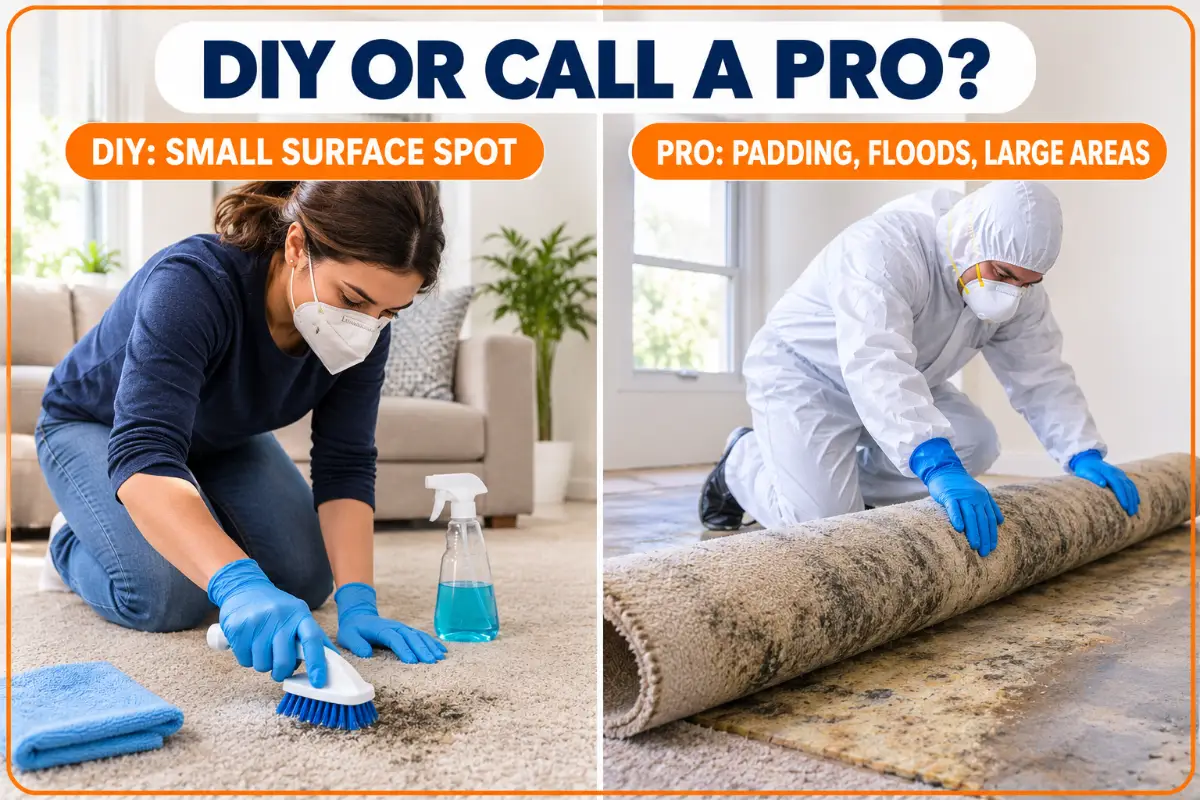
Can You Clean It Yourself? Use This Quick Decision Table
| Your situation | What to do |
| Small spot, surface only, under 10 sq ft (about 1 m²) | Clean it yourself with this guide |
| Padding or backing is moldy | Replace the padding. Clean or replace the carpet |
| Mold covers more than 10 sq ft, or many spots | Call a professional |
| Floodwater or sewage soaked the carpet | Replace it. Don’t try to clean it |
| Carpet stayed wet for 48 to 60 hours or more | Get it checked. Replacement is likely |
| Musty smell keeps coming back | Look for hidden mold or a hidden leak |
| Someone at home has allergy or breathing symptoms | Call a professional |
Tools and Safety Gear You’ll Need
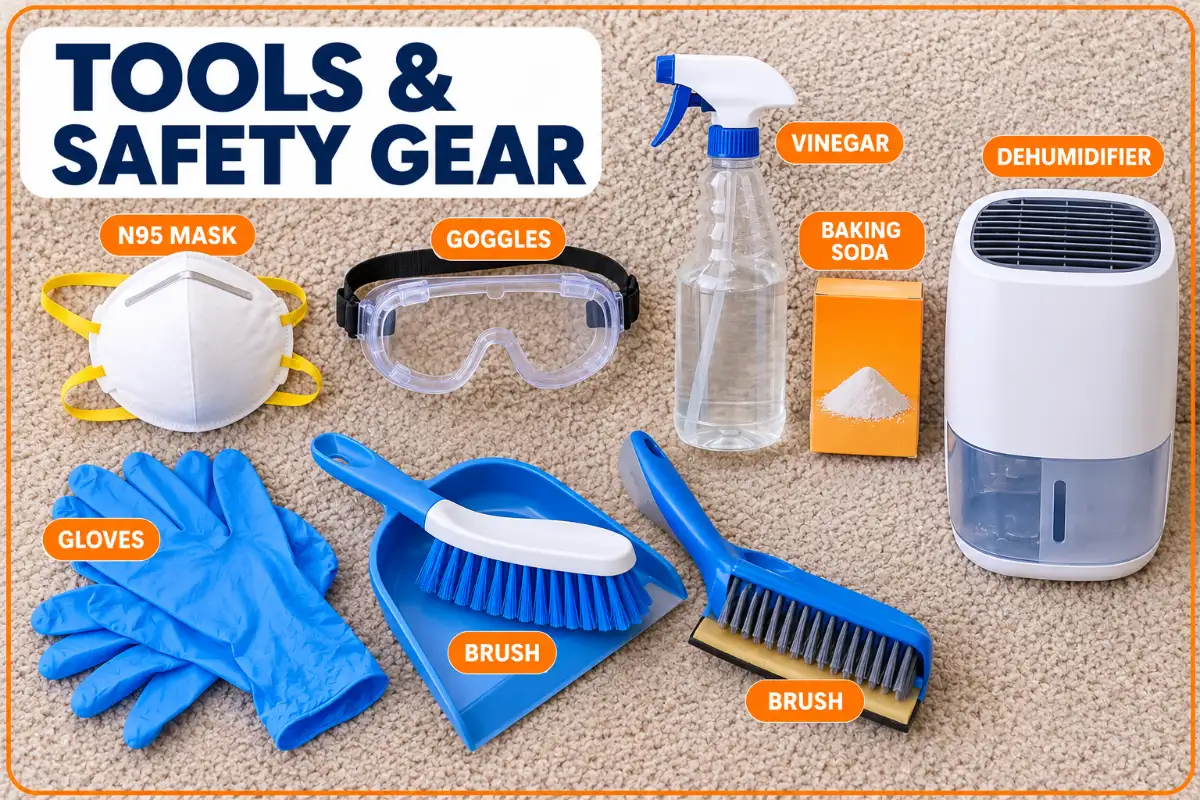
Safety gear
- N95 respirator (not a basic dust mask)
- Rubber or nitrile gloves
- Goggles without vent holes
- Long sleeves and old clothes you can wash right after
Cleaning supplies
- Stiff-bristle brush and a dustpan
- Spray bottle
- Carpet-safe antifungal spray, or white distilled vinegar
- 3% hydrogen peroxide (optional)
- Baking soda
- Clean, disposable rags or paper towels
- Heavy-duty trash bags
- HEPA vacuum or wet/dry vacuum, if you have one
- Dehumidifier and a cheap humidity meter
How to Get Mold Out of Carpet: 7 Effective Tips (Step by Step)
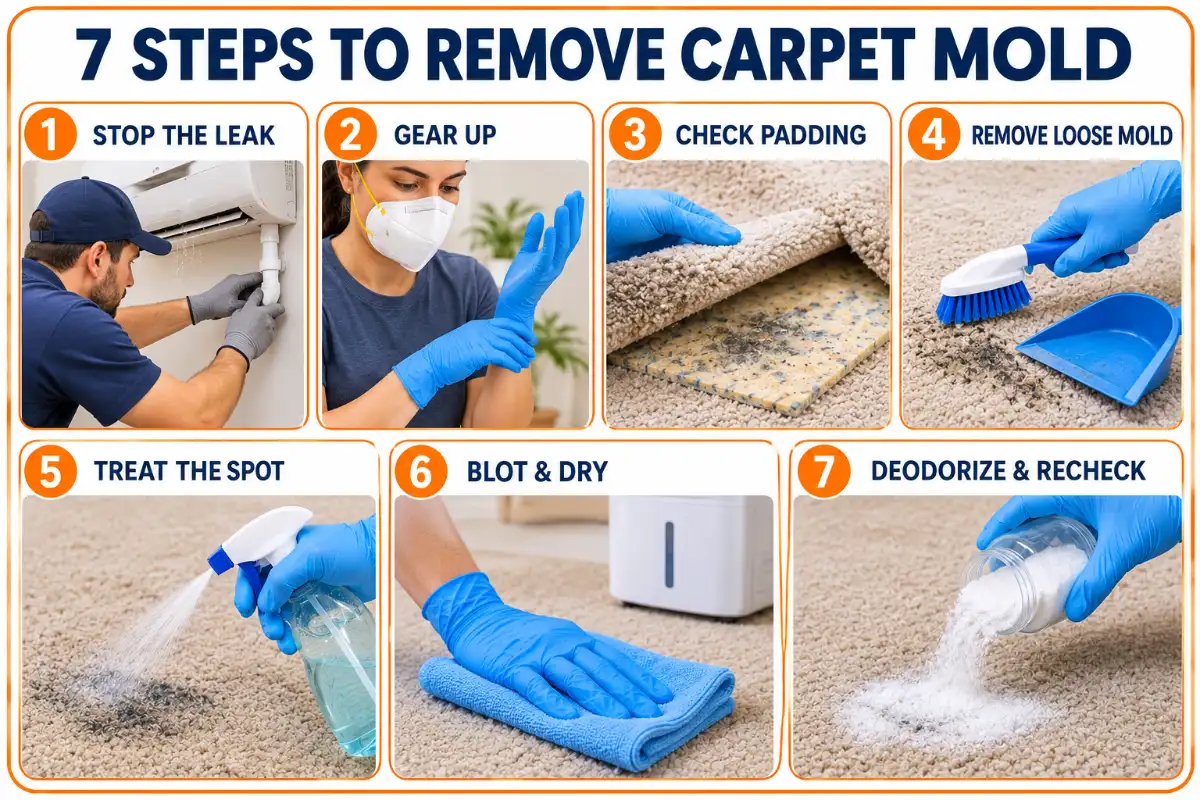
Tip 1: Find and Stop the Moisture Source
Start here, not with a cleaner. If you clean the mold but leave the leak, the mold will grow back.
Check the AC unit, nearby pipes, windows and walls. Look up at the ceiling too. Fix the leak, or call someone who can. If you need help, here’s a list of trusted home maintenance companies in Dubai for AC and plumbing repairs.
Tip 2: Gear Up and Prepare the Room
Put on your mask, gloves and goggles. Close the doors to other rooms. Open a window if the outside air is dry.
Mark the moldy area with painter’s tape. Now you know exactly where to clean.
Tip 3: Check the Backing and the Padding
Lift a corner of the carpet if you can. Use pliers to pull it off the tack strip. Look at the carpet’s back, the padding and the floor.
- Padding looks clean and dry? Keep going.
- Padding is moldy or wet? Throw it out. Padding acts like a sponge, and cleaning can’t reach mold inside it.
- Floor looks dark, soft or damp? Check these signs of subfloor damage before you go further.
Tip 4: Remove Loose Mold Without Spreading It
Scrub the spot with a dry, stiff brush. Sweep the loose mold into a dustpan. Drop it in a trash bag, tie it tight, and take it outside right away.
Use a HEPA vacuum if you own one. A regular vacuum can blow spores back into the room. When you finish, empty the HEPA vacuum outside and seal the bag and filter in plastic.
Tip 5: Treat the Spot With a Carpet-Safe Cleaner
Always test first on a hidden spot, like inside a closet. Wait 10 minutes and check for color change.
Then pick one cleaner:
- Antifungal spray (best for most carpets). Choose one labeled safe for carpets. Spray the moldy area plus about 6 inches (15 cm) around it. Spray the back of the carpet and the floor too, if you can reach them. Leave it as long as the label says. That’s often about an hour.
- White vinegar (natural option). Mix equal parts white vinegar and water. Spray, scrub gently, and leave it for up to an hour.
- Hydrogen peroxide (light synthetic carpet only). Mix 1 part 3% peroxide with 2 parts water. Leave it for a few hours, then scrub.
Scrub in small circles. Don’t soak the carpet. More water means more mold.
Safety rule: Never mix bleach with other cleaners, especially ammonia. It can create toxic fumes.
Tip 6: Blot, Then Dry the Carpet Completely
Blot the area with clean, dry rags. Press down. Don’t rub.
Now dry it. This is the step most people rush.
- Run a dehumidifier in the room with the door closed.
- Keep the AC on. It pulls moisture out of the air.
- Let the carpet dry for at least 24 hours.
What about fans? Skip them while loose mold is still on the surface, because they can blow spores around. After you clean and blot, a fan aimed low across the floor can speed things up.
Test it with a paper towel. Press it into the carpet pile. If it comes up damp, keep drying. Our guide on how to clean a carpet has more tips for drying carpet fast.
Tip 7: Repeat, Deodorize and Recheck
Once the carpet is fully dry, treat it one more time and dry it again. This catches any mold the first round missed.
To remove the leftover musty smell, sprinkle baking soda over the spot. Leave it overnight, then vacuum.
Wash your brush and dustpan in hot, soapy water. Throw used rags and gloves away in a sealed bag.
Check the spot every few days for two to three weeks. If the smell or spots return, something is still feeding the mold. Look for a hidden leak or damp padding.
Natural Ways to Remove Mold From Carpet: What Actually Works?
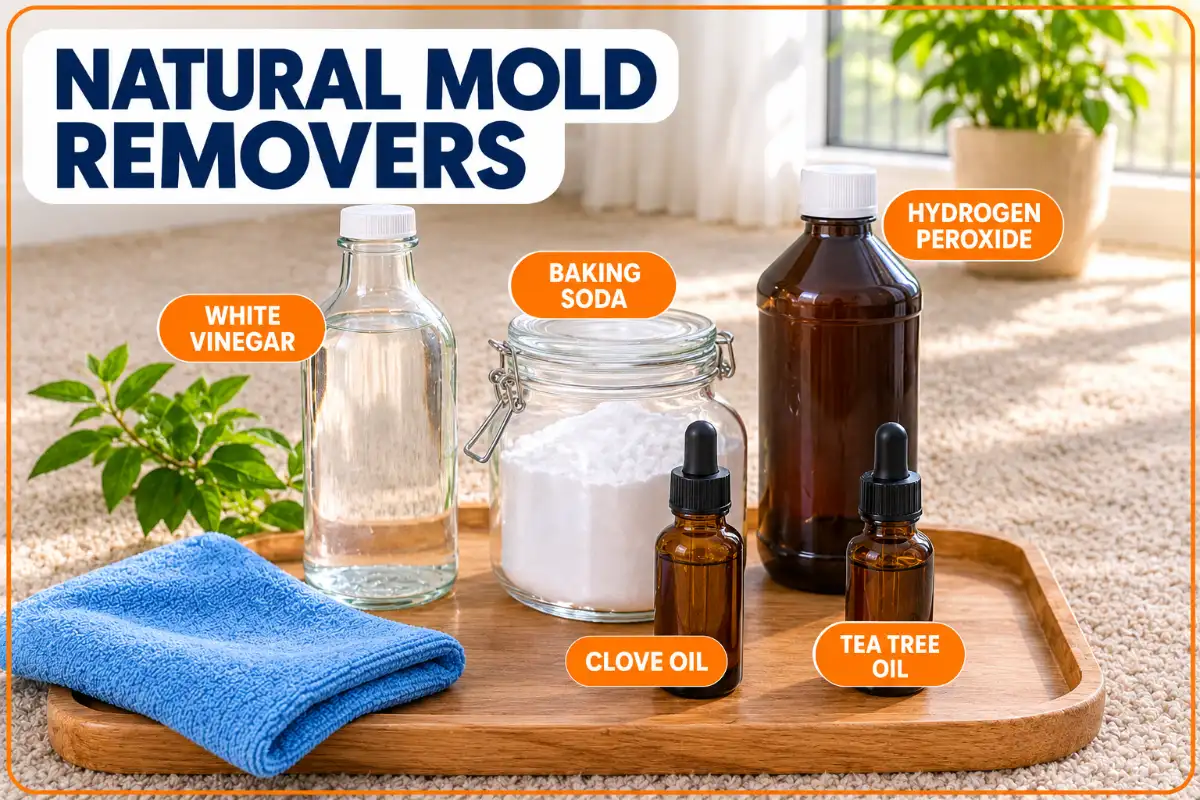
| Remedy | How to use it | Best for | Watch out |
| White vinegar | 1:1 with water, leave up to 1 hour | Small surface spots, mildew | Works better on hard surfaces than thick carpet. May need two rounds |
| Baking soda | Sprinkle, leave overnight, vacuum | Musty smell, light dampness | Absorbs odor and moisture but doesn’t reliably kill mold |
| Hydrogen peroxide (3%) | 1 part to 2 parts water | Light-colored synthetic carpet | Can bleach colors |
| Clove oil | ¼ tsp per litre of water | Small spots | Very strong. Test first |
| Tea tree oil | A few drops in water | Small spots | Keep pets away. It’s toxic to cats and dogs |
| Sunlight | Dry the rug outside | Removable rugs | Can fade colors |
| Bleach | Not recommended | — | Stains carpet, doesn’t reach the padding, and isn’t advised for routine mold cleanup |
What about steam cleaning? Professional steam equipment runs above 200°F and can kill spores deep in the carpet. But steam also adds moisture. Only use it if the carpet can dry fast. A pro with strong extraction is the safer choice.
Special Cases
Mold on Area Rugs
Rugs are easier because you can move them.
- Take the rug outside and brush off loose mold.
- Use the vinegar mix on synthetic rugs.
- For wool, silk or hand-knotted rugs, skip peroxide and bleach. Use a wool-safe cleaner or call a rug specialist.
- Dry both sides in direct sun. Sunlight helps kill leftover mold. Move the rug to shade once it’s dry, to protect the colors.
Mold in Car Carpet
A damp car in summer heat is perfect for mold. Here’s how to fix it:
- Pull out the floor mats and dry them outside.
- Vacuum the carpet with a wet/dry vacuum.
- Spray a 1:1 vinegar mix. Scrub and blot.
- Leave the doors open in the sun to dry, or run the AC on fresh-air mode.
- Find the leak. Check door seals, sunroof drains and the AC drain under the dashboard.
If mold covers the whole floor, a car detailer may need to remove the carpet.
Musty Smell but No Visible Mold
Hunt for the source. Check behind sofas, inside closets, under area rugs, and along the carpet edge near the AC. A humidity meter helps too. If a room keeps reading above 60%, that’s your problem area. An air purifier with a HEPA filter can catch spores floating in the air while you fix the damp.
6 Mistakes That Make Carpet Mold Worse
- Hiding the spot. A rug or sofa on top blocks airflow and lets mold spread unseen.
- Scrubbing too hard. Wire brushes tear fibers and push mold deeper.
- Walking on the wet spot. Shoes and paws carry spores to other rooms.
- Shaking a moldy rug indoors. Always do it outside.
- Putting furniture back too soon. Wait until the carpet is dry all the way through.
- Storing rugs rolled up while damp. A rolled, damp rug is a mold factory.
When to Replace Moldy Carpet or Call a Professional
If your situation matches the “call a pro” or “replace” rows in the table above, don’t fight it alone.
Pay extra attention to flood and sewage water. Experts call this Category 3 water. Carpet soaked by it should come out, and the surfaces underneath need disinfecting. Pros who remove moldy carpet often follow the IICRC S520 standard for mold cleanup.
Is the carpet backing moldy across more than a few feet? Cleaning won’t fix it. You’ll need new carpet.
A cheaper fix: If the mold sits in a corner or under a bed, a fitter can cut out the damaged section plus a 12-inch (30 cm) border and fit a patch. Replace the padding under it too.
Replacing your carpet? Choose smarter this time:
- Carpet tiles let you swap out one damaged tile, not the whole floor. Our office carpet tiles work well in homes too.
- New wall-to-wall carpet can go over a waterproof underlay. That stops spills soaking into the padding.
- Wet rooms need a different floor. For bathrooms, laundry rooms and kitchens, skip carpet. A 100% waterproof option like SPC flooring is a better fit.
How to Prevent Mold in Carpet

- Control humidity. Keep indoor humidity below 60%, ideally between 30% and 50%.
- Dry spills the same day. Even a coffee spill can feed mold if it stays damp. Here’s how to remove coffee stains from carpet and dry it without brown rings.
- Service your AC. Clean the drip pans and keep the drain lines clear.
- Don’t seal the house shut in summer. Traveling? Leave the AC on a moderate setting, or run a dehumidifier.
- Vacuum every week. Less dust means less food for mold.
- Protect carpet from plants. Use glazed pots on a rubber tray, never terracotta straight on the carpet.
- Let air flow. Pull furniture a few centimetres away from walls.
- Check the rest of your home. Carpet mold often comes with bathroom mold. Here’s how to clean tile grout mold safely.
FAQs
How fast does mold grow on wet carpet?
Mold can start growing within 24 to 48 hours. Humid rooms and thick carpet speed it up. That’s why fast drying matters so much.
What is the best thing to kill mold in carpet?
A carpet-safe antifungal spray is the most reliable choice. White vinegar is a good natural option for small, fresh spots.
Is black mold on carpet more dangerous?
You can’t tell a mold’s type by its color alone. Treat every mold the same way: protect yourself, remove it and fix the moisture. If you see visible mold, testing is usually not needed.
Can mold spread from carpet to other rooms?
Yes. Spores travel through the air, AC systems, shoes and pet paws. Close doors while you clean, and keep people and pets off the area.
Can a dehumidifier alone fix carpet mold?
No. A dehumidifier stops new growth by drying the air. But it won’t remove mold that’s already there. You still need to clean it.
Is it safe to sleep in a room with moldy carpet?
It’s best not to. You breathe in that air for hours every night. Treat or replace moldy bedroom carpet even if no one feels sick yet.
How long does carpet take to dry after mold treatment?
Plan on at least 24 hours. Thick carpet, padding or a humid room can take two or three days. Don’t call it done until it’s dry all the way through.
I rent my home. Who should fix the carpet mold?
Tell your landlord or building manager about the leak or mold right away. The water source is usually their job to fix. Take photos first so you have a record.
Final Thoughts
Finding mold in your carpet feels awful. But you’re not stuck with it. Most small spots clear up in an afternoon, plus a day of drying.
The real win is what comes after. Keep humidity low, catch leaks early, and choose the right floor for each room. Do that, and mold won’t get a second chance.

Noah Williams
Interior Designer & Flooring Expert