New flooring can feel confusing because many options look similar. Terms like SPC, vinyl, laminate, and WPC flooring often sound alike, but they have important differences. Many people choose a floor based on its appearance, then experience problems with water, wear, or comfort within a year. SPC flooring helps reduce these concerns, which is why more people are searching for it today.
Nova Floor experts explain what SPC flooring is, how it is made, and how much it costs in this guide. Information about installation, expected lifespan, and choosing the right option for your space also appears in this guide. Each section provides clear answers in a simple format without unnecessary details.
Contents
What Is SPC Flooring?
SPC stands for Stone Plastic Composite. This is the direct answer to what SPC flooring is. The name rigid core flooring comes from its solid base layer, which stays firm instead of bending like traditional vinyl flooring.
The term rigid also explains the SPC flooring meaning shown in many flooring guides today. This strong core stays stable when indoor temperatures change during the day. That quality makes SPC different from softer flooring options.
Many people search only for what is SPC without adding the word flooring. In most cases, they are looking for this same rigid core material. Today, this flooring appears in homes, offices, kitchen, and retail spaces around the world.
Types of SPC Flooring
SPC flooring comes in several styles, finishes, features, and installation options. Each type works better for certain rooms and everyday needs.
By shape
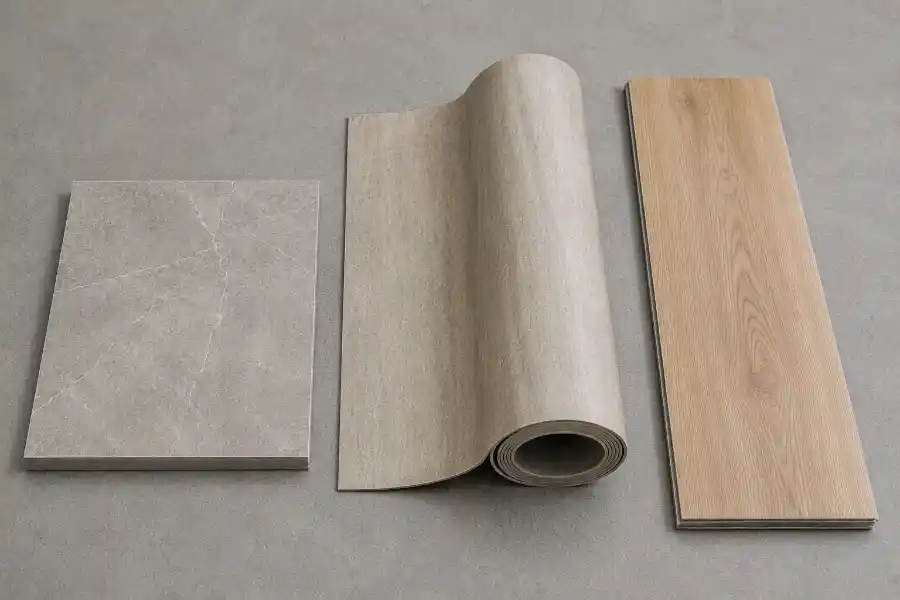
- Tile format, made in square or rectangular pieces to resemble stone
- Sheet format, supplied in large rolls for wide floor areas
- Plank format, designed as long boards for a wood style appearance
By look
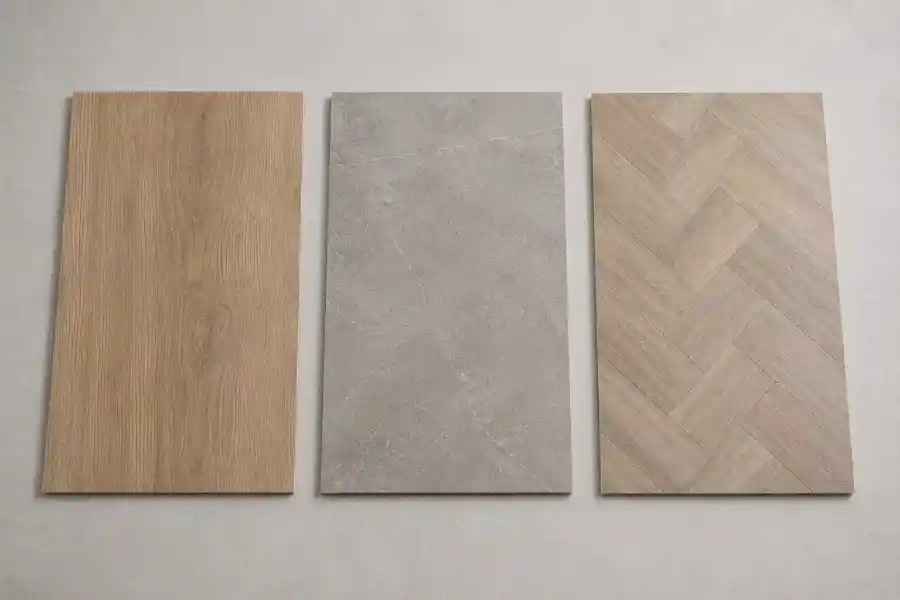
- Wood look, finished with realistic grain patterns
- Stone look, created with the appearance of natural stone
- Herringbone pattern, arranged in angled rows for a decorative design
By feature
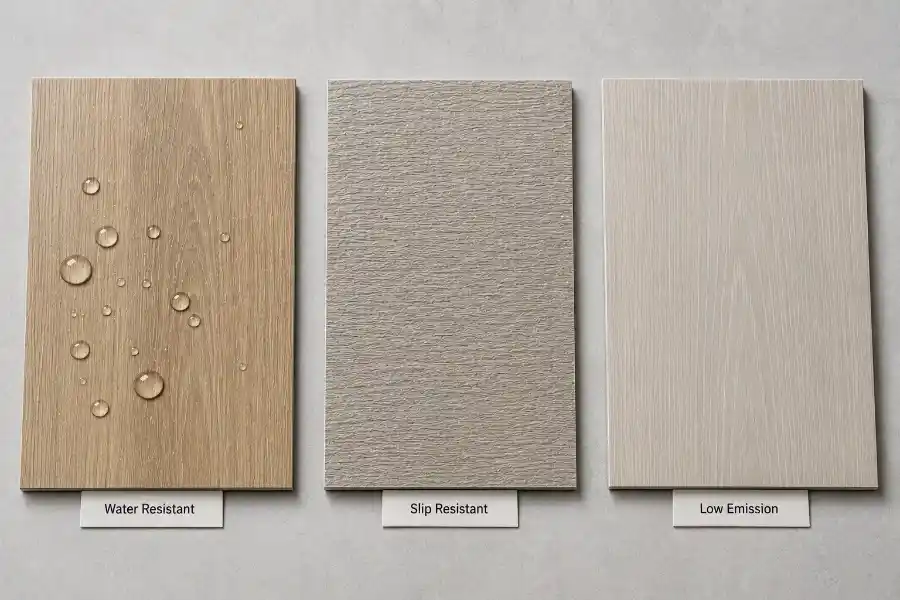
- Extra water resistant, suitable for bathrooms and kitchens
- Slip resistant, textured to improve grip underfoot
- Low emission, produced with fewer added chemicals
By installation method
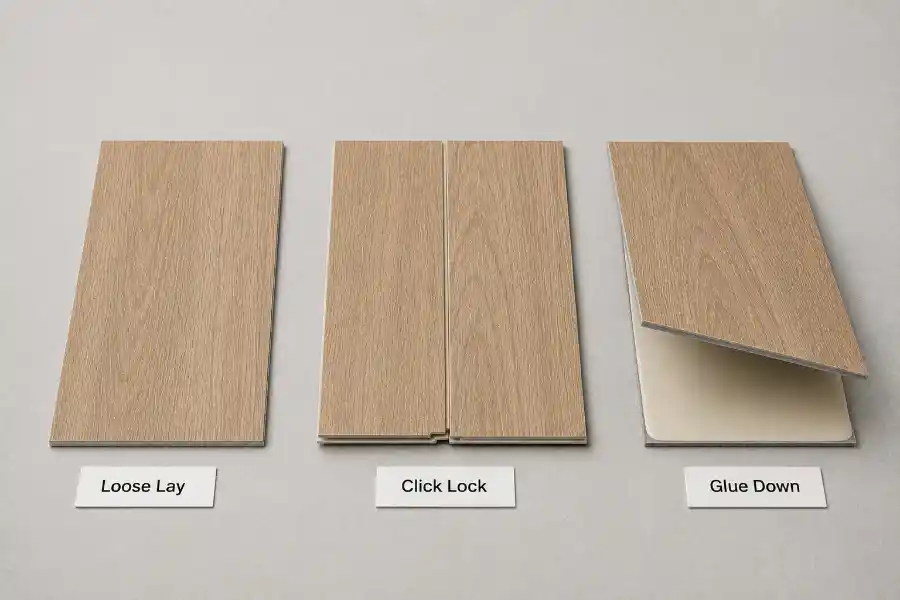
- Loose lay, placed without glue or locking joints
- Click lock, connected without adhesive
- Glue down, attached directly to the subfloor
These categories do not represent separate flooring products. One plank can include a wood look finish with a click lock system. Most homeowners choose the right combination based on the room and its daily use.
How SPC Flooring Is Made: Layer by Layer
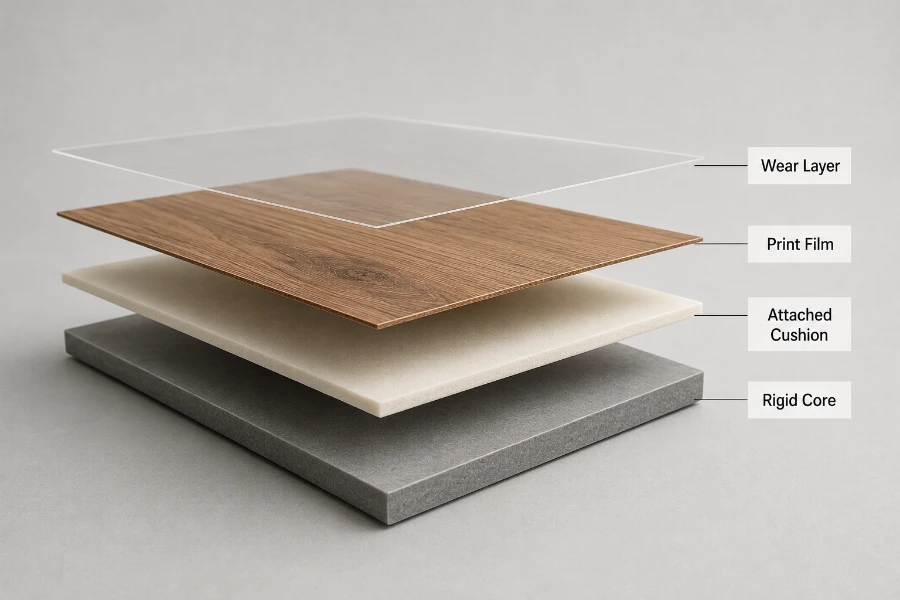
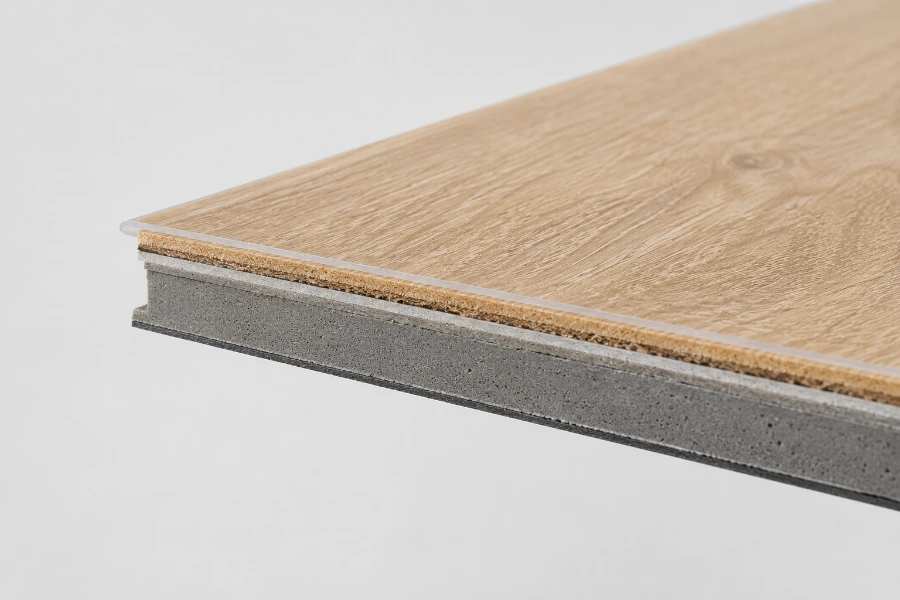
SPC flooring contains four separate layers pressed together. Each layer follows a fixed order, from the bottom layer to the top surface.
1. Rigid core
This bottom layer creates the main structure of the plank. Limestone powder combined with plastic compounds adds strength and stability. This layer keeps the flooring firm during daily use.
2. Attached cushion
This layer sits directly above the core. It adds a softer feel while walking on the floor. It also helps reduce sound movement between floors in multi level homes.
3. Print film
This layer creates the floor’s color and design. Manufacturers add wood grain or stone patterns through high quality printing. Detailed images help create a more realistic surface appearance.
4. Wear layer
This top layer protects the layers underneath. A clear protective coating helps resist scratches, stains, and everyday wear. Thicker wear layers usually support heavier foot traffic.
These four layers explain how SPC flooring gets its structure and performance. Each layer has one specific purpose within the plank design.
Is SPC Flooring the Same as Vinyl?
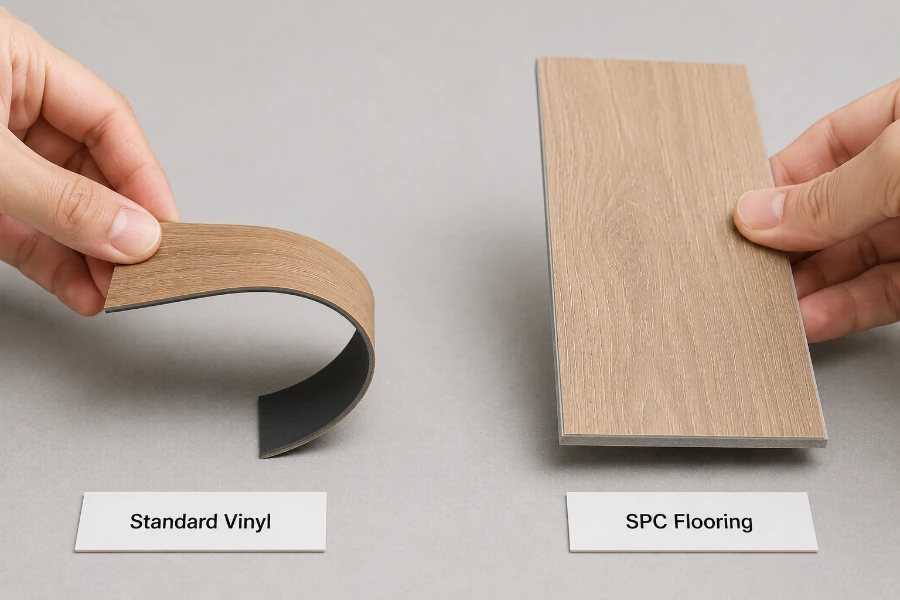
SPC flooring belongs to the larger vinyl flooring category. It is different from regular vinyl products available in many stores.
Standard vinyl
Standard vinyl uses a soft and flexible base. This base can bend, stretch, or dent under pressure. Its performance depends on a smooth, level subfloor.
SPC vinyl flooring
SPC vinyl flooring uses a rigid core instead of a flexible base. This firm center provides better stability under daily foot traffic. It can also handle minor subfloor imperfections more effectively.
The core structure creates the main difference between the two flooring types. Both options offer water-resistant features and similar surface designs. The internal structure, not the outer appearance, separates them.
Key Benefits of SPC Flooring
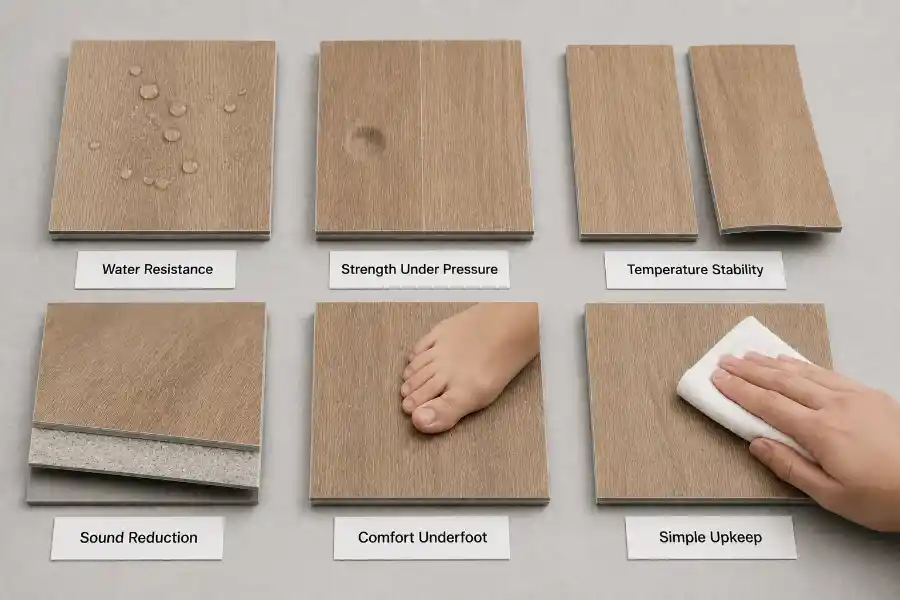
SPC flooring provides several advantages beyond its construction and appearance. These features explain why many homeowners prefer it for different spaces.
- Water resistance: Spills and moisture remain on the surface instead of passing through the floor. This makes SPC flooring a suitable choice for kitchens and bathrooms.
- Strength under pressure: Heavy furniture, regular foot traffic, and daily use create fewer marks. The rigid core helps prevent dents that softer flooring may develop.
- Temperature stability: Changes in room temperature do not easily cause gaps or warping. SPC flooring stays stable through different seasons and climate conditions.
- Sound reduction: The attached cushion layer helps reduce footsteps and impact noise. This feature is useful in apartments and rooms on upper floors.
- Comfort underfoot: SPC flooring feels more comfortable than hard tile surfaces. The cushion layer provides slight softness while keeping the floor stable.
- Simple upkeep: Regular cleaning takes little effort and does not require special tools. Sweeping and occasional mopping help maintain the surface appearance.
Each advantage connects to a different part of the plank design. Together, these features show why SPC flooring works well in many residential and commercial areas.
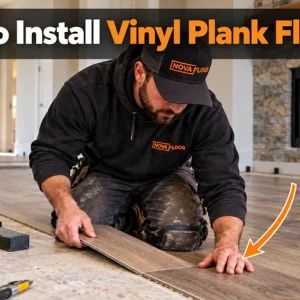
How SPC Flooring Is Installed
SPC flooring installation follows a simple step by step process. The method can vary based on the fitting option selected earlier.
Step 1: Prepare the subfloor
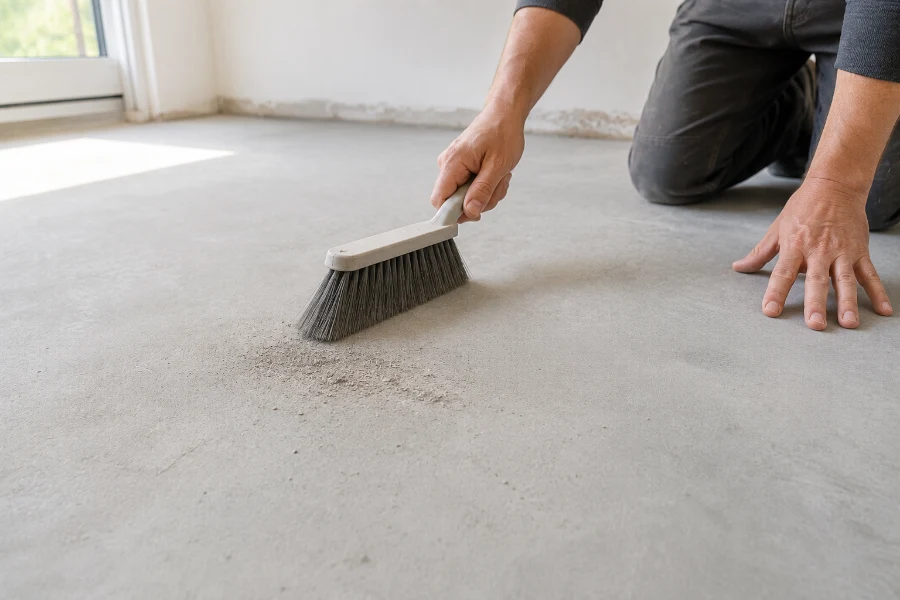
The existing surface needs to stay clean, dry, and level. Dust, debris, or uneven areas can affect plank placement.
Step 2: Leave expansion gaps
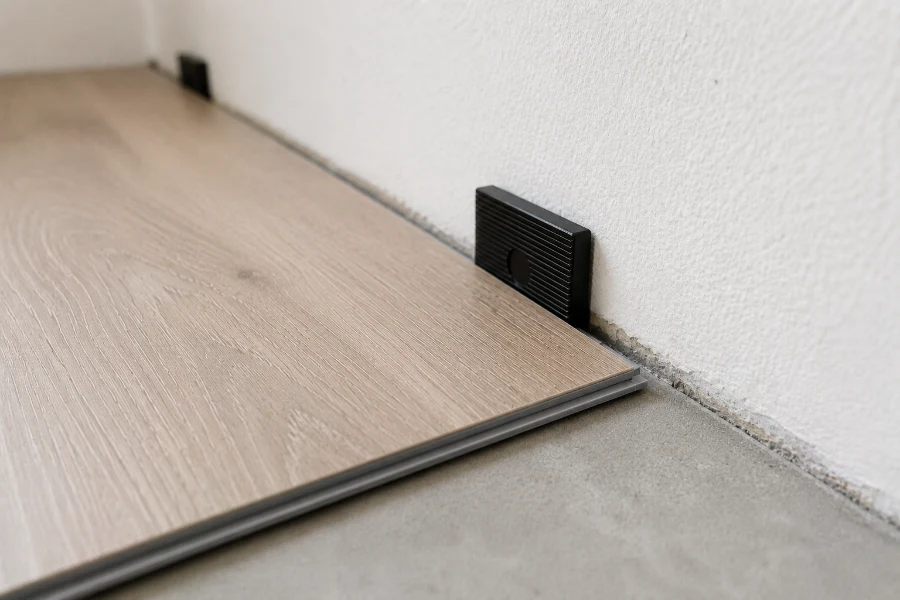
Small spaces remain around the room edges during installation. These gaps allow the flooring to adjust as temperatures change.
Step 3: Fit the planks
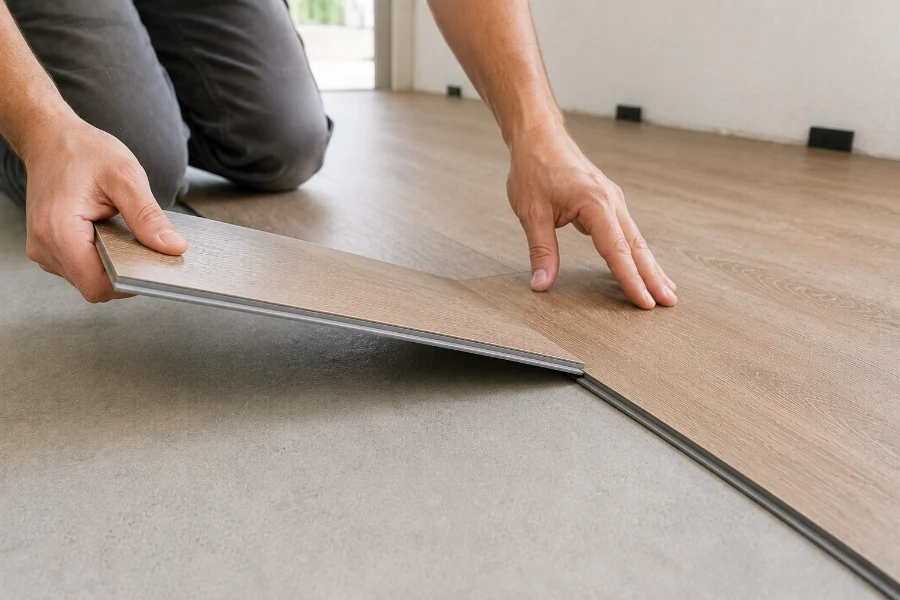
Click lock planks connect along the edges. Glue down planks attach directly to the subfloor with flooring adhesive.
Step 4: Cut planks for edges
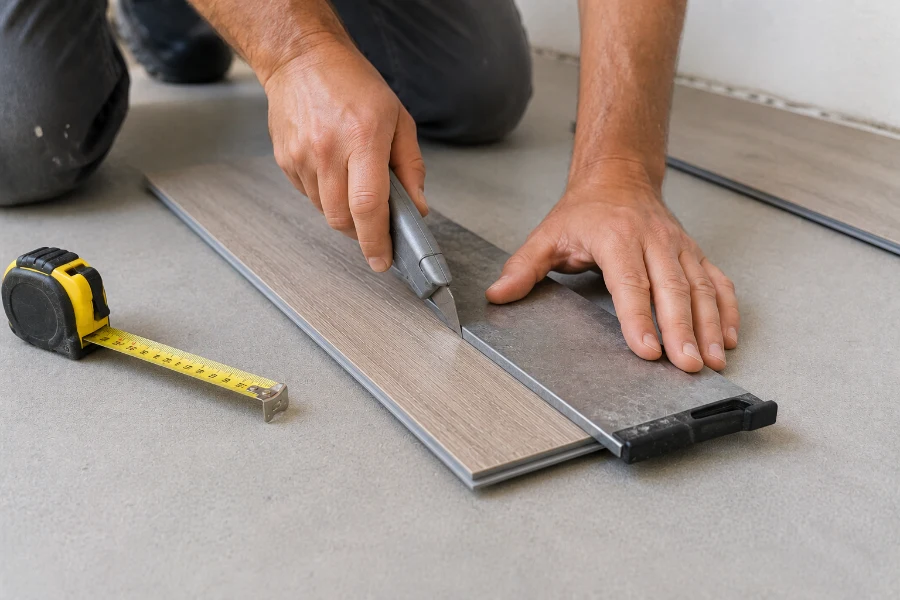
Planks near walls, corners, or doorways may need size adjustments. Careful measurements help create accurate cuts before placement.
Step 5: Add finishing trims
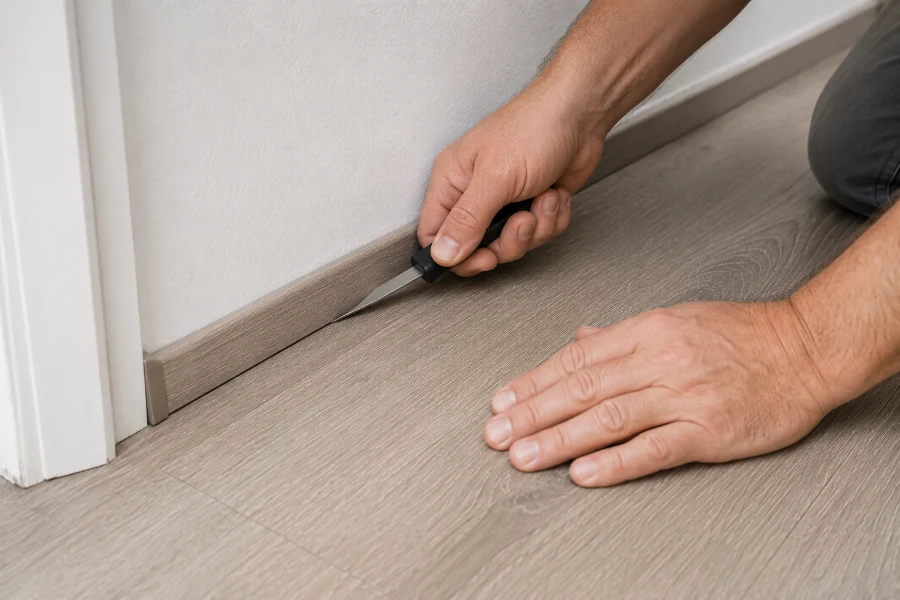
Skirting boards and transition strips cover the expansion spaces. This final step creates a neat and complete floor appearance.
Most SPC flooring projects finish within one or two days. Room size and layout details can change the total installation time.
How Long Does SPC Flooring Last
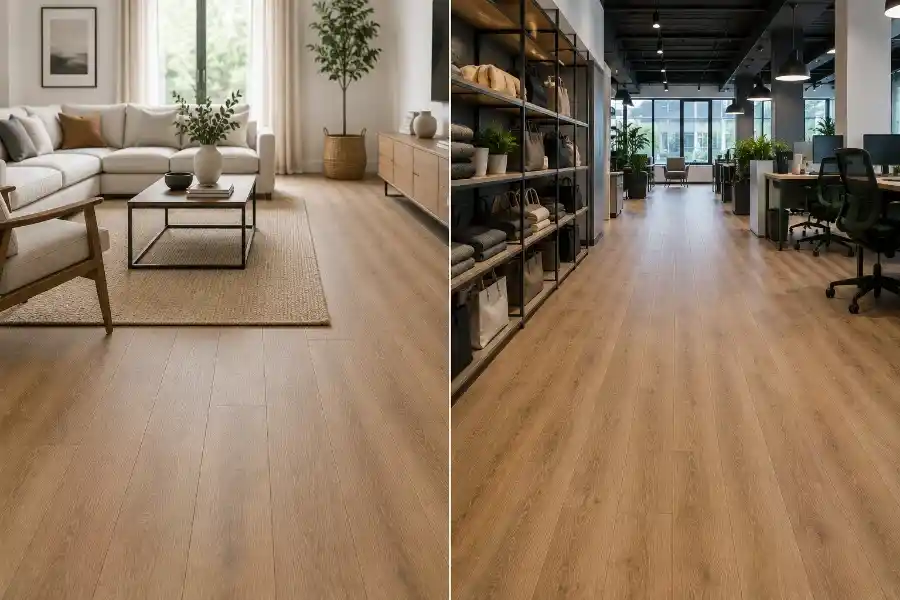
SPC flooring can provide reliable performance for many years with normal use. Its expected lifespan depends on several important factors.
Average lifespan
Most SPC flooring lasts around 15 to 25 years. This range applies to floors used in regular residential conditions.
Residential use
Homes usually have lower and less frequent foot traffic. SPC flooring in bedrooms or living areas can often last closer to 25 years.
Commercial use
Offices, stores, and public areas experience heavier daily activity. SPC flooring in these spaces often lasts closer to 15 years.
Wear layer impact
A thicker wear layer helps reduce surface damage over time. This factor affects how long the top protective layer remains effective.
Warranty coverage
Many manufacturers provide warranties between 10 and 20 years. Warranty periods often match the expected durability of each flooring product.
The actual lifespan depends on daily use and maintenance habits. Proper care helps SPC flooring reach its expected service life.
Caring for SPC Flooring
SPC flooring needs little effort to stay in good condition. A few simple habits help keep the surface looking fresh for years.
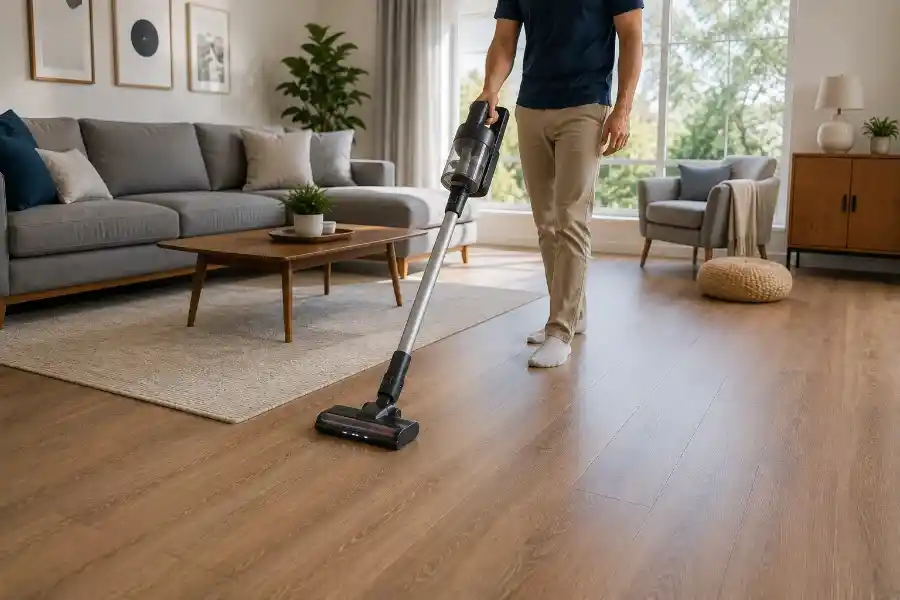
- Regular sweeping: Sweep or vacuum the floor a few times each week. This removes dust and small particles before they create scratches.
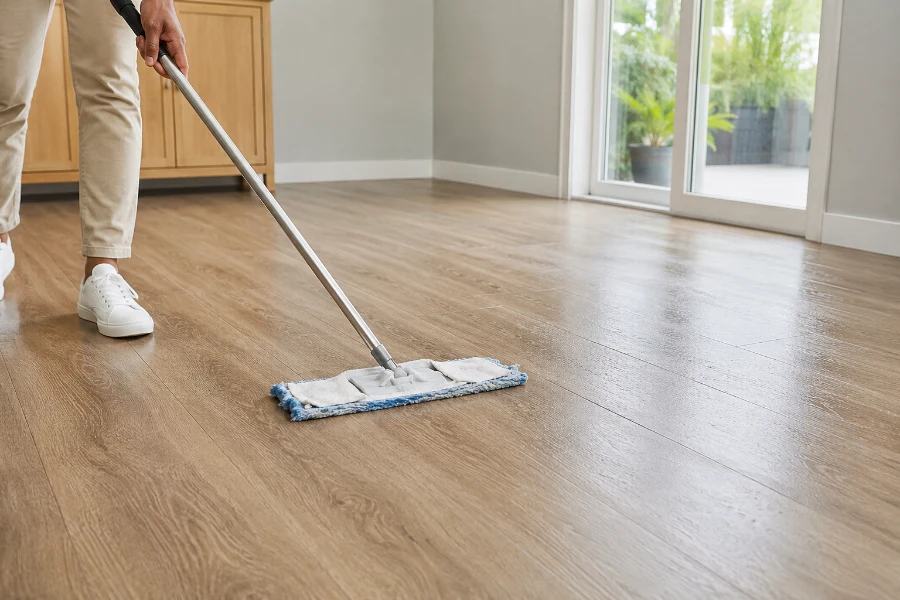
- Damp mopping: Clean the floor with a damp cloth or mop only. Avoid using too much water during cleaning.
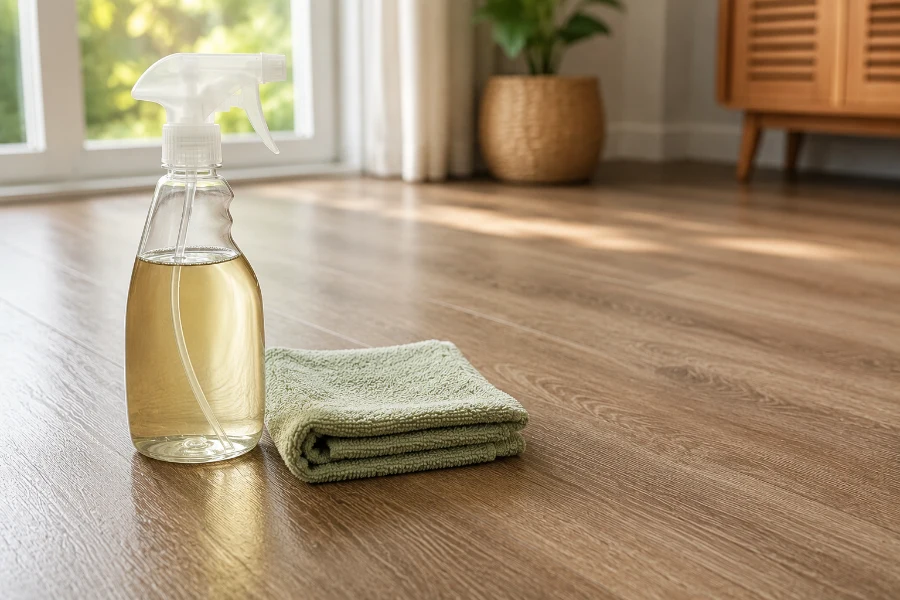
- Mild cleaning products: Use a mild, pH-neutral cleaner made for hard floors. Strong chemicals can damage the protective wear layer over time.
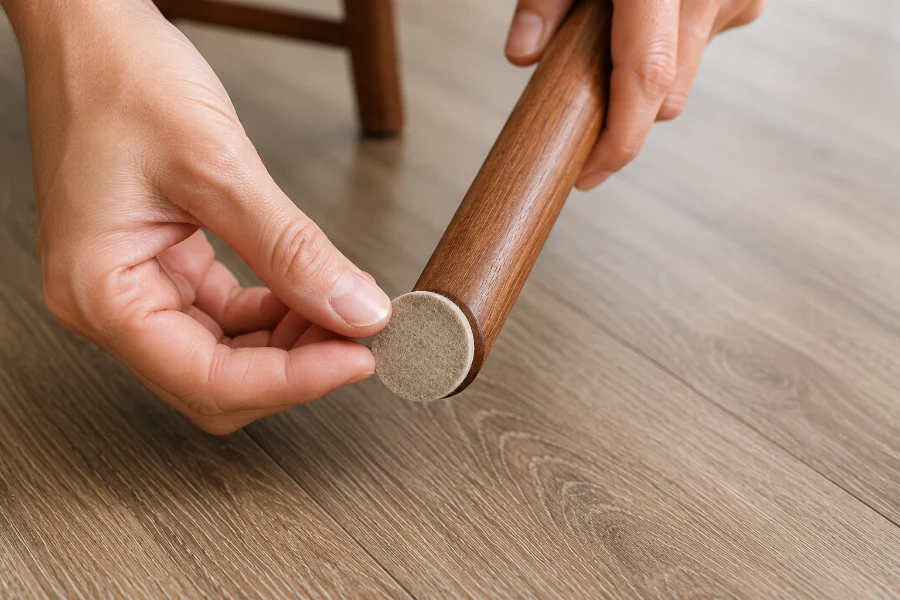
- Furniture pads: Add felt pads under furniture legs before moving items. This helps prevent scratches when chairs or tables move.
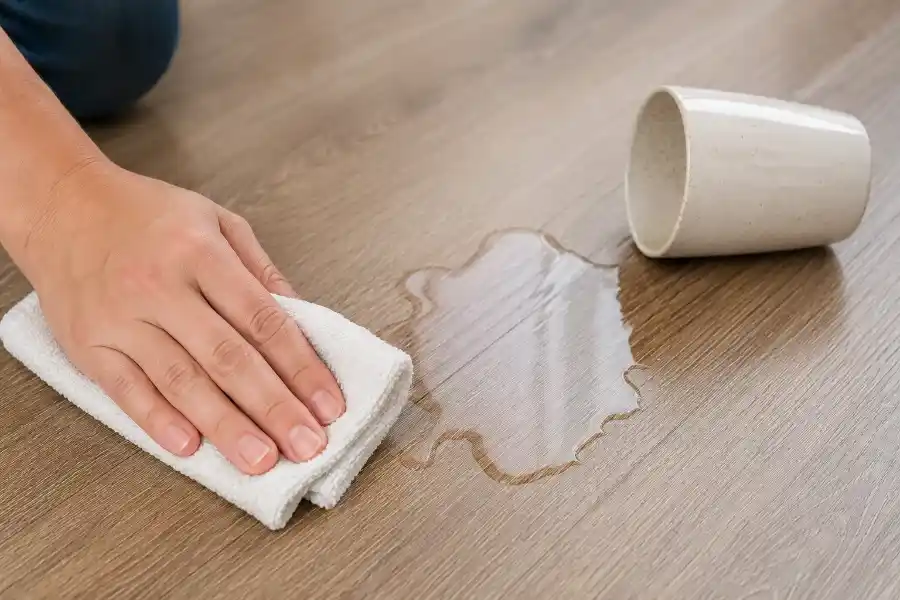
- Prompt spill cleanup: Clean spills as soon as they happen. Long exposure to liquid can affect the floor finish.
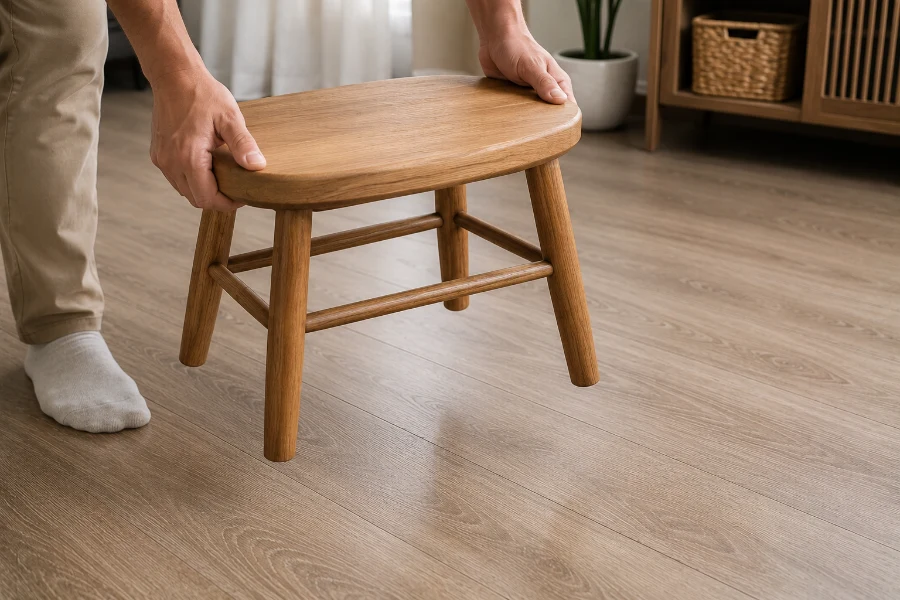
- Careful object handling: Avoid pulling heavy or sharp objects across the surface. Lifting items instead of dragging them helps prevent damage.
How Much Does SPC Flooring Cost
Cost becomes an important factor after understanding what SPC flooring offers. This section focuses on pricing only and does not repeat earlier performance details.
Material price range
SPC flooring material usually costs between 15 and 45 AED per square foot in Dubai. Product thickness and finish quality affect the final price range.
Installation cost
Professional installation usually adds 8 to 20 AED per square foot. This amount covers labor, tools, subfloor checks, and finishing trims.
DIY installation
Click lock planks can reduce total project expenses when installed without professional help. This option works better for small rooms with simple layouts.
What raises the price
Thicker wear layers usually cost more because they provide added surface protection. Detailed designs such as herringbone patterns can increase material prices compared to basic plank styles. Well known brands may also have higher prices than newer suppliers.
The total project price depends on room size and selected finish. A local supplier quote provides the most accurate estimate for each space.
SPC Flooring vs Other Flooring Types
This table compares SPC flooring with three common flooring options. Each category shows one key difference for easier comparison
| Feature | SPC Flooring | Laminate | Hardwood | WPC |
| Waterproof | Yes | No | No | Yes |
| Durability | High | Medium | Medium | High |
| Comfort underfoot | Medium | Medium | High | High |
| Stability | High | Medium | Low | Medium |
| Relative cost tier | Budget to mid | Budget | Premium | Mid to premium |
| Sound insulation | High | Low | Low | High |
Laminate transmits more sound since it lacks a cushioned backing layer. Hardwood also carries sound easily across rooms below. SPC and WPC both include attached cushioning, which lowers noise from footsteps. Knowing how to install laminate flooring can also help improve the flooring setup and sound control.
Explore more flooring solutions with our guide to the most popular flooring types available in Dubai.
Choosing the Right SPC Flooring for Your Space
The right SPC flooring choice depends on the room, daily activity, and expected use. Each area needs a suitable option for better results.
Kitchens & bathrooms
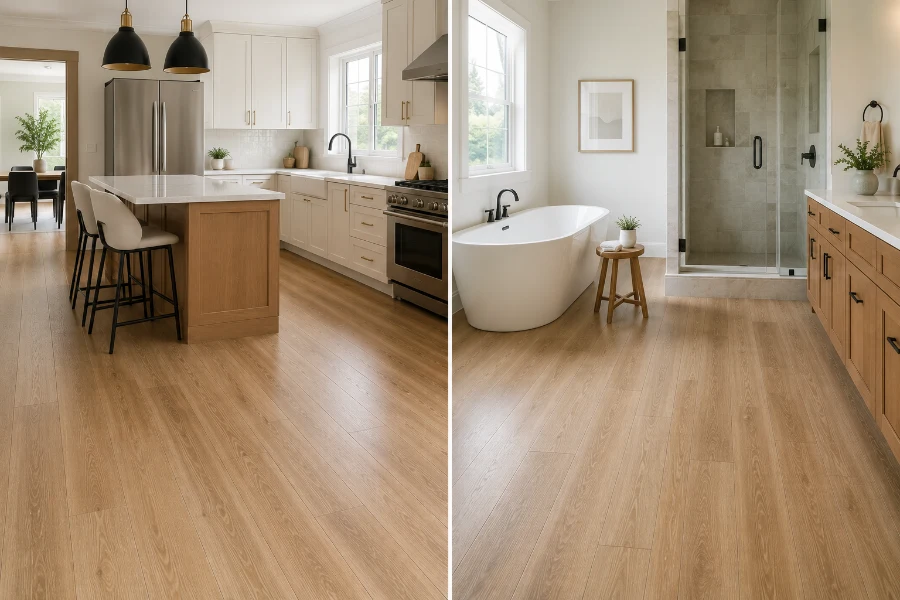
An extra water resistant option works well for these areas. This type handles frequent spills and regular moisture exposure.
Living rooms & bedrooms
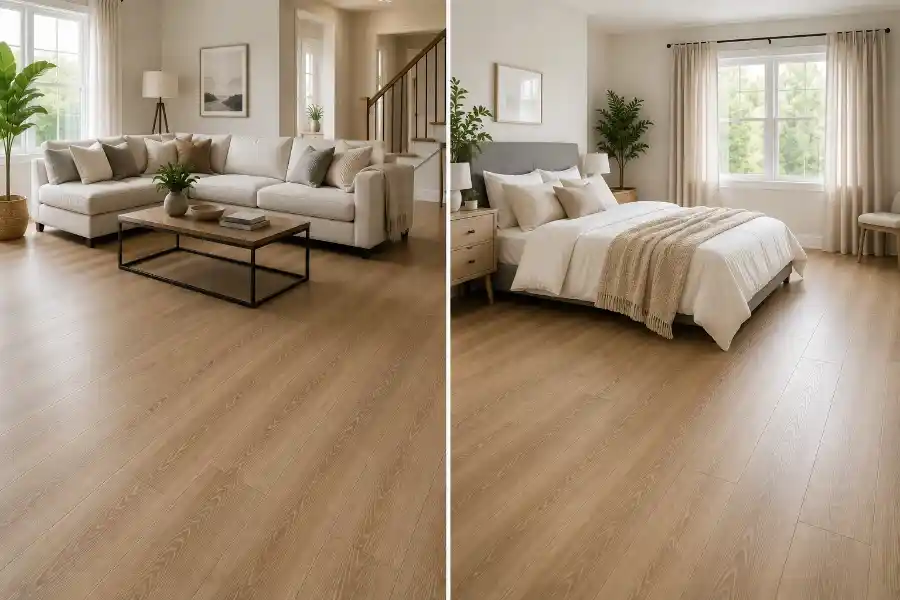
A standard wear layer is usually enough for these spaces. These rooms normally experience lighter daily activity than high traffic areas.
Basements
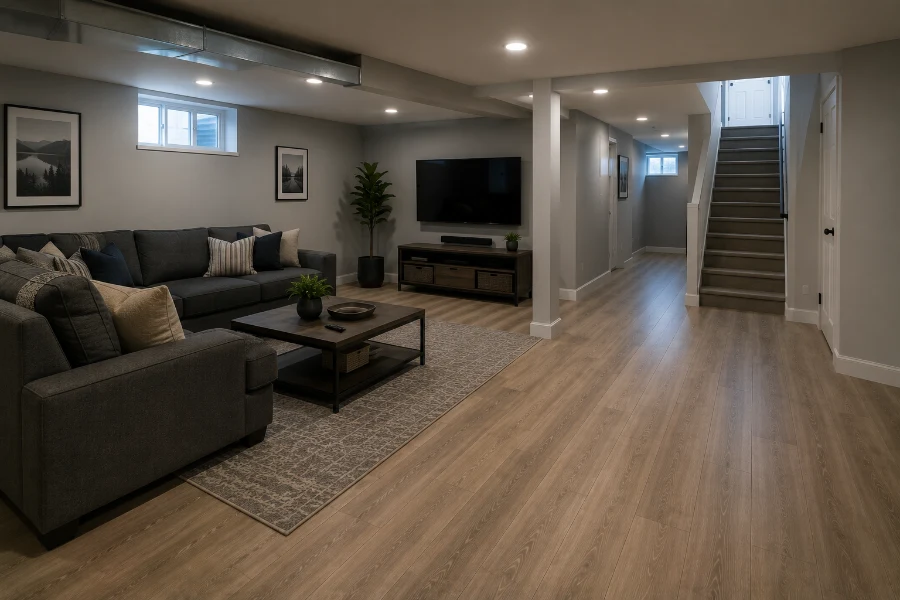
Plank or tile formats can work well based on the room layout. Basements benefit from a stable rigid core that performs well in changing conditions.
Commercial spaces
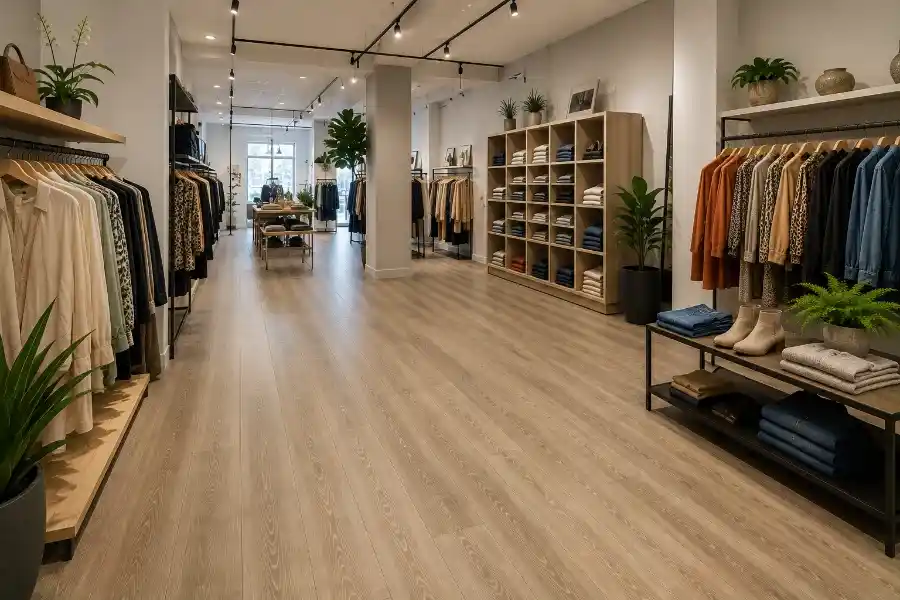
A commercial grade wear layer suits offices, stores, and reception areas. This option supports frequent foot traffic and helps reduce early surface damage.
Matching style to interior
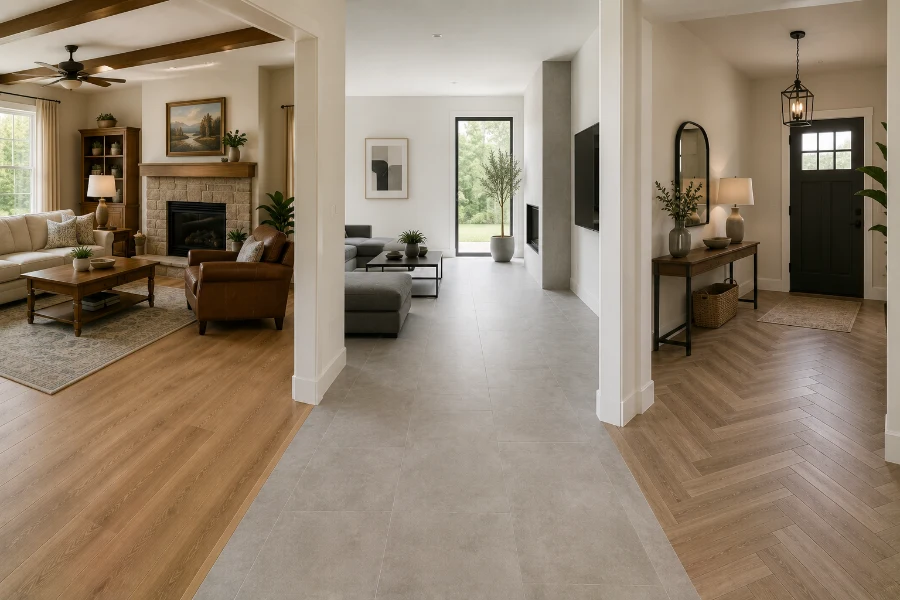
Wood look designs fit warmer and traditional interiors. Stone look finishes suit modern and simple spaces. Herringbone patterns work well for areas that need a decorative feature.
Setting a budget
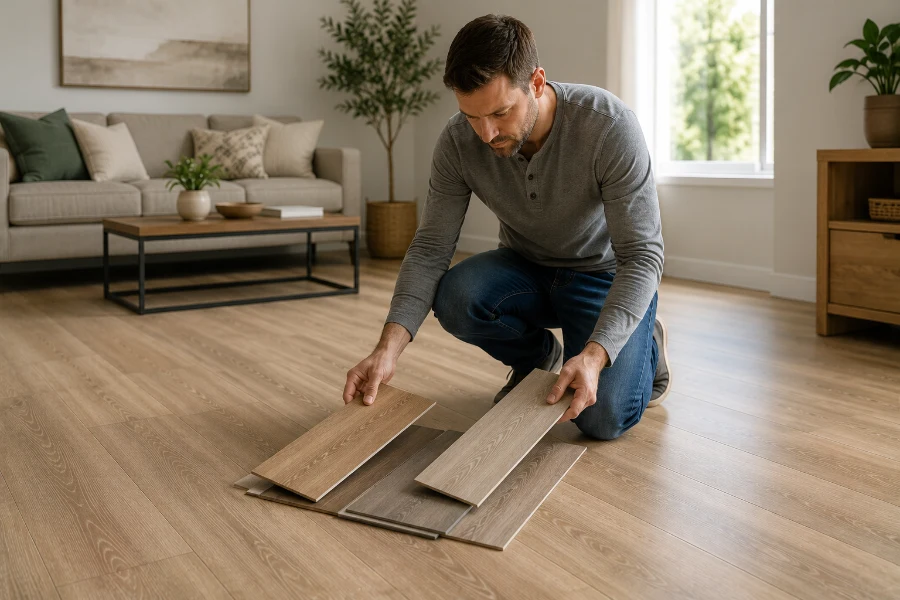
Material and installation expenses should be considered together before making a final choice. A clear budget helps narrow down suitable flooring options.
Choosing SPC flooring becomes easier when room purpose and daily use are clear. The right combination of type, wear layer, and style creates a better fit for each space.
Looking for an alternative to SPC? Learn what LVT flooring is and how it compares with other modern flooring solutions.
Frequently Asked Questions
Can SPC flooring be used with underfloor heating?
Yes, most SPC floors handle underfloor heating without any issue. Always check the maximum heat limit set by the manufacturer first.
Does SPC flooring lose color in sunlight?
Strong, direct sunlight can slowly lighten the surface over time. Blinds or curtains during peak sun hours help slow down fading.
Is SPC flooring suitable for hot climates like Dubai?
Yes, indoor heat and air conditioning shifts do not affect SPC flooring shape. Its solid core stays flat even with constant temperature changes.
Can SPC planks go directly over old tiles?
In most homes, yes, SPC planks can sit right on top of existing tiles. The surface below still needs to be flat and free of large gaps.
Does SPC flooring need extra padding underneath?
Most SPC planks already come with a built-in cushion layer. A separate pad is only needed if a room needs extra noise reduction.
Conclusion
SPC flooring brings together a rigid core, water resistance, and long lasting performance in one flooring option. This guide explained its meaning, construction, types, pricing, and maintenance details.
The right flooring choice depends on matching product features with everyday requirements. Room use, foot traffic, and budget all help determine the most suitable option.
A good flooring decision requires more than choosing a design. Understanding how a floor performs in real conditions helps create a better long term choice.