
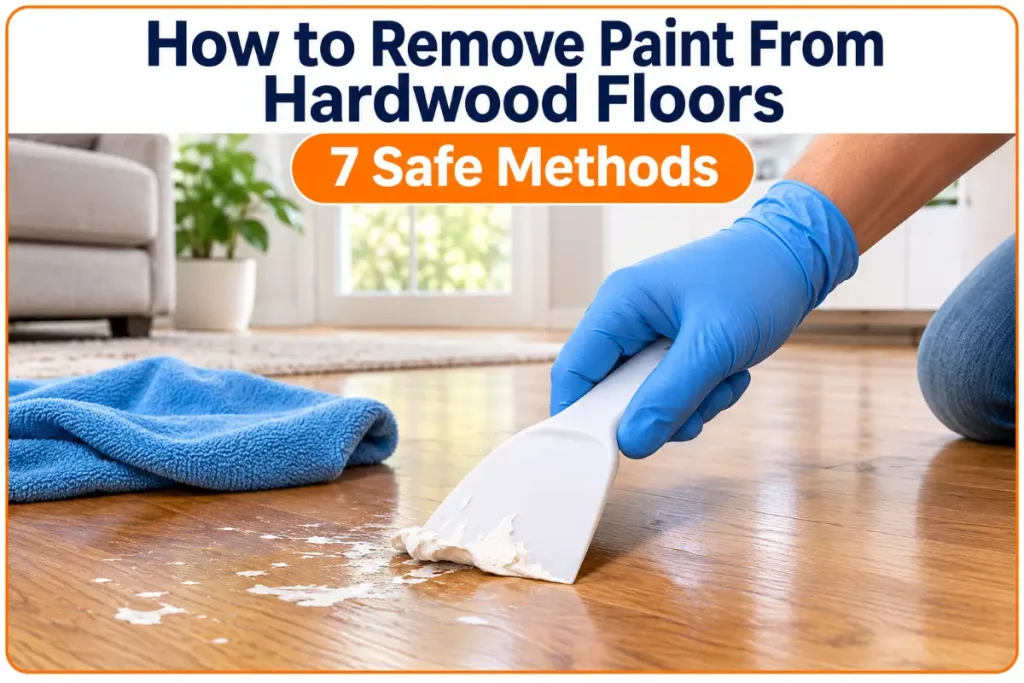
A paint spill can look like permanent damage, but most hardwood floors recover well. This guide shows you how to get paint off wood floors without causing more damage. The safest approach depends on three things: the paint, the floor finish, and the age of your home.
Quick answer: To get paint off hardwood floors, start with warm soapy water and a plastic scraper. Use rubbing alcohol for dried latex paint and mineral spirits for oil-based paint. Move to a paint remover or sanding only if gentler methods fail. Test every product in a hidden spot first. If your home was built before 1978, test for lead before you disturb the paint.
Contents
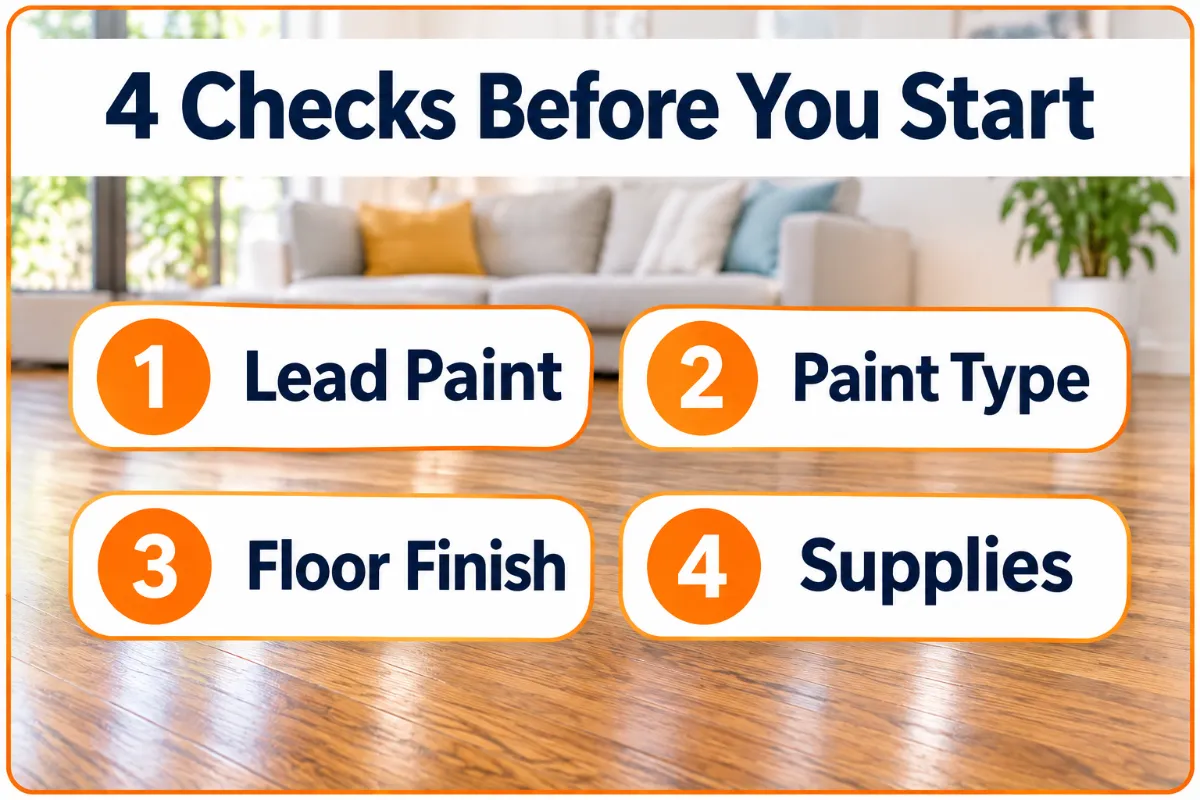
Before You Start: 4 Essential Checks
Learning how to remove paint from a wood floor starts with these four checks. They help you avoid the most costly mistakes.
1. Check for lead paint
This step matters most in older homes. The U.S. banned lead-based paint for residential use in 1978, so older paint may contain lead. An EPA guide estimates that about half of pre-1978 homes contain it, including nine in ten homes built before 1940.
Use a lead test kit for a quick screen. For a firmer answer, hire a certified inspector or use an accredited lab. Test old paint found under carpet too, since it may date back decades.
If the paint contains lead, do not scrape, sand, or heat it yourself. Call a lead-safe certified contractor. Any work on old paint should keep dust low, stay in one small area, finish quickly, and keep other people away.
2. Identify the paint type
Read the can if you still have it. If not, use this simple test:
- Dampen a cotton ball with rubbing alcohol.
- Rub it on the paint for a few seconds.
- Check the cotton ball.
Color on the cotton usually means water-based paint, such as latex or acrylic. Clean cotton usually means oil-based paint. Very old or heavily layered paint may give an unclear result.
3. Identify the floor finish
The finish often decides which product is safe. Test in a closet or under a radiator.
| Test | Result | What it suggests |
| Drop of water | Water soaks in | Bare wood or worn finish |
| Drop of water | The surface temporarily turns pale | Possible wax or unsealed wood |
| Mineral spirits on a rag | The rag darkens noticeably | Wax |
| Denatured alcohol | The surface turns soft and sticky within about a minute | Shellac |
| Lacquer thinner, after the alcohol test | The surface turns sticky | Lacquer or a water-based finish |
If the surface stays hard after these tests, it likely has a durable film such as polyurethane. Factory-finished floors often fall into this group, but check the manufacturer’s care guide.
4. Gather your supplies
- Plastic putty knife with a blunt edge
- Microfiber cloths and clean rags
- Mild dish soap and warm water
- Rubbing alcohol and mineral spirits
- Nylon brush or old toothbrush
- Chemical-resistant gloves and eye protection
- Metal can with a tight lid for solvent rags
Always scrape along the grain and use light pressure. Avoid metal blades, steel wool, and rough scouring pads on finished floors.
Which Paint Removal Method Should You Use?
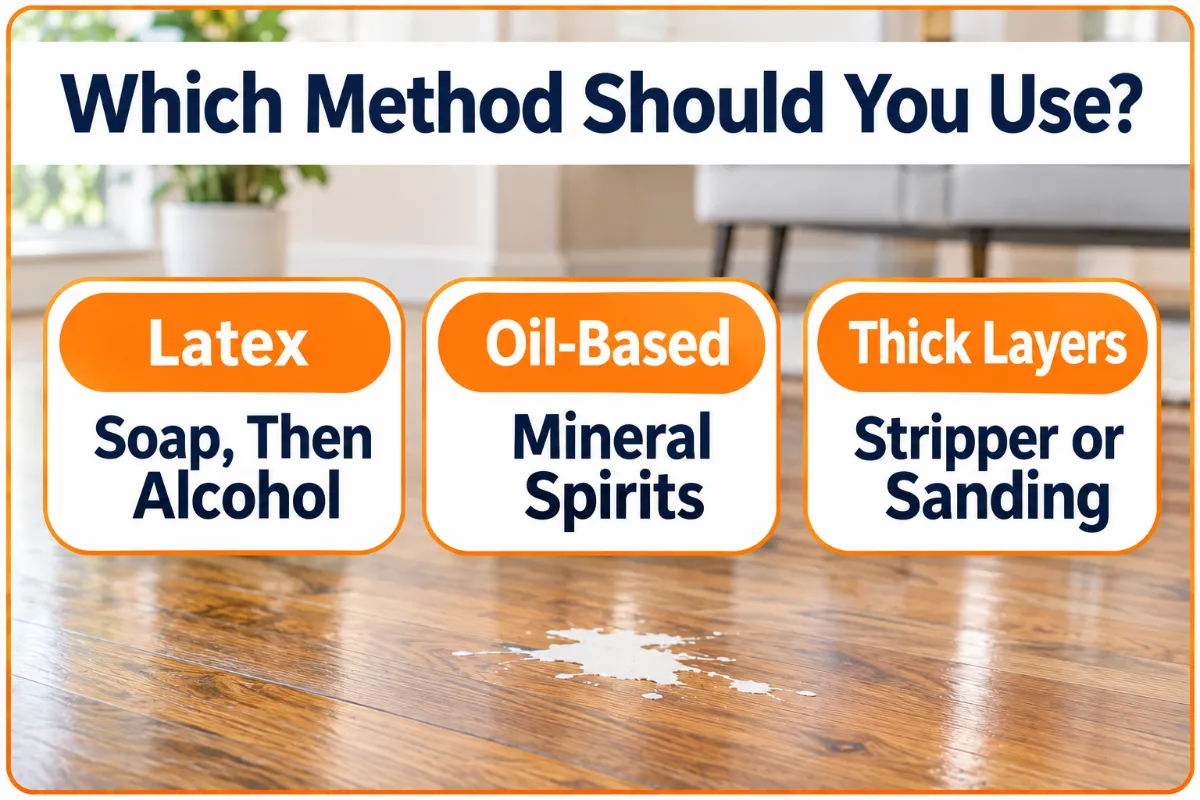
Start at the top of this table and stop as soon as a method works. Costs are rough U.S. estimates.
| Method | Best for | Time | Cost | Risk to finish |
| 1. Soap and water | Wet or light dried latex | 5 to 20 min | Under $5 | Low |
| 2. Rubbing alcohol | Dried latex | 15 to 45 min | Under $10 | Low to medium |
| 3. Hair dryer | Thick, stubborn spots | 10 to 30 min | $0 | Medium |
| 4. Mineral spirits | Oil-based paint | 15 to 45 min | $10 to $20 | Medium |
| 5. Splatter remover | Small dried spots | 10 to 30 min | $10 to $25 | Medium |
| 6. Chemical stripper | Large or layered paint | 1 to 3 days | $30 and up | High |
| 7. Sanding and refinishing | Severe or widespread paint | 2 to 5 days | About $3 to $8 per sq ft for a pro | Replaces finish |
Match the method to your finish
- Polyurethane or factory finish: Most methods work when you test first and limit contact time.
- Wax: Use a barely damp cloth and gentle scraping. Mineral spirits can dissolve wax, and heat can melt it. Plan to rewax the area.
- Shellac: Avoid alcohol, heat, and chemical removers. Alcohol softens shellac quickly.
- Lacquer: Test before using alcohol, because very old lacquer may soften slightly.
- Penetrating oil: Use mild methods, then reapply oil if the area looks dry.
- Bare wood: Paint may sit deep in the pores. You will likely need a stripper or sanding.
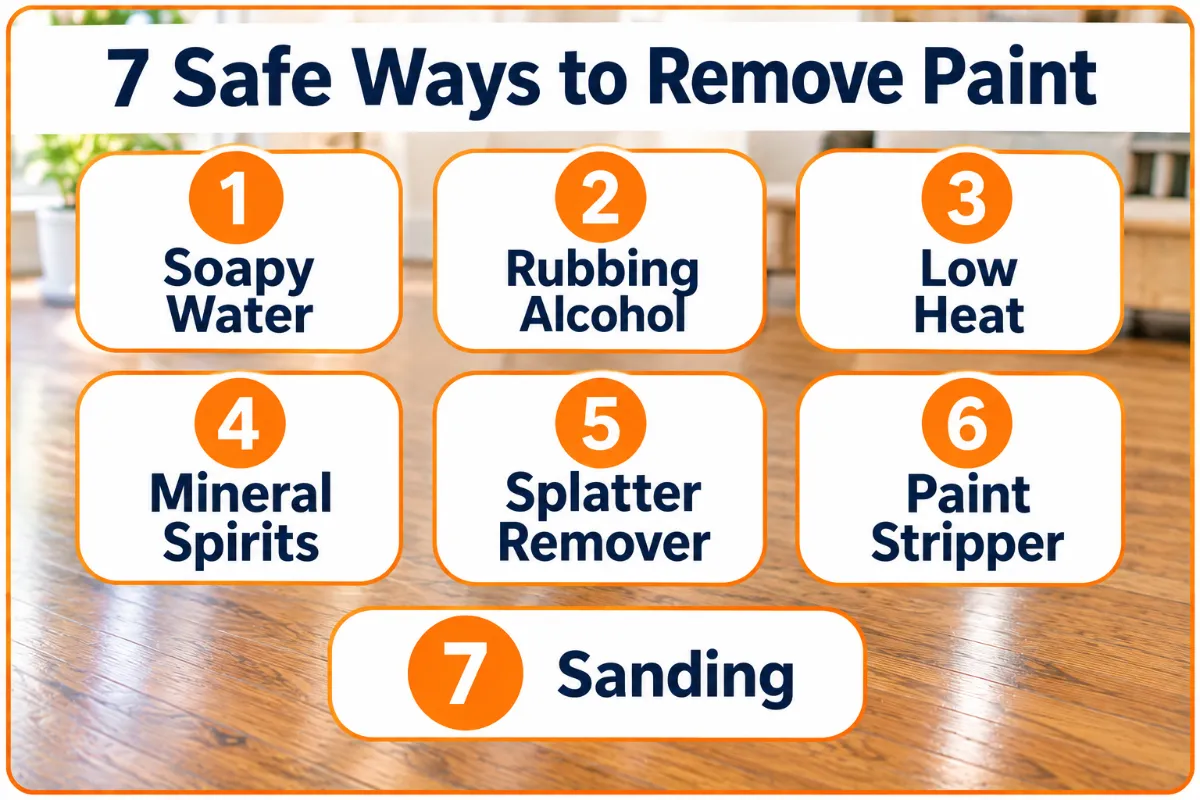
7 Safe Ways to Get Paint Off Hardwood Floors
Method 1: Warm Soapy Water
This method suits fresh spills and light dried latex paint. Fresh paint comes up fastest, so act immediately.
- Blot wet paint with a cloth. Do not rub it outward.
- Mix a few drops of dish soap into 2 cups of warm water.
- Wring a microfiber cloth until it is just damp.
- Rub along the grain and rinse the cloth often.
- Lift softened paint with the plastic scraper.
- Wipe with a clean, damp cloth, then dry the floor right away.
Method 2: Rubbing Alcohol
Rubbing alcohol softens many dried latex paints, including old splatters found under carpet. Do not use it on shellac.
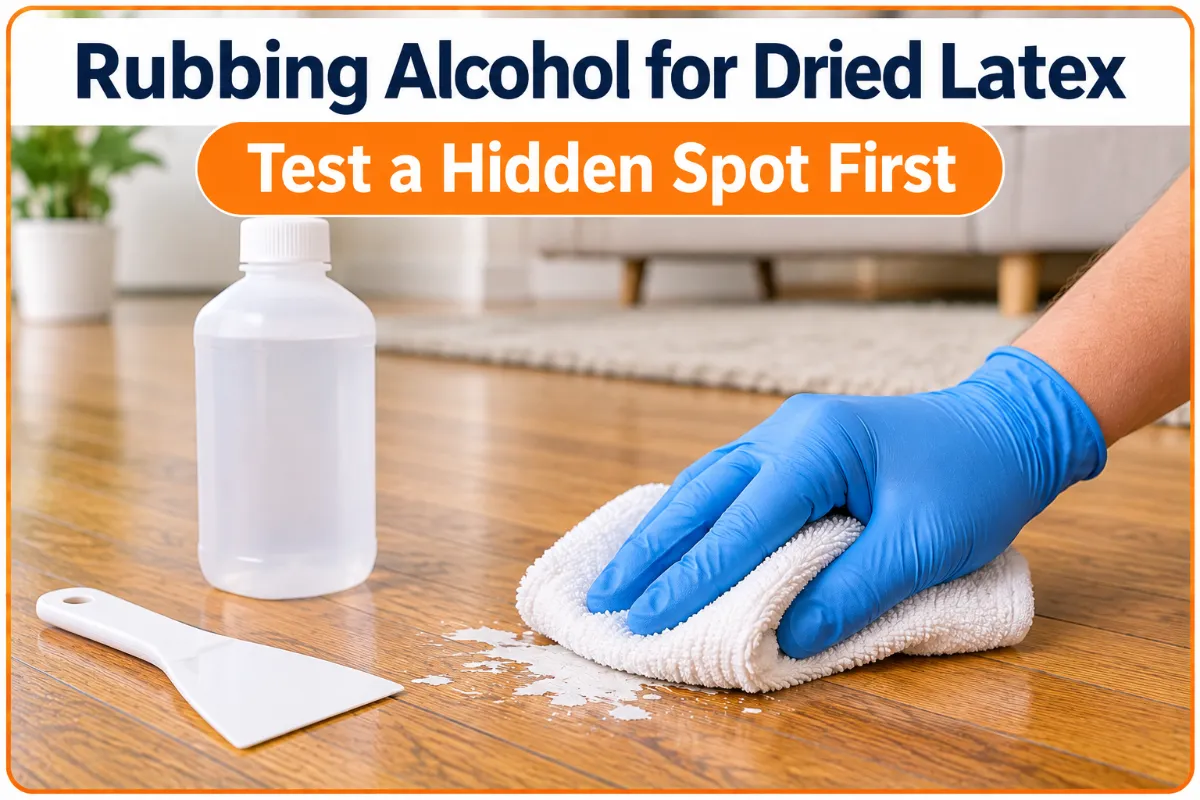
- Open the windows and remove all ignition sources.
- Soak a rag with alcohol, then wring it out.
- Lay the rag over the paint for up to 5 minutes.
- Cover it with plastic for larger spots. This slows evaporation.
- Scrape gently and scrub with a nylon brush.
- Wipe with a damp cloth and dry the area.
Never pour alcohol across the floor. Large amounts create flammable vapor and can damage the finish.
What about lemon juice? Many guides suggest three parts alcohol to one part lemon juice. Reliable testing of this mix is hard to find, and acid may dull some finishes. Start with plain alcohol. Treat vinegar with the same caution.
Method 3: Low Heat From a Hair Dryer
Heat softens thick paint so you can lift it with less force. Use this method only on lead-free paint and durable finishes. Avoid it on wax and shellac.
- Make sure no solvent or vapor remains in the area.
- Set the hair dryer to low or medium.
- Hold it several inches from the paint and keep it moving.
- Heat in short bursts until the paint softens.
- Lift the paint with the plastic scraper.
- Wipe away any residue with a damp, soapy cloth.
A heat gun can scorch wood and melt the finish quickly. Most homeowners should choose a hair dryer for spot work.
Method 4: Mineral Spirits
Mineral spirits are the usual next step for oil-based paint. They work best on newer paint, and fully cured paint may need Method 5 or 6.
- Ventilate the room and turn off nearby flames, including pilot lights.
- Put on gloves and eye protection.
- Scrape away as much paint as you safely can.
- Dampen a rag and hold it on the spot for 1 to 2 minutes.
- Rub gently along the grain.
- Wipe with a soapy, damp cloth, then dry and buff the area.
Avoid acetone and lacquer thinner unless you plan to refinish. In one floor test, these solvents thinned the existing finish easily, and lacquer thinner can strip water-based polyurethane.
Method 5: Hardwood Paint Splatter Remover
Choose this option when household products fail on small spots. Goof Off markets a splatter remover for dried latex and oil-based paint on hardwood. Goo Gone sells a latex cleanup product for wet or dry paint.
Read the full label and confirm it allows use on your floor.
- Test the product in a hidden spot.
- Apply a small amount to the paint only.
- Wait for the time stated on the label.
- Lift the paint with a plastic scraper or cloth.
- Clean off all residue as directed.
Treat “safe for hardwood” as a marketing claim until your own spot test passes. At least one of these products is flammable, so ventilate the room.
Method 6: Chemical Paint Stripper
Stripping paint from wood makes sense for large painted areas or multiple coats. A stripper will likely remove the clear finish too, so plan to refinish the floor.
Check the label before you buy. The EPA has banned consumer uses of methylene chloride because of serious health risks, and advocates suggest looking for products labeled free of it. Do not use an old can from the garage if it contains this chemical.
- Confirm that the paint is lead-free.
- Remove furniture and cover vents and doorways.
- Set up strong cross-ventilation.
- Try the stripper on a small test patch.
- Apply a thick coat to one small section.
- Wait for the time on the label.
- Scrape along the grain with a plastic tool.
- Remove residue or neutralize the wood as the label directs.
- Let the floor dry fully before any sanding or finishing.
Some poultice strippers are caustic. They can darken wood and raise the grain, so your test patch should include the full cleanup step.
Method 7: Sanding and Refinishing
Sanding works when paint covers a large area or has soaked into the wood. It also removes wood and patina, so treat it as the last resort.
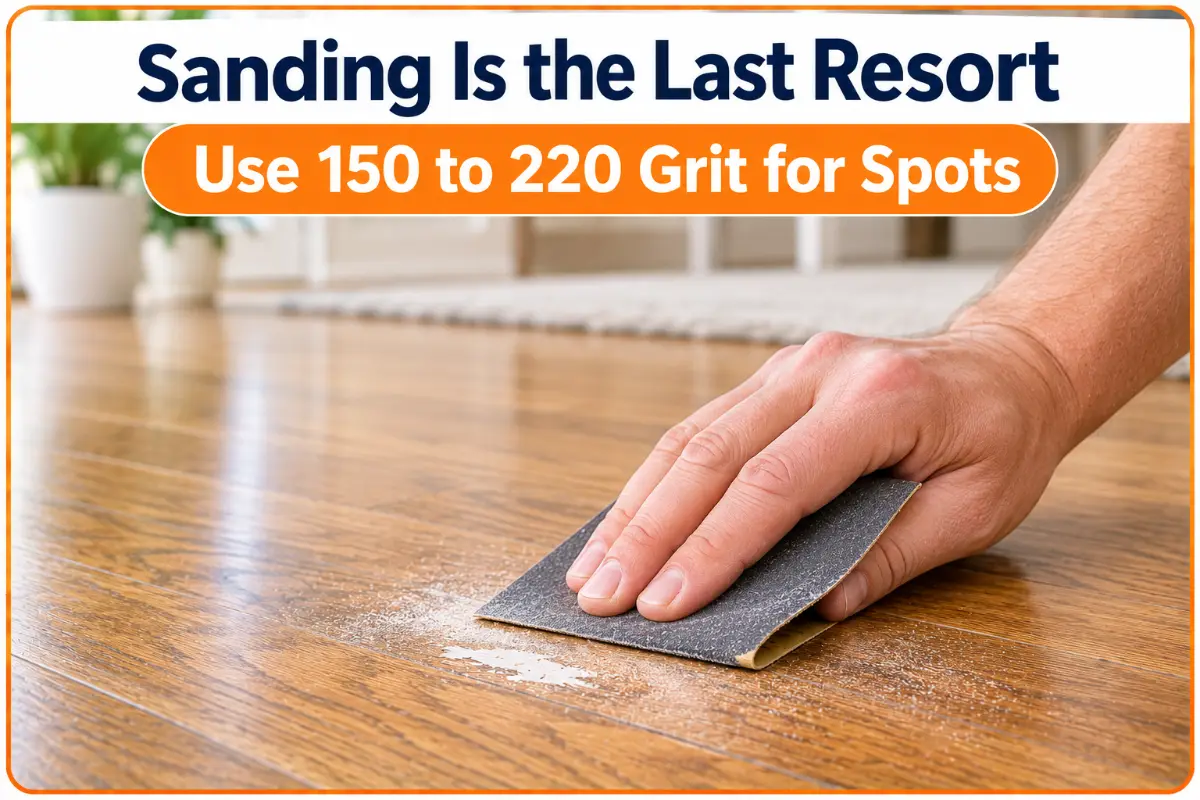
For a small spot:
- Confirm that the paint is lead-free.
- Hand sand with fine 150 to 220 grit paper.
- Follow the grain and stop once the paint is gone.
- Vacuum and wipe away the dust.
- Touch up the finish to match the floor.
Some guides recommend low-grit paper for this job, but low grit means coarse. Coarse paper can leave deep scratches that are hard to hide.
For a full floor: Professionals often start at a coarse grit, such as 36 to 60, and step up to about 100 to 120. Rental drum sanders can gouge boards quickly, so this job suits experienced users. Our guide on how to refinish hardwood floors explains the full process.
Check the thickness of your floor first. Solid 3/4-inch floors can usually handle three to six full refinishes, depending on the wood left above the tongue. This guide to tongue and groove flooring shows where that joint sits. Some engineered floors have a wear layer that is too thin to sand.
How to Get Paint Off of Wooden Floors in Tricky Situations
Paint in gaps between boards
Soften the paint with the right solvent on a cotton swab. Pick it out with a wooden skewer or a nylon brush, then vacuum the gap. Avoid pouring liquid into the seams, because it can reach the subfloor.
Textured or wire-brushed floors
Paint settles into the low areas of these floors. Use a nylon brush along the grain and work with small amounts of product. Sanding will change the texture, so ask a professional before you try it.
Engineered hardwood
Engineered hardwood has a real wood top layer over a core. Use the same gentle methods, but keep moisture to a minimum. Check the manufacturer’s guidance before you use a solvent or sand the floor.
Old painted floors where you want to keep the patina
Sanding can make an antique floor look new. For wide pine or other historic boards, consider chemical stripping first. Pine is soft, so use a light hand with every tool.
Other options need caution:
- Steam: It adds heat and moisture, which can swell boards and damage old finishes. Leave it to a specialist unless a small test shows no harm.
- Steel wool and mineral spirits: This option is slow and works poorly on thick layers. Stray steel fibers can also stain oak.
Try two or three removal methods in small areas before you commit. Paint conditions vary so much that the best method can change from one floor to the next in the same building. Record the results and scale up the method that works best.
Aftercare: How to Restore the Floor
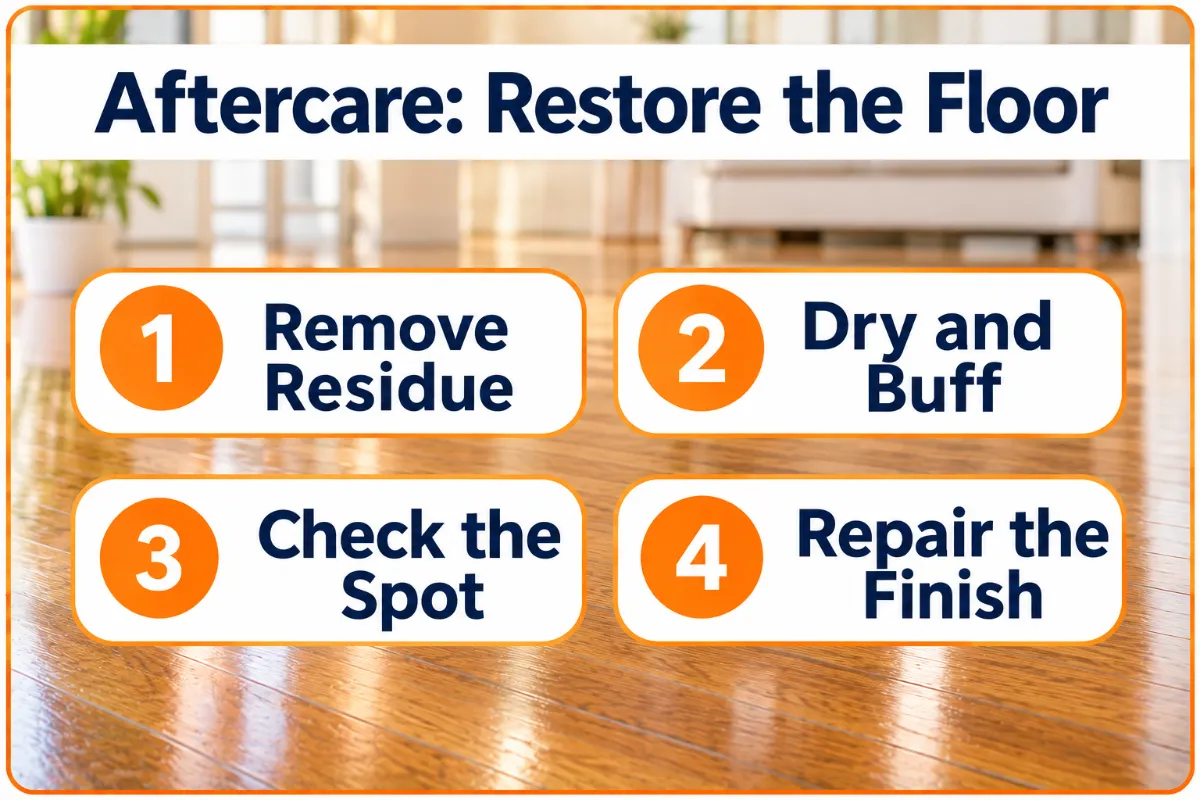
- Remove all residue with a barely damp cloth.
- Dry the area and buff it with a dry microfiber cloth.
- Check the spot from a low angle with a flashlight.
- Let the wood dry fully before you add any product.
- Repair the finish to match the floor.
| Finish | Typical repair |
| Wax | Apply fresh wax and buff |
| Penetrating oil | Reapply a compatible oil |
| Shellac | Sand lightly and add new shellac |
| Polyurethane | Blend a small repair or recoat the room |
| Factory finish | Use the manufacturer’s repair product |
Once the repair cures, follow a gentle routine to clean your hardwood floors and protect the finish.
Dispose of rags safely. Oil-soaked rags can heat up and ignite on their own, and solvent-soaked rags remain a fire hazard. Submerge them in water inside a metal can with a tight lid. Then follow your local hazardous waste rules. Never pour solvents down a drain.
Common Mistakes to Avoid
- Skipping the lead test in a pre-1978 home
- Using a metal scraper on a finished floor
- Pouring solvent directly onto the wood
- Leaving water or solvent on the floor too long
- Using alcohol on shellac or mineral spirits on wax without testing
- Mixing products or using heat near solvent vapors
- Sanding before you try gentler methods
How to Prevent Paint Spills on Hardwood Floors
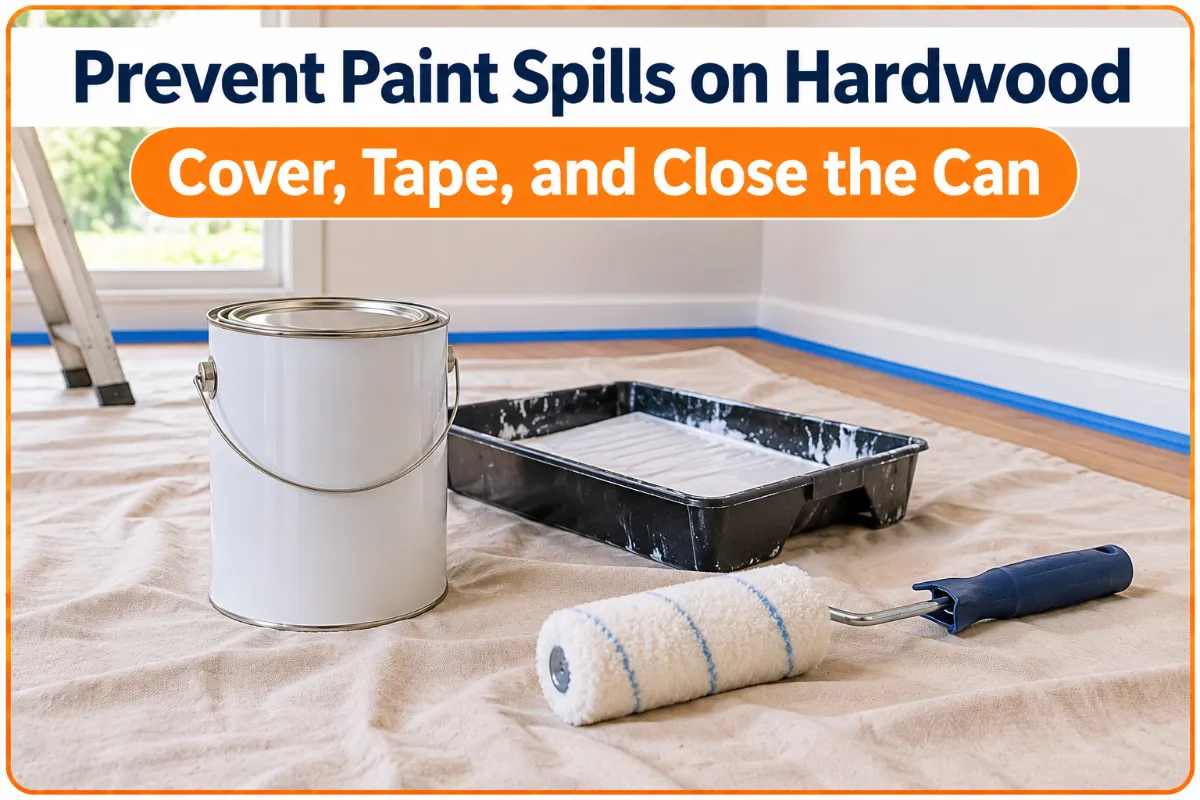
- Use canvas drop cloths and extend them past the work area. Remove your shoes before stepping off the cloth so you do not track paint across the floor.
- Tape the edges of the cloth near the walls.
- Close the can whenever you step away.
- Keep the paint tray on a stable, covered surface.
- Keep a damp rag nearby for quick cleanup.
- Clean your baseboards before you remove the cloth, so dust and paint specks do not fall onto the floor.
- Consider one of the best painting services in Dubai for large rooms or high ceilings.
When Replacement Makes More Sense
Sometimes the paint is only part of the problem. Consider replacing the floor if the boards are too thin to sand, badly stained, or damaged across most of the room.
Solid and engineered options keep the look of real wood. Explore engineered wood flooring or parquet flooring if you want that natural character. Vinyl flooring and laminate flooring offer lower-maintenance alternatives.
Not sure which to choose? Compare engineered hardwood vs LVP, then check current flooring costs in Dubai to plan your budget.
Frequently Asked Questions
What is the easiest way to get paint off wood floors?
Wipe fresh paint with a damp, soapy cloth. For dried latex, hold an alcohol-dampened rag on the spot, then lift the paint with a plastic scraper.
How do you get paint off of hardwood floors without sanding?
Start with soapy water and a plastic scraper. Move to rubbing alcohol for latex or mineral spirits for oil-based paint. Use a hardwood splatter remover if those fail.
Can you remove paint from hardwood floors without damaging the finish?
Yes, in many cases. Latex splatters on a sound polyurethane finish often come off cleanly. Gentle products, limited contact time, and a spot test lower the risk.
Does rubbing alcohol damage hardwood floors?
It can damage some finishes. Alcohol dissolves shellac and may soften old lacquer. Sound polyurethane usually handles brief contact, but test first.
Can you use WD-40 or Goo Gone on painted wood floors?
WD-40 is a weak choice. It is a lubricant rather than a paint remover, and it can leave a slick film that attracts dirt. Goo Gone offers a latex-specific product, which suits this job better than a general adhesive remover. One homeowner reported that Goo Gone appeared to strip her floor finish without removing 35-year-old paint, so test it first.
How do you remove old dried paint from hardwood?
Test for lead first if your home dates from before 1978. Then try soapy water and alcohol for latex, or mineral spirits for oil-based paint. Use a stripper or sanding for thick or deeply set paint.
What removes oil-based paint from wood floors?
Mineral spirits are the best first choice. Fully cured paint may need a splatter remover or a chemical stripper.
Is it better to strip or sand painted wood floors?
Stripping removes less wood and may preserve more of the floor’s patina, but it is messy and slow. Sanding gives a uniform surface, but it removes wood and creates dust. Test for lead before you choose either method.
How much does it cost to remove paint from a hardwood floor?
Spot removal often costs under $25 in supplies. Professional refinishing typically costs about $3 to $8 per square foot, or roughly $1,000 to $2,500 per project.
Final Thoughts
Most paint on hardwood floors comes off with patience and the right order of work. Check for lead, identify the paint and finish, and test every product first. Start with the gentlest method and stop as soon as it works. Your floor keeps more of its finish, its wood, and its character that way.